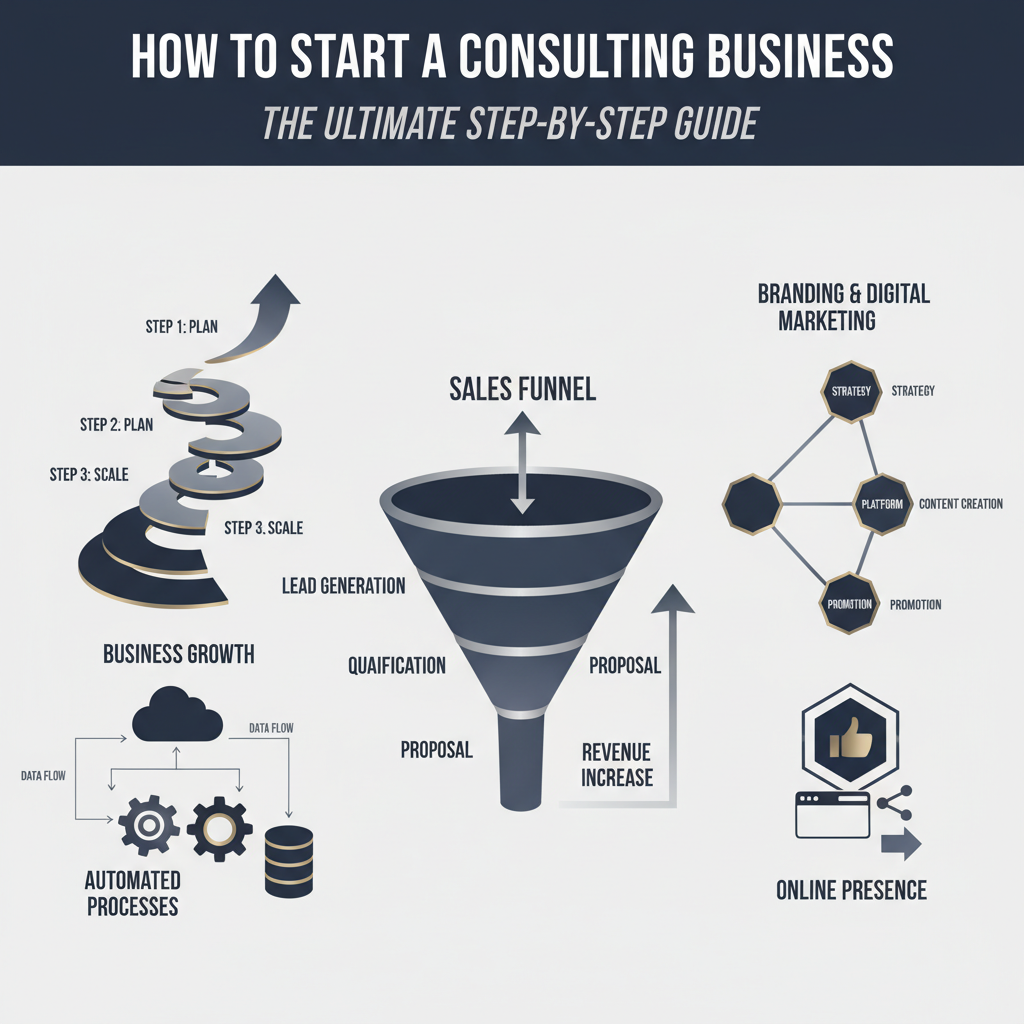
Starting a consulting business involves identifying your area of expertise, defining your target market, and creating a solid business plan. Key steps include legally structuring your company (such as an LLC), building a professional online presence with a website, and developing a marketing strategy to attract your first clients. Automating workflows for lead generation and client management is crucial for scaling efficiently.
Many professionals want to use their skills to start a consulting business. But turning a good idea into a successful company can feel overwhelming. You might be struggling with marketing, operations, or how to build a professional online presence from day one. The good news? Starting a consulting company doesn’t have to be a confusing process of trial and error.
This step-by-step guide is for entrepreneurs who are ready to build and grow a consulting business. We’ll show you how to find your niche, create your service packages, and handle expert branding and website creation. You’ll also learn to develop lead generation strategies and set up automated sales systems. Our goal is to give you a clear plan to turn your vision into a profitable business, so you can start with confidence.
Stop guessing and trying to piece everything together yourself. With Automated-Biz, you get expert online business solutions that work together smoothly. We help you automate tasks to achieve consistent small business growth without sacrificing quality. By focusing on business automation and smart marketing, you can simplify your operations, find clients consistently, and build a strong professional brand. Ready to build a consulting business that can truly grow? Let’s get started.
What Should You Do Before Starting a Consulting Business?
Step 1: Identify Your Niche and Expertise
Before you start a consulting business, it’s important to know your strengths. Choosing a specific niche is key. It stops you from being a generalist, which can weaken your marketing and lead to poor results.
Your niche is your area of specialty. It helps you stand out in a busy market. This clarity is important for building your brand and website later.
To find your niche, ask yourself these questions:
- What are your core skills? Think about what you do best.
- What problems do you solve best? Focus on how your skills can help others.
- What industries do you have experience in? Use what you already know.
- What are you passionate about? Your motivation will last longer if you love what you do.
A clear niche makes your marketing more focused and positions you as the expert. This helps you attract better clients and build a strong reputation quickly. It turns you from a general advisor into a specialist people want to hire.
Step 2: Define Your Target Audience
Once you have a niche, you need to define who you will serve. Your target audience is the specific group of clients who will benefit most from your skills. Knowing this group is key to finding new customers.
When you define your audience, you can tailor your message just for them. This ensures your brand, website, and marketing speak directly to their problems. This focus is important for building a sales process that actually works.
Think about these points when describing your ideal client:
- Demographics: What is their industry, company size, or job title?
- Pain Points: What challenges do they face growing their business online? What keeps them up at night?
- Aspirations: What are their goals? What does success look like to them?
- Location: Are they local, national, or international?
- Budget: How much are they willing to spend on a solution?
A clear understanding of your audience helps you create content they find useful. It also helps you develop services they truly need. This targeted approach improves your small business marketing services and builds a stronger professional online presence.
Step 3: Conduct Market Research and Validate Your Idea
Even with a great niche and audience, you need to check if people will actually buy your consulting services. This step keeps you from wasting time and money on an idea that won’t work.
Market research gives you facts to back up your decisions. It shows if your services solve real problems for businesses. This process helps you improve your offerings and create a solid business plan.
Good market research includes:
- Competitor Analysis: Look at other consultants in your niche. What do they offer? What are their strengths and weaknesses?
- Surveys and Interviews: Talk to your target audience directly. Ask about their problems and if they would pay for a solution. Over 80% of businesses fail due to cash flow problems or no market need [1].
- Industry Reports: Find trends, gaps, and opportunities in your industry.
- Pilot Programs: Offer a small service to a few clients to get feedback and testimonials.
Validating your idea builds confidence and gives you a strong foundation. This research ensures that your branding, website, and marketing are all based on proven demand. You can then move forward, knowing your business is set up for growth.
How Do I Create a Solid Business Plan and Service Offerings?
Step 4: Outline Your Consulting Services and Packages
Defining your consulting services is a crucial step. It tells potential clients exactly what you offer. This process turns your expertise into services that people can buy. Well-planned services also make your marketing much more effective.
To start, list the specific problems you solve for clients. Then, turn these solutions into different services. Think about how your offerings align with Automated-Biz’s integrated approach to professional online presence and client management. Your services should be easy for clients to understand and want.
Structuring Your Service Offerings
Putting your services into packages has many benefits. It makes it easier for clients to choose and gives your business a steady income. Consider these common ways to structure your offers:
- Project-Based Fees: Great for one-off projects. Define a clear scope and what you will deliver.
- Hourly Rates: Good for ongoing help or tasks without a clear endpoint. This model requires you to track your time carefully.
- Retainer Agreements: Offers a steady monthly income. This gives clients regular access to your expertise and helps build long-term relationships.
- Tiered Packages: Present a few options (e.g., Basic, Standard, Premium). Each tier offers more services or features, which helps you serve clients with different needs and budgets.
- Value-Based Pricing: Base your fee on the measurable results you deliver to the client. This requires confidence in your ability to generate a great return on their investment.
It’s essential to clearly outline what each service package includes and what it does not. This helps prevent misunderstandings and keeps projects on track. A clear list of services also improves your website and online brand, showing you are professional and building trust.
Step 5: Develop a Comprehensive Business Plan
A solid business plan is your roadmap to success. It provides a clear direction for your consulting business. This document is vital whether you’re starting a new business or growing an existing one. It guides your small business growth strategies and can also help you get funding if you need it [source: https://www.sba.gov/business-guide/plan-your-business/write-your-business-plan].
Your business plan is more than just a document—it’s a tool you’ll actually use. It helps you define your vision and your goals. This plan also guides how you set up business automation and digital marketing systems.
Key Components of Your Consulting Business Plan
A good business plan has several key sections. Each one covers an important part of your business. For each component, focus on practical, real-world information:
- Executive Summary: Give a short summary of your entire plan. Highlight your mission, services, and financial goals.
- Company Description: Explain what your consulting firm does. Describe your values and what makes you unique.
- Market Analysis: Research your ideal clients and industry trends. Know who your competitors are and what they offer. Understand where you fit in the market.
- Service Offerings: Provide more detail on the services and packages you outlined in Step 4. Explain how they solve your clients’ problems.
- Marketing and Sales Strategy: Outline how you will find and keep clients. Include how you’ll generate leads and use automated sales funnels.
- Management Team: Describe your experience and skills. Mention any key partners or advisors.
- Financial Projections: Estimate your income, expenses, and profit. Include startup costs and a break-even analysis. This section is key to showing your potential for growth.
- Operational Plan: Detail your day-to-day work. Explain how you will use business process automation to be more efficient.
Creating this plan gives you a clear structure to follow. It turns your ideas into a real business that can grow. It also helps you decide which technology to use, such as the comprehensive online business solutions offered by Automated-Biz.
Step 6: Create a Pricing Strategy for Your Services
Setting the right price for your consulting services is very important. It affects your profit and how clients see your brand. Your pricing should match the value you provide and be competitive in your market. A good strategy makes it easier to grow your business online.
Consider a few factors when setting your rates, including your expertise, market demand, and the value you deliver. Your pricing should also fit the professional brand you build with automated-biz’s branding and website creation services.
Approaches to Pricing Your Consulting Services
There are several common pricing models in consulting. Each has its pros and cons. Choose the model that best fits your services and clients:
- Cost-Plus Pricing: Add up your business costs, then add a set amount for profit. This ensures you make money but might not match what clients are willing to pay.
- Market-Based Pricing: Research what competitors charge for similar services. Set your prices to be competitive, which helps you attract clients.
- Value-Based Pricing: Base your fees on the tangible value you deliver to the client. This can lead to higher earnings because it focuses on results.
- Tiered Pricing: Offer different service levels at different prices. This allows you to serve a wider range of clients and lets them choose what fits their budget.
- Hybrid Models: Mix and match parts of different strategies. For example, you could charge a fixed project fee plus an hourly rate for extra work.
Clearly explain the value behind your prices. Show clients how your services solve their problems and get them good results. Transparent pricing builds trust and helps you create sales funnels that work. It’s also important to review your pricing regularly. Adjust it as you gain experience and as the market changes to ensure your business continues to grow and succeed.
Do I need an LLC to be a consultant?
Step 7: Choose a Business Structure (Sole Proprietorship, LLC, etc.)
Choosing the right legal structure is a key decision for your consulting business. It affects your personal liability, taxes, and paperwork. This choice builds a foundation for your business and its future growth.
Most consultants choose from a few common structures. Each has its own pros and cons. Let’s look at the main options:
- Sole Proprietorship: This is the simplest option. You and your business are legally the same. All profits and losses are part of your personal income. There’s no legal separation, which means you are personally responsible for all business debts and lawsuits.
- Limited Liability Company (LLC): An LLC protects your personal assets while offering flexible taxes. It separates your personal finances from business debts and legal issues. This is a very popular structure for
starting a consulting firm. An LLC’s profits can be taxed like a sole proprietorship, a partnership, or a corporation. - Partnership: If you’re starting your business with others, a partnership might be a good fit. General partnerships usually don’t protect your personal assets, similar to sole proprietorships. However, structures like a Limited Liability Partnership (LLP) can offer some protection.
- Corporation (S-Corp or C-Corp): These are more complex structures that offer the strongest liability protection because they are completely separate legal entities from their owners. S-Corps can help avoid the “double taxation” often found with C-Corps. C-Corps are usually for larger businesses that want to find outside investors. They require more formal record-keeping and have more rules to follow.
Think about your comfort with risk, your tax situation, and your goals for growth. Many new consultants choose an LLC because it protects their assets and is simple to run. For example, over 70% of new small businesses form as an LLC for its flexibility and protection [2].
Key Considerations for Your Business Structure:
- Liability Protection: How much personal risk are you willing to take? An LLC helps protect your personal assets.
- Tax Implications: Different structures are taxed differently. This affects how much you’ll pay and how you report income.
- Administrative Complexity: Some structures require more paperwork and ongoing tasks.
- Future Growth: Do you plan to bring on partners or investors? Your answer can help you pick the right structure.
We recommend talking to a lawyer and a tax advisor. They can give you advice based on your specific needs. This helps you make a smart decision for setting up a consulting business that supports small business growth.
Step 8: Register Your Business Name and Obtain Licenses
Once you’ve chosen a business structure, it’s time to make it official. Proper registration and licensing are required to operate legally. This step also builds trust and improves your professional online presence.
1. Register Your Business Name:
You must register your chosen business name. How you do this depends on your business structure and location.
- LLC or Corporation: Your business name is usually registered with your state when you file your formation papers.
- Sole Proprietorship or Partnership: If you use a business name that is different from your own name, you may need to file a “Doing Business As” (DBA). This is also called a fictitious or assumed name. You typically register a DBA with your county or state.
Always do a name search first to make sure your desired name is available. Check state business registries and federal trademark databases. Using an available name helps you avoid legal problems later.
2. Obtain an Employer Identification Number (EIN):
An EIN is like a Social Security number for your business and is issued by the IRS. You need an EIN if you plan to hire employees. Even if you don’t, it’s a good idea for an LLC to have one. You’ll need an EIN to open a business bank account and keep your personal and business finances separate. Getting an EIN online is a simple process [3].
3. Secure Business Licenses and Permits:
Licensing rules vary a lot by industry and location. Don’t skip this step. Operating without the right licenses can lead to fines and legal trouble.
- Federal Licenses: Most consultants don’t need federal licenses, but some specific industries do.
- State Licenses: Many states require a general business license. Some professional consulting services may need specific state certifications as well.
- Local (City/County) Licenses: Most cities and counties require local business licenses or permits. This can include zoning permits if you run your business from home. Check your local government’s website for details.
4. Consider Professional Liability Insurance:
While it’s not a license, professional liability insurance is essential for consultants. Also known as Errors & Omissions (E&O) insurance, this coverage protects you from claims of negligence or mistakes in your work. It adds an important layer of protection, especially for an LLC.
Taking these steps early makes your business official. It lets you focus on building a consulting business with confidence and prepares you for online reputation management and other growth strategies.
Step 9: Set Up Your Business Finances
Keeping your business finances separate from your personal money is vital for success. This is especially true when starting a consulting business. Separate finances make tax time easier and help you track performance and plan for small business growth. Don’t make the common mistake of mixing your funds.
Here are the essential steps for setting up your business finances:
- Open Dedicated Business Bank Accounts: This is a must-do. Open a separate checking account and maybe a savings account for your business. This makes tracking expenses simple and creates a clear record for audits. Many banks offer special accounts for
small business owners. - Obtain a Business Credit Card: A business credit card is useful for a few reasons. It helps build your business credit, which is important for future loans. It also simplifies managing business expenses. Be sure to use it responsibly to avoid debt.
- Implement Accounting Software: Use accounting software like QuickBooks, Xero, or FreshBooks to automate invoicing, track expenses, and create financial reports. This saves time and keeps your books accurate for tax season. It’s a key part of effective
business process automation. - Track All Income and Expenses Diligently: Keep consistent records. Categorize every transaction so you can understand your profitability and find all possible tax deductions. Automated-Biz focuses on
automated sales funnelsandlead nurturing, and you need good financial tracking to manage that income. - Set Up a Payment Processing System: You need an easy way for clients to pay you. Use options like Stripe, PayPal, Square, or direct bank transfers. Adding these to your invoicing process is convenient for clients and helps you get paid faster.
- Understand Your Tax Obligations: As a consultant, you will likely need to pay estimated taxes every quarter. Talk to a tax professional who can explain federal, state, and local tax rules and help you find relevant deductions.
By setting up a consulting business with strong financial habits, you gain clarity and control. Moving from guesswork to a clear financial system allows you to focus on your clients. It also supports your overall business automation strategy for long-term growth.
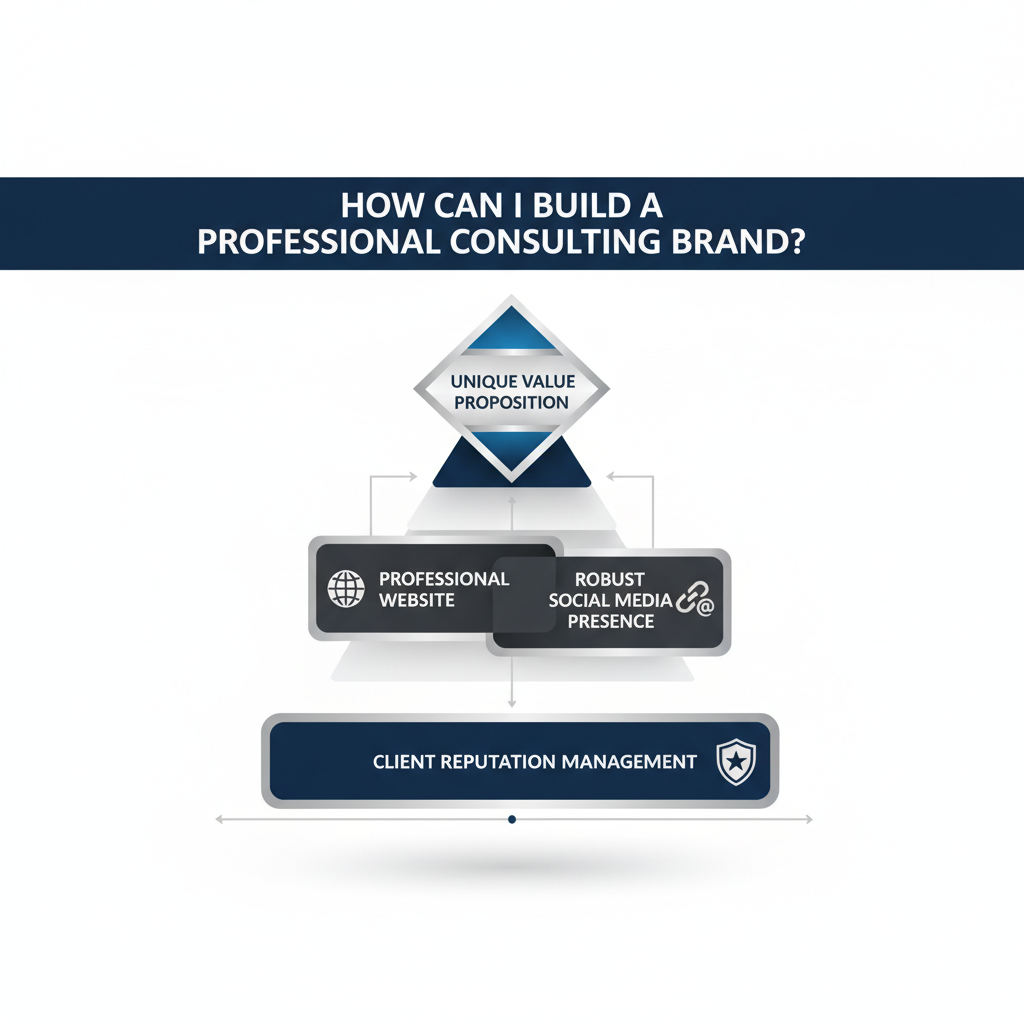
How Can I Build a Professional Consulting Brand?
Step 10: Establish Your Brand Identity and Logo
A strong brand identity is essential for your consulting business. It builds trust with potential clients, projects professionalism, and shows them your unique value. A clear brand helps you stand apart from the competition.
Automated-Biz makes this process easier. We help you define your core message and create a memorable visual identity. A well-defined brand is crucial for attracting the right clients.
Follow these essential steps to establish your brand:
- Define Your Core Message: What problems do you solve? Who is your ideal client? What makes your approach different?
- Understand Your Audience: Learn their needs, challenges, and goals. This allows you to tailor your message so it connects with them.
- Develop Your Brand Voice: Decide if your brand should sound authoritative, friendly, innovative, or practical. Keep this voice consistent everywhere you communicate.
- Design Your Logo and Visuals: Choose colors, fonts, and images that reflect your brand’s personality. A professional logo is vital for recognition and trust [4].
This strong foundation helps you stand out in a competitive market. Automated-Biz offers expert guidance with professional branding and custom logo creation to ensure your online presence is both distinctive and trustworthy.
Step 11: Build a Professional Website to Showcase Your Expertise
Your website is your digital storefront and often the first impression a client has of your business. A professional website is critical for showcasing your expertise and building credibility.
Are you struggling to find new clients online? Automated-Biz provides complete website creation and hosting. Our solutions ensure a great user experience, helping you present your consulting services effectively.
Your website should include these key elements:
- Clear Service Offerings: Describe your consulting packages and explain the specific benefits clients will receive.
- About Page: Share your professional story and what makes you unique. This helps you connect with visitors on a personal level.
- Testimonials and Case Studies: Use success stories and positive feedback from past clients to build trust and show what you can do.
- Blog or Resources: Share valuable industry insights and expert advice to establish yourself as a thought leader.
- Contact Information: Make it simple for potential clients to get in touch with you through clear forms or contact details.
- Call-to-Action (CTA): Clearly guide visitors on what to do next, whether it’s booking a consultation or signing up for a newsletter.
Our branding and website services work together to create a cohesive online presence. This helps you attract more leads and turn prospects into clients. A well-designed website is a powerful lead generation tool and the core of your online business.
Step 12: Set Up Your Professional Online Presence (LinkedIn, etc.)
Your online presence should extend beyond your website. For consultants, LinkedIn is crucial, but other platforms can also be valuable. Staying consistent across all channels reinforces your brand and expands your reach.
Feeling overwhelmed by marketing? Automated-Biz offers social media automation tools to help you manage your presence efficiently. This saves you time and keeps your audience engaged.
Follow these steps to build your professional online presence:
- Optimize Your LinkedIn Profile: Use your profile to clearly present your expertise, highlight key achievements, and feature client recommendations.
- Choose Relevant Platforms: Focus your efforts where your target audience spends their time, such as X (Twitter) or industry-specific forums.
- Share Valuable Content: Regularly post articles, insights, and advice to establish yourself as an expert in your field.
- Engage with Your Audience: Respond to comments and messages, and participate in relevant online discussions to build relationships.
- Manage Your Online Reputation: Monitor online reviews and mentions of your brand. Automated-Biz provides reputation management tools to help you address feedback professionally.
A strong online presence is essential for business growth. Our integrated digital marketing systems streamline this process, helping you move from inconsistent leads to a steady stream of new clients. With expert-guided automation from Automated-Biz, you can build a powerful and professional brand.
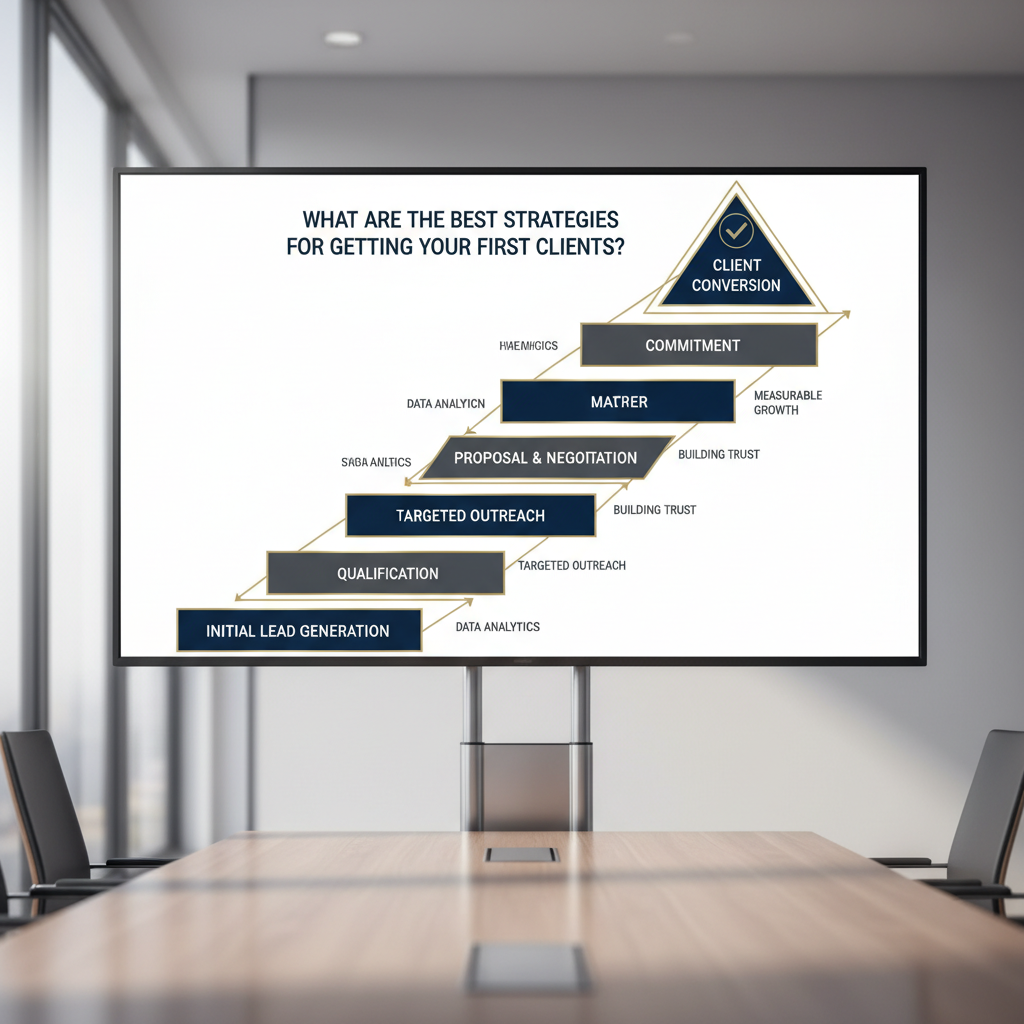
What Are the Best Strategies for Getting Your First Clients?
Step 13: Develop Your Marketing and Lead Generation Strategy
Getting your first clients is a huge step for any new consulting business. A good marketing plan is key to getting clients consistently. It helps you move from finding leads by chance to having a reliable way to attract new business.
Identify Your Ideal Client and Channels
Start by knowing exactly who you want to help. Understand their problems and where they look for answers. This focus makes your marketing efforts much more effective.
- Refine Your Target Audience: Who will get the most value from your skills? What are their biggest challenges?
- Research Their Online Presence: Where do your ideal clients hang out online? This helps you choose where to market.
- Understand Their Decision-Making Process: What do they need to know before they decide to hire a consultant?
Once you know your audience, you can pick the best channels to reach them. This creates a solid foundation for growing your small business.
Core Marketing and Lead Generation Tactics
Use a mix of methods to reach potential clients. Focus on building trust and showing your value. This is essential for starting a successful consulting business.
- Content Marketing: Write helpful blog posts, articles, or guides. Share your knowledge to solve common industry problems. This establishes you as an expert online.
- Professional Networking: Be active at industry events, in webinars, and in online groups. LinkedIn is a great platform for consultants to connect with potential clients.
- Social Media Engagement: Use the platforms where your ideal clients are most active. Share useful tips, join discussions, and show how you can help. Automated-Biz offers social media automation tools to streamline this process and ensure a consistent online presence.
- Referral Partnerships: Work with other businesses that don’t compete with you. They can send clients who need your services your way.
- Direct Outreach: When you reach out to potential clients, personalize your message. Show them you understand their business and can solve their specific problems.
Automated-Biz provides branding and website creation services. We make sure your online presence looks professional from day one. A strong digital foundation is key to attracting new clients. It makes your online business look polished and effective.
Step 14: Create Automated Sales Funnels to Nurture Leads
Once you start getting leads, you need to guide them toward becoming clients. Automated sales funnels turn interest into real prospects. They change messy, manual work into a smooth, automatic process. This is key for growing a modern small business.
The Power of Automation in Client Acquisition
Using automated sales funnels can change your business. They help you stay in touch with potential clients without constant manual work. This saves you time and ensures every interaction is professional. You can automate your process without sacrificing quality.
Automated sales funnels are systems that guide potential clients through your sales process, from when they first learn about you to when they become a paying client. This automation helps you get leads consistently.
Key Stages of an Automated Sales Funnel
A typical sales funnel has a few key stages. Each stage has a specific goal and uses automated actions:
- Awareness (Lead Capture): Attract potential clients with helpful content, like a free guide or webinar. Collect their contact info using a form on your website or landing page.
- Interest (Lead Nurturing): Send a series of automated emails to engage your leads. Share more insights or success stories to build trust and show them you’re the expert who can help.
- Decision (Evaluation & Conversion): Encourage interested leads to take the next step. This could be booking a free consultation or requesting a proposal. You can use automated scheduling tools to make this easy.
- Action (Client Onboarding): Turn the prospect into a client. Send automated reminders for proposals or contracts. Then, smoothly welcome them through your new client onboarding process.
Automated-Biz specializes in creating effective sales funnels and lead nurturing emails. Our platform gives you the tools to build, manage, and improve these funnels. This streamlines your work and helps your business run efficiently, ensuring a steady flow of prospects. You can focus on growing your revenue and getting clients predictably.
Step 15: Master the Art of the Consulting Proposal and Contract
Turning an interested lead into a paying client requires more than a good conversation. You need professional, clear, and convincing documents. A great proposal and a solid contract are essential. They make you look trustworthy and help you earn repeat business.
Crafting a Winning Consulting Proposal
Your proposal is your chance to present your solution and stand out. It should clearly explain the value you offer the client. A strong proposal builds their confidence and trust. Research shows that well-crafted proposals can significantly increase your win rate [5].
Key elements of an effective consulting proposal include:
- Executive Summary: A short overview of the client’s problem and how you plan to solve it.
- Understanding of the Client’s Challenge: Show that you truly understand their problems and goals.
- Proposed Solution and Methodology: Detail your plan, the services you’ll provide, and how they will help.
- Deliverables and Timeline: Clearly list what you will provide and when. Set realistic deadlines.
- Investment (Pricing): Present your fees clearly. Break down the costs if it helps.
- Client Testimonials or Case Studies: Include reviews from past clients to prove your skills and success.
- Call to Action: Clearly state the next steps the client needs to take to hire you.
Personalize every proposal. Show that you have invested time in understanding the client’s unique situation. This reinforces your value as an expert.
Essential Elements of a Consulting Contract
The contract protects both you and the client by making the agreement official. It provides clarity, prevents misunderstandings, and acts as a legal safety net. Never start work without a signed contract. This is a basic rule for running a professional online business.
Critical components of a consulting contract include:
- Parties Involved: Clearly name your business and the client’s business.
- Scope of Work: A detailed description of the services you will provide and what is not included.
- Payment Terms: Your fees, the payment schedule, and any penalties for late payments.
- Term and Termination: The project’s duration and the rules for how either party can end the agreement.
- Confidentiality Clause: An agreement to protect any sensitive information shared during the project.
- Intellectual Property: A clause stating who owns the work created during the project.
- Warranties and Disclaimers: An outline of any guarantees you offer and the limits of your liability.
- Governing Law: The state or country whose laws will apply to the contract.
While Automated-Biz focuses on automation and growth strategies, we know how important a professional image is. Our branding and website creation services help you present a credible business. This professionalism extends to your documents. A polished online presence, combined with well-structured proposals and contracts, is key to cementing client trust.
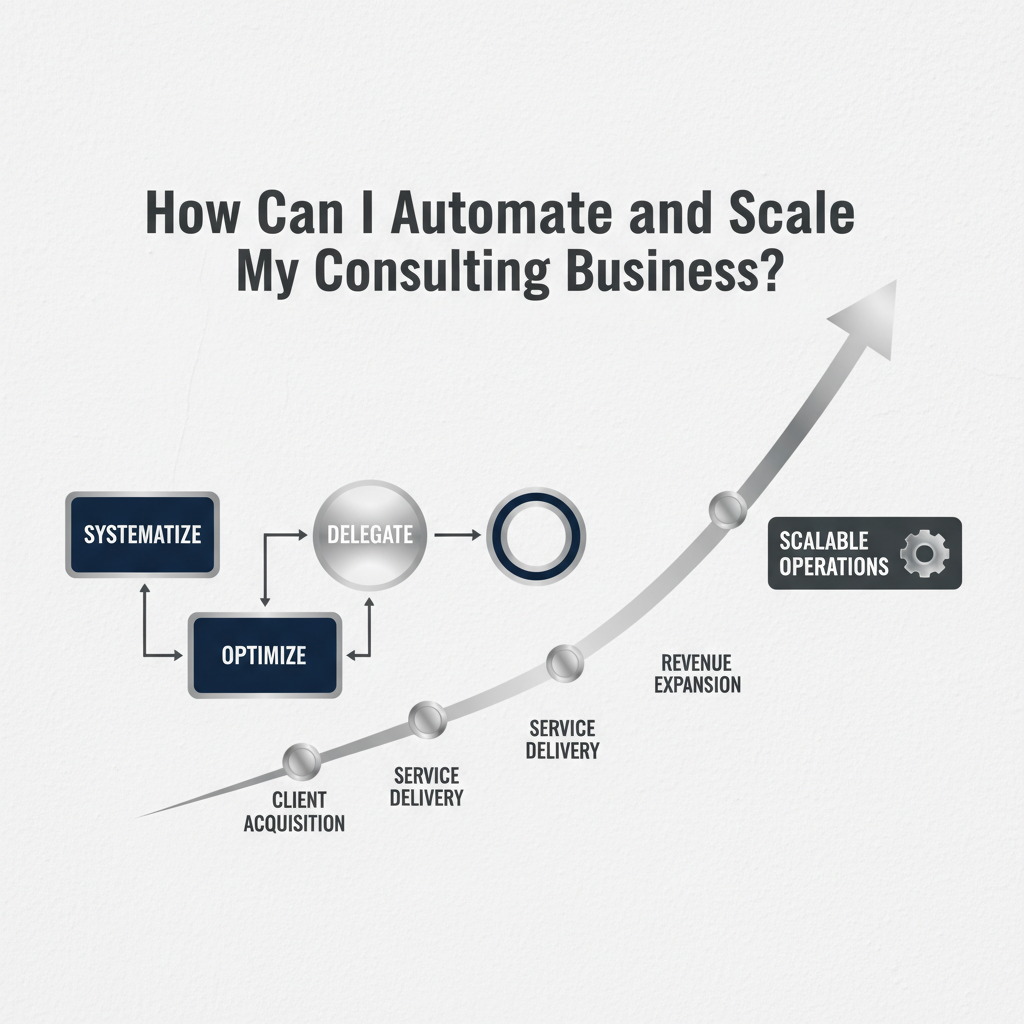
How Can I Automate and Scale My Consulting Business?
Step 16: Implement Business Automation Tools for Efficiency
To scale your consulting business, you need to work smarter, not just harder. Business automation is key to being more efficient and growing your business long-term. It frees you from repetitive tasks that take up too much time. This lets you focus on important client work and growing your business.
Many consultants get overwhelmed with admin work. Manual tasks like scheduling, invoicing, and email follow-ups can take hours out of your day. Automation changes how you handle this work. It helps you save time and make your process smoother without sacrificing quality.
Key Areas for Business Automation:
- Administrative Tasks: Automate appointment scheduling, email sequences, and reminder notifications.
- Marketing & Lead Generation: Set up automated sales funnels and lead nurturing sequences. Manage your social media automation for consistent content delivery.
- Client Management: Streamline proposals, contracts, and invoicing. This ensures a professional and consistent client experience.
- Data & Reporting: Automate data collection and report generation. Gain valuable insights into your small business growth.
Automated-Biz offers all-in-one online business solutions for consultants. We combine branding, website creation, and key automation tools like CRM systems and marketing platforms. Our platform brings all your work into one place. This helps turn scattered efforts into steady, organized growth.
Consider the impact on your revenue. Businesses that automate marketing processes see an average 14.5% increase in sales productivity [6].
How to Begin Automating Your Consulting Business:
- Identify Repetitive Tasks: List every task you do weekly that feels tedious or takes too much time. This could be anything from sending follow-up emails to updating spreadsheets.
- Prioritize for Impact: Focus on tasks that consume the most time or are critical for client satisfaction. Automating these first has the biggest impact.
- Choose Integrated Solutions: Opt for platforms like Automated-Biz. They offer integrated tools for small business marketing services and client management. This prevents disconnected systems.
- Start Small, Scale Up: Begin with one or two automation processes. This could be automating your email outreach or client booking. Then gradually expand to more complex workflows.
Using business automation helps you do more with less effort. It’s about building a consulting business that runs smoothly, even when you aren’t managing every single task by hand.
Step 17: Streamline Client Onboarding and Project Management
A smooth client onboarding process is the first step to a successful project. On the other hand, a messy start can cause frustration and make clients lose trust. A simple onboarding process and good project management are key to getting repeat clients and building a successful business.
Many consultants provide an inconsistent experience for new clients. This is often because of manual onboarding and reacting to problems as they happen. Using technology can fix this. It helps you move from a messy process to a smooth, automated one.
Key Elements of Streamlined Client Onboarding:
- Automated Welcome Sequences: Send automated welcome emails, provide access to client portals, and share essential resources. This ensures clients feel valued and informed from day one.
- Digital Contracts & E-Signatures: Speed up the legal process with automated contract generation and secure e-signature solutions.
- Automated Intake Forms: Collect necessary client information efficiently. Use smart forms that guide clients through the required data points.
- Project Kick-off Automation: Automatically create project folders, assign initial tasks, and schedule kick-off meetings.
Good project management keeps your projects on time and on budget while delivering great results. It helps you handle several clients and deadlines at once. This is essential for growing your business and keeping your quality of service high.
Benefits of Automated Onboarding & Project Management:
| Feature | Manual Process Challenges | Automated Process Benefits |
|---|---|---|
| Onboarding | Slow, inconsistent, error-prone, poor first impression. | Fast, professional, consistent, enhanced client satisfaction. |
| Communication | Missed updates, unclear expectations, endless emails. | Centralized communication, automated reminders, clear progress tracking. |
| Task Management | Disorganized, deadlines missed, lack of accountability. | Clear task assignments, progress monitoring, timely completion. |
| Scalability | Difficult to take on more clients without sacrificing quality. | Easily manage increased client load, scalable processes. |
Automated-Biz provides tools to build custom automated sales funnels. These funnels can also nurture leads and onboard new clients. Our platform lets you create professional client portals where you can manage project timelines, tasks, and communication in one place. This makes finding and keeping clients much easier.
Step 18: Manage Your Online Reputation to Build Trust
Today, your online reputation is your most valuable asset. It has a direct impact on your ability to find new clients. Potential clients will likely look you up online before they contact you. What they find will determine if they trust you enough to hire you.
Many consultants don’t actively manage their online reputation. Instead, they only react to feedback. This can leave them in a bad position. It’s important to look professional and trustworthy online from the very beginning. This helps you build a good name and get noticed in your field.
Key Aspects of Online Reputation Management:
- Encourage Positive Reviews: Actively encourage satisfied clients to leave testimonials and reviews on relevant platforms. These could be Google My Business, LinkedIn, or industry-specific sites.
- Monitor Online Mentions: Stay aware of what’s being said about your consulting business across the web. This includes social media and review sites.
- Respond Professionally: Address all feedback, positive or negative, promptly and professionally. Show that you value client input and are committed to excellent service.
- Showcase Success Stories: Feature client testimonials, case studies, and positive reviews prominently on your website and social media channels.
- Maintain Professional Profiles: Ensure your LinkedIn profile, website, and other online presences are consistent, up-to-date, and reflect your expert knowledge.
A strong online reputation makes you look like an expert in your field. It helps you stand out from the competition. It also has a big effect on your SEO rankings, which brings more visitors to your site. Studies show that 93% of consumers read online reviews before purchasing from a local business [7].
Automated-Biz offers tools for online reputation management. Our platform helps you collect, monitor, and respond to reviews all in one place. We also help with professional branding and website design to make sure your online presence is consistent and trustworthy. When you actively manage your reputation, you build client trust and create a steady stream of new business.
Frequently Asked Questions
How much money do I need to start a consulting business?
Starting a consulting business can be surprisingly affordable. The amount you need depends on your goals. Many consultants start with very little money, relying on their skills.
For a solo consultant working from home, expenses are usually low. You might need a professional website and some basic business software. A good online presence is key to building trust.
However, if you want to grow fast or rent an office, your costs will be higher. Investing in tools to automate your business and manage clients is important from the start.
Key areas to invest in at the beginning include:
- Business Registration and Legal Fees: This covers setting up an LLC or other business structure, plus any needed permits.
- Branding and Website Creation: A professional brand and a great website are must-haves. Automated-Biz offers integrated branding and website solutions to make this step easier.
- Essential Software and Tools: This includes software for project management, communication, and tools for automated sales and client follow-ups.
- Marketing and Lead Generation: This could be early outreach, online ads, or networking. You need good ways to find new clients from day one.
- Professional Development: Always keep learning to make sure your skills stay current and valuable.
- Insurance: Professional liability insurance gives you important protection.
You can start with less than $1,000 if you keep things simple. However, setting aside $2,000-$5,000 for a more professional launch, including a strong website and marketing, is a smart choice for growing your business.
Focus on smart spending that helps you work more efficiently and find clients. Automated-Biz provides the tools to build your online presence and automate tasks, helping you get more from your budget and grow faster.
What are the 7 C’s of consulting?
The “7 C’s of Consulting” are a set of core principles for working well with clients and delivering successful projects. Following these principles makes you a better consultant and helps you get great results [8].
These principles help guide you in solving problems and building client relationships:
- Client: Always focus on understanding what your client needs and wants to achieve. Knowing their challenges is essential.
- Clarity: Make sure everyone understands the project goals and what you will deliver. Confusion can slow things down.
- Cause: Find the real cause of a problem, not just the surface issues. This helps you provide solutions that last.
- Creativity: Offer new and smart solutions. Avoid generic advice and customize your approach for each client.
- Communication: Keep your communication open, honest, and frequent. This builds trust and keeps the project on track.
- Commitment: Be dedicated to helping your client succeed. Your commitment leads to better work and better results.
- Change: Help your client make the changes needed to use your solutions. This makes sure the new methods stick.
Using these C’s in your work will improve how you serve clients. Automated-Biz gives you tools for easy communication, organized project management, and a professional platform that shows your commitment and clarity to clients.
Are consulting firms profitable?
Yes, consulting firms can be very profitable. They often have higher profit margins than businesses in other fields. This is mainly because they sell valuable knowledge and expert skills.
The average profit margin for management consulting firms can be 15% to 25%, and some smaller, specialized firms earn even more [9]. This makes consulting a great business to start.
Key reasons for high profits include:
- High-Value Services: Consultants charge higher rates for their special knowledge and problem-solving skills.
- Low Overhead Costs: Many firms have few physical costs, especially if they work remotely and use online business tools.
- Easy to Grow: Once you have good systems, it’s easier to grow a consulting business.
- Working Smart: Using business automation, like automated sales funnels, makes your work more efficient.
- Strong Online Presence: A professional website and smart marketing help attract clients willing to pay more.
- Keeping Clients: Building good client relationships leads to repeat business and referrals.
To make the most profit, focus on a specific area, create expert services, and use tools to automate your work. Automated-Biz offers an all-in-one platform for branding, websites, client communication, and managing your online reputation. These tools are key for small business growth and building a profitable consulting business.
Is $100 an hour good for consulting?
$100 an hour can be a good starting rate for new consultants, especially when you’re building a portfolio of your work. But whether it’s a “good” rate really depends on your experience, specialty, location, and the results you provide.
For new or general consultants, $100/hour can be a reasonable price. This rate helps you get experience and improve your methods. It can provide a good income as you find more clients.
However, many experienced or specialized consultants charge much more. Some charge $250, $500, or even over $1,000 per hour [10]. This reflects their deep knowledge, history of success, and the great value they bring to clients.
Factors that affect your hourly rate:
- Your Niche: If you work in a highly specialized or high-demand area, you can often charge more.
- Experience and Credentials: A strong background and certifications make clients see you as more valuable.
- Value Delivered: Focus on the results you deliver. Solving big problems means you can charge a higher rate.
- Location: Rates can be different depending on where you and your clients are.
- Overhead Costs: Remember to include your business costs, like marketing and software.
- Online Presence: A professional website and a good online reputation help you charge more.
As you get more experience and become known for getting results, you should plan to raise your rates. Always show clients the positive changes you can make for them. Automated-Biz helps you build a professional online presence and find clients, allowing you to prove your value and earn higher fees.
Sources
- https://www.cbinsights.com/research/startup-failure-reasons-top/
- https://www.sba.gov/business-guide/start-your-business/choose-business-structure
- https://www.irs.gov/businesses/small-businesses-self-employed/how-to-apply-for-an-ein
- https://www.forbes.com/sites/forbesagencycouncil/2021/03/17/the-importance-of-branding-in-business/?sh=248067b8417c
- https://www.proposify.com/blog/proposal-statistics
- https://blog.hubspot.com/sales/sales-productivity-statistics
- https://www.brightlocal.com/research/local-consumer-review-survey/
- https://www.consulting.com/7cs-of-consulting
- https://www.statista.com/statistics/1238491/average-operating-margin-consulting-services-worldwide/
- https://www.consulting.com/consulting-fees
Leave a Reply