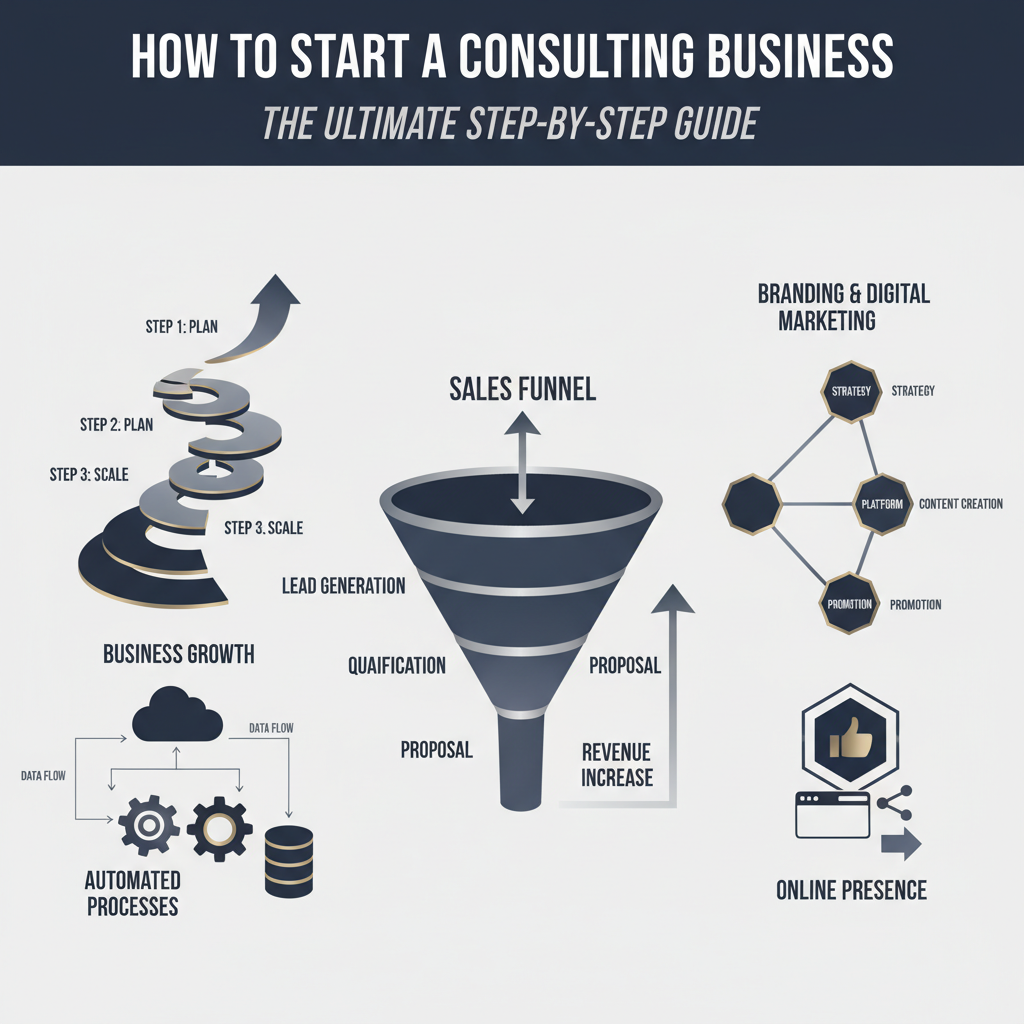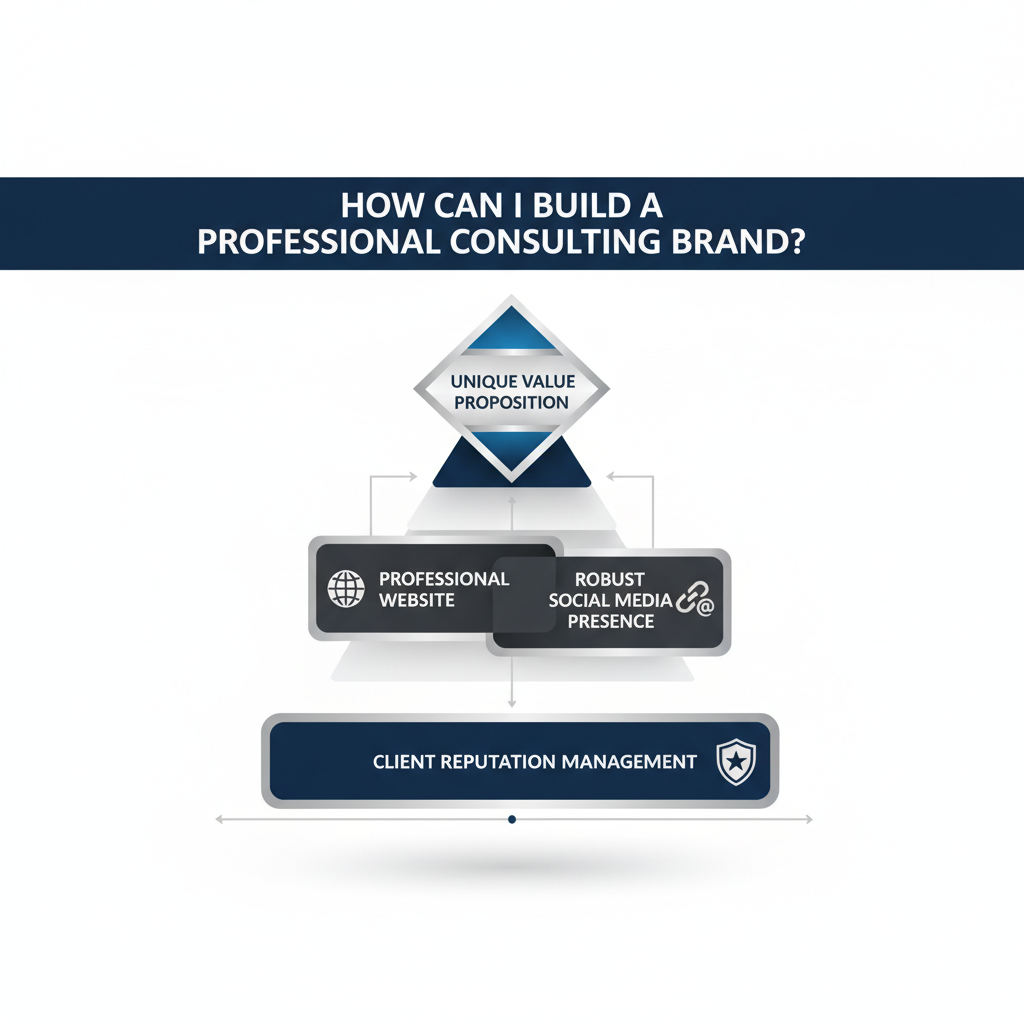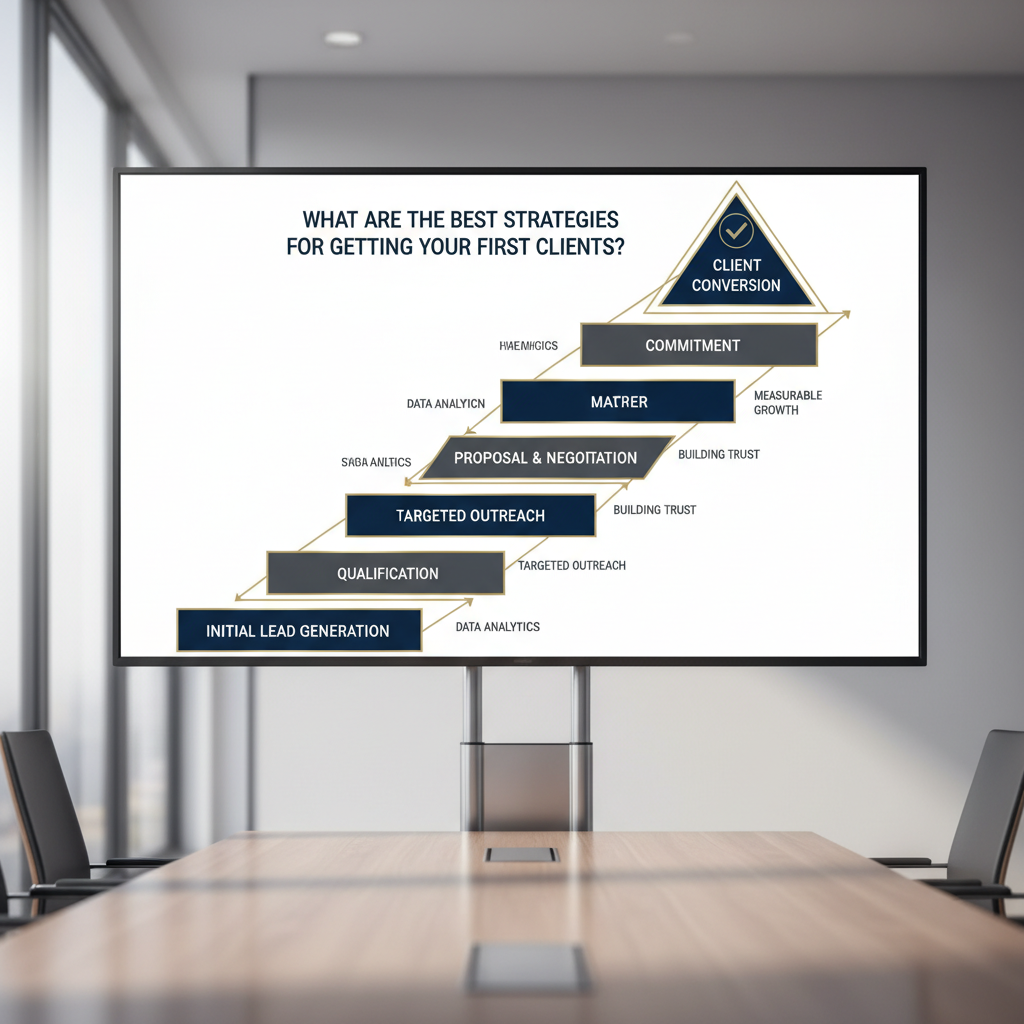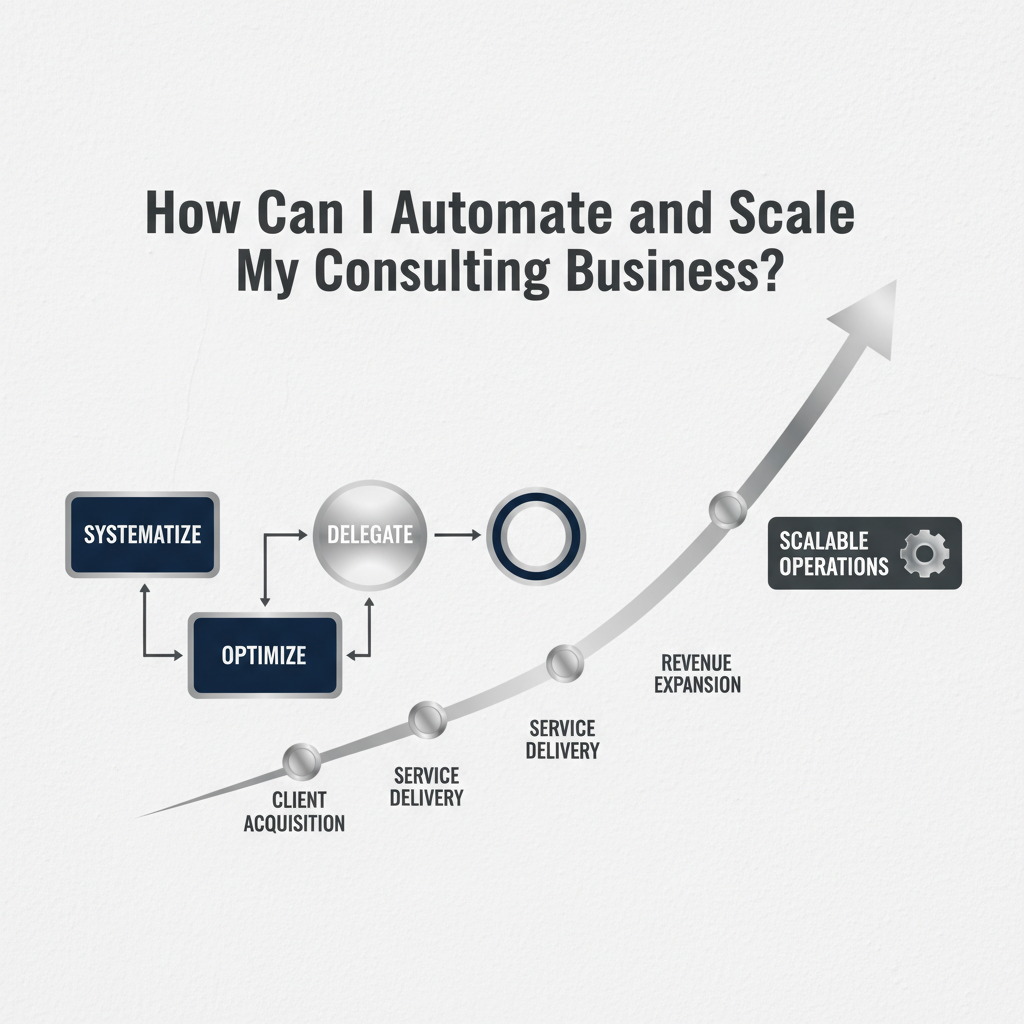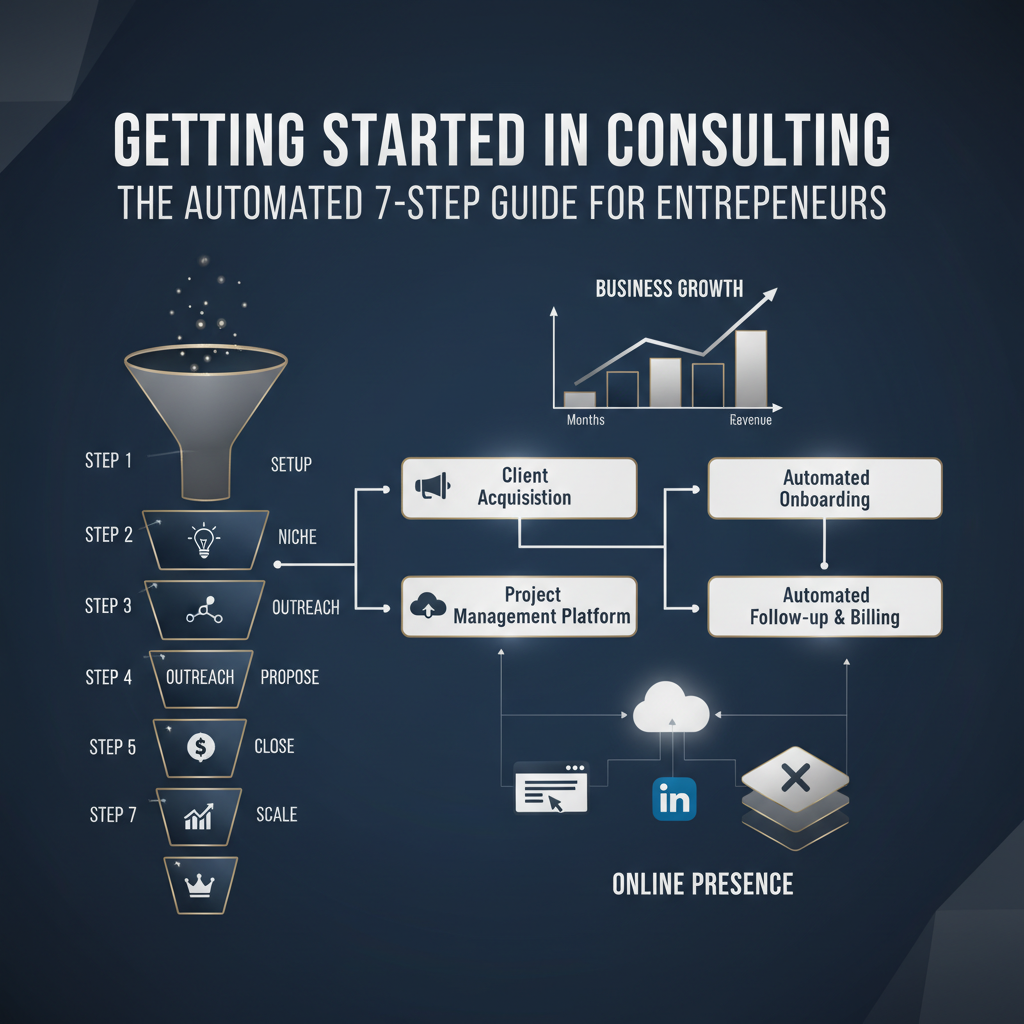
Category: Starting a Consulting Business

  • Consulting Packages: The Ultimate Guide to Creating & Pricing Your Offers

    Consulting Packages: The Ultimate Guide to Creating & Pricing Your Offers

    Consulting packages are pre-defined service offerings sold at a fixed price to solve specific client needs. They help consultants streamline their sales process, provide clear deliverables, and create predictable revenue by bundling expertise in areas like business automation, marketing, and growth strategy.

    Are you an entrepreneur or small business owner struggling with custom client proposals and unpredictable project scopes? It’s hard to grow a business online when you feel overwhelmed with marketing and operations tasks. You need to find steady leads and maintain a professional online presence at the same time. The challenge isn’t just delivering great work—it’s packaging your expertise in a clear, scalable, and profitable way. This common problem can prevent you from achieving the sustainable small business growth you want.

    This is where well-designed consulting packages become a powerful solution. Instead of billing by the hour or for one-off projects, bundled services allow you to offer integrated online business solutions. This approach attracts high-value clients and simplifies your sales process. At Automated-Biz, we understand these challenges. As your partner, we provide the expert guidance and business automation tools to turn your manual processes into efficient workflows. This helps you deliver quality work while you scale your business faster.

    This guide gives you practical steps to create and price effective business consulting packages. We’ll show you how to define your offers, calculate value-based prices, and use digital marketing systems like Automated Sales Funnels and social media to market them. You’ll learn how to go from inconsistent leads to a steady flow of clients, building an online presence that creates trust and drives revenue. Let’s explore why consulting packages are an essential step for truly scalable business growth.

    Why Do You Need Consulting Packages to Scale Your Business?

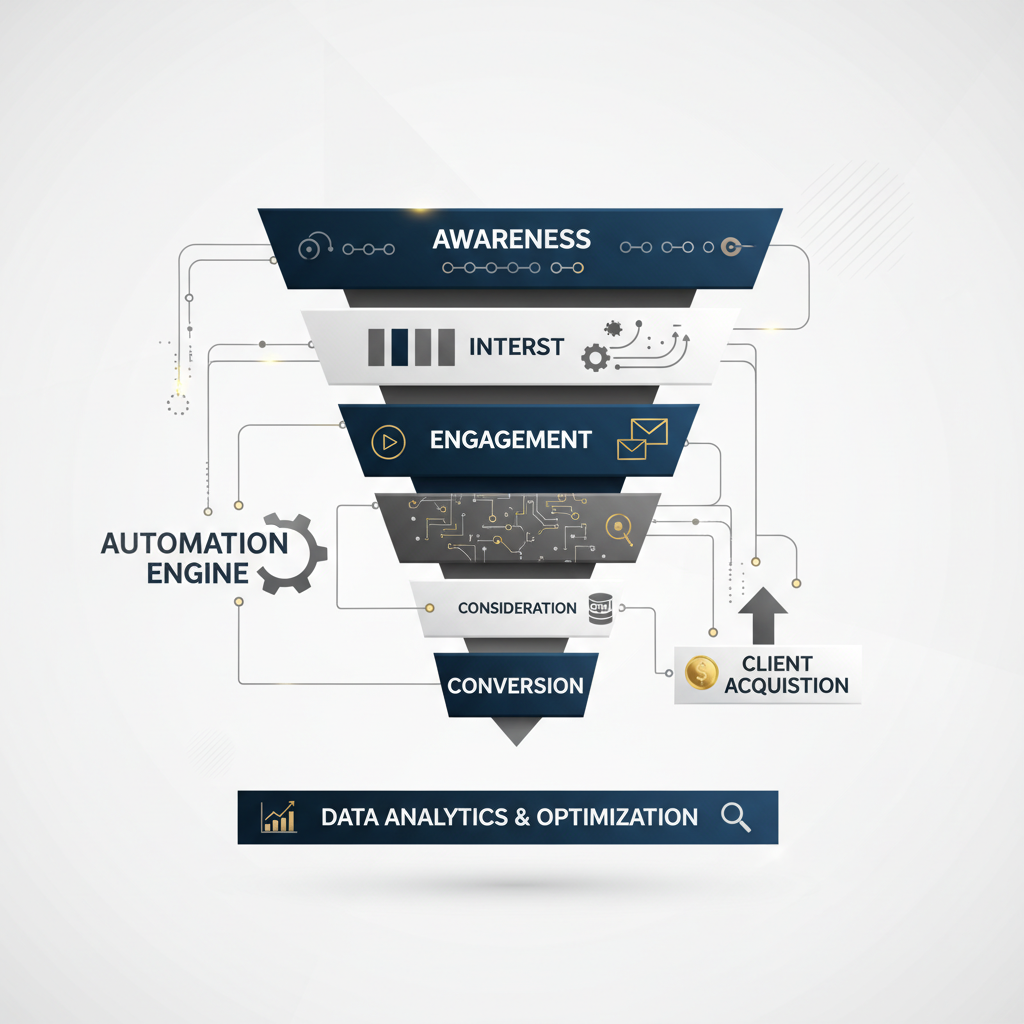
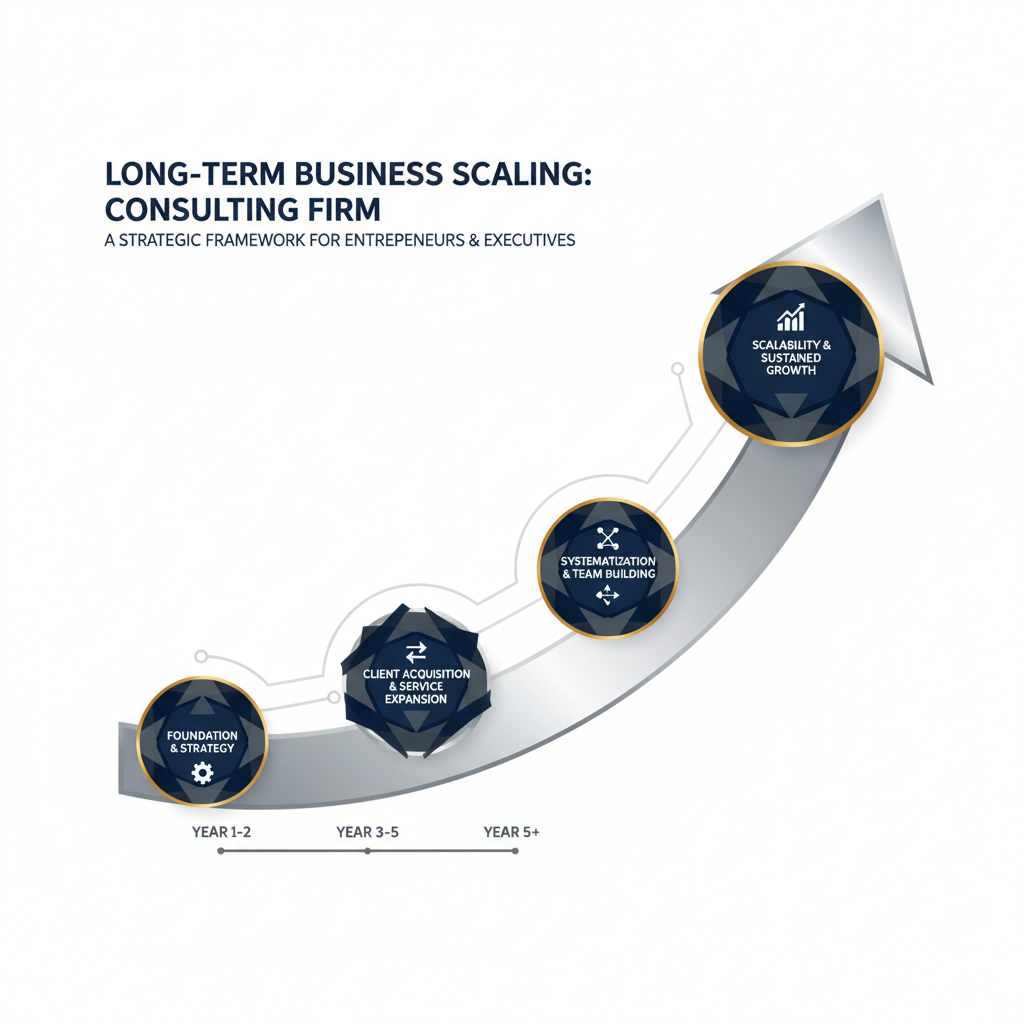
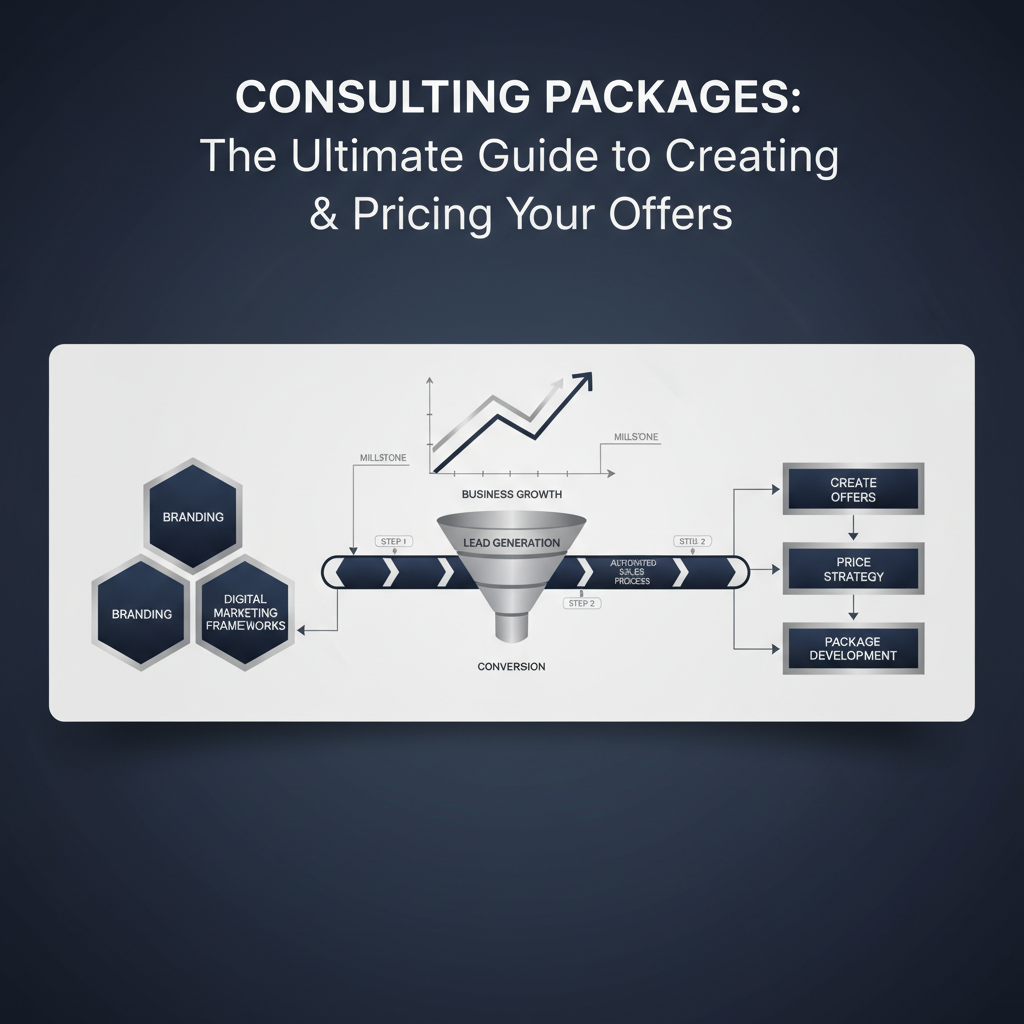
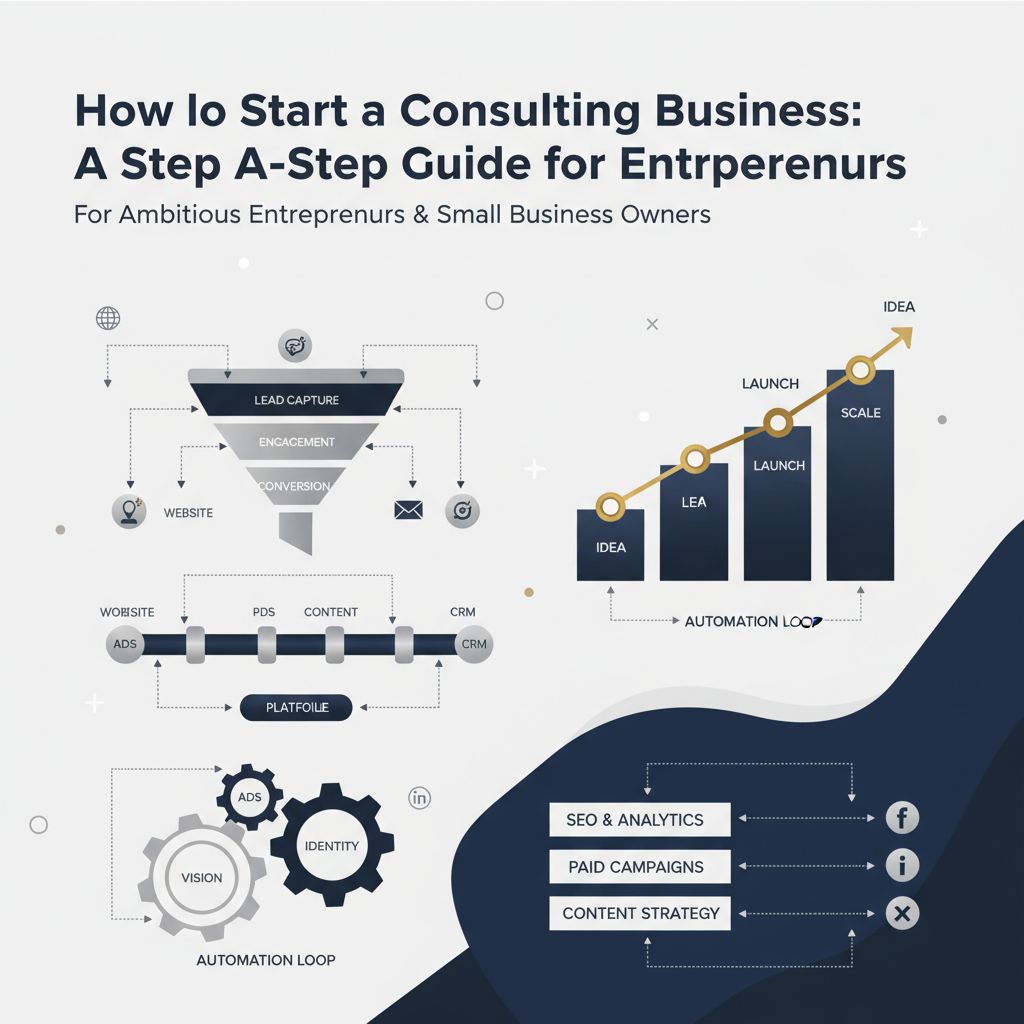
    An abstract infographic illustrating business scaling and growth through a minimalist, ascending chart or pipeline, using professional colors.
    An executive-level infographic. A minimalist, vector-based abstract business visualization showing upward growth and scaling. Feature a dynamic, ascending bar chart or a clean pipeline visual with multiple stages, indicating progression and expansion. Use geometric shapes and subtle gradients in a color palette of deep navy, white, charcoal, with refined silver or gold highlights. The layout should have ample negative space for implied labels or category indicators, emphasizing clarity, analytical representation, and premium business branding. No human figures or cartoon elements.

    To scale your business, you need smart strategies. That means moving beyond the old way of delivering services. Consulting packages offer a clear, effective path to growth. They change how you work, help you attract better clients, and create a steady income. This approach is key for entrepreneurs, small business owners, and startups ready for serious expansion.

    Move Beyond Trading Time for Money

    Many service providers get trapped billing by the hour. When you trade time directly for money, you cap how much you can earn. This model holds back your growth because when you’re busy, you can’t take on more clients without working around the clock.

    Consulting packages change this approach. They focus on delivering results and value, not just hours. Instead of selling your time, you sell solutions. This lets you set prices based on the outcome you provide for your clients. Automated-Biz helps you streamline this process. Our tools make it easier to deliver more value, so you can serve more clients without working more hours. You’ll move from manual tasks to smart business automation. Switching to value-based pricing can significantly boost your profits [1].

    • Focus on Value: Price for results, not just hours.
    • Increase Capacity: Serve more clients without burnout.
    • Achieve Scalability: Grow your income without working more hours.
    • Leverage Automation: Use automation to deliver your services efficiently.

    Eliminate Scope Creep and Unclear Deliverables

    Unclear project boundaries are a big challenge for consultants. They often lead to “scope creep,” where projects grow beyond the original agreement. This can leave clients unhappy and consultants burnt out. It wastes your valuable time and resources, and it hurts your profits.

    Consulting packages fix this problem. They come with clearly defined deliverables, so each package outlines specific services, timelines, and expected results. This clarity helps both you and your clients by setting clear expectations from the start. You know exactly what you need to do, and your client knows exactly what they will get.

    Automated-Biz helps you manage these well-defined projects. Our all-in-one online business tools ensure everything runs smoothly, including Lead Generation Strategies and client communication. Since scope creep affects 52% of projects worldwide, clear project details are essential [2]. Defined packages protect your business by keeping you focused and profitable. They turn chaotic projects into organized, successful ones.

    • Clear Boundaries: Prevent projects from growing out of control.
    • Specific Outcomes: Outline exactly what clients will receive.
    • Reduced Disputes: Reduce misunderstandings and disagreements.
    • Time Protection: Protect your time and resources.

    Create Predictable, Recurring Revenue Streams

    Unpredictable income is a major source of stress for small business owners. When you rely on one-off projects, it’s hard to plan for the future. You’re forced into a constant search for new clients, which takes time away from growing your business.

    Consulting packages are the solution to this problem. They help you create a predictable income. You can offer different packages, from one-time setups to ongoing support. Many packages can be structured with upfront payments or monthly retainers, giving you financial stability. They also help build long-term client relationships, as happy clients are more likely to buy again or sign up for ongoing services. Businesses with steady, recurring income are often more valuable and grow faster [3].

    Automated-Biz supports this model with powerful tools. Our automated sales funnels guide potential customers until they are ready to buy. We help turn interested people into loyal clients. With our help, you can build strong digital marketing systems that bring in new clients consistently. This shifts your business from chasing one-off sales to enjoying stable, long-term growth.

    • Financial Stability: Improve your cash flow and plan ahead.
    • Repeat Clients: Encourage repeat business and long-term clients.
    • Scalable Growth: Build a foundation for steady income growth.
    • Automated Nurturing: Use automation to turn leads into future clients.

    What Are the Key Components of a Successful Consulting Package?

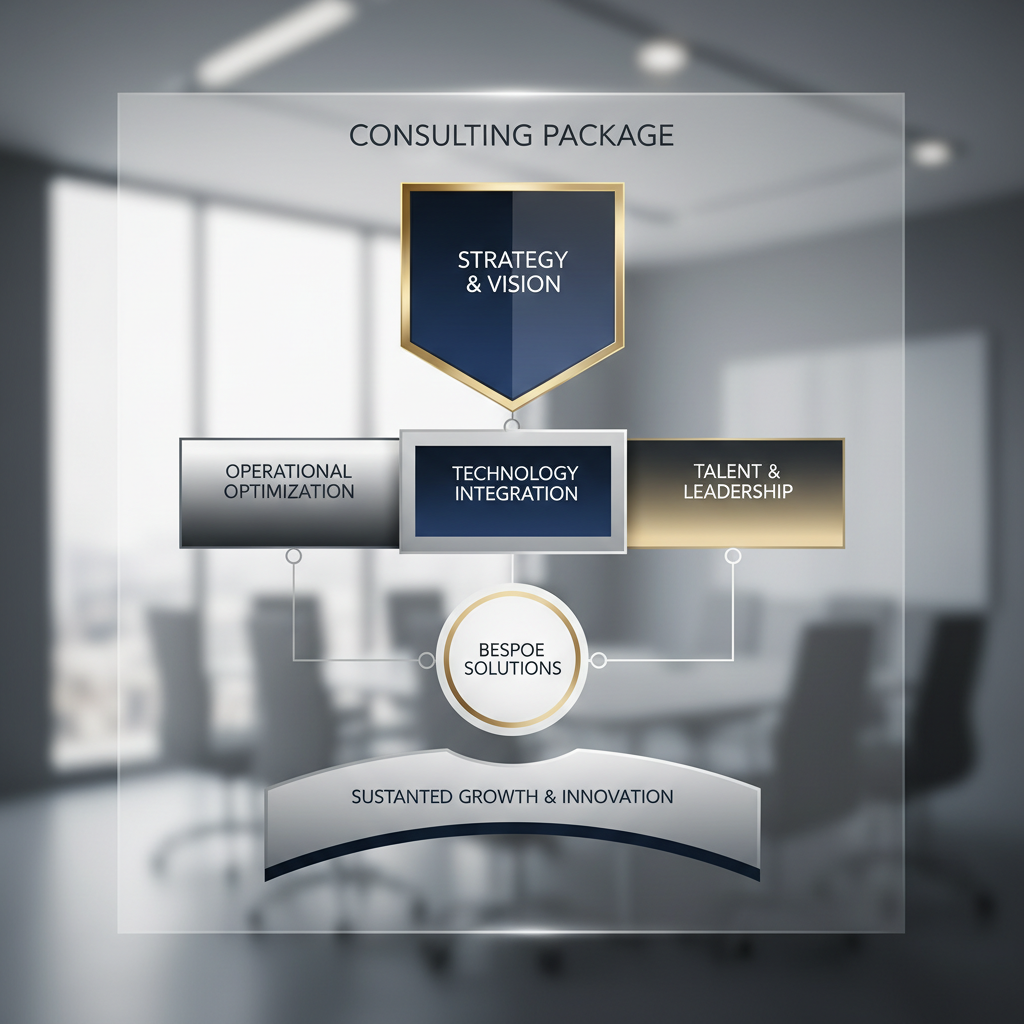
    A professional infographic outlining the essential, interconnected components of a successful consulting package using a minimalist, layered framework.
    An executive-level infographic. A minimalist, vector-based abstract business visualization depicting the key components of a successful consulting package. Design a structured, layered framework or a clean hierarchical system with distinct, interconnected geometric shapes. Each shape represents a core component, utilizing subtle gradients and metallic accents in deep navy, white, charcoal, with silver or gold. The visual should convey a sense of integration and completeness, with clear visual hierarchy and negative space for conceptual labels. No human figures or cartoon elements.

    Define Your Niche and Ideal Client Profile

    To create successful consulting packages, you need to be clear. Start by defining your niche and ideal client. This first step helps you avoid creating offers that are too broad and don’t sell.

    When you specialize, you can speak directly to a client’s specific problems. This makes you the go-to expert. Research shows that businesses with a clear niche grow faster and are more profitable [4].

    Ask yourself these questions to find your ideal client:

    • What industry or business size do you serve best?
    • What common challenges do they face? (e.g., struggling to grow online, overwhelmed with marketing tasks)
    • How do your skills solve their biggest problems?
    • What are their goals for growing their business and working more efficiently?

    Once you know your ideal client, you can tailor your services directly to them. This makes your packages much more appealing. Your marketing will attract the right people who are already looking for your help.

    Identify Your Core Services and Tangible Deliverables

    After you define your niche, list the services you’ll offer. Focus on the real results clients will get. Vague promises lead to unhappy clients. Instead, list clear, measurable deliverables. This builds trust and shows clients exactly what they’re paying for.

    Your services should solve common business problems. Many entrepreneurs need help generating leads, automating tasks, and looking professional online. Automated-Biz gives you the tools to deliver these solutions.

    Think about what your clients will actually receive in your packages:

    • Branding and Website Creation: A professional logo, custom website, and clear brand messaging.
    • Automated Sales Funnels: Lead magnet creation, email sequences, and landing page design to bring in clients predictably.
    • Lead Generation Strategies: Setting up targeted ad campaigns or content plans to attract customers.
    • Social Media Automation: Content calendars, scheduling tools, and strategies to grow an online presence.
    • Online Reputation Management: Systems for getting good reviews and improving online credibility.
    • Business Process Automation: Simpler workflows for onboarding clients, managing tasks, or creating reports.

    Every part of your package should help your client succeed. Clearly explain the change they’ll see. Show them how they’ll go from manual, messy work to smooth, automated systems.

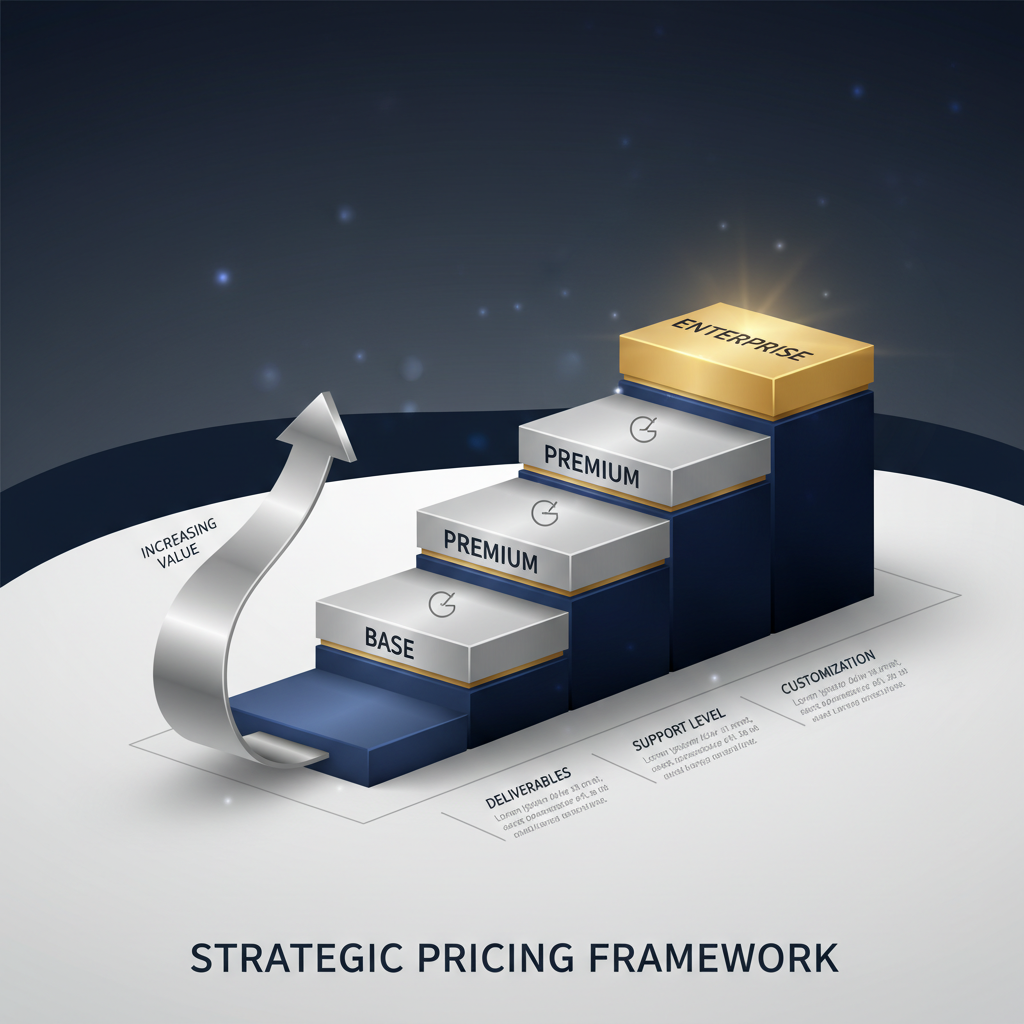
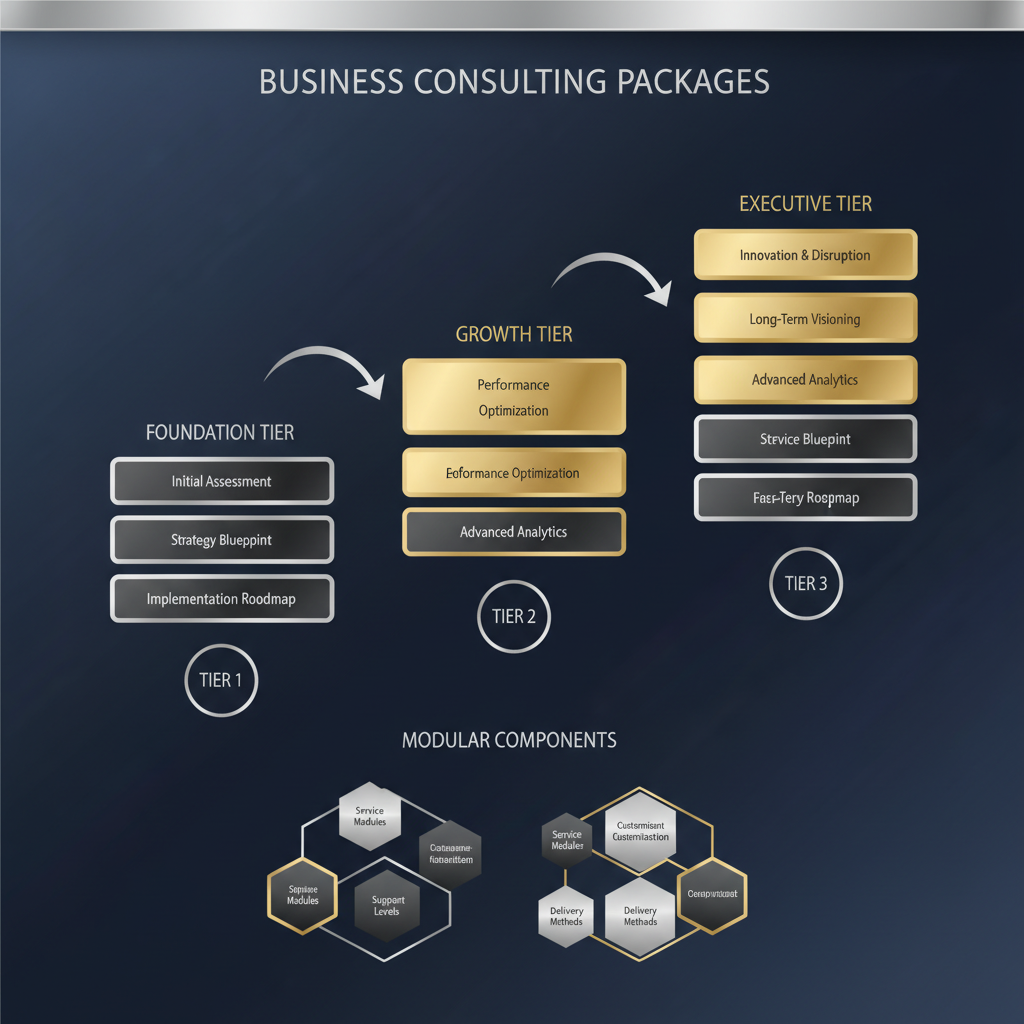
    Structure Your Packages into Tiers (e.g., Foundation, Growth, Scale)

    Offering packages in tiers gives clients more flexibility. It lets you serve different needs and budgets, which helps you attract more clients. It also gives them a clear way to upgrade as their business grows. Best of all, clients can choose the package that fits their current problems and goals.

    You can use common tier names like Foundation, Growth, and Scale, or create your own. Each tier should build on the last, offering more value as the price increases.

    Here’s how you might structure your consulting packages:

    • Foundation Package: Focuses on the essentials. This could include basic branding, a starter website, and social media setup. It’s perfect for new businesses that need a professional online start.
    • Growth Package: Builds on the first tier. It adds services like automated sales funnels and lead generation strategies. This tier is for businesses ready to find more leads and grow.
    • Scale Package: All-in-one solutions. This could include advanced process automation, reputation management, and one-on-one consulting. It’s designed for established businesses that want to be more efficient and make more money.

    Using tiers helps you meet clients at every stage of their business. You can guide them from getting inconsistent results to having predictable systems. This approach also shows off everything you can do with Automated-Biz to help businesses scale.

    Incorporate High-Value Bonuses and Add-Ons

    Make your packages more attractive with high-value bonuses and add-ons. They make your offer seem more valuable and help you stand out from competitors. Choose bonuses that go well with your main services but don’t create a lot of extra work for you.

    Bonuses are usually included for free in a package. Add-ons are extra services clients can buy. Both can increase your sales and make clients happier. They show you’re committed to helping their business grow in every way.

    Consider these high-value additions:

    • Complimentary Audit: A free review of their website, social media, or marketing. This gives them valuable insights right away.
    • Exclusive Resource Library: Access to templates, guides, or videos that help with things like automation or finding leads.
    • One-on-One Strategy Session: A special one-on-one call to give them personal advice.
    • Priority Support: Faster replies to their questions or direct access to an expert for a short time.
    • Online Review Management Setup: A system to help them get more positive reviews and look more credible online.
    • Custom Reporting Dashboards: Reports that automatically track key numbers, like how many leads they get or who visits their website.

    These extras can completely change your offer. It goes from a simple service to a complete, expert solution. They also reinforce that Automated-Biz is the platform that helps businesses run well and grow faster.

    How Do You Price Your Business Consulting Packages?

    A minimalist infographic visualizing strategic pricing models and tiered options for business consulting packages, featuring geometric shapes.
    An executive-level infographic. A minimalist, vector-based abstract business visualization illustrating strategic pricing for consulting packages. Show a tiered pricing model or a value-based pricing framework using clean, geometric blocks or ascending steps. Incorporate subtle gradients and metallic silver or gold accents against a deep navy, white, and charcoal background. The design should convey value, structure, and strategic decision-making, with open areas for conceptual labels and a focus on clarity and premium business branding. No human figures or cartoon elements.

    Understanding Common Pricing Models

    Setting the right price for your consulting packages is crucial. It affects your profit and keeps clients happy. Many entrepreneurs struggle with this. Understanding common pricing models will help you create effective offers.

    There are several ways to price your services. Each has its pros and cons. We recommend models that match the value and transformation you provide.

    • Hourly Rate: This is a simple model. You charge clients for every hour you work.
      • Benefit: It’s easy to understand and ensures you get paid for your time.
      • Drawback: It limits your earning potential and can penalize you for being efficient. Clients may see it as just trading time for money, which can lead to budget concerns.
    • Project-Based/Fixed Fee: You set one price for a whole project. This price covers specific deliverables and outcomes.
      • Benefit: Clients know the total cost upfront. It encourages efficiency and lets you price based on value, not hours. It’s great for packages like “branding and website creation.”
      • Drawback: You need a very clear scope to avoid doing extra work for free. If the project grows, you might end up underpricing your effort.
    • Value-Based Pricing: This model prices your services based on the value they give the client. It focuses on their return on investment (ROI).
      • Benefit: This model offers the highest earning potential. It links your fee directly to the client’s success, like more revenue from “business automation.”
      • Drawback: The value can be hard to calculate at first. You must clearly communicate the expected benefits.
    • Retainer Model: Clients pay you a recurring fee for ongoing access to your services or for a set amount of work each month.
      • Benefit: It creates a predictable, steady income. It also helps build long-term client relationships for “small business growth.”
      • Drawback: You must deliver consistent value and have a clear service agreement.

    For steady growth and happy clients, we suggest using project-based and value-based pricing. These models help you package your expertise and focus on results, not hours.

    Calculating Your Rates Based on Value, Not Hours

    Switching from an hourly mindset to value-based pricing is a game-changer. It lets you connect your price to the measurable results you deliver. This works especially well for services that provide a big return on investment (ROI), like “automated sales funnels” or “business process automation.”

    Think about the real benefits you offer. How much new revenue will your “lead generation strategies” create? How much time will your “productivity workflows” save your clients? In fact, businesses that focus on value often see higher profit margins [5].

    Follow these steps to set value-driven rates:

    1. Identify Client Pain Points: What specific problems do your clients have? Are they struggling to grow online? Are they overwhelmed with marketing? Do they need consistent leads?
    2. Quantify the Solution’s Impact: Estimate the dollar value of solving their problems. For example, if your “social media automation” saves a client 10 hours a week and their time is worth $100/hour, that’s $1,000 in weekly savings.
    3. Determine Your Value Proposition: What unique change do you provide? Automated-Biz helps entrepreneurs switch from manual tasks to smooth, automated systems. This greatly improves their profits.
    4. Factor in Your Expertise and Tools: Your expertise and tools are valuable. This includes specialized knowledge and integrated “online business solutions” from a platform like Automated-Biz. It also covers expert support for things like “branding and website creation” or “online reputation management.”
    5. Set Your Price: Choose a price that is a fraction of the total value your client gets. This ensures they see a clear return on their investment (ROI) in your “consulting packages.” A good price is fair to you both. It lets you make a profit while your client sees major benefits.

    This approach moves you away from charging by the hour. It positions you as a strategic partner. You’re focused on delivering results that help clients grow smarter and faster.

    How to Clearly Present Pricing to Potential Clients

    Presenting your prices with clarity and confidence is key. Potential clients need to know exactly what they’re getting. They need to see the value in your “business consulting packages.” Be clear to build trust and avoid sticker shock.

    Here’s how to present your pricing well:

    • Use Tiered Packages: Offer your services in clear tiers. For example, you could have a “Starter” package, a “Growth” package, and a “Scale” package. This gives clients choices that fit their needs and budget.
    • Outline Deliverables Clearly: For each package, list everything you will deliver. Be specific. Mention things like a custom website design, an automated email sequence, a social media content calendar, or a set number of coaching calls.
    • Highlight Outcomes and Benefits: Don’t just list features; explain the results. How will your “small business marketing services” increase their leads? How will “business automation” save them time? Focus on the results they care about, like saving time or increasing sales.
    • Emphasize the Value Proposition: Remind them of the ROI. Show how investing in your package—supported by tools from Automated-Biz—leads to a professional online presence, more leads, and a business that can grow easily.
    • Provide a Professional Proposal: Put your pricing in a professional proposal. The proposal should outline the client’s problem, your solution, the cost, the timeline, and the expected results.
    • Address Potential Objections Proactively: Plan for common questions about cost. Frame your price as an investment in their success. Expert help avoids costly mistakes and speeds up growth. For instance, the cost of not automating can be significant, with businesses spending an average of 40% of their workday on manual, repetitive administrative tasks [6].

    Present your price as the solution to their challenges. Show them your packages are a smart investment that will help them reach their business goals.

    Structuring Payment Terms and Options

    Clear and flexible payment terms build trust and create a smooth financial relationship. Good payment options can attract more clients. They also protect your income from your “consulting packages.”

    Consider these strategies for payment terms:

    • Upfront Deposit: Ask for a deposit (like 25-50%) before you start. This shows the client is committed and covers your initial costs.
    • Milestone Payments: For big projects, split the fee into smaller payments tied to project milestones. For example, a client pays after you complete the “branding and website creation” and again after you set up their “automated sales funnels.”
    • Monthly Installments: Let clients pay in equal monthly installments. This makes bigger packages more affordable for small businesses.
    • Recurring Retainers: For ongoing “small business growth” support or “social media automation,” a fixed monthly retainer works best. This ensures predictable income for you and continuous support for the client.
    • Clear Invoicing: Use professional invoices. Clearly state the services provided, the amount due, and the payment deadline. Automated-Biz can help streamline this process.
    • Written Agreement/Contract: Always use a contract or written agreement. This protects both you and the client. It should outline what you’ll deliver, the timeline, payment dates, and your cancellation policy.
    • Accepted Payment Methods: Offer easy ways to pay, like bank transfers, credit cards, or online payment systems.

    By offering these options, you help clients manage their budgets and secure your own income. This approach shows you are professional and committed to a good partnership.

    What are some effective consulting packages examples?

    Good consulting packages help you attract the right clients. Instead of billing by the hour, they show the real results you provide. Here are four package examples that solve common problems for small businesses, focusing on growth and automation.

    Example 1: The Business Foundation Package

    This package is perfect for new businesses or anyone needing a fresh start. We build a strong, professional online presence so you can grow your business online. This package creates the foundation you need to succeed.

    What it includes:

    • Professional Branding & Logo Design: We create a memorable brand identity, including a custom logo.
    • Brand Style Guide: You get a guide for a consistent brand look and feel.
    • Custom Website Creation: We build a user-friendly website that works for you 24/7.
    • Basic Search Engine Optimization (SEO): We help people find you on search engines like Google.
    • Initial Content Strategy: We help you plan the first pieces of content for your new site.

    Outcomes delivered:

    • You get a professional online presence you can trust.
    • Your brand makes a great first impression.
    • You receive a working website ready to attract visitors.
    • You have a strong foundation for future marketing.

    Example 2: The Automated Sales Funnel Package

    This package is for entrepreneurs who need a steady flow of new leads. It simplifies how you find new clients. We help you automate the process to turn potential customers into paying customers, saving you time.

    What it includes:

    • Sales Funnel Strategy Session: We map out your customer’s journey from interested visitor to happy client.
    • High-Converting Landing Pages: We design and build pages that are effective at capturing leads.
    • Automated Email Nurturing Sequences: We create email campaigns that build trust and guide potential customers.
    • CRM Integration & Setup: We connect everything to your Customer Relationship Management (CRM) system so leads don’t get lost.
    • Lead Magnet Creation: We develop a free resource, like a guide or checklist, to attract your ideal audience.

    Outcomes delivered:

    • You get a reliable way to generate new leads.
    • Your sales process runs on autopilot.
    • You will see higher conversion rates.
    • You save time on manual follow-ups.

    Example 3: The Small Business Growth & Automation Package

    This package is for business owners who feel overwhelmed by marketing and daily tasks. We offer a complete solution to help you scale your business smarter, not harder. It combines key tools to automate your work and create a plan for growth.

    What it includes:

    • Comprehensive Growth Strategy: We create a custom plan to help your business grow smoothly.
    • Automated Sales Funnel Implementation (Advanced): We build a more advanced version of our automated sales funnel.
    • Social Media Automation & Content Planning: We help manage and schedule your social media to keep your audience engaged.
    • Email Marketing Automation: We set up advanced email campaigns to nurture clients and encourage repeat sales.
    • Online Reputation Management Setup: We set up tools to help you get and track customer reviews.
    • Analytics & Reporting Dashboard: You get clear reports to see how your marketing is performing.

    Outcomes delivered:

    • Your daily operations become smoother and more efficient.
    • You experience steady, consistent business growth.
    • Your marketing efforts work together automatically.
    • You gain expert help running your business online.

    Example 4: The Online Reputation Management Package

    Your online reputation is more important than ever. This package helps you build trust with customers and protect your good name. We use proven strategies and keep a close watch on what people are saying about you online.

    What it includes:

    • Review Generation Strategy: We set up a simple way to get more positive customer reviews.
    • Online Review Monitoring: We watch for new reviews and mentions on important websites.
    • Review Response Templates & Training: We teach you how to respond professionally to all feedback, good or bad.
    • Local SEO Optimization: We make sure your business information is correct and consistent online to improve local search results.
    • Crisis Management Consultation: We provide expert advice on how to handle negative feedback.

    Outcomes delivered:

    • You build more trust and credibility online.
    • You get more positive reviews. 85% of consumers trust online reviews as much as personal recommendations [7].
    • Your business looks more professional online.
    • New customers will feel confident choosing you.

    How Can You Market Your New Consulting Packages?

    Updating Your Website to Showcase Your Offers

    Your website is your digital storefront. It’s often the first impression a potential client has of your business. To market your new consulting packages well, your website must look polished and professional. This means more than just listing services—it means showing your offers in a way that attracts serious clients.

    Automated-Biz specializes in branding and website creation. We make sure your site not only looks great but also turns visitors into clients. Our work simplifies your path to business growth.

    Here’s how to update your website for the best results:

    • Create a page for each package: Each consulting package needs its own page. Clearly explain the problem it solves and the results clients can expect.
    • Highlight benefits, not just features: Clients want results. Focus on how your packages improve their business. Explain the time they’ll save, the revenue they’ll gain, or the processes you’ll streamline.
    • Use clear calls to action (CTAs): Guide visitors with direct CTAs. Tell them to “Book a Discovery Call” or “Download Our Package Guide.”
    • Incorporate social proof: Show off testimonials, case studies, and client logos. This builds trust by proving your results. In fact, 92% of consumers trust recommendations above all other forms of advertising [8].
    • Ensure your site is mobile-friendly: Many clients will visit your site on their phones. It must work perfectly on any device.
    • Optimize for search engines (SEO): Use keywords like “business consulting packages” and “small business growth strategies.” This helps clients find you through search engines like Google.

    Creating Content That Attracts High-Intent Leads

    Content marketing is a great way to generate leads. It shows you’re an expert and attracts clients who are looking for solutions. When your content speaks to your ideal client’s problems, it presents your packages as the perfect answer. This approach is key for a steady stream of leads.

    Automated-Biz helps you create a content plan that brings in new clients. We focus on content that drives action, making your marketing efforts both effective and easy to track.

    Consider these content ideas:

    • Problem-solution blog posts: Write articles about common problems your audience faces. Then, show how your consulting packages can solve them.
    • Expert guides and whitepapers: Offer detailed guides in exchange for an email address. This shows your expertise and helps you collect contact information for follow-up.
    • Webinars and workshops: Host online events to share valuable insights and showcase your packages. This is a great way to connect directly with potential clients.
    • Case studies: Share client success stories. Explain the problem they had, how you helped, and the results they got. This proves the value of your services.
    • Video content: Create short, interesting videos about your package benefits or share client testimonials. Video is a powerful way to boost engagement.
    • SEO optimization: Use specific phrases your ideal clients are searching for, like “online business solutions.” This helps more people find you online.

    Leveraging Social Media Automation to Promote Your Services

    Social media is essential for reaching your audience, but managing it takes time. Automation is the key to promoting your consulting packages efficiently. It helps you maintain a consistent presence online without getting overwhelmed.

    Automated-Biz offers tools to manage and automate your social media. We make it easier to reach and connect with your audience. This frees you up to focus on your clients.

    Use these strategies for effective social media marketing:

    • Schedule posts in advance: Use automation tools to plan your content for weeks or even months. This ensures your packages are promoted consistently.
    • Repurpose content: Turn a blog post into several social media updates. Create a graphic from a client testimonial. Get more value from every piece of content.
    • Engage with your audience: Since automation saves you time, you can focus on real conversations. Respond to comments and join relevant discussions.
    • Run targeted ads: Use social media ads to reach people interested in small business growth. Send them directly to your package pages.
    • Utilize diverse formats: Share a mix of images, videos, carousels, and stories. Social media platforms often reward content variety with more visibility.
    • Analyze performance: Check your analytics to see what content your audience likes best. Use that data to improve your strategy. Companies that use data-driven marketing are six times more likely to be profitable year-over-year [9].

    Building an Automated Follow-Up System for Inquiries

    Getting leads is just the first step. To turn inquiries into clients, you need a fast and reliable follow-up system. Without automation, potential clients can fall through the cracks, costing you business.

    Automated-Biz offers solutions that automate your sales and lead follow-up. Our platform ensures every inquiry gets a quick, personal response, which helps you win more clients.

    Here’s how to build an effective automated follow-up system:

    • Implement a CRM system: A Customer Relationship Management (CRM) tool keeps all your lead information and interactions organized in one place.
    • Set up email automation sequences: Create a series of emails that send automatically after someone inquires. Share package details, testimonials, and a link to book a call.
    • Use scheduling tools: Let leads book calls directly on your calendar. An integrated scheduling tool eliminates back-and-forth emails.
    • Personalize communications: Even automated messages should feel personal. Use the client’s name and other details to make each message feel unique.
    • Track lead progress: See where each lead is in your sales process. This helps you find and fix any roadblocks.
    • Integrate feedback loops: Ask for feedback from clients. Use what you learn to improve your follow-up process and consulting packages.

    Frequently Asked Questions

    What are some good business consulting packages examples?

    Good consulting packages are key to growing your business. Instead of billing by the hour, they offer clear results for a set price. Here are a few examples for entrepreneurs who want to automate tasks and grow their business:

    • The Automated Online Presence Package: This package builds your professional online presence. It includes branding, a custom logo, a mobile-friendly website, and basic SEO setup. You’ll look professional and trustworthy online from the start.

      Transformation: From invisible or outdated to a powerful, engaging digital storefront.

    • The Lead Generation Accelerator Package: This package helps you get consistent leads. We build automated sales funnels, create content to attract customers, and set up follow-up emails. It’s designed to turn interested people into qualified leads.

      Transformation: From inconsistent inquiries to a predictable, automated lead flow.

    • The Social Media & Content Automation Package: Feeling overwhelmed by marketing? This package simplifies your social media. It includes a content calendar, scheduled posts for all your platforms, and tips for engaging with followers. It helps you share your brand’s message without the constant manual work.

      Transformation: From scattered social media efforts to a cohesive, automated content strategy.

    • The Online Reputation Management Package: This package builds and protects your brand’s online reputation. We set up systems to get more reviews, monitor what people say about you online, and respond to feedback. This helps you keep a positive image and attract new clients.

      Transformation: From uncertain online perception to a proactively managed, positive brand reputation.

    • The Business Process Automation Jumpstart: This package finds and automates your repetitive tasks. We can help with CRM setup, automatic client onboarding, or making your internal processes smoother. It’s perfect for saving time without sacrificing quality.

      Transformation: From manual, time-consuming processes to efficient, automated operations.

    How do you price consulting packages?

    Pricing your consulting packages well is key to success. Don’t just charge by the hour. Instead, focus on the value and results you deliver. Here are the main steps:

    1. Define Your Value Proposition: Clearly explain the problems you solve and the real results clients get. For example, do you save them 10 hours a week or boost sales by 20%? Pricing based on value works much better than charging by the hour [10].
    2. Research Market Rates: Look at what similar services cost. This gives you a starting point. But remember, your special skills and all-in-one packages may be worth more.
    3. Calculate Your Costs and Desired Profit: Add up your business costs, like software, and what you want to earn for your time. Make sure to include a profit margin so your business can grow.
    4. Choose a Pricing Model (See below): Fixed-fee packages are often the best choice. They offer clear, predictable pricing for both you and your clients.
    5. Test and Adjust: Start with a price, get feedback from clients, and be ready to make changes. The goal is to find a price that feels valuable to clients and helps you meet your income targets. Clear pricing builds trust.

    Always present your prices clearly. Show clients the return on their investment and the long-term benefits of automating their business with an expert’s help.

    What are the best consulting packages for small businesses?

    The best consulting packages help small businesses save time, grow, and build a strong online presence. They solve common problems, like getting more leads or finding new customers online. Automated-Biz focuses on getting you these results. Here are our top recommendations:

    • Foundational Digital Presence Package: This package includes professional branding and a new website to build a strong, trustworthy online presence. A good website is essential for any small business [11]. This is a foundational package.
    • Automated Sales & Lead Nurturing Package: This package is key for steady income. We build automated sales systems and find ways to bring in new leads. It helps turn curious visitors into paying customers.
    • Comprehensive Digital Marketing System: This combines branding, automated social media, and email marketing into one complete plan for finding new clients. We use integrated tools to make your marketing work together smoothly.
    • Productivity & Workflow Automation Package: Perfect for busy entrepreneurs. We find and automate the repetitive tasks in your business. The goal is to save you a lot of time and make your work flow more smoothly.
    • Online Reputation & Growth Accelerator: This package does more than just build your online presence—it actively manages it. We handle reviews and client feedback, then use your good reputation to help you grow faster. This is key to looking professional and trustworthy.

    These packages help you go from manual, disconnected tasks to automated, smooth success. We combine smart technology with proven business strategies to help you grow.

    What is a typical consulting package pricing model?

    While some consultants still bill by the hour, package pricing is often better because it offers value and predictable costs. For small business owners, clear pricing helps with budgeting and seeing a return on your investment. Here are the most common models:

    Pricing Model Description Best For Automated-Biz Benefit
    Fixed-Fee Packages A single, agreed-upon price for a defined scope of work and clear deliverables. Clients know the exact cost upfront. Specific projects like website creation, automated sales funnels, or a branding overhaul. Offers transparency and a predictable investment. Focuses on delivering a complete solution.
    Value-Based Pricing Price is set based on the value delivered to the client, not just the time or effort involved. High-impact services such as increasing revenue, generating leads, or saving significant time through automation. Directly tied to the results you get, focusing on the return on your investment.
    Retainer Model A recurring monthly fee for ongoing access to services or support. It provides continuous expert guidance. Ongoing social media management, online reputation management, or continuous marketing system optimization. Gives you consistent support and creates a stable partnership for long-term growth.
    Tiered Packages Offering different levels (e.g., Bronze, Silver, Gold) with varying features and price points. Almost any service, allowing clients to choose a package that fits their budget and needs for business automation. Offers flexible options for different budgets and business stages, making it easy to upgrade later.

    We recommend fixed-fee or tiered packages that are priced based on value. These models focus on results, not hours worked. This sets clear expectations and delivers measurable results to help your small business grow.


    Sources

    1. https://smallbiztrends.com/2021/04/value-based-pricing-for-small-businesses.html
    2. https://www.projectmanager.com/blog/project-management-statistics
    3. https://www.entrepreneur.com/growing-a-business/why-recurring-revenue-is-a-game-changer-for-small-businesses/326840
    4. https://hingemarketing.com/blog/story/professional-services-marketing-trends-the-future-of-your-firm-2023
    5. https://hbr.org/2014/11/pricing-strategy-how-to-avoid-the-value-trap
    6. https://www.salesforce.com/news/press-releases/2021/11/03/automation-report/
    7. https://www.brightlocal.com/research/local-consumer-review-survey/
    8. https://www.nielsen.com/insights/2012/global-trust-in-advertising-and-brand-messages/
    9. https://www.forbes.com/sites/forbesagencycouncil/2021/08/11/the-importance-of-data-driven-marketing-in-2021/?sh=74f10795400d
    10. https://hbr.org/2010/06/the-case-for-value-based-prici
    11. https://www.score.org/blog/small-business-statistics

  • SBA Consultant: A Small Business Owner’s Guide to Growth and Funding

    SBA Consultant: A Small Business Owner’s Guide to Growth and Funding

    An SBA consultant is a professional advisor who helps small businesses navigate the resources, programs, and loan application processes of the U.S. Small Business Administration (SBA). Their primary role is to provide expert guidance on business planning, compliance, and financing strategies to increase the likelihood of securing SBA-backed funding and achieving long-term growth.

    Many ambitious entrepreneurs and small business owners struggle to scale their business while also trying to secure funding. Achieving consistent small business growth can feel overwhelming when you’re juggling marketing, operations, and lead generation. Small Business Administration (SBA) loans can be a game-changer, but the application is known for its complex rules and paperwork. This is where an expert SBA consultant can be a huge help.

    An experienced SBA consultant is a strategic partner who simplifies the process of getting federal funding. They help position your business for long-term success, not just loan approval. A consultant provides expert guidance to create a strong business plan, meet all requirements, and present your company well to lenders. This guide explains what an SBA consultant does, how they help you get funding, and when their expertise is key to improving your operations and speeding up your small business growth.

    Getting funding is just the first step. Real small business growth also depends on having efficient systems and a strong online presence. An SBA consultant can help you get capital, but your long-term success is what truly matters. This means showing predictable revenue with tools like automated sales funnels, nurturing leads, and keeping a professional online store. We’ll explore how business automation and solid online business solutions support your funding goals. Once you have the capital, these systems will help you make the most of every opportunity, scale effectively, and succeed.

    What is an SBA Consultant?

    Defining the Role of an SBA Advisor

    An SBA consultant, or advisor, is an expert who helps small businesses with Small Business Administration (SBA) programs. Their main goal is to help you get the funding and resources you need to succeed.

    These advisors know the different SBA loans inside and out, like the popular 7(a), 504, and Microloan programs. They understand the strict eligibility rules and application steps, which helps you avoid mistakes and get approved faster.

    But an SBA consultant does more than just help with funding. They are also important for strategic business development. If you’re struggling to grow online or find a clear direction, a consultant can help. They assist you in setting clear goals and creating a strong business plan, which is often required for a loan application. To give you an idea, the SBA approved over 57,000 7(a) and 504 loans in fiscal year 2023 [1]. An advisor can help you become one of the businesses that gets approved.

    Their help is a huge benefit for growing businesses. They take complicated rules and break them down into simple, manageable steps. With their support, you can spend less time on paperwork and more time running your business. An SBA advisor helps you build a solid foundation for scalable business processes and future success.

    The Difference Between an SBA Consultant and a General Business Coach

    SBA consultants and general business coaches both provide helpful support, but they focus on very different things. Knowing the difference helps you pick the right expert for your business.

    An SBA consultant offers very specific help with government-backed programs, like SBA funding, grants, and certifications. They have a deep understanding of the rules and regulations. Their main goal is to help you get these specific resources. Think of them as your guide through the official process, helping you avoid common mistakes on applications.

    On the other hand, a general business coach offers wider support for your overall business strategy. They might give advice on leadership, operational efficiency, team building, or marketing basics. While helpful, they usually don’t have detailed knowledge of SBA programs. Their goal is to improve your business’s general performance, often by offering motivation and helping you set long-term goals.

    Consider this comparison:

    Aspect SBA Consultant General Business Coach
    Primary Focus Getting SBA loans, grants, and certifications. Meeting government rules. Setting up business processes for funding. Big-picture business strategy. Day-to-day operations. Leadership and personal growth. General growth strategies.
    Key Expertise Government programs and rules. Details of loan applications. Creating business plans for lenders. Showing loan viability with digital marketing. General business skills. Finding your place in the market. Sales and team management. Mindset and online tools.
    Outcome Goal Winning SBA funding or government contracts. Proving your business can make money. Increasing profits and efficiency. Reaching personal and business goals. Setting up automated sales systems.
    Approach Step-by-step, technical, and focused on rules. A process-driven approach based on expert knowledge of funding. Big-picture, strategic, and motivational. Offers a wide range of advice on productivity and saving time.

    Both experts are helpful, but an SBA consultant is necessary when you need government funding. A coach is better for general growth and improving operations. Automated-Biz works with both. We give you the tools to run an efficient online business, including a professional website, automated sales funnels, and smooth operations. These things are key to proving your business is a good investment for lenders and for succeeding after you get funding. Whether you’re applying for a loan or growing your business, you can automate your work and increase your revenue.

    What Key Services Does an SBA Consultant Provide?

    An infographic illustrating the key services of an SBA consultant. A central icon branches out into four distinct, interconnected geometric panels, each representing a core service area such as funding, business planning, operations, and marketing, with subtle metallic accents.
    Create a clean, executive-level infographic. Visual direction: Abstract business visualization, specifically a structured, multi-panel diagram representing key services. Subject: Conceptual, layered framework with distinct, interconnected geometric shapes for each service category. Style: Minimalist, vector-based, professional, premium. Use clean geometric shapes with subtle silver and gold metallic accents. Color palette: Deep navy, white, charcoal, with silver and gold highlights. Negative space: Ample open areas for short infographic labels, structured grouping, visual hierarchy, and clarity. The central element should symbolize an SBA Consultant, branching out into 4-5 core service areas like ‘Funding Strategy & Access,’ ‘Business Planning & Structuring,’ ‘Operational Optimization,’ ‘Marketing & Digital Presence,’ and ‘Growth & Exit Strategies.’ No humans, no photographs, no cartoon elements.

    Navigating SBA Loan Applications (7(a), 504, Microloans)

    Getting an SBA loan can be a game-changer for your small business. However, the application process is often long and complicated. Many entrepreneurs struggle to grow their business because of limited funding or too much paperwork.

    An expert SBA consultant makes this process easier. They are experts in the various SBA programs, including 7(a) loans, 504 loans, and microloans. They help you choose the best option for your business goals.

    Key services in this area include:

    • Finding the Right Program: Helping you find the most suitable SBA loan program for your business.
    • Document Preparation: Guiding you as you gather and organize all the required paperwork, so nothing is missed.
    • Financial Structuring: Helping you create accurate financial projections and statements, which are critical for lenders to review.
    • Lender Communication: Connecting you with approved SBA lenders and helping manage communication throughout the process.
    • Application Review: Carefully checking your complete application to reduce errors and improve your chances of approval.

    This expert help saves you valuable time and greatly improves your chances of getting the funding you need. For example, the SBA approved over 50,000 7(a) loans in fiscal year 2023 [2]. An SBA consultant can help you become one of them.

    Developing a Compliant and Compelling Business Plan

    A good business plan is more than just a document—it’s your roadmap for growth. For SBA loan applications, your plan must be both persuasive and follow all of the SBA’s strict guidelines.

    Many business owners are busy with day-to-day tasks and may not have the expertise to write a plan that impresses lenders. An SBA consultant can help. They work with you to explain your vision in a clear and convincing way.

    An SBA consultant provides hands-on support for:

    • Market Analysis: Researching your target market to identify your ideal customers and what makes you different from competitors.
    • Financial Projections: Creating realistic financial forecasts, including profit and loss statements and cash flow projections.
    • Operational Strategy: Outlining your business model, management structure, and day-to-day operations.
    • Compliance Assurance: Making sure your plan meets all SBA requirements to avoid common mistakes.
    • Value Proposition: Clearly stating what makes your business special to attract lenders and investors.

    This detailed planning builds trust and shows lenders you have a clear path to success. A strong business plan isn’t just for getting a loan—it’s a tool that guides your business as it grows.

    Assistance with Government Contracting and Certifications

    Government contracts are a big opportunity for small businesses, but the process of getting them can be confusing. Many companies looking for new customers overlook this profitable area.

    An SBA consultant can help you enter this market. They guide you through the complex rules for federal, state, and local contracts, from checking your eligibility to preparing your bid.

    Their support often includes:

    • Opportunity Identification: Helping you find government contracts that match what your business does.
    • SAM.gov Registration: Assisting with your registration in the System for Award Management (SAM.gov), which is required for federal contracts.
    • Certification Support: Guiding you through certifications like Women-Owned Small Business (WOSB), Service-Disabled Veteran-Owned Small Business (SDVOSB), and the 8(a) Business Development Program. These can give you an edge over the competition.
    • Proposal Development: Providing expert advice on how to write winning proposals that increase your chances of success.
    • Compliance & Strategy: Making sure you understand and follow all government contracting rules, while also helping you plan for long-term success.

    Winning government contracts can bring in more money and create a steady income for your business. A consultant turns a complicated process into simple, clear steps.

    Strategic Guidance for Business Growth and Compliance

    Beyond funding and contracts, an SBA consultant offers expert advice to help your small business grow in a healthy way. This includes dealing with complex rules and changing market trends.

    Many business owners want to automate tasks to save time, but they need help with their online operations. A consultant provides the overall strategy. Automated-Biz then provides the tools to put that plan into action.

    A consultant’s strategic guidance covers:

    • Market Expansion: Advising on entering new markets, creating new products, or offering new services.
    • Operational Efficiency: Identifying ways to use automation and improve processes to work more efficiently.
    • Regulatory Adherence: Helping you stay compliant with SBA guidelines and other industry rules.
    • Financial Management: Providing advice on managing cash flow, creating budgets, and improving financial performance.
    • Risk Mitigation: Helping you spot and plan for potential business risks.

    This expert advice helps you move from guesswork to a clear plan for your business. It sets you up to grow smoothly. While a consultant gives you the strategy, Automated-Biz provides the tools you need. This includes professional branding, website creation, automated sales funnels, and lead generation strategies. This combination helps your business run more efficiently, grow smarter, and earn more revenue. You get a professional online presence and can better support your clients, leading to steady growth.

    When Should You Hire an SBA Consultant?

    When You’re Seeking SBA Funding for the First Time

    Understanding SBA loans can feel confusing. Many small business owners feel overwhelmed by the application process. An SBA consultant is a great partner, especially when you’re seeking SBA funding for the first time.

    They offer expert help from the start. This makes sure you understand the requirements and pick the right loan for your needs. They also help you avoid common mistakes that can delay or deny your application.

    Here’s how an SBA consultant helps first-time applicants:

    • Explaining Loan Types: They explain the differences between [3], [4], and Microloans. This helps you choose the best fit for your business growth.
    • Creating a Strong Business Plan: A good business plan is very important. Consultants help you clearly explain your vision, market analysis, and financial goals. This shows that your business can succeed and make money.
    • Checking Your Application: They carefully check all your paperwork. This reduces mistakes that can slow down approval. Their experience makes the whole process smoother.
    • Highlighting Your Strengths: They help you show off the best parts of your business. This includes showing you have a strong online presence and good ways to find new customers.

    Automated-Biz supports this by helping you build a professional online presence. Our branding and website services help you look professional and reliable. Also, our automated sales funnels can show how you make money, making your loan application much stronger.

    When You Need to Grow Your Business

    Getting funding is just the first step. Growing your business the right way is key to long-term success. An SBA consultant gives you important advice that goes beyond the loan. They help you move from just running your business to actually growing it.

    They look at how your business works. Then, they find the best areas to improve and grow. This expert review helps you work smarter and plan for the future.

    An SBA consultant can help you:

    • Use Funds Wisely: Consultants help you decide how to best use new funds. This ensures you make smart investments in areas like technology or new staff.
    • Automate Your Work: They can recommend ways to use automation to make your work easier. This is important when you get busier, as it saves time and helps you manage more work without losing quality.
    • Improve Your Marketing: To grow, you need to reach new customers. Consultants can help you plan how to get new clients. This includes using today’s digital marketing tools.
    • Work More Efficiently: They help improve how your team works. The goal is to get more done with the resources you have. This creates processes that save you time.

    Automated-Biz gives you the tools to put these plans into action. Our platform has tools for automated sales funnels and social media. This helps you get new leads regularly and connect with clients easily. We change messy manual tasks into smooth, automated ones, which helps you get new clients in a reliable way.

    When Paperwork and Rules Are Overwhelming

    The amount of paperwork for a small business can be huge. SBA loan applications, following the rules, and government contracts often involve a ton of confusing paperwork. Many business owners struggle to grow online because they feel overwhelmed by marketing, operations, and these complex rules.

    An SBA consultant is an expert at handling these challenges. They guide you through confusing rules and long forms. This support lets you focus on running your business.

    An SBA consultant can help by:

    • Making Paperwork Easier: They break down confusing forms into simple steps. This lowers the chance of making big mistakes.
    • Following the Rules: Following SBA rules is required. Consultants keep you updated and help you keep good records. This helps prevent problems later on.
    • Saving Time and Stress: Handing off this work saves a lot of time. It also reduces the stress that comes with all the rules and paperwork.
    • Offering Continued Support: They offer help even after your application is done. This makes sure your business continues to follow the rules as it grows.

    While an SBA consultant handles the rules and regulations, Automated-Biz handles your other automation needs. We combine technology with practical business plans. Our platform offers marketing services, branding and website creation, and online reputation management. This helps you look professional and trustworthy online while automating your work without sacrificing quality. We help you go from feeling overwhelmed to growing in a smart way, making it easier to find new clients and manage your online work.

    Beyond Funding: How to Maximize Growth with Automation

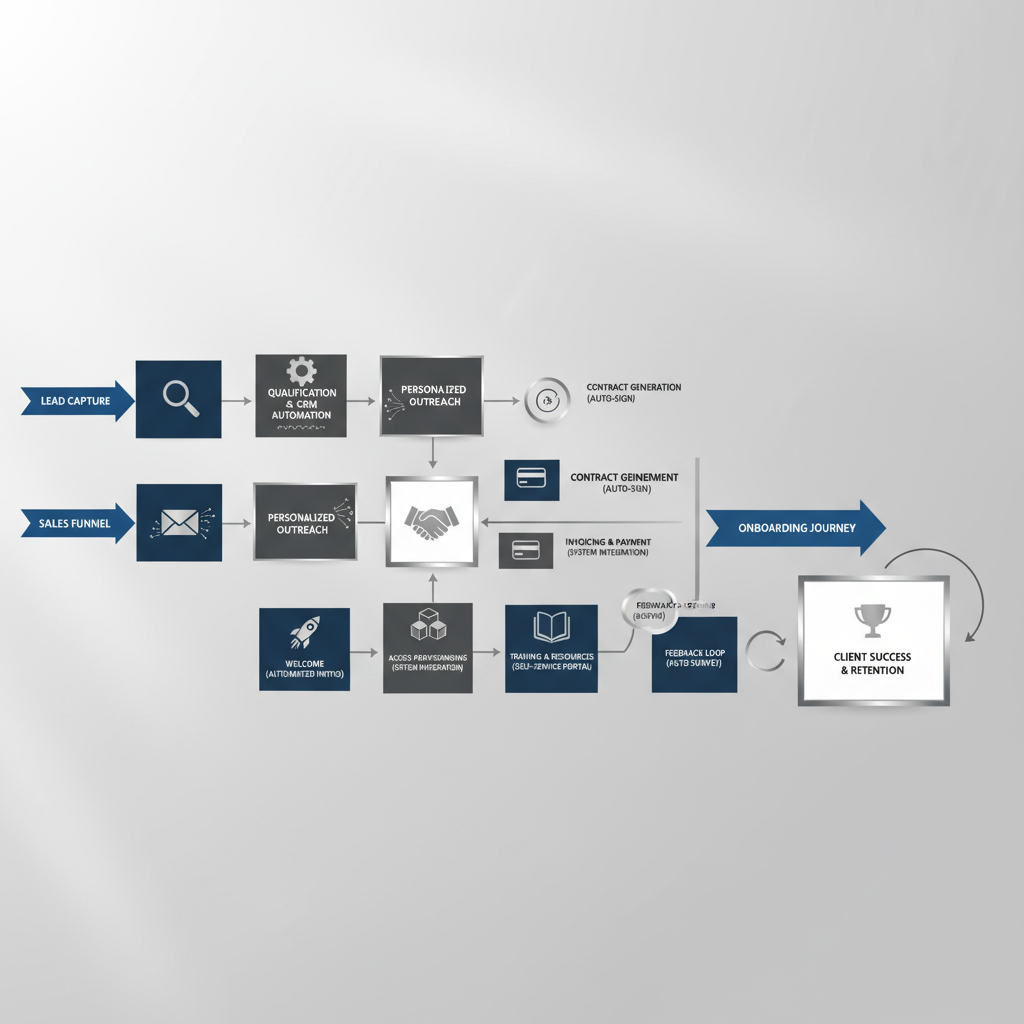
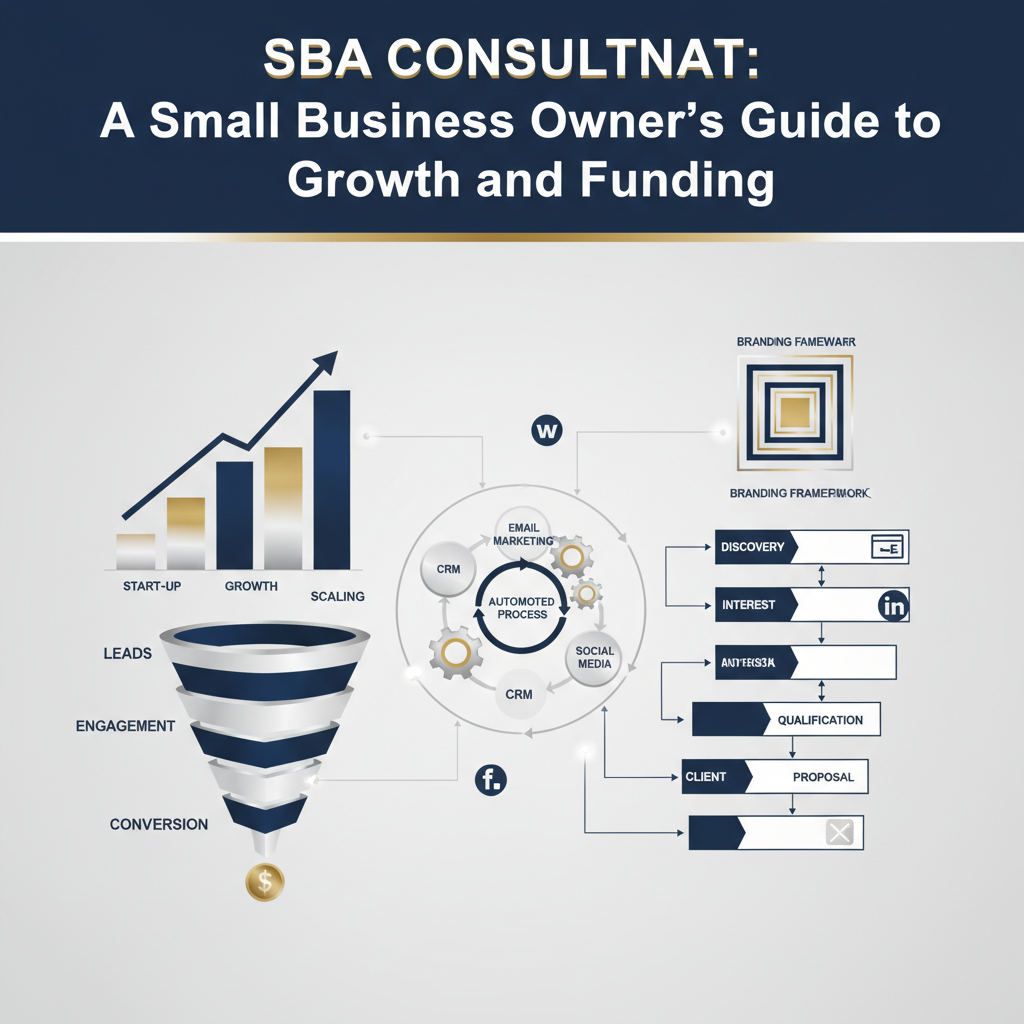
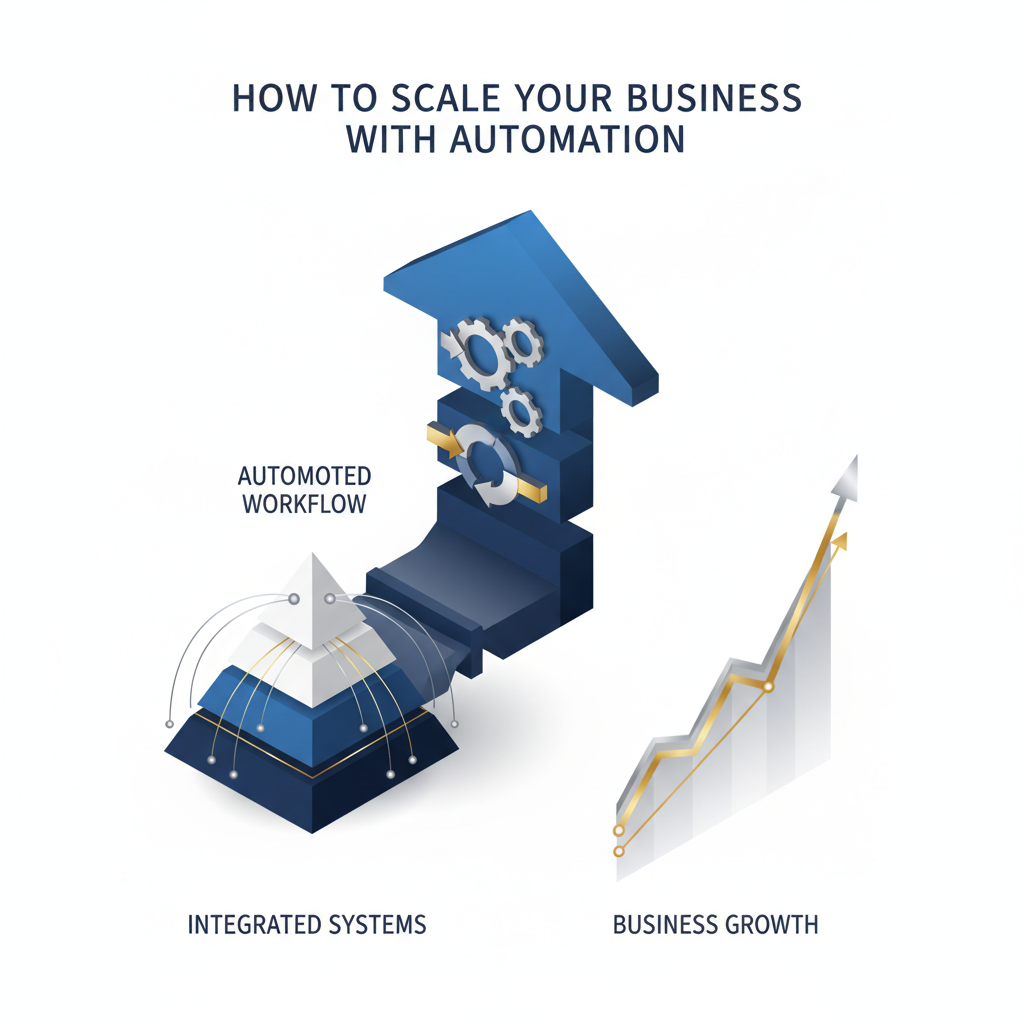
    An infographic visualizing business growth through automation. A sales funnel transitions smoothly into an ascending growth chart, showing a process from lead generation and nurturing to sales conversion and scaled business expansion, highlighted with subtle metallic accents and geometric shapes.
    Create a clean, executive-level infographic. Visual direction: Abstract business visualization, specifically an automated workflow diagram and a business growth chart. Subject: A stylized lead pipeline transitioning into an ascending growth chart, demonstrating seamless automation. Show a multi-stage process flow: Lead Generation (funnel entry), Client Nurturing (progression through the funnel), Sales Conversion (funnel exit), and then scaling upwards into a growth chart with KPI tracking elements. Style: Minimalist, vector-based, professional, premium. Use clean isometric and geometric shapes with subtle silver and gold metallic accents and smooth gradients. Color palette: Deep navy, white, charcoal, with silver and gold highlights. Negative space: Ample open areas for short infographic labels, structured grouping, visual hierarchy, and clarity. No humans, no photographs, no cartoon elements.

    Building a Professional Online Presence to Support Your Loan Application

    Getting an SBA loan takes more than a good business plan. Lenders want to see a stable and legitimate business. A professional online presence is key to showing your credibility and potential for growth. It proves you are serious about your business. In fact, many lenders now check your online presence when they review your application.

    Think of your online presence as your digital storefront. It shows how professional and reliable your brand is. An old or missing website can be a red flag for lenders. On the other hand, a polished website and active online profiles build trust. Consumers often look up a business online before they buy. In fact, 81% of consumers research online before making a purchase [5].

    To build this important online foundation, focus on these key areas:

    • Professional Branding and Website Creation: Start with a custom logo and consistent branding to create a recognizable identity. Your website should look modern, work well on phones, and be easy to use. It must clearly describe your services or products. This is your most important digital asset.
    • Consistent Online Information: Make sure your business name, address, phone number, and hours are the same everywhere online. Incorrect details can damage your credibility.
    • Active Social Media Presence: Keep your social media accounts active. Share interesting content regularly to show you are connected with your audience. It also shows you understand modern marketing.
    • Online Reputation Management: Read and respond to customer reviews. A strong online reputation builds trust with both customers and lenders. It shows you care about feedback and customer happiness.

    Automated-Biz helps you look professional and trustworthy online. We offer branding and website creation services that work together. Our platform makes sure your digital foundation is strong, polished, and ready to impress lenders.

    Using Automated Sales Funnels to Demonstrate Revenue Potential

    Lenders need to feel confident that your business can earn money and repay the loan. Managing sales by hand can seem inconsistent. Automated sales funnels, however, show a clear and predictable way you get new customers. This organized approach to growth is very attractive to loan officers.

    An automated sales funnel guides potential customers from their first show of interest to becoming a loyal client. This system works on its own, so you don’t lose track of any leads. It also provides a clear way to measure how you generate revenue. Businesses using marketing automation can see a 14.5% increase in sales productivity [6].

    Using automation for lead generation helps you:

    • Show a Steady Flow of Leads: Automation tracks every potential customer. This data proves you have a reliable system for finding new business.
    • Nurture Leads Effectively: Automated emails and content keep potential customers interested and get them ready to buy. This shows lenders you have a clear process to turn prospects into paying customers.
    • Forecast Sales with Confidence: Using data from your automated funnels, you can predict future income more accurately. This makes a strong case for your business’s financial health and supports your growth plans.
    • Scale Your Business: Automated sales funnels help you manage more leads without more work. This ability to grow is a key sign of long-term success and shows you have smart business processes in place.

    Automated-Biz offers complete online business solutions. Our platform has ready-to-use sales funnels. These tools help you get steady leads and show lenders that your business can make money. You can guide clients and increase repeat sales with less effort.

    Streamlining Operations for Post-Funding Success

    Receiving an SBA loan is a big step. The next challenge is to use that money well. Simplifying your daily work with business automation is key to long-term growth. It keeps you from getting overwhelmed by marketing and operational tasks. Automation saves you time and resources so you can focus on your bigger goals.

    Doing everything by hand can create bottlenecks and make it hard to grow. Business automation fixes these problems. It helps you shift from slow growth to scalable processes and from guesswork to expert-guided automation.

    Consider automating these key areas of your small business:

    • Marketing Automation: Schedule social media posts, manage email campaigns, and automatically follow up with leads. This keeps your communication consistent without you doing it all by hand.
    • Client Relationship Management (CRM): Automatically welcome new clients, set follow-up reminders, and track conversations. A good system enhances customer satisfaction and keeps them coming back.
    • Online Reputation and Review Management: Automatically ask customers for reviews, gather all your feedback in one place, and respond quickly. This helps you maintain a positive brand image.
    • Administrative Tasks: Automate tasks like sending invoices, scheduling appointments, and entering data. These simple workflows can save a lot of time. Businesses can save up to 30% of their time by automating repetitive tasks [7].

    Automated-Biz is your all-in-one platform for marketing and sales. We help you automate your work while keeping quality high. Our tools simplify your entire operation, ensuring your business runs efficiently, grows smarter, and earns more revenue before, during, and after your funding journey.

    Frequently Asked Questions About SBA Consultants

    What is a typical SBA consultant salary?

    Most SBA consultants are independent professionals or part of a firm, so they don’t earn a typical “salary.” Instead, they are paid fees for their expert services.

    These fees can vary a lot. The final cost depends on the consultant’s experience, location, the project’s difficulty, and the exact services you need. For example, help with an SBA 7(a) loan application will have a different price than creating a full business plan development for small business growth.

    Common SBA Consultant Fee Structures:

    • Hourly Rates: Many consultants charge by the hour. This can range from $100 to over $300 per hour, based on their expertise.
    • Flat Project Fees: For a specific project, like completing an SBA loan package, a consultant might charge a single flat fee. This makes it easy for business owners to budget.
    • Retainer Fees: For long-term help or bigger projects, you might arrange a monthly retainer.

    While prices change, the average hourly rate for a business consultant is often between $100 and $250 [8]. SBA specialists may charge more because of their specific skills and successful track record. It’s important to think about the long-term value. A good sba consultant can help you avoid expensive mistakes and greatly improve your chances of getting the funding you need. This often means you get a great return on your investment in your small business growth.

    At Automated-Biz, we know that hiring an expert is a big investment in expert support. While our focus is business automation and building your professional online presence, getting an SBA loan requires showing your business is ready to operate well and make money. Our services, from branding and website creation to automated sales funnels, are designed to strengthen these exact areas.

    How do I find an SBA consultant near me?

    Finding the right sba consultant is a smart step for any business owner who needs funding or guidance for small business growth. Here is a simple, step-by-step guide to help you find a qualified expert:

    1. Use Official SBA Resources:

    • SBA Website: Start at the official Small Business Administration website. They often have lists of resources to help you find local assistance.
    • SBDCs (Small Business Development Centers): These centers offer free or low-cost advice and training. They can often refer you to a trusted sba consultant in your area [9].
    • SCORE Mentors: SCORE is a non-profit that provides free mentoring and workshops. Its experienced mentors can guide you and recommend good consultants.

    2. Search Online Effectively:

    Use specific, detailed phrases (often called long-tail keywords) to get better search results. This will help you find local experts. Try searching for:

    • “SBA loan consultant near me”
    • “Small business funding advisor [your city/state]”
    • “SBA 7(a) loan application assistance”
    • “Business plan writer for SBA loans”

    3. Ask for Referrals:

    Networking is powerful. Speak with other small business owners, bankers, accountants, or attorneys. They can often provide trusted recommendations based on their own experiences.

    4. Check Their Background and Experience:

    Once you have a shortlist, check them out carefully. Look for a consultant with a history of successfully getting SBA loans for clients or helping with small business growth strategies. Ask about their experience with businesses in your industry.

    5. Set Up an Initial Meeting:

    Most good consultants offer a free first meeting. Use this time to talk about your needs, see if you communicate well with them, and understand how they work. Have a list of questions ready, such as:

    • What is your success rate with SBA loan applications?
    • Can you provide client testimonials or references?
    • What is your fee structure for my project?
    • How do you stay updated on SBA regulations?
    • How will you help me with business plan development?

    Finding the right sba consultant isn’t just about getting money. It’s about building a strong base for lasting small business growth. After you get your funding, Automated-Biz can help you put smart online business solutions in place. Our platform makes everything easier, from branding and website creation to setting up automated sales funnels and handling your online reputation management. We help you switch from manual work to automated, streamlined operations, so you can make the most of your new funding and attract new clients consistently.


    Sources

    1. https://www.sba.gov/
    2. https://www.sba.gov/document/report-small-business-lending-data
    3. https://www.sba.gov/funding-programs/loans/7a-loans
    4. https://www.sba.gov/funding-programs/loans/504-loans
    5. https://blog.hubspot.com/sales/local-seo-stats
    6. https://www.nucleusresearch.com/research/single/roi-case-study-marketing-automation-is-a-must-have/
    7. https://hbr.org/2021/04/the-power-of-process-automation
    8. https://www.consulting.com/consulting-fees-and-rates
    9. https://www.sba.gov/local-assistance/resource-partners/small-business-development-centers-sbdc

  • How to Start a Consulting Business: The Ultimate Step-by-Step Guide

    How to Start a Consulting Business: The Ultimate Step-by-Step Guide

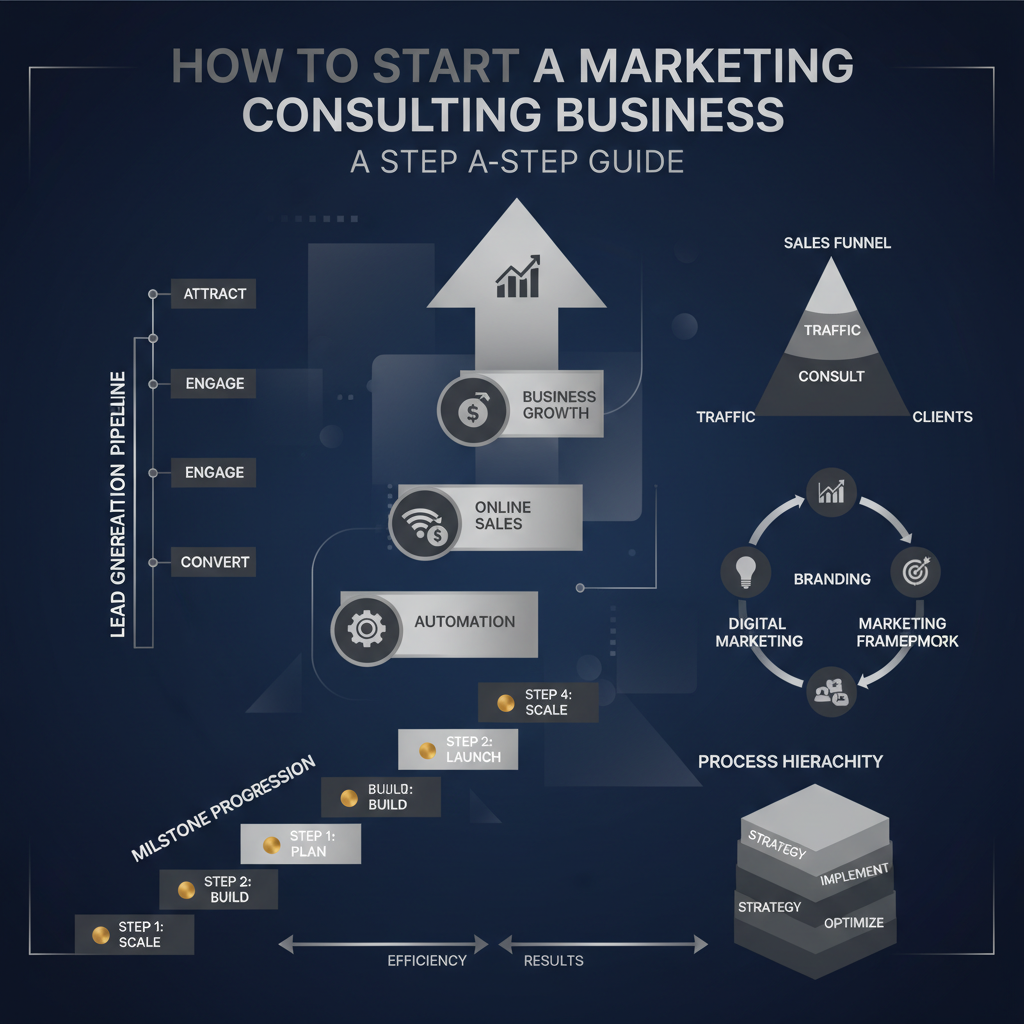
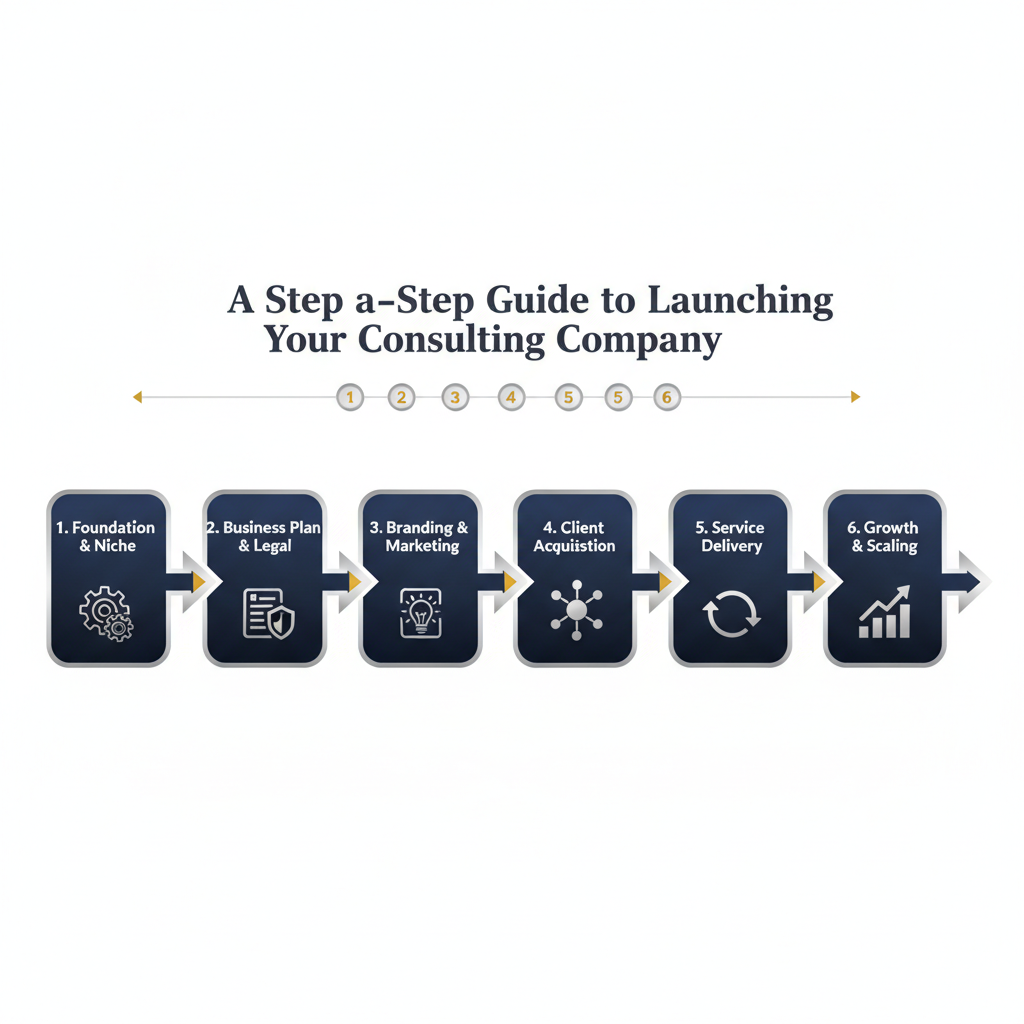
    Starting a consulting business involves identifying your area of expertise, defining your target market, and creating a solid business plan. Key steps include legally structuring your company (such as an LLC), building a professional online presence with a website, and developing a marketing strategy to attract your first clients. Automating workflows for lead generation and client management is crucial for scaling efficiently.

    Many professionals want to use their skills to start a consulting business. But turning a good idea into a successful company can feel overwhelming. You might be struggling with marketing, operations, or how to build a professional online presence from day one. The good news? Starting a consulting company doesn’t have to be a confusing process of trial and error.

    This step-by-step guide is for entrepreneurs who are ready to build and grow a consulting business. We’ll show you how to find your niche, create your service packages, and handle expert branding and website creation. You’ll also learn to develop lead generation strategies and set up automated sales systems. Our goal is to give you a clear plan to turn your vision into a profitable business, so you can start with confidence.

    Stop guessing and trying to piece everything together yourself. With Automated-Biz, you get expert online business solutions that work together smoothly. We help you automate tasks to achieve consistent small business growth without sacrificing quality. By focusing on business automation and smart marketing, you can simplify your operations, find clients consistently, and build a strong professional brand. Ready to build a consulting business that can truly grow? Let’s get started.

    What Should You Do Before Starting a Consulting Business?

    Step 1: Identify Your Niche and Expertise

    Before you start a consulting business, it’s important to know your strengths. Choosing a specific niche is key. It stops you from being a generalist, which can weaken your marketing and lead to poor results.

    Your niche is your area of specialty. It helps you stand out in a busy market. This clarity is important for building your brand and website later.

    To find your niche, ask yourself these questions:

    • What are your core skills? Think about what you do best.
    • What problems do you solve best? Focus on how your skills can help others.
    • What industries do you have experience in? Use what you already know.
    • What are you passionate about? Your motivation will last longer if you love what you do.

    A clear niche makes your marketing more focused and positions you as the expert. This helps you attract better clients and build a strong reputation quickly. It turns you from a general advisor into a specialist people want to hire.

    Step 2: Define Your Target Audience

    Once you have a niche, you need to define who you will serve. Your target audience is the specific group of clients who will benefit most from your skills. Knowing this group is key to finding new customers.

    When you define your audience, you can tailor your message just for them. This ensures your brand, website, and marketing speak directly to their problems. This focus is important for building a sales process that actually works.

    Think about these points when describing your ideal client:

    • Demographics: What is their industry, company size, or job title?
    • Pain Points: What challenges do they face growing their business online? What keeps them up at night?
    • Aspirations: What are their goals? What does success look like to them?
    • Location: Are they local, national, or international?
    • Budget: How much are they willing to spend on a solution?

    A clear understanding of your audience helps you create content they find useful. It also helps you develop services they truly need. This targeted approach improves your small business marketing services and builds a stronger professional online presence.

    Step 3: Conduct Market Research and Validate Your Idea

    Even with a great niche and audience, you need to check if people will actually buy your consulting services. This step keeps you from wasting time and money on an idea that won’t work.

    Market research gives you facts to back up your decisions. It shows if your services solve real problems for businesses. This process helps you improve your offerings and create a solid business plan.

    Good market research includes:

    • Competitor Analysis: Look at other consultants in your niche. What do they offer? What are their strengths and weaknesses?
    • Surveys and Interviews: Talk to your target audience directly. Ask about their problems and if they would pay for a solution. Over 80% of businesses fail due to cash flow problems or no market need [1].
    • Industry Reports: Find trends, gaps, and opportunities in your industry.
    • Pilot Programs: Offer a small service to a few clients to get feedback and testimonials.

    Validating your idea builds confidence and gives you a strong foundation. This research ensures that your branding, website, and marketing are all based on proven demand. You can then move forward, knowing your business is set up for growth.

    How Do I Create a Solid Business Plan and Service Offerings?

    Step 4: Outline Your Consulting Services and Packages

    Defining your consulting services is a crucial step. It tells potential clients exactly what you offer. This process turns your expertise into services that people can buy. Well-planned services also make your marketing much more effective.

    To start, list the specific problems you solve for clients. Then, turn these solutions into different services. Think about how your offerings align with Automated-Biz’s integrated approach to professional online presence and client management. Your services should be easy for clients to understand and want.

    Structuring Your Service Offerings

    Putting your services into packages has many benefits. It makes it easier for clients to choose and gives your business a steady income. Consider these common ways to structure your offers:

    • Project-Based Fees: Great for one-off projects. Define a clear scope and what you will deliver.
    • Hourly Rates: Good for ongoing help or tasks without a clear endpoint. This model requires you to track your time carefully.
    • Retainer Agreements: Offers a steady monthly income. This gives clients regular access to your expertise and helps build long-term relationships.
    • Tiered Packages: Present a few options (e.g., Basic, Standard, Premium). Each tier offers more services or features, which helps you serve clients with different needs and budgets.
    • Value-Based Pricing: Base your fee on the measurable results you deliver to the client. This requires confidence in your ability to generate a great return on their investment.

    It’s essential to clearly outline what each service package includes and what it does not. This helps prevent misunderstandings and keeps projects on track. A clear list of services also improves your website and online brand, showing you are professional and building trust.

    Step 5: Develop a Comprehensive Business Plan

    A solid business plan is your roadmap to success. It provides a clear direction for your consulting business. This document is vital whether you’re starting a new business or growing an existing one. It guides your small business growth strategies and can also help you get funding if you need it [source: https://www.sba.gov/business-guide/plan-your-business/write-your-business-plan].

    Your business plan is more than just a document—it’s a tool you’ll actually use. It helps you define your vision and your goals. This plan also guides how you set up business automation and digital marketing systems.

    Key Components of Your Consulting Business Plan

    A good business plan has several key sections. Each one covers an important part of your business. For each component, focus on practical, real-world information:

    • Executive Summary: Give a short summary of your entire plan. Highlight your mission, services, and financial goals.
    • Company Description: Explain what your consulting firm does. Describe your values and what makes you unique.
    • Market Analysis: Research your ideal clients and industry trends. Know who your competitors are and what they offer. Understand where you fit in the market.
    • Service Offerings: Provide more detail on the services and packages you outlined in Step 4. Explain how they solve your clients’ problems.
    • Marketing and Sales Strategy: Outline how you will find and keep clients. Include how you’ll generate leads and use automated sales funnels.
    • Management Team: Describe your experience and skills. Mention any key partners or advisors.
    • Financial Projections: Estimate your income, expenses, and profit. Include startup costs and a break-even analysis. This section is key to showing your potential for growth.
    • Operational Plan: Detail your day-to-day work. Explain how you will use business process automation to be more efficient.

    Creating this plan gives you a clear structure to follow. It turns your ideas into a real business that can grow. It also helps you decide which technology to use, such as the comprehensive online business solutions offered by Automated-Biz.

    Step 6: Create a Pricing Strategy for Your Services

    Setting the right price for your consulting services is very important. It affects your profit and how clients see your brand. Your pricing should match the value you provide and be competitive in your market. A good strategy makes it easier to grow your business online.

    Consider a few factors when setting your rates, including your expertise, market demand, and the value you deliver. Your pricing should also fit the professional brand you build with automated-biz’s branding and website creation services.

    Approaches to Pricing Your Consulting Services

    There are several common pricing models in consulting. Each has its pros and cons. Choose the model that best fits your services and clients:

    • Cost-Plus Pricing: Add up your business costs, then add a set amount for profit. This ensures you make money but might not match what clients are willing to pay.
    • Market-Based Pricing: Research what competitors charge for similar services. Set your prices to be competitive, which helps you attract clients.
    • Value-Based Pricing: Base your fees on the tangible value you deliver to the client. This can lead to higher earnings because it focuses on results.
    • Tiered Pricing: Offer different service levels at different prices. This allows you to serve a wider range of clients and lets them choose what fits their budget.
    • Hybrid Models: Mix and match parts of different strategies. For example, you could charge a fixed project fee plus an hourly rate for extra work.

    Clearly explain the value behind your prices. Show clients how your services solve their problems and get them good results. Transparent pricing builds trust and helps you create sales funnels that work. It’s also important to review your pricing regularly. Adjust it as you gain experience and as the market changes to ensure your business continues to grow and succeed.

    Do I need an LLC to be a consultant?

    Step 7: Choose a Business Structure (Sole Proprietorship, LLC, etc.)

    Choosing the right legal structure is a key decision for your consulting business. It affects your personal liability, taxes, and paperwork. This choice builds a foundation for your business and its future growth.

    Most consultants choose from a few common structures. Each has its own pros and cons. Let’s look at the main options:

    • Sole Proprietorship: This is the simplest option. You and your business are legally the same. All profits and losses are part of your personal income. There’s no legal separation, which means you are personally responsible for all business debts and lawsuits.
    • Limited Liability Company (LLC): An LLC protects your personal assets while offering flexible taxes. It separates your personal finances from business debts and legal issues. This is a very popular structure for starting a consulting firm. An LLC’s profits can be taxed like a sole proprietorship, a partnership, or a corporation.
    • Partnership: If you’re starting your business with others, a partnership might be a good fit. General partnerships usually don’t protect your personal assets, similar to sole proprietorships. However, structures like a Limited Liability Partnership (LLP) can offer some protection.
    • Corporation (S-Corp or C-Corp): These are more complex structures that offer the strongest liability protection because they are completely separate legal entities from their owners. S-Corps can help avoid the “double taxation” often found with C-Corps. C-Corps are usually for larger businesses that want to find outside investors. They require more formal record-keeping and have more rules to follow.

    Think about your comfort with risk, your tax situation, and your goals for growth. Many new consultants choose an LLC because it protects their assets and is simple to run. For example, over 70% of new small businesses form as an LLC for its flexibility and protection [2].

    Key Considerations for Your Business Structure:

    • Liability Protection: How much personal risk are you willing to take? An LLC helps protect your personal assets.
    • Tax Implications: Different structures are taxed differently. This affects how much you’ll pay and how you report income.
    • Administrative Complexity: Some structures require more paperwork and ongoing tasks.
    • Future Growth: Do you plan to bring on partners or investors? Your answer can help you pick the right structure.

    We recommend talking to a lawyer and a tax advisor. They can give you advice based on your specific needs. This helps you make a smart decision for setting up a consulting business that supports small business growth.

    Step 8: Register Your Business Name and Obtain Licenses

    Once you’ve chosen a business structure, it’s time to make it official. Proper registration and licensing are required to operate legally. This step also builds trust and improves your professional online presence.

    1. Register Your Business Name:

    You must register your chosen business name. How you do this depends on your business structure and location.

    • LLC or Corporation: Your business name is usually registered with your state when you file your formation papers.
    • Sole Proprietorship or Partnership: If you use a business name that is different from your own name, you may need to file a “Doing Business As” (DBA). This is also called a fictitious or assumed name. You typically register a DBA with your county or state.

    Always do a name search first to make sure your desired name is available. Check state business registries and federal trademark databases. Using an available name helps you avoid legal problems later.

    2. Obtain an Employer Identification Number (EIN):

    An EIN is like a Social Security number for your business and is issued by the IRS. You need an EIN if you plan to hire employees. Even if you don’t, it’s a good idea for an LLC to have one. You’ll need an EIN to open a business bank account and keep your personal and business finances separate. Getting an EIN online is a simple process [3].

    3. Secure Business Licenses and Permits:

    Licensing rules vary a lot by industry and location. Don’t skip this step. Operating without the right licenses can lead to fines and legal trouble.

    • Federal Licenses: Most consultants don’t need federal licenses, but some specific industries do.
    • State Licenses: Many states require a general business license. Some professional consulting services may need specific state certifications as well.
    • Local (City/County) Licenses: Most cities and counties require local business licenses or permits. This can include zoning permits if you run your business from home. Check your local government’s website for details.

    4. Consider Professional Liability Insurance:

    While it’s not a license, professional liability insurance is essential for consultants. Also known as Errors & Omissions (E&O) insurance, this coverage protects you from claims of negligence or mistakes in your work. It adds an important layer of protection, especially for an LLC.

    Taking these steps early makes your business official. It lets you focus on building a consulting business with confidence and prepares you for online reputation management and other growth strategies.

    Step 9: Set Up Your Business Finances

    Keeping your business finances separate from your personal money is vital for success. This is especially true when starting a consulting business. Separate finances make tax time easier and help you track performance and plan for small business growth. Don’t make the common mistake of mixing your funds.

    Here are the essential steps for setting up your business finances:

    • Open Dedicated Business Bank Accounts: This is a must-do. Open a separate checking account and maybe a savings account for your business. This makes tracking expenses simple and creates a clear record for audits. Many banks offer special accounts for small business owners.
    • Obtain a Business Credit Card: A business credit card is useful for a few reasons. It helps build your business credit, which is important for future loans. It also simplifies managing business expenses. Be sure to use it responsibly to avoid debt.
    • Implement Accounting Software: Use accounting software like QuickBooks, Xero, or FreshBooks to automate invoicing, track expenses, and create financial reports. This saves time and keeps your books accurate for tax season. It’s a key part of effective business process automation.
    • Track All Income and Expenses Diligently: Keep consistent records. Categorize every transaction so you can understand your profitability and find all possible tax deductions. Automated-Biz focuses on automated sales funnels and lead nurturing, and you need good financial tracking to manage that income.
    • Set Up a Payment Processing System: You need an easy way for clients to pay you. Use options like Stripe, PayPal, Square, or direct bank transfers. Adding these to your invoicing process is convenient for clients and helps you get paid faster.
    • Understand Your Tax Obligations: As a consultant, you will likely need to pay estimated taxes every quarter. Talk to a tax professional who can explain federal, state, and local tax rules and help you find relevant deductions.

    By setting up a consulting business with strong financial habits, you gain clarity and control. Moving from guesswork to a clear financial system allows you to focus on your clients. It also supports your overall business automation strategy for long-term growth.

    How Can I Build a Professional Consulting Brand?

    Infographic showing a structured framework for building a professional consulting brand, featuring interconnected geometric icons for a professional website, social media presence, unique value proposition, and client reputation management.
    Clean, executive-level infographic with abstract business visualization, representing a structured and layered framework for ‘How Can I Build a Professional Consulting Brand?’. Feature interconnected geometric icons illustrating a professional website, robust social media presence, articulation of a unique value proposition, and effective client reputation management. The style is minimalist, vector-based, using clean geometric shapes, subtle gradients, and silver accents. The color palette consists of deep navy, white, and charcoal. Employ ample negative space to ensure clarity, structured grouping, and a clear visual hierarchy. No people or cartoon elements are present.

    Step 10: Establish Your Brand Identity and Logo

    A strong brand identity is essential for your consulting business. It builds trust with potential clients, projects professionalism, and shows them your unique value. A clear brand helps you stand apart from the competition.

    Automated-Biz makes this process easier. We help you define your core message and create a memorable visual identity. A well-defined brand is crucial for attracting the right clients.

    Follow these essential steps to establish your brand:

    • Define Your Core Message: What problems do you solve? Who is your ideal client? What makes your approach different?
    • Understand Your Audience: Learn their needs, challenges, and goals. This allows you to tailor your message so it connects with them.
    • Develop Your Brand Voice: Decide if your brand should sound authoritative, friendly, innovative, or practical. Keep this voice consistent everywhere you communicate.
    • Design Your Logo and Visuals: Choose colors, fonts, and images that reflect your brand’s personality. A professional logo is vital for recognition and trust [4].

    This strong foundation helps you stand out in a competitive market. Automated-Biz offers expert guidance with professional branding and custom logo creation to ensure your online presence is both distinctive and trustworthy.

    Step 11: Build a Professional Website to Showcase Your Expertise

    Your website is your digital storefront and often the first impression a client has of your business. A professional website is critical for showcasing your expertise and building credibility.

    Are you struggling to find new clients online? Automated-Biz provides complete website creation and hosting. Our solutions ensure a great user experience, helping you present your consulting services effectively.

    Your website should include these key elements:

    • Clear Service Offerings: Describe your consulting packages and explain the specific benefits clients will receive.
    • About Page: Share your professional story and what makes you unique. This helps you connect with visitors on a personal level.
    • Testimonials and Case Studies: Use success stories and positive feedback from past clients to build trust and show what you can do.
    • Blog or Resources: Share valuable industry insights and expert advice to establish yourself as a thought leader.
    • Contact Information: Make it simple for potential clients to get in touch with you through clear forms or contact details.
    • Call-to-Action (CTA): Clearly guide visitors on what to do next, whether it’s booking a consultation or signing up for a newsletter.

    Our branding and website services work together to create a cohesive online presence. This helps you attract more leads and turn prospects into clients. A well-designed website is a powerful lead generation tool and the core of your online business.

    Step 12: Set Up Your Professional Online Presence (LinkedIn, etc.)

    Your online presence should extend beyond your website. For consultants, LinkedIn is crucial, but other platforms can also be valuable. Staying consistent across all channels reinforces your brand and expands your reach.

    Feeling overwhelmed by marketing? Automated-Biz offers social media automation tools to help you manage your presence efficiently. This saves you time and keeps your audience engaged.

    Follow these steps to build your professional online presence:

    • Optimize Your LinkedIn Profile: Use your profile to clearly present your expertise, highlight key achievements, and feature client recommendations.
    • Choose Relevant Platforms: Focus your efforts where your target audience spends their time, such as X (Twitter) or industry-specific forums.
    • Share Valuable Content: Regularly post articles, insights, and advice to establish yourself as an expert in your field.
    • Engage with Your Audience: Respond to comments and messages, and participate in relevant online discussions to build relationships.
    • Manage Your Online Reputation: Monitor online reviews and mentions of your brand. Automated-Biz provides reputation management tools to help you address feedback professionally.

    A strong online presence is essential for business growth. Our integrated digital marketing systems streamline this process, helping you move from inconsistent leads to a steady stream of new clients. With expert-guided automation from Automated-Biz, you can build a powerful and professional brand.

    What Are the Best Strategies for Getting Your First Clients?

    Infographic visualizing a streamlined sales funnel or lead pipeline, illustrating key stages for converting prospects into first-time clients with geometric shapes and progression indicators, highlighted with gold.
    Clean, executive-level infographic with abstract business visualization, representing a streamlined lead pipeline or an ascending sales funnel for ‘What Are the Best Strategies for Getting Your First Clients?’. Utilize interconnected geometric shapes and subtle gold highlights to depict stages from initial lead generation and qualification through to client conversion. The design should emphasize clear, efficient progression and measurable outcomes in a minimalist, vector-based style. The color palette is deep navy, white, and charcoal. Ample negative space is used to highlight key stages and the directional flow. No people or cartoon elements are present.

    Step 13: Develop Your Marketing and Lead Generation Strategy

    Getting your first clients is a huge step for any new consulting business. A good marketing plan is key to getting clients consistently. It helps you move from finding leads by chance to having a reliable way to attract new business.

    Identify Your Ideal Client and Channels

    Start by knowing exactly who you want to help. Understand their problems and where they look for answers. This focus makes your marketing efforts much more effective.

    • Refine Your Target Audience: Who will get the most value from your skills? What are their biggest challenges?
    • Research Their Online Presence: Where do your ideal clients hang out online? This helps you choose where to market.
    • Understand Their Decision-Making Process: What do they need to know before they decide to hire a consultant?

    Once you know your audience, you can pick the best channels to reach them. This creates a solid foundation for growing your small business.

    Core Marketing and Lead Generation Tactics

    Use a mix of methods to reach potential clients. Focus on building trust and showing your value. This is essential for starting a successful consulting business.

    • Content Marketing: Write helpful blog posts, articles, or guides. Share your knowledge to solve common industry problems. This establishes you as an expert online.
    • Professional Networking: Be active at industry events, in webinars, and in online groups. LinkedIn is a great platform for consultants to connect with potential clients.
    • Social Media Engagement: Use the platforms where your ideal clients are most active. Share useful tips, join discussions, and show how you can help. Automated-Biz offers social media automation tools to streamline this process and ensure a consistent online presence.
    • Referral Partnerships: Work with other businesses that don’t compete with you. They can send clients who need your services your way.
    • Direct Outreach: When you reach out to potential clients, personalize your message. Show them you understand their business and can solve their specific problems.

    Automated-Biz provides branding and website creation services. We make sure your online presence looks professional from day one. A strong digital foundation is key to attracting new clients. It makes your online business look polished and effective.

    Step 14: Create Automated Sales Funnels to Nurture Leads

    Once you start getting leads, you need to guide them toward becoming clients. Automated sales funnels turn interest into real prospects. They change messy, manual work into a smooth, automatic process. This is key for growing a modern small business.

    The Power of Automation in Client Acquisition

    Using automated sales funnels can change your business. They help you stay in touch with potential clients without constant manual work. This saves you time and ensures every interaction is professional. You can automate your process without sacrificing quality.

    Automated sales funnels are systems that guide potential clients through your sales process, from when they first learn about you to when they become a paying client. This automation helps you get leads consistently.

    Key Stages of an Automated Sales Funnel

    A typical sales funnel has a few key stages. Each stage has a specific goal and uses automated actions:

    • Awareness (Lead Capture): Attract potential clients with helpful content, like a free guide or webinar. Collect their contact info using a form on your website or landing page.
    • Interest (Lead Nurturing): Send a series of automated emails to engage your leads. Share more insights or success stories to build trust and show them you’re the expert who can help.
    • Decision (Evaluation & Conversion): Encourage interested leads to take the next step. This could be booking a free consultation or requesting a proposal. You can use automated scheduling tools to make this easy.
    • Action (Client Onboarding): Turn the prospect into a client. Send automated reminders for proposals or contracts. Then, smoothly welcome them through your new client onboarding process.

    Automated-Biz specializes in creating effective sales funnels and lead nurturing emails. Our platform gives you the tools to build, manage, and improve these funnels. This streamlines your work and helps your business run efficiently, ensuring a steady flow of prospects. You can focus on growing your revenue and getting clients predictably.

    Step 15: Master the Art of the Consulting Proposal and Contract

    Turning an interested lead into a paying client requires more than a good conversation. You need professional, clear, and convincing documents. A great proposal and a solid contract are essential. They make you look trustworthy and help you earn repeat business.

    Crafting a Winning Consulting Proposal

    Your proposal is your chance to present your solution and stand out. It should clearly explain the value you offer the client. A strong proposal builds their confidence and trust. Research shows that well-crafted proposals can significantly increase your win rate [5].

    Key elements of an effective consulting proposal include:

    • Executive Summary: A short overview of the client’s problem and how you plan to solve it.
    • Understanding of the Client’s Challenge: Show that you truly understand their problems and goals.
    • Proposed Solution and Methodology: Detail your plan, the services you’ll provide, and how they will help.
    • Deliverables and Timeline: Clearly list what you will provide and when. Set realistic deadlines.
    • Investment (Pricing): Present your fees clearly. Break down the costs if it helps.
    • Client Testimonials or Case Studies: Include reviews from past clients to prove your skills and success.
    • Call to Action: Clearly state the next steps the client needs to take to hire you.

    Personalize every proposal. Show that you have invested time in understanding the client’s unique situation. This reinforces your value as an expert.

    Essential Elements of a Consulting Contract

    The contract protects both you and the client by making the agreement official. It provides clarity, prevents misunderstandings, and acts as a legal safety net. Never start work without a signed contract. This is a basic rule for running a professional online business.

    Critical components of a consulting contract include:

    • Parties Involved: Clearly name your business and the client’s business.
    • Scope of Work: A detailed description of the services you will provide and what is not included.
    • Payment Terms: Your fees, the payment schedule, and any penalties for late payments.
    • Term and Termination: The project’s duration and the rules for how either party can end the agreement.
    • Confidentiality Clause: An agreement to protect any sensitive information shared during the project.
    • Intellectual Property: A clause stating who owns the work created during the project.
    • Warranties and Disclaimers: An outline of any guarantees you offer and the limits of your liability.
    • Governing Law: The state or country whose laws will apply to the contract.

    While Automated-Biz focuses on automation and growth strategies, we know how important a professional image is. Our branding and website creation services help you present a credible business. This professionalism extends to your documents. A polished online presence, combined with well-structured proposals and contracts, is key to cementing client trust.

    How Can I Automate and Scale My Consulting Business?

    Infographic illustrating the automation and scaling of a consulting business through an abstract workflow diagram flowing into an ascending growth chart with performance milestones, highlighted with silver.
    Clean, executive-level infographic with abstract business visualization, representing an elegant workflow diagram seamlessly transitioning into an upward-trending business growth chart for ‘How Can I Automate and Scale My Consulting Business?’. The visual features interconnected geometric process steps leading to an ascending line with clear milestone markers, symbolizing efficiency and scalable operations. Subtle metallic silver accents are applied to key elements. The style is minimalist, vector-based. The color palette consists of deep navy, white, and charcoal. Ample negative space ensures structured grouping and clear visual hierarchy. No people or cartoon elements are present.

    Step 16: Implement Business Automation Tools for Efficiency

    To scale your consulting business, you need to work smarter, not just harder. Business automation is key to being more efficient and growing your business long-term. It frees you from repetitive tasks that take up too much time. This lets you focus on important client work and growing your business.

    Many consultants get overwhelmed with admin work. Manual tasks like scheduling, invoicing, and email follow-ups can take hours out of your day. Automation changes how you handle this work. It helps you save time and make your process smoother without sacrificing quality.

    Key Areas for Business Automation:

    • Administrative Tasks: Automate appointment scheduling, email sequences, and reminder notifications.
    • Marketing & Lead Generation: Set up automated sales funnels and lead nurturing sequences. Manage your social media automation for consistent content delivery.
    • Client Management: Streamline proposals, contracts, and invoicing. This ensures a professional and consistent client experience.
    • Data & Reporting: Automate data collection and report generation. Gain valuable insights into your small business growth.

    Automated-Biz offers all-in-one online business solutions for consultants. We combine branding, website creation, and key automation tools like CRM systems and marketing platforms. Our platform brings all your work into one place. This helps turn scattered efforts into steady, organized growth.

    Consider the impact on your revenue. Businesses that automate marketing processes see an average 14.5% increase in sales productivity [6].

    How to Begin Automating Your Consulting Business:

    1. Identify Repetitive Tasks: List every task you do weekly that feels tedious or takes too much time. This could be anything from sending follow-up emails to updating spreadsheets.
    2. Prioritize for Impact: Focus on tasks that consume the most time or are critical for client satisfaction. Automating these first has the biggest impact.
    3. Choose Integrated Solutions: Opt for platforms like Automated-Biz. They offer integrated tools for small business marketing services and client management. This prevents disconnected systems.
    4. Start Small, Scale Up: Begin with one or two automation processes. This could be automating your email outreach or client booking. Then gradually expand to more complex workflows.

    Using business automation helps you do more with less effort. It’s about building a consulting business that runs smoothly, even when you aren’t managing every single task by hand.

    Step 17: Streamline Client Onboarding and Project Management

    A smooth client onboarding process is the first step to a successful project. On the other hand, a messy start can cause frustration and make clients lose trust. A simple onboarding process and good project management are key to getting repeat clients and building a successful business.

    Many consultants provide an inconsistent experience for new clients. This is often because of manual onboarding and reacting to problems as they happen. Using technology can fix this. It helps you move from a messy process to a smooth, automated one.

    Key Elements of Streamlined Client Onboarding:

    • Automated Welcome Sequences: Send automated welcome emails, provide access to client portals, and share essential resources. This ensures clients feel valued and informed from day one.
    • Digital Contracts & E-Signatures: Speed up the legal process with automated contract generation and secure e-signature solutions.
    • Automated Intake Forms: Collect necessary client information efficiently. Use smart forms that guide clients through the required data points.
    • Project Kick-off Automation: Automatically create project folders, assign initial tasks, and schedule kick-off meetings.

    Good project management keeps your projects on time and on budget while delivering great results. It helps you handle several clients and deadlines at once. This is essential for growing your business and keeping your quality of service high.

    Benefits of Automated Onboarding & Project Management:

    Feature Manual Process Challenges Automated Process Benefits
    Onboarding Slow, inconsistent, error-prone, poor first impression. Fast, professional, consistent, enhanced client satisfaction.
    Communication Missed updates, unclear expectations, endless emails. Centralized communication, automated reminders, clear progress tracking.
    Task Management Disorganized, deadlines missed, lack of accountability. Clear task assignments, progress monitoring, timely completion.
    Scalability Difficult to take on more clients without sacrificing quality. Easily manage increased client load, scalable processes.

    Automated-Biz provides tools to build custom automated sales funnels. These funnels can also nurture leads and onboard new clients. Our platform lets you create professional client portals where you can manage project timelines, tasks, and communication in one place. This makes finding and keeping clients much easier.

    Step 18: Manage Your Online Reputation to Build Trust

    Today, your online reputation is your most valuable asset. It has a direct impact on your ability to find new clients. Potential clients will likely look you up online before they contact you. What they find will determine if they trust you enough to hire you.

    Many consultants don’t actively manage their online reputation. Instead, they only react to feedback. This can leave them in a bad position. It’s important to look professional and trustworthy online from the very beginning. This helps you build a good name and get noticed in your field.

    Key Aspects of Online Reputation Management:

    • Encourage Positive Reviews: Actively encourage satisfied clients to leave testimonials and reviews on relevant platforms. These could be Google My Business, LinkedIn, or industry-specific sites.
    • Monitor Online Mentions: Stay aware of what’s being said about your consulting business across the web. This includes social media and review sites.
    • Respond Professionally: Address all feedback, positive or negative, promptly and professionally. Show that you value client input and are committed to excellent service.
    • Showcase Success Stories: Feature client testimonials, case studies, and positive reviews prominently on your website and social media channels.
    • Maintain Professional Profiles: Ensure your LinkedIn profile, website, and other online presences are consistent, up-to-date, and reflect your expert knowledge.

    A strong online reputation makes you look like an expert in your field. It helps you stand out from the competition. It also has a big effect on your SEO rankings, which brings more visitors to your site. Studies show that 93% of consumers read online reviews before purchasing from a local business [7].

    Automated-Biz offers tools for online reputation management. Our platform helps you collect, monitor, and respond to reviews all in one place. We also help with professional branding and website design to make sure your online presence is consistent and trustworthy. When you actively manage your reputation, you build client trust and create a steady stream of new business.

    Frequently Asked Questions

    How much money do I need to start a consulting business?

    Starting a consulting business can be surprisingly affordable. The amount you need depends on your goals. Many consultants start with very little money, relying on their skills.

    For a solo consultant working from home, expenses are usually low. You might need a professional website and some basic business software. A good online presence is key to building trust.

    However, if you want to grow fast or rent an office, your costs will be higher. Investing in tools to automate your business and manage clients is important from the start.

    Key areas to invest in at the beginning include:

    • Business Registration and Legal Fees: This covers setting up an LLC or other business structure, plus any needed permits.
    • Branding and Website Creation: A professional brand and a great website are must-haves. Automated-Biz offers integrated branding and website solutions to make this step easier.
    • Essential Software and Tools: This includes software for project management, communication, and tools for automated sales and client follow-ups.
    • Marketing and Lead Generation: This could be early outreach, online ads, or networking. You need good ways to find new clients from day one.
    • Professional Development: Always keep learning to make sure your skills stay current and valuable.
    • Insurance: Professional liability insurance gives you important protection.

    You can start with less than $1,000 if you keep things simple. However, setting aside $2,000-$5,000 for a more professional launch, including a strong website and marketing, is a smart choice for growing your business.

    Focus on smart spending that helps you work more efficiently and find clients. Automated-Biz provides the tools to build your online presence and automate tasks, helping you get more from your budget and grow faster.

    What are the 7 C’s of consulting?

    The “7 C’s of Consulting” are a set of core principles for working well with clients and delivering successful projects. Following these principles makes you a better consultant and helps you get great results [8].

    These principles help guide you in solving problems and building client relationships:

    • Client: Always focus on understanding what your client needs and wants to achieve. Knowing their challenges is essential.
    • Clarity: Make sure everyone understands the project goals and what you will deliver. Confusion can slow things down.
    • Cause: Find the real cause of a problem, not just the surface issues. This helps you provide solutions that last.
    • Creativity: Offer new and smart solutions. Avoid generic advice and customize your approach for each client.
    • Communication: Keep your communication open, honest, and frequent. This builds trust and keeps the project on track.
    • Commitment: Be dedicated to helping your client succeed. Your commitment leads to better work and better results.
    • Change: Help your client make the changes needed to use your solutions. This makes sure the new methods stick.

    Using these C’s in your work will improve how you serve clients. Automated-Biz gives you tools for easy communication, organized project management, and a professional platform that shows your commitment and clarity to clients.

    Are consulting firms profitable?

    Yes, consulting firms can be very profitable. They often have higher profit margins than businesses in other fields. This is mainly because they sell valuable knowledge and expert skills.

    The average profit margin for management consulting firms can be 15% to 25%, and some smaller, specialized firms earn even more [9]. This makes consulting a great business to start.

    Key reasons for high profits include:

    • High-Value Services: Consultants charge higher rates for their special knowledge and problem-solving skills.
    • Low Overhead Costs: Many firms have few physical costs, especially if they work remotely and use online business tools.
    • Easy to Grow: Once you have good systems, it’s easier to grow a consulting business.
    • Working Smart: Using business automation, like automated sales funnels, makes your work more efficient.
    • Strong Online Presence: A professional website and smart marketing help attract clients willing to pay more.
    • Keeping Clients: Building good client relationships leads to repeat business and referrals.

    To make the most profit, focus on a specific area, create expert services, and use tools to automate your work. Automated-Biz offers an all-in-one platform for branding, websites, client communication, and managing your online reputation. These tools are key for small business growth and building a profitable consulting business.

    Is $100 an hour good for consulting?

    $100 an hour can be a good starting rate for new consultants, especially when you’re building a portfolio of your work. But whether it’s a “good” rate really depends on your experience, specialty, location, and the results you provide.

    For new or general consultants, $100/hour can be a reasonable price. This rate helps you get experience and improve your methods. It can provide a good income as you find more clients.

    However, many experienced or specialized consultants charge much more. Some charge $250, $500, or even over $1,000 per hour [10]. This reflects their deep knowledge, history of success, and the great value they bring to clients.

    Factors that affect your hourly rate:

    • Your Niche: If you work in a highly specialized or high-demand area, you can often charge more.
    • Experience and Credentials: A strong background and certifications make clients see you as more valuable.
    • Value Delivered: Focus on the results you deliver. Solving big problems means you can charge a higher rate.
    • Location: Rates can be different depending on where you and your clients are.
    • Overhead Costs: Remember to include your business costs, like marketing and software.
    • Online Presence: A professional website and a good online reputation help you charge more.

    As you get more experience and become known for getting results, you should plan to raise your rates. Always show clients the positive changes you can make for them. Automated-Biz helps you build a professional online presence and find clients, allowing you to prove your value and earn higher fees.


    Sources

    1. https://www.cbinsights.com/research/startup-failure-reasons-top/
    2. https://www.sba.gov/business-guide/start-your-business/choose-business-structure
    3. https://www.irs.gov/businesses/small-businesses-self-employed/how-to-apply-for-an-ein
    4. https://www.forbes.com/sites/forbesagencycouncil/2021/03/17/the-importance-of-branding-in-business/?sh=248067b8417c
    5. https://www.proposify.com/blog/proposal-statistics
    6. https://blog.hubspot.com/sales/sales-productivity-statistics
    7. https://www.brightlocal.com/research/local-consumer-review-survey/
    8. https://www.consulting.com/7cs-of-consulting
    9. https://www.statista.com/statistics/1238491/average-operating-margin-consulting-services-worldwide/
    10. https://www.consulting.com/consulting-fees

  • How to Start a Consulting Business: A Step-by-Step Guide for Entrepreneurs

    How to Start a Consulting Business: A Step-by-Step Guide for Entrepreneurs

    Starting a consulting business involves defining your area of expertise, identifying a target market, and establishing a legal business structure like an LLC. Key steps include creating a business plan, developing service packages, building a professional website to attract clients, and implementing automated systems to manage projects and scale efficiently.

    The idea of starting a consulting business is exciting. It offers the freedom of running your own company while using your expertise to make a difference. But, turning your idea into a profitable firm can feel overwhelming. Many consultants struggle to grow online because they are swamped with marketing and operational tasks. You’re serious about building a successful company that stands out and brings in new clients consistently.

    This step-by-step guide is designed for you. At Automated-Biz, we understand the challenges of setting up a consulting business and know how smart automation can help. We provide clear, practical strategies to launch and grow your business, covering everything from finding your niche and handling legal setup to building a strong brand and creating automated sales funnels. You will learn how to automate work without losing quality, use powerful online business solutions for small business growth, and make your operations more efficient. This will help your firm find clients more predictably and grow smoothly from day one. Prepare to build a professional online presence with expert help in business automation.

    What Do You Need Before Starting a Consulting Business?

    Defining Your Niche and Core Expertise

    Starting a consulting business begins with a clear vision. Your first step is to define your niche and core expertise. This isn’t about limiting yourself; it’s about becoming the go-to expert in a specific area. A well-defined niche helps you stand out in a crowded market and lets you target your marketing efforts effectively.

    Think about your unique strengths and experiences. What problems do you enjoy solving? Which industries do you know well? Answering these questions helps you build a consulting business on a solid foundation. This clarity also makes it easier to create great consulting packages.

    To find your core expertise, follow these steps:

    • List Your Skills: Write down your professional skills, qualifications, and past achievements.
    • Identify Your Passions: What topics excite you? Where do you naturally do your best work?
    • Solve Specific Problems: Think about the real-world challenges you’ve solved for clients or employers. For example, did you streamline business operations? Did you implement effective lead generation strategies?
    • Evaluate Your Experience: What unique insights do you bring? Your experience could be in small business marketing services, financial strategy, or business process automation.
    • Consider Your Target Client: Who would benefit the most from your knowledge?

    Focusing on a niche makes you an authority, not a generalist. This allows you to charge higher fees. It also makes your branding and website creation much more effective. Automated-Biz can help you show this expertise, ensuring you look professional and trustworthy online from day one.

    Assessing Market Demand and Your Ideal Client

    After defining your niche, you need to confirm there is a real market demand for your services. Without demand, even the best expertise won’t create a profitable consulting firm. This means understanding your ideal client and the specific problems they need to solve. This knowledge is key to successful small business growth.

    Many entrepreneurs are struggling to grow their business online because they don’t fully understand their market. Taking the time to do this research now saves you a lot of effort later. In fact, about 80% of small businesses fail within the first five years, often because there is no market need for what they sell [source: https://www.fundera.com/blog/small-business-failure-rate].

    Here’s how to assess market demand and find your ideal client:

    • Research Competitors: Look at other consulting companies in your niche. What do they offer? Who are their clients? How do they price their services? This will help you find gaps in the market and ways to stand out.
    • Conduct Client Interviews: Talk to potential clients. Ask about their biggest challenges, what they’ve tried so far, and what they would pay for a real solution. This provides great firsthand feedback.
    • Analyze Online Trends: Use tools like Google Trends or industry reports to see if people are interested in your niche. Search for keywords related to the problems you solve.
    • Create Client Personas: Build detailed profiles of your ideal clients. Include their job titles, goals, and pain points. Understanding them will make your small business marketing services much more effective.
    • Verify Profitability: Make sure your ideal clients can afford your expertise. Your services need to provide them with a clear return on their investment.

    By checking demand and knowing your ideal client, you can create a solid plan for getting started in consulting. This understanding improves your automated sales funnels and lead nurturing efforts. Automated-Biz provides the online business solutions to capture, nurture, and convert these leads, ensuring consistent client acquisition and small business growth.

    A Step-by-Step Guide to Launching Your Consulting Company

    A minimalist, vector-based infographic depicting a multi-stage, linear process flow diagram for launching a consulting company, using geometric shapes and a deep navy, white, charcoal, and silver/gold color palette.
    Create a clean, executive-level infographic. Visual direction: A multi-stage, linear process flow diagram representing the ‘A Step-by-Step Guide to Launching Your Consulting Company’. Use abstract business visualization to represent the section’s concept: step-based processes or hierarchical systems. Subject: No humans — focus entirely on conceptual visuals, specifically stepwise task structures. Style: Minimalist, vector-based, professional, and premium. Clean geometric shapes with subtle gradients and silver or gold metallic accents. Color Palette: Deep navy, white, charcoal, with silver or gold highlights for clarity, sophistication, and credibility. Negative Space & Layout: Leave open areas for short infographic labels or category indicators for each step. Maintain structured grouping, visual hierarchy, and clarity. Constraints: No people. No photographs of humans. No cartoon elements. Infographic text may appear only as short labels, category headers, or directional markers. Focus on clarity, analytical representation, and premium business branding suitable for entrepreneurs, small business owners, and executives.

    Step 1: Create a Comprehensive Business Plan

    A successful consulting company starts with a solid foundation: your business plan. This plan is more than a document—it’s your roadmap for growth. It helps you define your purpose and set clear goals.

    A good plan guides your decisions and keeps you focused on your vision. Without one, it’s easy to get lost in daily tasks and see inconsistent results.

    Your business plan should include these key parts:

    • Executive Summary: A short overview of your entire plan.
    • Company Description: Your mission, vision, and core values.
    • Market Analysis: Research your industry, ideal clients, and competitors. Find out what makes you unique.
    • Services and Products: Clearly define your consulting packages and how they help clients.
    • Marketing and Sales Strategy: Explain how you will find and keep clients. Include your lead generation strategies and sales process.
    • Management Team: Describe your experience and background.
    • Financial Projections: Estimate your startup costs, revenue, and profit. Include initial investments and operating expenses. Businesses with a formal plan are 16% more likely to succeed [1].

    This plan is a living document. Review and update it as your small business growth strategies change over time.

    Step 2: Handle the Legal and Financial Setup

    Setting up the legal and financial side of your starting a consulting business is essential. It protects you, makes your business official, and builds client trust.

    First, choose a business structure, like a Sole Proprietorship or a Limited Liability Company (LLC). Many consultants pick an LLC to protect their personal assets.

    Next, get an Employer Identification Number (EIN) from the IRS for tax purposes. Then, open a separate business bank account to keep your personal and business finances apart. This makes accounting much easier.

    Look into the business licenses and permits you need, as they vary by location and industry. Finally, get the right business insurance. Professional liability insurance is crucial for consultants because it protects you from claims of errors in your work.

    Key legal and financial steps:

    • Choose your business structure (e.g., LLC).
    • Get an EIN.
    • Open a business bank account.
    • Get the required licenses and permits.
    • Buy professional liability insurance.

    Completing these steps early lowers your risk and sets a professional tone for your starting a consulting firm.

    Step 3: Develop Your Branding and Professional Online Presence

    In today’s digital world, your brand is your reputation. A professional online presence is essential to stand out and attract the right clients. It helps you build trust and credibility right away.

    Your brand identity includes your logo, colors, and messaging. These elements show clients what makes you unique and help your starting your own consulting business become memorable.

    Next, build your online presence, starting with a professional website. Your site is your 24/7 digital storefront. It should clearly explain your services, show off your expertise, and feature client testimonials and contact info.

    Automated-Biz offers complete branding and website creation services to help you build a powerful online presence. Our platform helps consultants who want to appear professional and trustworthy online. We provide custom logo design and website development so you can focus on serving your clients, not on technical details.

    What you need for a professional online presence:

    • A professional logo and consistent brand identity.
    • A custom, mobile-friendly website with clear service descriptions.
    • High-quality content that shows your expertise.
    • Client testimonials and case studies.
    • Easy-to-use contact forms and calls to action.

    A strong online branding and website creation strategy is key to attracting your first clients and supporting your small business marketing services.

    Step 4: Create and Price Your Consulting Packages

    Defining your consulting packages is key for making things clear and profitable. Clients need to understand the value you provide. Structure your services to solve specific problems for your clients. Try to avoid billing by the hour and focus on results. This changes the focus from the hours you work to the value you deliver.

    Create different package levels to fit various client needs and budgets. This can help you attract more clients and create opportunities to upsell. For example, you could offer a basic, standard, and premium package.

    Consider these pricing models:

    • Project-Based Fees: Charge one flat fee for a specific project. This is predictable for you and the client.
    • Retainer Agreements: Get a recurring monthly fee for ongoing services. This creates steady income for your building a consulting business.
    • Value-Based Pricing: Base your fee on the results or return on investment you provide. This works best when you are confident in your outcomes.

    Be clear about what is included in each package and the expected results. Being transparent builds trust and justifies your prices. Think of your business consulting packages as solutions to your ideal client’s biggest challenges.

    When setting up a consulting business, focus on creating high-value business consulting packages. They attract serious clients and position you as a top expert.

    Step 5: Build Your Marketing and Lead Generation Engine

    A steady stream of new leads is essential for a successful starting a consulting company. You need a system to attract, connect with, and convert potential clients. This keeps you from running out of new business and helps you grow beyond just word-of-mouth.

    Start with great content. Share your knowledge through blog posts, articles, and guides to position yourself as an expert. This builds trust and brings in people who are looking for the solutions you offer.

    Use social media automation to reach more people. Platforms like LinkedIn are great for B2B consultants. Share helpful tips and talk with your audience. Automated-Biz has tools to schedule posts, freeing up your time for client work.

    Set up automated sales funnels to guide people from discovering you to hiring you. A typical funnel includes:

    • Awareness: Getting noticed through content and social media.
    • Interest: Offering free guides or webinars for an email sign-up.
    • Desire: Building interest with follow-up emails, case studies, and testimonials.
    • Action: Getting them on a consultation call to close the deal.

    Automated-Biz provides powerful lead generation strategies and tools to build automated sales funnels. We help you generate consistent leads without the extra work. Our small business marketing services make outreach simple, so you won’t be overwhelmed with marketing and operations tasks.

    A consistent marketing engine gives you a predictable way to get new clients, which is key for long-term small business growth.

    Step 6: Automate Your Operations for Scalable Growth

    To grow your starting a consulting business, automation is a must. Doing things by hand slows you down, wastes time, and stops you from growing. Using business automation helps you get more done with less effort.

    Automated-Biz turns manual tasks into smooth, automated systems. We help you set up workflows that automate workflows without losing quality. This makes your business more consistent and efficient.

    Consider automating these key areas:

    • Lead Nurturing: Send automated email sequences to new leads to keep them engaged.
    • Client Onboarding: Automate welcome emails, contracts, and new-client questionnaires.
    • Project Management: Use tools to automatically assign tasks and track progress to keep projects on time.
    • Invoicing and Payments: Send invoices and payment reminders automatically.
    • Appointment Scheduling: Let clients book calls on your calendar automatically.
    • Social Media Management: Schedule your posts ahead of time.
    • Online Reputation Management: Automatically ask clients for reviews.

    Using business process automation saves a lot of time and lets you focus on high-value client work. A recent survey found that 86% of businesses believe automation helps them save time [2]. Automated-Biz offers online business solutions that simplify these tasks. Our platform gives you access to productivity workflows and time-saving processes, from social media automation to automated sales funnels. This helps you achieve steady growth and profits.

    Stop struggling to grow your business online and start building scalable success. Automated-Biz gives you the tools to build, grow, and automate your consulting business with confidence.

    How much does it cost to start a consulting business?

    Essential Startup Investments (Legal, Software, Website)

    To start a consulting business, you need to invest in a few key areas. These first costs help you build a professional online presence and run your business smoothly and legally.

    Here are the core areas where you will likely invest:

    • Legal & Administrative Setup:
      • Business Registration: Registering your business as an LLC or sole proprietorship is the first step. Costs vary by state [3].
      • Licenses & Permits: You might need special licenses depending on your industry and location.
      • Contracts: Good client contracts will protect your business.
      • Business Insurance: Liability insurance is a must-have for peace of mind.
    • Branding & Website Creation:
      • Custom Logo & Branding: A good logo and brand design help clients trust and remember you. Automated-Biz offers expert branding services.
      • Professional Website Design: Your website is like your online office. It shows clients what you can do. This includes your domain name and web hosting. Automated-Biz provides integrated website creation and hosting.
      • Content Creation: Clear descriptions of your services will attract the right clients.
    • Essential Software & Business Automation Tools:
      • Integrated Business Platform: An all-in-one tool like Automated-Biz can simplify your work.
      • CRM (Client Relationship Management): Keep track of potential and current clients.
      • Project Management: Organize your projects and client work.
      • Accounting Software: Handle your invoices, expenses, and money.
      • Email Marketing: Stay in touch with leads and build relationships with clients.

    Investing in these areas early on sets your business up for success. Using an all-in-one platform like Automated-Biz helps you look professional online without a huge budget or the headache of managing multiple tools.

    Bootstrapping: How to Start a Consulting Business with No Money

    You can start a consulting business with very little money. This is called bootstrapping. It means you use the resources you already have and spend money carefully.

    Here are a few ways to start on a small budget:

    • Use Your Network: Reach out to former colleagues, friends, and industry contacts. They can become your first clients.
    • Offer Pilot Projects: Provide your services at a lower rate at first. This helps you build a portfolio and get testimonials.
    • Use Free Tools: Many software tools offer free versions for basic tasks. For example, Google Workspace has free email and document tools.
    • Start as a Sole Proprietor: This is the easiest and cheapest way to set up your business legally. You can always change it later.
    • DIY Your Website: Use a free website builder if you have no budget. Just remember that free sites have limits compared to professional ones.
    • Focus on Free Marketing: Share your knowledge on social media. Join online groups in your field. This builds trust for free.

    Bootstrapping saves money, but it takes more of your time. Still, it’s a great way to get your consulting business started. Once you start making money, invest in tools that automate your sales and daily tasks to help your business grow faster.

    Creating a Realistic Budget for Your First Year

    A good budget for your first year is key. It helps you avoid money surprises and decide where to invest in your business. Make sure to plan for both fixed and variable costs.

    Here’s a look at common costs in your first year:

    • Fixed Costs: These are costs that stay the same each month.
      • Legal & Insurance: Business registration, licenses, and professional liability insurance.
      • Automated-Biz Platform Subscription: An all-in-one platform gives you a steady monthly cost. It bundles services you’d otherwise pay for one by one.
      • Professional Services: Set aside money for an accountant or bookkeeper. This is important for handling taxes correctly.
    • Variable Costs: These costs change depending on how busy you are.
      • Marketing & Advertising: Invest in ways to find new clients, like social media ads. For instance, small businesses spend an average of 1-12% of their revenue on marketing [4].
      • Professional Development: Going to workshops or getting new certifications improves your skills.
      • Travel & Networking: Costs for client meetings or industry events.
      • Subcontractors: If you hire others for specific tasks, like writing.
    • Contingency Fund: Always set aside 15-20% of your budget for surprises. This is your safety net.

    Good planning helps your business grow smoothly. Using a platform like Automated-Biz from day one can change how you work. It replaces messy, manual tasks with smooth, automated ones. This saves you time, makes work less stressful, and helps you find clients consistently. It’s the key to growing your business smarter and faster.

    Do I need an LLC to start consulting?

    Comparing Business Structures: Sole Proprietorship vs. LLC

    Choosing the right legal structure is a key first step when starting a consulting business. Your choice affects your liability, taxes, and credibility. While many new business owners start as sole proprietors, an LLC offers major benefits for anyone serious about small business growth and a professional image.

    A sole proprietorship is the simplest way to set up a business. It means you and your business are legally the same—there is no separation. This makes you personally responsible for all business debts. While it’s easy to start, it offers no protection for your personal assets. This becomes a major risk as your consulting firm grows.

    On the other hand, a Limited Liability Company (LLC) protects your personal assets. It creates a legal separation between you and your business. This means your home, savings, and other personal property are generally safe from business lawsuits or debts [5]. An LLC combines the liability protection of a corporation with the tax benefits of a partnership. It’s a popular choice for setting up a consulting business because it offers both protection and flexibility.

    Here’s a quick comparison:

    Feature Sole Proprietorship Limited Liability Company (LLC)
    Liability Unlimited personal liability Limited personal liability
    Setup Complexity Very simple; often no formal action needed More formal; requires state registration
    Cost Low to no setup costs Modest state filing fees
    Credibility Less formal Higher; conveys professionalism
    Taxation Pass-through; profits taxed on personal return Pass-through; potential for S-corp election
    Flexibility High High

    Benefits of an LLC for a One-Person Consulting Company

    For a solo consultant, an LLC offers clear benefits. It helps you build a secure and respected consulting company from the start. An LLC gives you the confidence to grow and supports long-term business automation.

    • Personal Asset Protection: This is the main benefit. An LLC shields your personal assets from business debts and lawsuits. This separation gives you crucial peace of mind.
    • Enhanced Professional Image: Having “LLC” after your name makes your business look more credible. It shows clients you are a serious, established business. This can be key to landing higher-value contracts. A strong legal foundation also supports professional branding and your website.
    • Tax Flexibility: Typically, an LLC is a “pass-through” entity, which helps you avoid double taxation. However, you can also choose to have it taxed as an S-corporation. As your income grows, this can lead to big savings on self-employment taxes [6].
    • Easier Funding and Growth: If you ever need a loan or want to add partners, an LLC structure is more appealing to banks and investors. It shows them your business is organized and secure. This makes it easier to plan for future small business growth strategies.
    • Simplified Operations: An LLC has fewer rules and less paperwork than a corporation. This makes it easier to set up business process automation. You can spend more time with clients and less time on complicated legal tasks.

    Forming an LLC is a smart move for your business. It sets up your consulting firm for long-term stability and growth. It helps you build a solid foundation instead of just guessing as you go.

    Steps to Register Your Consulting Firm

    Registering your consulting firm as an LLC is a straightforward process. The exact rules change from state to state, but the basic steps are the same. Following them helps strengthen your online branding and website creation and ensures your business runs smoothly.

    Here are the key steps to setting up a consultancy as an LLC:

    1. Choose Your Business Name: Choose a unique name for your LLC that follows your state’s rules. Most states require the name to include “LLC” or “Limited Liability Company.” Search on your Secretary of State’s website to make sure the name isn’t already taken.
    2. Appoint a Registered Agent: Every LLC needs a registered agent. This is a person or service that accepts official legal and tax mail for your business. The agent must have a physical street address in the state where you form your LLC. You can hire a professional service for this.
    3. File Articles of Organization: This is the official document that creates your LLC. You will file it with your state’s Secretary of State office. It lists basic information like your LLC’s name, address, and registered agent. Once filed, your LLC is officially formed.
    4. Create an Operating Agreement: An operating agreement is a highly recommended internal document, even if your state doesn’t require it. It outlines how your business will be run, including member duties and how profits are shared. Think of it as a roadmap that can help prevent disagreements later on.
    5. Obtain an Employer Identification Number (EIN): An EIN is like a Social Security number for your business. You need it to open a business bank account, file taxes, or hire employees. You can get an EIN for free on the IRS website [7].
    6. Comply with State and Local Regulations: Look into any other licenses or permits your business needs. These requirements can change depending on your industry and location. You might need a local business license or special professional certifications.

    Completing these steps builds a solid legal foundation for your small business growth. This lets you focus on developing automated sales funnels and lead generation strategies. Automated-Biz offers full support for building your professional online presence. This includes expert help with branding and website creation, making sure you present a trustworthy image from the start.

    How Do You Create Your Business Consulting Packages?

    A minimalist, vector-based infographic showing a structured diagram with modular components or tiered options for business consulting packages, using geometric shapes and a deep navy, white, charcoal, and silver/gold color palette.
    Create a clean, executive-level infographic. Visual direction: A structured diagram illustrating modular components or tiered options for creating business consulting packages. Use abstract business visualization to represent the section’s concept: layered frameworks, or hierarchical systems showing package components. Subject: No humans — focus entirely on conceptual visuals: structured layouts of service components or package tiers. Style: Minimalist, vector-based, professional, and premium. Clean geometric or isometric shapes with subtle gradients and silver or gold metallic accents. Color Palette: Deep navy, white, charcoal, with silver or gold highlights for clarity, sophistication, and credibility. Negative Space & Layout: Leave open areas for short infographic labels or category indicators for each package component or tier. Maintain structured grouping, visual hierarchy, and clarity. Constraints: No people. No photographs of humans. No cartoon elements. Infographic text may appear only as short labels, category headers, or directional markers. Focus on clarity, analytical representation, and premium business branding suitable for entrepreneurs, small business owners, and executives.

    Defining Your Service Offerings and Deliverables

    To launch a successful consulting business, you must first clearly define what you offer. What problems do you solve for clients? What real results can they expect to see?

    Your services are the heart of your consulting packages. They should highlight your unique skills. Start by focusing on your ideal client’s main challenges. Then, create services that solve those specific problems.

    Identify Your Niche and Expertise

    • Pinpoint Your Specialty: What are you best at? Are you an expert in digital marketing, finance, operations, or business automation?
    • Solve Specific Problems: Your services should solve common problems for clients. For example, if you offer lead generation, you solve the problem of not having enough sales leads.
    • Outline Your Process: How will you get results? A clear process builds trust and shows clients you have a reliable plan for their success.

    Structure Your Deliverables

    Deliverables are the specific things your clients get from you. They make your work tangible and prove its value. Be sure to define these for each service you offer.

    For example, a website design service might include deliverables like a custom-designed website, working contact forms, and a basic SEO setup. Automated-Biz can help by providing tools for branding and website creation that you can easily add to your services.

    • Tangible Outputs: These are real items like reports, custom templates, software setup, or training sessions.
    • Measurable Results: Focus on outcomes you can measure, such as more website traffic, lower costs, or higher conversion rates.
    • Phased Approach: Break large projects into smaller steps. This shows clients clear progress along the way.

    Well-defined services with clear deliverables are the foundation of great consulting packages. This helps clients understand the value you provide and how you can help them.

    Pricing Strategies: Retainers, Project-Based, and Hourly Rates

    Choosing the right pricing model is key to a profitable business and happy clients. Each strategy has its own benefits. Think about the value you provide and what your clients need.

    Hourly Rates

    This is a common way for new consultants to start. You charge clients for each hour you work.

    • Pros: Easy to understand, ensures you get paid for all your time, and works well for projects with unclear scopes.
    • Cons: Clients may feel you’re focused on time, not results. It can limit your income because there are only so many hours in a day. It also punishes you for being efficient.
    • Best For: Small or undefined tasks, as-needed help, or the first stages of a project.

    Project-Based Pricing

    You charge a flat fee for the entire project, no matter how many hours it takes. This links your fee to the final result.

    • Pros: Clients like the predictable cost. It encourages you to work efficiently and focus on results. You can earn more as you get faster.
    • Cons: You need to estimate the work accurately. If you estimate too low, you’ll work for free.
    • Best For: Projects with a clear scope, like a website redesign, building a sales funnel, or creating a social media strategy.

    Retainer Agreements

    Clients pay you a set fee every month for ongoing access to your services. This gives your business a steady income.

    • Pros: Provides stable, recurring revenue. It helps you build long-term client relationships and positions you as a trusted advisor.
    • Cons: You have to deliver value consistently to keep clients happy.
    • Best For: Ongoing work like strategic advice, social media management, lead generation, or online reputation management.

    A study by Consulting Success found that 70% of consultants prefer value-based or project-based pricing over hourly rates because it better reflects the client’s perceived value [8]. Price your services based on the results you deliver, not just the hours you work.

    Structuring High-Value Packages to Attract Better Clients

    Instead of selling one-off services, create high-value consulting packages. This approach helps you attract better clients and earn more from each one. Your packages should offer a complete solution to a client’s problem.

    Bundle Services for Greater Impact

    Combine related services into one package. Think about the full solution a client needs. For example, don’t just offer branding. Offer a package that includes branding, a new website, and an automated sales funnel to solve a much bigger problem for them.

    • Solve Bigger Problems: Address several related issues in one package so clients feel less overwhelmed.
    • Show How Services Work Together: Explain how combining services leads to better results. For example, a new website gets more traffic when paired with a lead generation strategy.
    • Create Clear Tiers: Offer “Good,” “Better,” and “Best” options. This lets clients choose the best fit for their budget and goals.

    Focus on Transformation, Not Just Tasks

    Clients pay for results, not tasks. Frame your packages around the transformation you provide. Focus on benefits like saving time, making more money, or growing the business smoothly.

    • Benefit-Oriented Language: Describe what life will be like for your client after working with you. Talk about time saved, sales increased, or simpler operations.
    • Quantifiable Results: Whenever possible, use numbers to show expected results, like a percentage increase in leads or fewer manual tasks.
    • Position Yourself as a Solution Provider: Show them you’re a problem-solver who delivers real growth, not just a service provider.

    Integrate Automated-Biz Solutions

    As a consultant, you can use platforms like Automated-Biz to create and manage your high-value packages. This lets you offer clients smoothly integrated services.

    • Branding & Web Development Package: Use Automated-Biz’s tools to offer custom logo design, a professional website with hosting, and initial content setup.
    • Automated Client Acquisition Package: Combine lead generation, automated sales funnels, and email nurturing, all managed inside Automated-Biz.
    • Full-Service Digital Growth Package: Offer branding, a website, social media automation, and online reputation management, and manage their marketing from one place with Automated-Biz.

    Creating high-value packages makes your business look more professional. It shows you are focused on delivering complete solutions that get results. This will help you attract serious clients who want to grow their business.

    How to Get Your First Clients (Even with No Experience)

    Using Your Existing Network

    Finding your first clients is often easier than you think. Even without consulting experience, your network is a great resource. People you already know are more likely to trust you and consider your services. This is a highly effective way to start a consulting business with no experience.

    Here’s how to tap into your connections:

    • Inform Your Inner Circle: Tell your friends, family, and former colleagues about your new business. Clearly explain what you do and how you help businesses. They can become your first clients or give you valuable referrals.
    • Reach Out Professionally: Connect with past employers, clients from previous jobs, and contacts in your industry. Use platforms like LinkedIn to announce your services. Personalize your messages, and focus on how you can solve common business problems.
    • Offer Value First: Consider offering a free consultation or a discounted first project. This builds trust and gives you a real success story to share. Getting testimonials early is key to building credibility. [9]
    • Attend Networking Events: Join industry groups or local business meetups. Online forums and virtual events are also great places to connect. Focus on building real relationships, not just on selling.

    It’s important to track who you contact and when you follow up. Automated-Biz’s CRM tools can help you manage these contacts. This ensures no potential client gets forgotten, allowing you to track your progress.

    Setting Up an Automated Sales Funnel

    After you find clients through your network, the next step is to create a system for getting more. An automated sales funnel is key to getting new leads regularly. It turns casual interest into a steady stream of new clients, which is essential for growth.

    A sales funnel guides potential clients on their journey to becoming a customer:

    • Awareness: Bring people to your website. You can do this with helpful blog posts, social media posts, or targeted ads.
    • Interest: Get their contact information by offering something valuable. This could be a free guide, a template, or a quick audit. These offers are often called lead magnets.
    • Decision: Build relationships with these leads through automated emails. Share case studies, client testimonials, and helpful tips. Show them how your services solve their specific problems.
    • Action: Turn interested leads into paying clients. This final step is often a one-on-one consultation call or a direct offer for your services.

    Automated-Biz provides the tools to build these funnels easily. Our platform combines website creation with automated sales funnels. You can design landing pages, set up contact forms, and send automated email campaigns. This lets you connect with potential clients 24/7, so you can focus on your work.

    Content Marketing and Social Media Strategies

    To get clients from outside your network, you need to show you’re an expert. Content marketing and social media are great ways to do this. They help you show what you know and attract the right kind of clients.

    Follow these steps to build your online presence:

    • Identify Client Pain Points: Find out what problems your ideal clients have. Then, create content that directly solves those problems.
    • Create Valuable Content: Make blog posts, articles, videos, or infographics. Focus on giving practical tips and showing your unique style. Good, regular content builds trust online.
    • Optimize for Search Engines: Use keywords your target audience is searching for. This helps your content show up in search results, so potential clients can find you easily.
    • Use Social Media: Share your content on the platforms where your audience is active. Social media automation tools can help you schedule posts to stay consistent. Respond to comments and questions to build a community.
    • Build a Professional Online Presence: Your website is your digital storefront. Make sure it looks professional and clearly explains what you offer. Automated-Biz offers branding and website creation services to help you look trustworthy from day one.
    • Monitor and Manage Your Reputation: Ask for feedback and encourage clients to leave reviews. Managing your online reputation is key to building trust. Positive reviews can make a big difference when new clients are deciding whether to hire you. [10]

    Using these strategies together makes finding clients much easier. Automated-Biz offers complete small business marketing services, including social media, following up with leads, and managing your online reputation. This all-in-one approach helps you stay active online and get new leads regularly, without getting overwhelmed by marketing tasks.

    How to Scale Your Business with Automation

    A minimalist, vector-based infographic illustrating business scaling through automation, featuring interconnected systems, workflow diagrams, and ascending growth charts, using geometric shapes and a deep navy, white, charcoal, and silver/gold color palette.
    Create a clean, executive-level infographic. Visual direction: An abstract business visualization representing ‘How to Scale Your Business with Automation’. Use automated workflow diagrams, business growth charts, layered frameworks, or integrated systems. Subject: No humans — focus entirely on conceptual visuals: process flow diagrams showing automation, ascending charts indicating growth, or interconnected system diagrams. Style: Minimalist, vector-based, professional, and premium. Clean geometric or isometric shapes with subtle gradients and silver or gold metallic accents. Color Palette: Deep navy, white, charcoal, with silver or gold highlights for clarity, sophistication, and credibility. Negative Space & Layout: Leave open areas for short infographic labels or category indicators such as ‘Automated Workflow’ or ‘Growth Trajectory’. Maintain structured grouping, visual hierarchy, and clarity. Constraints: No people. No photographs of humans. No cartoon elements. Infographic text may appear only as short labels, category headers, or directional markers. Focus on clarity, analytical representation, and premium business branding suitable for entrepreneurs, small business owners, and executives.

    Automating Lead Nurturing and Client Onboarding

    To scale your consulting business, you need smart automation. Manual tasks slow you down. Automating how you nurture leads and onboard new clients is key to growing your business. It saves you time and gives clients a professional experience from the start.

    Streamlining Lead Nurturing for Consistent Growth

    Turning prospects into clients requires you to stay in touch. Doing this by hand takes a lot of time. Automated lead nurturing helps you stay connected without the constant effort. This way, you can deliver value and build trust.

    • Capture Leads Easily: Add contact forms or lead magnets to your website. Use specific landing pages for your offers. These tools gather prospect information for you.
    • Automate Follow-Up Emails: Set up an email series for new leads. These emails send helpful content over time, teaching prospects about what you do. This keeps your business fresh in their minds.
    • Group and Personalize: Sort your leads based on their interests or actions. Then, customize your automated messages for each group. Personal messages get much better results [11].

    Automated sales funnels bring in a steady stream of good leads. They guide people through your sales process smoothly. This lets you focus on the most important work. Automated-Biz gives you the tools to build these powerful funnels. Our solutions help with everything from branding and website creation to advanced automated sales funnels.

    Seamless Client Onboarding for a Strong Start

    Your client onboarding process makes the first impression. A smooth start builds trust. A messy one can create problems right away. Automation can completely change this important step.

    • Automated Welcome Emails: Send a welcome email series. Introduce your team and explain what happens next. Share helpful links and clearly set expectations.
    • Digital Contract Signing: Use e-signature tools for contracts. This gets rid of paperwork and makes things faster. It’s easier for you and your clients.
    • Automated Project Setup: Connect your onboarding forms to your project tools. This can automatically create client folders and first tasks, so nothing gets missed.

    Automating these steps gives your clients a better experience and saves you a lot of admin time. Our platform helps you automate your work without sacrificing quality. We offer complete online business solutions to make your business run smoothly from the start.

    Using Tools for Project Management and Invoicing

    Good project management and on-time invoicing are key to a successful consulting business. A common reason for slow growth is messy operations. Automated tools can organize these important tasks and make them more efficient.

    Efficient Project Management Workflows

    As you get more clients, managing projects gets harder. Tracking things by hand can lead to mistakes and missed deadlines. That’s why good project management tools are so important. They keep all your information in one place and make it easier for teams to work together.

    • All-in-One Task Management: Assign tasks, set deadlines, and see how things are going. Everyone on the project knows what they need to do. This helps keep projects on time.
    • Simple Communication: Use the messaging feature in your project tool. This keeps all client conversations in one spot, so important details don’t get lost in your inbox.
    • Client Portals: Give clients their own online area to check on progress and leave feedback. This makes the process clear and keeps clients happy. It also cuts down on email chains.

    Using these tools makes difficult projects easier. Your team will get more done and finish work on time. This is a big part of business process automation. It turns stressful jobs into simple productivity workflows.

    Automating Invoicing and Financial Management

    Getting paid on time is vital for your business. Invoicing by hand can cause delays and mistakes. Automated invoicing tools make sure you look professional and get the details right.

    • Create Invoices Automatically: Easily make professional invoices. Set up recurring invoices for clients on a retainer. This saves you admin time every month.
    • Easy Online Payments: Let clients pay you directly online. Offer different payment options to make it convenient. This helps you get paid faster.
    • Automated Payment Reminders: Set up automatic reminders for late invoices. This means you don’t have to chase payments yourself. It helps keep your cash flow healthy.
    • Track Expenses and Reports: Keep track of business costs in the same system. Create financial reports with just a few clicks. This makes accounting and taxes much simpler.

    When you automate these money tasks, you cut down on paperwork. This helps create a steady, predictable income. Automated-Biz offers time-saving processes that help consultants manage their finances well. You can focus on your clients, not on admin.

    Transitioning from Solopreneur to Agency Consultant

    Many successful solo consultants eventually hit a limit. They get buried in marketing and daily tasks. This is a sign it’s time to grow from a one-person show into an agency consultant. Growing in a smart way lets you handle more clients and larger projects. This leads to real small business growth.

    Recognizing the Need to Scale

    How do you know it’s time to grow? Look for these clear signs:

    • You’re turning away new clients regularly.
    • You have too much work and are close to burning out.
    • Admin tasks are taking up most of your day.
    • You want to offer more types of services.

    If you see these signs, your current setup is holding you back. It’s time to use business process automation and start building a team.

    Leveraging Automation to Expand Capacity

    Before you hire anyone, use automation to get more done with what you have. This builds a strong base for your future team and keeps things running smoothly as you grow.

    • Standardize Your Services: Create clear service packages and workflows. This will make it much easier to hand off tasks to others.
    • Automate Repetitive Tasks: Use tools for things like scheduling social media, answering common emails, and entering data. This can save you many hours. For example, our social media automation tools can plan your content and manage engagement for you.
    • Use a Central System: Use one platform for your CRM, projects, and messages. This way, everyone can find the information they need.

    By automating your main tasks, you can take on more clients before you need to hire. This is a smart way to manage your growth.

    Strategic Team Building and Delegation

    Once automation is handling the basic work, you can start adding team members. Focus on hiring for roles that help you do more and bring in new skills.

    • Find Key Support: Start with a virtual assistant for admin work. You could also hire freelancers for specific jobs, like a writer or a designer.
    • Create How-To Guides (SOPs): Write down clear steps for every task you do regularly. This makes it easy to train new people and makes sure the work is always done the same way.
    • Trust Your Team: Give your team the tools and access they need to do their job. Give them clear tasks and trust them to get it done.

    This step-by-step method helps you grow smarter and faster. You can build a team that believes in your goals while keeping your quality high. Automated-Biz offers expert support in digital operations. We provide the complete small business marketing services and online business solutions you need to make this change. This lets you grow with less work and helps keep your online reputation management strong.

    Frequently Asked Questions

    Is $100 an hour good for consulting?

    $100 an hour can be a good starting rate for some freelance work [12], but it’s often too low for professional consulting. Your hourly rate should match your expertise and the value you bring to clients. Many experienced consultants charge $250 to $500 per hour or more, depending on their niche and the results they get for clients. Consider these factors when setting your rates:

    • Your Niche and Expertise: Highly specialized skills command higher fees. Focus on a specific area where you excel.
    • Value Delivered: Charge for the results your clients get, not just your time. What problem are you solving? What clear results do you bring?
    • Market Demand: Research what other consultants in your specific niche are charging.
    • Overhead Costs: Factor in your business expenses, like software, marketing, and training.
    • Professional Presence: A strong online presence helps you charge higher rates. Automated-Biz helps you build this credibility from day one.

    Instead of charging by the hour, consider creating high-value consulting packages. Packages focus on results, simplify your services, and help your business grow. They also attract better clients and increase your profits.

    How profitable is a consulting firm?

    A consulting firm’s profitability can vary widely. Profit margins are often between 10-20%, while small, specialized firms can earn over 30% [13]. Several factors influence these numbers:

    • Niche and Market Demand: Firms in high-demand areas are often more profitable.
    • Operational Efficiency: Smooth business processes and workflows boost your profits.
    • Client Acquisition Costs: Good lead generation strategies and automated funnels lower the cost of getting new clients.
    • Scalability: To grow, you need systems that let you serve more clients without a big jump in costs. This is key for small business growth.
    • Automated-Biz offers tools for business automation. This includes client management, automated sales funnels, and marketing. These tools cut down on manual work, lower your costs, and help you serve clients better. This frees you up to focus on important client work and increase your profits.

    In the end, a consulting firm’s profit depends on its ability to provide real value, run smoothly, and grow wisely.

    What are the 7 C’s of consulting?

    The “7 C’s of Consulting” is a guide for working well with clients and delivering successful projects. These principles help consultants stay focused and provide great results every time. Using these principles in your daily work builds strong client relationships and leads to better results:

    • Client: Always focus on understanding your client’s needs, goals, and problems.
    • Clarity: Be clear about the project’s scope, goals, and what you will deliver.
    • Creativity: Offer creative solutions designed for your client’s specific problems.
    • Credibility: Build trust by showing your expertise, being professional, and having a good track record. Your branding and website creation are a big part of this.
    • Collaboration: Work with clients as partners to solve problems together.
    • Communication: Keep communication open, honest, and frequent during the project. Social media automation can help with this.
    • Commitment: Show you are committed to your client’s success and to delivering real results.

    Automated-Biz helps you follow these principles with a professional website, automated communication, and tools to manage clients. This helps you use the 7 C’s to build stronger client relationships and create lasting success for your consulting firm.

    How can I start my own consulting business with no experience?

    You can definitely start a consulting business without direct “consulting” experience. Many successful consultants started by using their existing skills in a new way. The key is to focus on your strengths, build trust, and create a strong online presence. Here’s how to get started:

    • Identify Your Niche: Pinpoint what you’re truly good at. What specific problems can you solve for businesses? Even without “consulting” experience, you likely have valuable expertise from previous jobs or education. For example, if you’ve managed successful projects, you could offer project management consulting.
    • Leverage Transferable Skills: Your past jobs gave you valuable skills. These can include problem-solving, planning, communication, or industry-specific knowledge. Highlight these strengths.
    • Build a Professional Online Presence: This is crucial for building trust. Automated-Biz offers professional branding and website creation services. This allows you to quickly set up a professional online home for your business.
    • Develop Clear Consulting Packages: Put your services into clear, value-focused consulting packages. This makes it easy for clients to understand what you offer and how much it costs.
    • Network Strategically: Connect with potential clients and mentors. Go to industry events and use online professional platforms to share your expertise and build relationships.
    • Focus on Outcomes: Instead of focusing on a lack of experience, focus on the results you can get for clients. Show case studies or testimonials, even from past jobs or volunteer work.
    • Automate Your Operations: Use business process automation from the start. Automated-Biz helps with automated sales funnels, lead generation strategies, and building client relationships. This helps you run your consulting company smoothly, even on your own.

    With a clear plan, a strong online presence, and the right tools, you can launch and grow a successful own consulting business. Automated-Biz gives you the tools to turn your skills into a profitable business, even when starting a consulting business with no experience.


    Sources

    1. https://www.sba.gov/blog/writing-business-plan-2024-what-include
    2. https://www.mckinsey.com/capabilities/operations/our-insights/the-future-of-automation
    3. https://www.sba.gov/business-guide/start-your-business/register-your-business
    4. https://www.sba.gov/business-guide/plan-your-business/marketing-sales
    5. https://www.sba.gov/business-guide/launch-your-business/choose-business-structure
    6. https://www.irs.gov/businesses/small-businesses-self-employed/s-corporations
    7. https://www.irs.gov/businesses/small-businesses-self-employed/how-to-apply-for-an-ein
    8. https://consultingsuccess.com/how-much-do-consultants-charge/
    9. https://hbr.org/2012/03/earning-your-first-client
    10. https://www.brightlocal.com/research/local-consumer-review-survey/
    11. https://www.mckinsey.com/capabilities/growth-marketing-and-sales/our-insights/the-value-of-getting-personalization-right-or-wrong
    12. https://www.forbes.com/sites/forbescoachescouncil/2021/04/21/how-to-determine-your-consulting-fees/?sh=12c62c2f4277
    13. https://hbr.org/2012/10/how-to-make-the-most-of-your-consulting-budget