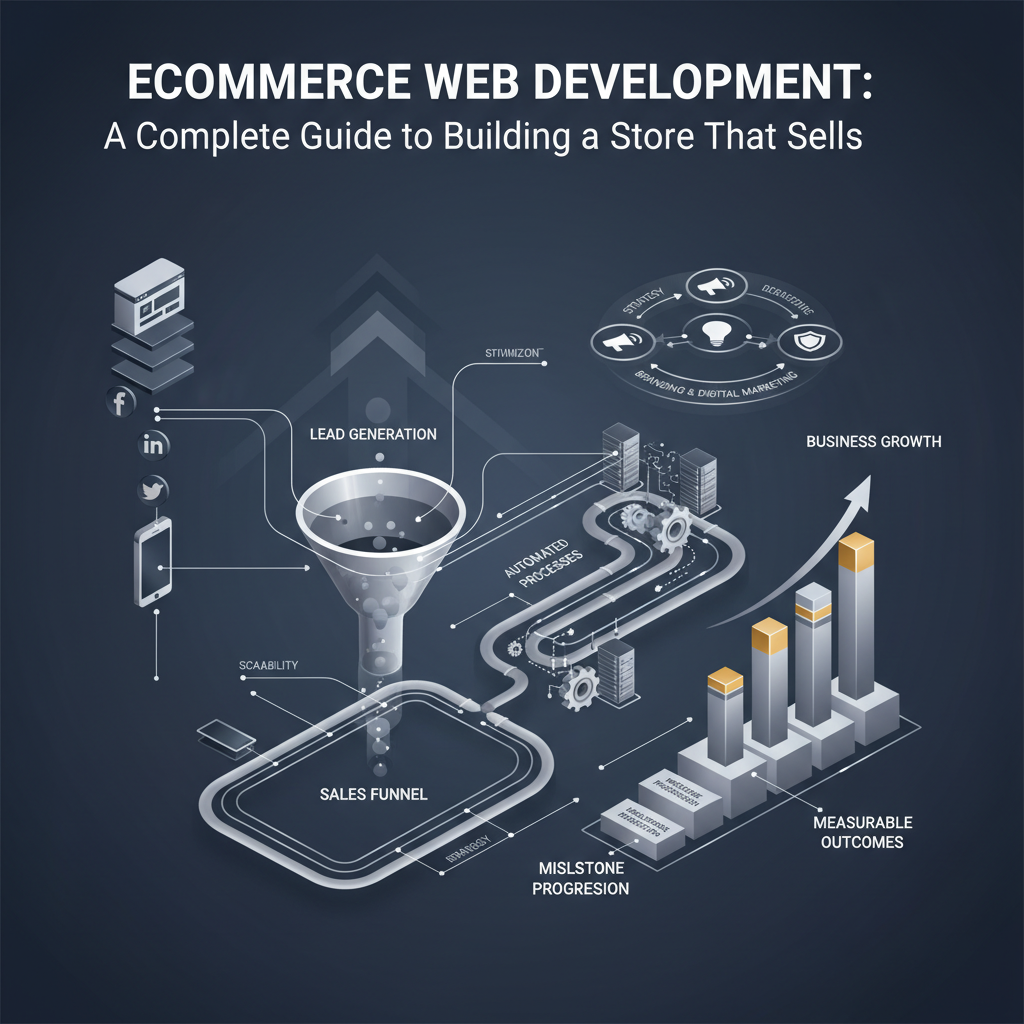
Ecommerce web development is the end-to-end process of creating an online platform for businesses to sell products and services directly to customers. It encompasses everything from website design, custom feature development, and payment gateway integration to security implementation and post-launch maintenance, all aimed at creating a seamless and efficient online shopping experience.
In today’s competitive digital landscape, merely having an online presence isn’t enough to drive sustainable business growth. Many entrepreneurs and small business owners find themselves struggling to grow their business online, overwhelmed by the complexities of marketing and operations, and yearning for a professional, trustworthy image. Building an effective online store requires more than just listing products; it demands a strategic approach to ecommerce web development that turns visitors into loyal customers and ensures your business stands out. Without a well-executed plan, the journey of building an ecommerce site can feel like navigating a maze, leading to inconsistent sales and wasted effort.
This complete guide to ecommerce web development is designed to cut through the noise, offering clear, actionable guidance to help you build a store that truly sells. We understand the need to generate consistent leads and want to automate workflows without losing quality, freeing you from manual tasks. From strategic planning and captivating UI/UX design to robust website creation and implementing automated sales funnels, we’ll walk you through every critical phase. You’ll discover how integrated online business solutions, combined with expert strategies, can transform your vision into a high-performing digital storefront, setting the foundation for significant small business growth.
Whether you’re starting from scratch or looking to revitalize an existing store, this guide will provide the insights you need to make informed decisions about your e commerce development. We’ll explore the core process, from branding and website creation to integrating essential features and leveraging business automation for maximum efficiency. Learn how the right ecommerce development services can help you appear professional and trustworthy online, streamline operations, and scale your business smarter and faster, turning a complex endeavor into a structured, rewarding journey toward online success.
What Is Ecommerce Web Development?
Ecommerce web development is the specialized process of building online stores. It involves creating a functional, secure, and user-friendly platform. This platform allows businesses to sell products or services directly over the internet.
From initial design to final launch, it covers everything. This includes setting up payment systems and managing product catalogs. A robust ecommerce site development focuses on creating a seamless shopping experience. It ensures your customers can easily find, purchase, and receive products.
For entrepreneurs and small business owners, this is more than just a website. It’s your digital storefront, sales engine, and customer service hub.
Why a Professional Ecommerce Site is Crucial for Small Business Growth
In today’s digital landscape, a professional ecommerce site is not optional. It is absolutely essential for small business growth. An effective online presence transforms how you connect with customers and scale your operations.
Many businesses are struggling to grow online. A professionally built ecommerce site offers a powerful solution. It moves you beyond local limitations. It opens your business to a global market.
Here’s why investing in expert ecommerce web development is critical:
- Establishes Credibility and Trust: A well-designed site projects professionalism. It assures customers your business is legitimate and reliable. Approximately 75% of users judge a company’s credibility based on its website design [1].
- Expands Your Reach Significantly: Physical stores have geographical boundaries. An ecommerce site operates 24/7. It reaches customers worldwide. This greatly increases your potential customer base.
- Enhances Customer Experience: Easy navigation, fast loading times, and secure payment options create a positive buying journey. This leads to higher satisfaction and repeat sales.
- Drives Consistent Lead Generation: Your website can integrate lead generation strategies. This includes sign-up forms and calls-to-action. It helps you capture potential customer information around the clock.
- Enables Automated Sales Funnels: A professional site is the foundation for automated sales funnels. These systems guide visitors from browsing to purchasing. They nurture leads automatically.
- Offers Scalability for Growth: As your business expands, a well-built ecommerce site can grow with you. It supports more products, higher traffic, and new features without extensive overhauls.
- Provides Valuable Data Insights: Ecommerce platforms collect data on customer behavior. This insight helps you refine marketing strategies and optimize your offerings.
- Automates Key Business Processes: Integrated systems can automate inventory management, order processing, and shipping. This frees up your time. It helps businesses like yours, often overwhelmed with marketing and operations tasks.
Automated-Biz offers comprehensive online business solutions. We focus on branding and website creation. This ensures your ecommerce site is not just built, but optimized for success. It supports your small business growth journey from day one.
Key Differences: Ecommerce Platforms vs. Custom ecommerce development
Choosing the right foundation for your online store is a critical decision. You generally have two main paths: using an existing ecommerce platform or opting for custom ecommerce development. Each has distinct advantages and considerations.
Understanding these differences helps you make an informed choice. This choice should align with your business goals and future growth plans.
Ecommerce Platforms (e.g., Shopify-website-development/”>Shopify, BigCommerce, WooCommerce)
These are off-the-shelf solutions. They provide pre-built templates and functionalities. They offer a quicker entry into the market.
- Pros:
- Speed to Market: Launch your store relatively quickly.
- Lower Upfront Cost: Subscription-based models reduce initial investment.
- Ease of Use: User-friendly interfaces often require less technical expertise.
- Built-in Features: Many essential ecommerce features are readily available.
- Maintenance & Security: Platform providers handle server maintenance and security updates.
- Cons:
- Limited Customization: Design and functionality are often constrained by the platform’s framework.
- Scalability Limits: May face limitations as your business grows or requires unique features.
- Subscription Fees: Ongoing monthly costs can add up, plus transaction fees.
- Vendor Lock-in: Migrating to a different platform later can be complex and costly.
- Feature Dependence: You rely on the platform’s roadmap for new features.
Custom Ecommerce Development
Custom ecommerce development involves building a unique online store from the ground up. An ecommerce development company or ecommerce developer creates a tailored solution. This meets your exact specifications.
- Pros:
- Complete Customization: Full control over design, functionality, and user experience.
- Unmatched Scalability: Built to grow with your business, handling increasing traffic and product lines.
- Unique Branding: Reflects your brand identity perfectly, without template restrictions.
- Optimal Performance: Tailored code often results in faster loading times and better security.
- Integration Flexibility: Seamlessly integrate with existing business systems and tools.
- No Recurring Platform Fees: Avoids ongoing subscription costs and transaction fees (beyond payment processors).
- Cons:
- Higher Upfront Cost: Requires a larger initial investment for design and development.
- Longer Development Time: The process takes more time due to bespoke coding and testing.
- Requires Expertise: Needs an experienced ecommerce development agency or expert ecommerce web developer.
- Ongoing Maintenance: You or your development partner are responsible for updates and security.
Here is a comparison table summarizing the key differences:
| Feature | Ecommerce Platforms | Custom Ecommerce Development |
|---|---|---|
| Control & Customization | Limited by templates and platform features | Full control; unique design and functionality |
| Development Cost | Lower upfront, ongoing subscription fees | Higher upfront investment, lower long-term platform fees |
| Time to Market | Faster (weeks to a few months) | Slower (several months to a year or more) |
| Scalability | Good for small to medium growth; may have limits | Built for unlimited growth and specific needs |
| Maintenance | Handled by platform provider | Managed by you or your development partner |
| Integration | Via apps or limited APIs | Seamless integration with any system |
| Ownership | You rent the platform, own your data | You own the entire codebase and intellectual property |
For businesses serious about long-term scalability and a truly unique online presence, custom ecommerce website development often proves to be the superior choice. Automated-Biz works as an ecommerce development agency. We provide comprehensive ecommerce web development services. We guide you through selecting the right solution. This ensures your online store is built for maximum impact and sustained growth. We offer expert insight into branding, website design, and digital marketing, integrated under one platform.
What is the Ecommerce Website Development Process?

Building a successful ecommerce store involves a systematic approach. It’s more than just putting products online; it’s about creating a robust, intuitive, and secure platform that drives sales and automates your operations. Automated-Biz guides you through each critical phase of ecommerce web development, ensuring your online store is built for both performance and scalable small business growth.
Phase 1: Strategy and Planning Your Online Store
Every thriving online business begins with a clear strategy. This foundational phase is crucial for defining your store’s purpose and direction. We help you map out every detail before a single line of code is written.
- Define Your Vision: Articulate your core business objectives. What do you want your online store to achieve?
- Target Audience Identification: Understand who your customers are. What are their needs, pain points, and buying habits? This insight informs everything, from design to product offerings.
- Competitive Analysis: Research your competitors. What are they doing well? Where can your business offer unique value? This helps you carve out a distinct niche.
- Product Catalog and Features: List your products and services. Determine essential features like product variations, reviews, and wishlists.
- Monetization Strategy: How will your store generate revenue? Consider pricing models, subscription options, or upsell opportunities.
- Scalability Planning: Anticipate future growth. How will your store handle increased traffic and product expansion? Automated-Biz specializes in solutions that support long-term small business growth.
A solid plan prevents costly revisions and sets the stage for a professional online presence. It streamlines the entire ecommerce development process, saving you time and resources.
Phase 2: UI/UX Design and Brand Integration
Once your strategy is clear, the focus shifts to creating an engaging and user-friendly experience. UI (User Interface) and UX (User Experience) design are vital for attracting and retaining customers.
- User Flow Mapping: We design the journey your customers will take through your site, from discovery to checkout. This ensures a seamless and logical path.
- Wireframing and Prototyping: Visual layouts are created to demonstrate page structure and functionality. This provides a blueprint before visual design begins.
- Custom UI Design: This phase brings your brand to life. We develop visually appealing layouts, color schemes, and typography that reflect your unique branding and website creation vision.
- Intuitive UX Design: Focus is placed on ease of use. This includes clear navigation, fast loading times, and a responsive design that works perfectly on any device. Up to 90% of users have stopped using an app due to poor performance or design [2].
- Brand Integration: Your brand identity is woven into every element. This creates a cohesive and professional online presence that builds trust and recognition. Automated-Biz offers expert branding and custom logo creation to ensure your store truly stands out.
An exceptional UI/UX design keeps customers engaged, reduces bounce rates, and converts visitors into loyal clients. It’s a critical component of strong digital marketing systems.
Phase 3: Choosing Your Tech Stack and Ecommerce Tools
Selecting the right technology stack is fundamental for a stable, scalable, and secure ecommerce platform. This decision impacts your store’s performance, flexibility, and future growth potential.
- Ecommerce Platform Selection: We help you evaluate platforms like Shopify, WooCommerce, or custom solutions. The choice depends on your budget, required features, and scalability needs.
- Database Management: We determine the best way to store product information, customer data, and order history securely and efficiently.
- Server and Hosting: Reliable hosting ensures your store is always accessible and performs optimally, even during peak traffic.
- Third-Party Integrations: Essential tools for business automation are integrated. This includes CRM systems, email marketing platforms for lead nurturing, inventory management software, and shipping solutions. Automated-Biz helps you integrate technology with real-world business strategies to streamline operations.
- Security Measures: Planning for robust security protocols from the outset is non-negotiable. This protects both your business and your customers.
Automated-Biz offers expert guidance in choosing the right combination of tools. This ensures you build a robust foundation for automated sales funnels and efficient business process automation without losing quality.
Phase 4: Website Coding and Development
This is where your vision transforms into a functional ecommerce website. Our ecommerce web development team meticulously builds your store based on the approved designs and chosen technologies.
- Front-End Development: This involves coding what users see and interact with. It includes implementing the UI/UX design, creating responsive layouts, and ensuring smooth user navigation.
- Back-End Development: The unseen engine of your store. This includes server-side logic, database management, and custom functionality development. This powers features like product management, user accounts, and order processing.
- Custom Feature Implementation: Developing unique functionalities tailored to your business. This could be specific product configurators, loyalty programs, or advanced search filters. Custom ecommerce development helps you stand out.
- Content Management System (CMS) Integration: Setting up a system that allows you to easily update product information, blog posts, and other site content without needing a developer.
- Performance Optimization: Ensuring the site loads quickly and runs smoothly across all devices. This is crucial for user experience and search engine rankings.
Automated-Biz’s ecommerce development services focus on clean, efficient code that delivers a high-performing and professional online presence.
Phase 5: Integrating Payment Gateways and Security Protocols
Secure and reliable transactions are the backbone of any ecommerce business. This phase focuses on setting up payment processing and safeguarding sensitive data.
- Payment Gateway Integration: Connecting popular and trusted payment processors like Stripe, PayPal, or Square. This allows your customers to make purchases safely and conveniently.
- SSL Certificate Implementation: Installing an SSL certificate encrypts data transferred between your site and your customers. This is essential for protecting sensitive information and building trust.
- PCI DSS Compliance: Ensuring your store adheres to Payment Card Industry Data Security Standard regulations. This protects credit card data.
- Fraud Prevention Tools: Implementing measures to detect and prevent fraudulent transactions, protecting both your business and your customers.
- Data Privacy Measures: Ensuring compliance with data protection laws like GDPR or CCPA. This builds customer confidence in your online reputation management efforts.
Prioritizing robust security builds trust with your customers. It ensures a safe shopping environment, reinforcing your business’s credibility and professionalism online.
Phase 6: Testing, Quality Assurance, and Launch
The final stage ensures your ecommerce store is flawless, fully functional, and ready to go live. Thorough testing prevents issues that could impact sales and customer satisfaction.
- Functional Testing: Verifying that all buttons, forms, links, and features work as intended. Every component is checked for proper operation.
- Performance Testing: Assessing how the site handles high traffic and large data loads. This ensures stability and speed under various conditions.
- Security Testing: Probing for vulnerabilities to protect against potential threats and ensure data integrity.
- Cross-Browser and Device Compatibility: Confirming the store looks and functions perfectly across different browsers and mobile devices.
- User Acceptance Testing (UAT): Allowing real users (or stakeholders) to test the site. Their feedback helps identify any remaining usability issues.
- Final Content Review: Proofreading all product descriptions, policies, and site content for accuracy and clarity.
- Deployment and Launch: Carefully moving the fully tested site from a staging environment to live production.
- Post-Launch Monitoring: Continuously tracking site performance, security, and user behavior after launch. This helps identify areas for ongoing optimization and supports your small business marketing services.
With Automated-Biz, your ecommerce store undergoes rigorous quality assurance, ensuring a smooth launch and a powerful platform for consistent lead generation strategies and revenue growth.
How Can You Automate and Grow Your Ecommerce Business?
Implementing Automated Sales Funnels
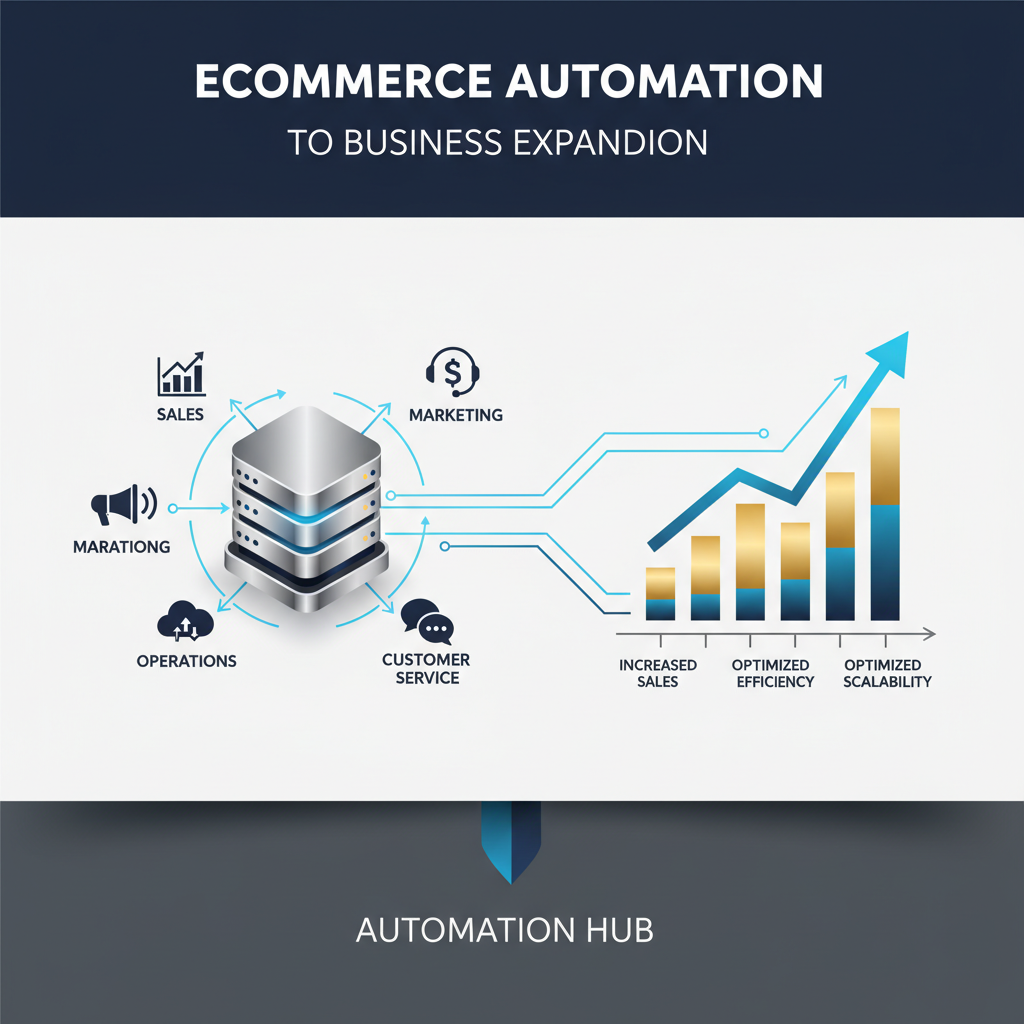
Growing your ecommerce business requires more than just a website. You need a reliable system to convert visitors into loyal customers. Automated sales funnels are your solution. They guide potential buyers seamlessly through every stage. This process turns initial interest into consistent sales. Therefore, you can generate consistent leads effortlessly.
An effective automated sales funnel ensures no lead is left behind. It works while you focus on other critical business areas. Automated-Biz offers robust tools for building these vital funnels. Our platform simplifies complex marketing processes. This helps you establish a professional online presence with ease.
Key steps for implementing automated sales funnels include:
- Awareness Stage: Attract visitors through targeted ads and engaging content. This captures their initial interest.
- Interest Stage: Capture contact information with compelling offers. Think about lead magnets like free guides or exclusive discounts.
- Decision Stage: Nurture leads with personalized emails. Highlight product benefits and address common concerns. Offer clear calls to action.
- Action Stage: Facilitate easy purchases with optimized product pages. Ensure a smooth checkout experience.
- Retention Stage: Follow up post-purchase. Encourage repeat business and solicit feedback.
As a result, you transform inconsistent leads into predictable client acquisition. This strategic approach drives significant revenue growth for your small business.
Using Automation for Lead Nurturing and Customer Retention
Building a customer base is just the start. Keeping them engaged and encouraging repeat purchases is crucial for sustained small business growth. Manual follow-ups are time-consuming. However, automation empowers you to nurture leads and retain customers efficiently. It ensures every client feels valued without overwhelming your team.
Automated lead nurturing campaigns deliver relevant content at the right time. This builds trust and positions you as an expert. For instance, new subscribers can receive a welcome series. Customers who abandon their carts can get timely reminders. This strategy significantly boosts conversion rates [3].
Furthermore, customer retention automation cultivates loyalty. You can set up automated emails for various milestones. This includes birthday wishes or anniversary discounts. Segmenting your audience allows for highly personalized communication. This level of engagement strengthens client relationships. Consequently, it drives repeat sales.
Automated-Biz integrates these powerful lead nurturing and customer retention features. Our platform allows you to:
- Create personalized email sequences based on user behavior.
- Automate post-purchase follow-ups.
- Implement loyalty programs with triggered rewards.
- Collect customer feedback to improve services and manage your online reputation.
- Segment your audience for targeted marketing messages.
This proactive approach ensures continuous engagement. It transforms one-time buyers into lifelong customers. You automate workflows without losing quality or personalization.
Streamlining Operations with Business Process Automation
Many small business owners feel overwhelmed with marketing and operations tasks. Business process automation (BPA) is a game-changer. It automates repetitive, everyday workflows. This frees up valuable time and resources. Consequently, you can focus on strategic growth initiatives.
BPA goes beyond marketing automation. It optimizes back-end functions critical to your ecommerce success. Think about inventory management, order fulfillment, and customer service. Automating these areas reduces human error. It also increases overall operational efficiency.
Automated-Biz provides comprehensive business process automation tools. We empower your online business solutions to run smoothly. Our integrated platform helps you transition from manual, disjointed workflows to automated, streamlined operations. This leads to scalable business processes and faster growth.
Consider automating these common ecommerce operations:
- Inventory Management: Automatically update stock levels across all channels. Generate reorder alerts when supplies are low.
- Order Processing: Sync orders directly from your store to fulfillment centers. Send automated shipping notifications to customers.
- Customer Support: Implement chatbots for instant answers to frequently asked questions. Route complex queries to human agents seamlessly.
- Data Reporting: Generate automated sales reports and analytics. Gain insights into customer behavior and performance trends.
- Employee Onboarding: Automate the distribution of training materials and essential documents for new hires.
By implementing business process automation, your business runs more efficiently. You save time, reduce costs, and enhance customer satisfaction. Automated-Biz empowers you to achieve maximum productivity with minimal effort.
Hiring an Ecommerce Development Company vs. DIY
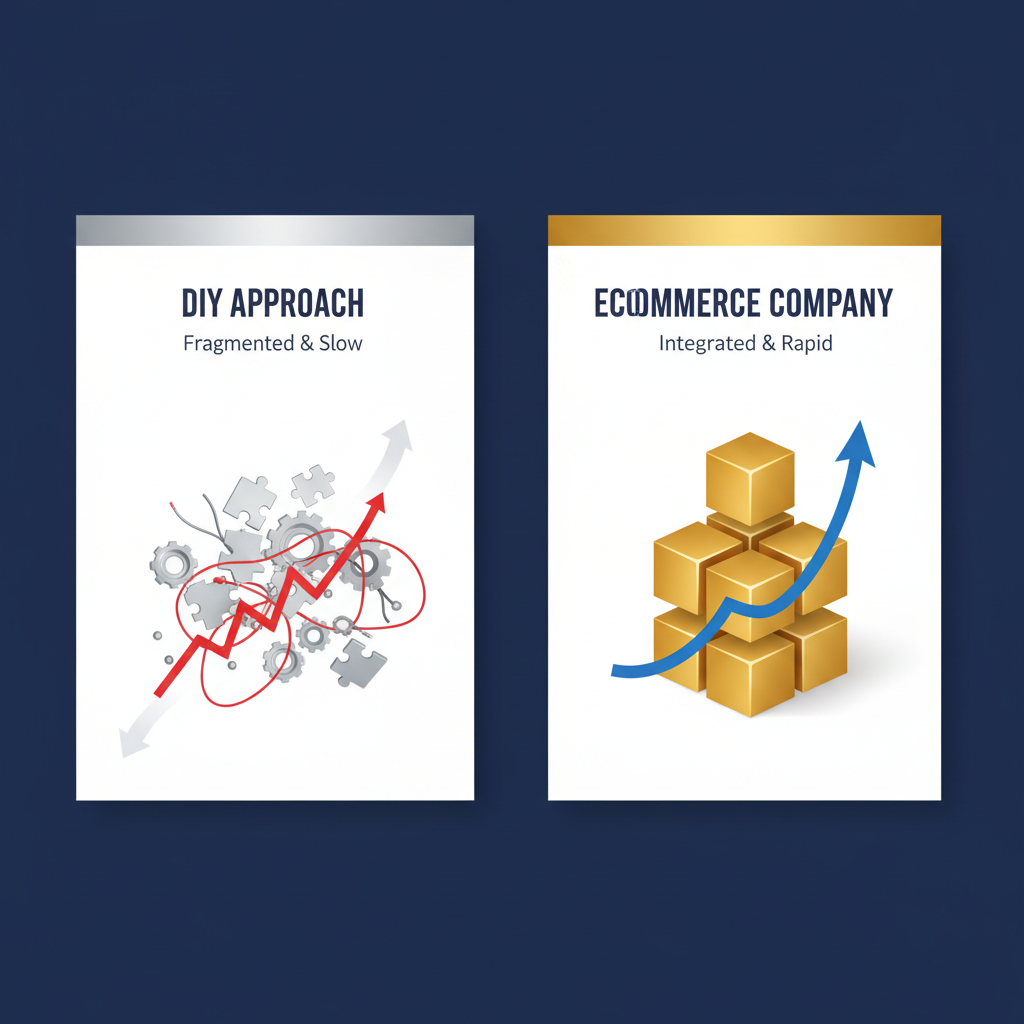
Building a successful online store requires more than just listing products. It demands a strategic approach to technology, design, and marketing. Many entrepreneurs face a critical decision: should you tackle ecommerce web development yourself, or partner with an expert?
While the DIY route can seem cost-effective initially, it often leads to unforeseen challenges. A professional ecommerce development company brings a depth of expertise. This partnership ensures your online presence is not just functional, but also optimized for sales and long-term growth. Furthermore, it frees you to focus on core business strategies.
Benefits of Partnering with an Ecommerce Development Agency
For ambitious entrepreneurs and small business owners, the choice is clear. Collaborating with an ecommerce development agency offers significant advantages. These benefits extend far beyond simply having a website. They impact your efficiency, profitability, and market perception.
Here’s how an expert partner transforms your ecommerce store development:
- Expertise and Experience: Agencies bring years of experience. They understand complex platforms, coding, and integration needs. This expertise helps you avoid common pitfalls.
- Professional Design and User Experience (UX): A polished, intuitive store builds trust. An agency creates a custom design that reflects your brand. This leads to a seamless, engaging shopping experience for customers.
- Scalability and Future Growth: Your business will grow. A professionally built site is designed to scale with you. This prevents costly redevelopments later on.
- Robust Security and Compliance: Online security is non-negotiable. Agencies implement advanced security measures and ensure compliance. This protects both your business and your customers.
- SEO Optimization from Day One: Visibility is crucial for small business growth. Experts build your site with search engine optimization (SEO) best practices in mind. This helps attract organic traffic immediately.
- Seamless Integrations: Ecommerce sites need many integrations. These include payment gateways, inventory management, and CRM systems. Agencies ensure these tools work together flawlessly.
- Automated Workflows: Professional ecommerce development services often include setting up automated sales funnels. They also implement business process automation. This streamlines operations and saves time.
- Time and Resource Savings: Your time is valuable. Delegating development frees you to manage your business. It removes the stress of learning complex technical skills.
- Ongoing Support and Maintenance: Websites require continuous attention. Agencies provide post-launch support, updates, and troubleshooting. This keeps your store running smoothly.
In essence, partnering with an ecommerce development agency shifts you from manual, disjointed workflows to automated, streamlined operations. You move from DIY guesswork to expert-guided business automation. This strategy consistently delivers measurable outcomes for your online business.
Key Skills to Look for in an Ecommerce Developer
When selecting an ecommerce web developer or ecommerce website development company, assess their capabilities carefully. The right developer is more than just a coder. They are a strategic partner. They should understand your business goals and translate them into a high-performing online store.
Here are critical skills and qualities to prioritize:
- Technical Proficiency:
- Platform Expertise: Strong command of leading ecommerce platforms (e.g., Shopify, Magento, WooCommerce).
- Programming Languages: Proficient in relevant languages like HTML, CSS, JavaScript, PHP, Python, or Ruby.
- Database Management: Experience with databases (e.g., MySQL, PostgreSQL) for efficient data handling.
- API Integration: Ability to connect third-party tools and services seamlessly.
- Design and User Experience (UX) Acumen:
- UI/UX Design Principles: Understanding of intuitive navigation, compelling layouts, and responsive design.
- Conversion Optimization: Knowledge of how design impacts customer journeys and purchase decisions.
- Mobile-First Approach: Ensuring the store performs perfectly on all devices.
- Digital Marketing and SEO Knowledge:
- Search Engine Optimization: Implementing technical SEO, site structure, and content best practices.
- Analytics Integration: Setting up tools like Google Analytics for tracking performance.
- Marketing Automation: Understanding how to integrate automated sales funnels and email marketing.
- Security and Performance:
- Cybersecurity Best Practices: Implementing SSL certificates, secure payment gateways, and data protection.
- Performance Optimization: Ensuring fast load times and smooth operation.
- Business Acumen and Communication:
- Project Management: Ability to manage timelines, budgets, and deliverables effectively.
- Communication Skills: Clear, regular updates and responsiveness to your needs.
- Strategic Thinking: Understanding your small business growth strategies and providing relevant recommendations.
A developer with these skills can build a site that not only looks professional but also acts as a powerful engine for your online business solutions. They transform your vision into a revenue-generating asset.
When to Use an Ecommerce Website Builder
For some businesses, a DIY ecommerce website builder can be a viable starting point. These platforms offer templates and drag-and-drop interfaces. They require minimal technical skills. However, it’s crucial to understand their limitations. Website builders are best suited for specific scenarios.
Consider a website builder if:
- You Have a Very Limited Budget: Builders often have low monthly fees. This makes them accessible for bootstrapped ventures.
- Your Needs Are Basic: You only require standard product listings and simple payment processing. You don’t need complex features.
- You’re Testing a Business Idea: A builder allows you to launch quickly. You can validate your product or market before investing heavily.
- You Have Minimal Customization Requirements: You are comfortable with template-based designs. You don’t need unique branding elements or advanced functionality.
- You Don’t Anticipate Rapid Scaling: Your business is likely to remain small. You don’t foresee needing extensive integrations or high traffic volumes.
However, for businesses serious about sustained small business growth and professional presence, builders often fall short. They typically lack the flexibility for custom ecommerce development. Furthermore, they can hinder advanced business automation and personalized customer experiences. For instance, only about 26% of small businesses actively use marketing automation [4]. This highlights a gap that professional services can fill.
While builders offer a quick launch, they often lead to fragmented workflows. You might find yourself overwhelmed with marketing and operations tasks that a custom solution could automate. When you’re ready to move beyond basic functionality and truly scale, expert ecommerce web development services become essential. They provide the robust foundation, seamless integrations, and growth-oriented features that builders simply cannot match.
Frequently Asked Questions
How much does ecommerce website development cost?
The cost of ecommerce website development varies significantly. It depends on several factors. Therefore, providing a single price is challenging.
Expect a broad range. Simple, templated sites can start from a few thousand dollars. More complex, custom ecommerce development projects can reach tens of thousands, or even more. The investment should align with your business goals.
Key factors influencing the cost of your ecommerce site development include:
- Complexity of Design and Features: Basic templates cost less. Custom user interface (UI) and user experience (UX) designs increase the price. Advanced features like custom product configurators or augmented reality also add to the expense.
- Number of Products and SKUs: More products mean more data entry. This can also require more robust database management.
- Integrations: Connecting with third-party systems affects cost. Examples include enterprise resource planning (ERP) software or customer relationship management (CRM) tools.
- Custom Functionality: Unique business logic or specific operational needs require custom coding. This is a significant cost driver.
- Hosting and Maintenance: Ongoing costs for secure hosting, regular updates, and technical support are crucial.
- Marketing and SEO: Initial search engine optimization (SEO) setup and digital marketing strategies impact the total investment.
Investing in a professional ecommerce web development service is vital. It lays the foundation for small business growth. Our approach at Automated-Biz focuses on delivering integrated online business solutions. These solutions provide measurable returns on your investment. For instance, a well-built site can significantly improve conversion rates [5].
We help businesses avoid the pitfalls of low-cost, low-quality solutions. Our services include robust branding and website creation. Furthermore, we offer automated sales funnels and comprehensive online reputation management. This holistic approach ensures long-term success, not just a functional website.
How do you create an ecommerce website for free?
Creating an ecommerce website for “free” is often an appealing idea for new entrepreneurs. Several platforms offer free plans or trials. These allow you to set up a basic online store. Examples include certain tiers of Shopify, Wix, or Squarespace.
However, it is crucial to understand the limitations and hidden costs involved. True business automation and sustainable small business growth rarely come without investment.
Here are common trade-offs with “free” ecommerce solutions:
- Limited Features: Free plans typically restrict crucial functionalities. These include payment gateway options, product limits, or storage.
- Lack of Customization: Your design options are usually very basic. This can hinder your branding and website creation efforts. It makes it difficult to appear professional and trustworthy online.
- No Custom Domain: You often cannot use your own professional domain name. Instead, you get a subdomain (e.g., yourstore.platform.com). This looks less credible to customers.
- Platform Branding: The platform’s branding may appear prominently on your site. This dilutes your own brand identity.
- Transaction Fees: Many “free” platforms charge higher transaction fees. These fees can quickly erode your profits.
- Limited Support: Access to customer support is often basic or nonexistent. This can leave you struggling to grow your business online without help.
- Scalability Issues: Free options are not designed for scaling your business. As your sales grow, you will quickly hit limitations. You will then need to upgrade, incurring costs.
For serious entrepreneurs and small business owners, a truly professional online presence requires a strategic investment. Automated-Biz provides integrated online business solutions. Our platform focuses on business automation and lead generation strategies. We empower you to build a scalable, revenue-generating ecommerce store. This approach avoids the constraints and hidden costs of “free” alternatives.
What are the most important ecommerce web development tools?
Building a successful ecommerce store requires a robust set of tools. These tools streamline operations, enhance customer experience, and drive small business growth. They are vital for anyone wanting to automate workflows without losing quality.
The most important ecommerce web development tools fall into several categories:
- Ecommerce Platforms: These are the foundation of your online store.
- Examples: Shopify, WooCommerce (for WordPress), Magento, BigCommerce.
- Benefit: They provide the core infrastructure for product listings, shopping carts, and checkout processes. Many also offer app marketplaces for extending functionality.
- Payment Gateways: Securely process customer transactions.
- Examples: Stripe, PayPal, Square, Authorize.Net.
- Benefit: Essential for accepting payments. They ensure secure transactions, which builds customer trust.
- Content Management Systems (CMS): Manage your site’s content.
- Examples: WordPress, Drupal, Joomla (often integrated with ecommerce platforms).
- Benefit: Allows for easy creation and management of product descriptions, blog posts, and static pages.
- Customer Relationship Management (CRM) Software: Manage customer interactions.
- Examples: HubSpot, Salesforce, Zoho CRM.
- Benefit: Critical for lead nurturing, tracking customer behavior, and providing personalized service. This helps generate consistent leads and increase repeat sales.
- Email Marketing Automation Tools: Automate communication with customers.
- Examples: Mailchimp, Klaviyo, ActiveCampaign.
- Benefit: Facilitate automated sales funnels. They help with cart abandonment reminders, promotional campaigns, and post-purchase follow-ups.
- Analytics and Reporting Tools: Track website performance.
- Examples: Google Analytics, Hotjar, platform-specific dashboards.
- Benefit: Provide insights into traffic, sales, and user behavior. This enables data-driven decisions for optimizing your store.
- Social Media Automation Tools: Schedule and manage social content.
- Examples: Buffer, Hootsuite, Sprout Social.
- Benefit: Essential for social media management and organic/paid engagement. They streamline marketing efforts and increase online visibility.
- Live Chat and Support Tools: Provide real-time customer assistance.
- Examples: Zendesk, Intercom, Tidio.
- Benefit: Improves customer satisfaction and can boost conversion rates by answering questions instantly.
At Automated-Biz, we provide integrated online business solutions. Our platform helps you leverage these tools effectively. We focus on business process automation and efficient productivity workflows. This ensures your ecommerce store runs smoothly, enabling you to maximize revenue with minimal effort.
What is the difference between an ecommerce developer and a web developer?
While both roles involve building websites, the distinction between an ecommerce developer and a general web developer is crucial for businesses aiming to sell online. An ecommerce developer possesses specialized skills tailored to the unique demands of online retail.
A web developer is a broad term. It refers to someone who builds and maintains websites. They work with various programming languages and frameworks. Their focus is on creating functional and visually appealing sites. This includes informational sites, blogs, or corporate portfolios.
An ecommerce developer, however, is a specialized web developer. They focus exclusively on building and optimizing online stores. Their expertise goes beyond general web design. They understand the intricacies of online transactions, product management, and secure data handling.
Here is a comparison of their key differences:
| Feature | Web Developer | Ecommerce Developer |
|---|---|---|
| Primary Focus | Building any type of website (informational, corporate, blogs). | Building online stores for selling products or services. |
| Core Skills | HTML, CSS, JavaScript, general front-end/back-end development, database management. | All web development skills, plus specialized knowledge in ecommerce platforms, payment gateways, security, inventory management, taxation, conversion optimization. |
| Key Challenges | Ensuring website functionality, responsiveness, basic security, and user experience. | Managing product catalogs, secure payment processing, inventory synchronization, shipping logic, order management, sales funnels, and fraud prevention. |
| Business Goal | Establishing an online presence or conveying information effectively. | Driving sales, optimizing conversion rates, streamlining online transactions, and customer acquisition. |
| Platform Expertise | Can work with various CMS (e.g., WordPress, Drupal). | Proficient in specific ecommerce platforms (e.g., Shopify, Magento, WooCommerce) and their APIs. |
For small business owners struggling to grow your business online, hiring an ecommerce web developer or partnering with an ecommerce development agency is essential. Their expertise ensures your online store is not just present but also performs optimally. This specialized knowledge directly impacts your automated sales funnels and ability to generate consistent leads.
Automated-Biz provides comprehensive ecommerce development services. We offer custom ecommerce website development and a full suite of digital marketing systems. Our team combines general web development principles with deep ecommerce specialization. This ensures your online store is professional, secure, and built for scalable business processes.
Sources
- https://www.sweor.com/article/website-trust
- https://techjury.net/blog/ui-ux-statistics/
- https://www.omniscend.com/blog/abandoned-cart-statistics/
- https://www.statista.com/statistics/1230491/marketing-automation-usage-by-company-size/
- https://unbounce.com/conversion-glossary/what-is-a-good-conversion-rate/
Leave a Reply