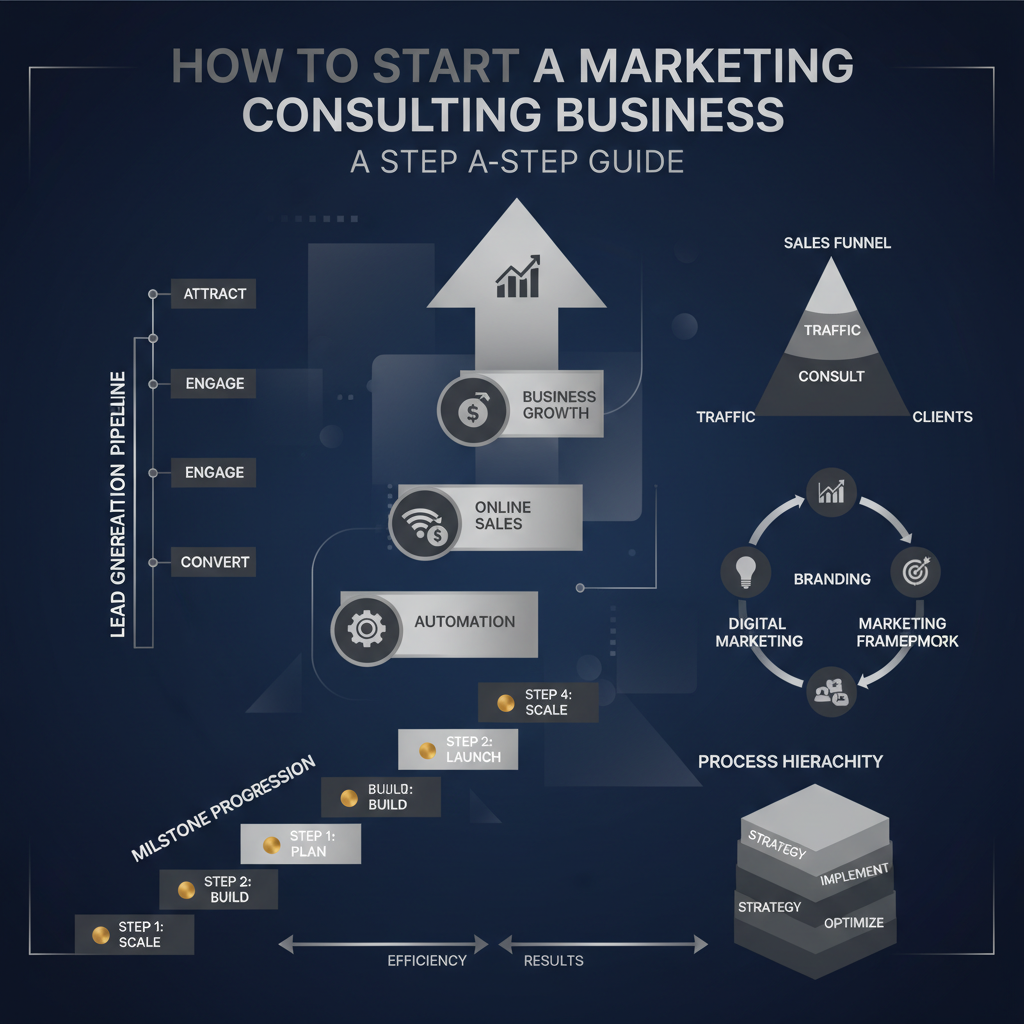
Starting a marketing consulting business involves defining a specific niche, legally establishing your company, and creating a compelling list of services. The critical first steps include building a professional website to establish credibility, setting competitive pricing, and implementing automated lead generation strategies to attract your first clients efficiently.
Are you a marketing expert ready to start your own business? The idea of starting a marketing consulting business is exciting, but turning that expertise into a successful company can feel overwhelming. Many new consultants get stuck on the details of setting up the business, building a professional website, and finding clients consistently. You know you can offer great services, but how do you handle getting clients, managing projects, and maintaining a professional image?
This step-by-step guide cuts through the confusion with clear, simple strategies to launch and grow your consulting firm. We’ll walk you through finding your niche, creating a brand, building a high-converting website, and getting leads. At Automated-Biz, our goal is to help you use automation to create a smooth, scalable business. We’ll help you move from manual effort to a streamlined system, setting you up for sustainable small business growth from day one.
Ready to turn your expertise into a profitable business? Let’s start by understanding the role of a modern marketing consultant to build a strong foundation for your success.
What Does a Marketing Consultant Actually Do?
Defining the Role of a Modern Marketing Consultant
A modern marketing consultant is more than an advisor. They are a strategic partner for small business growth, helping owners handle the challenges of the digital world. They turn marketing problems into clear, step-by-step plans.
Consultants offer expert advice. They find areas for improvement and put online solutions into practice. Their main goal is to help businesses grow online and get measurable results.
Today’s marketing consultants often focus on business automation. They build smart systems that save clients time. They change manual, disconnected marketing tasks into smooth, automated ones. This helps businesses grow more effectively, going from random leads to a reliable way of getting new clients.
This role requires both strategic planning and practical skills. Consultants combine technology with real-world business goals. They make sure a client’s online presence looks professional and builds trust. They are essential for any business wanting to increase revenue with less effort.
Key Responsibilities and Outcomes
A marketing consultant focuses on getting real results. They work to improve efficiency, increase sales, and build a stronger online presence for their clients. Here are their main tasks and the outcomes they deliver:
- Strategic Planning & Analysis:
- Responsibility: Review current marketing, find what’s missing, and study market trends. They help define the ideal customer and set clear goals.
- Outcome: A clear small business growth strategy. This roadmap helps you get a steady flow of leads and use your resources wisely.
- Online Branding and Website Creation:
- Responsibility: Help clients with professional branding and logo design. They also manage website design and hosting to build a strong online foundation.
- Outcome: A professional and consistent brand. This includes a website that turns visitors into customers, building online trust and visibility.
- Automated Sales Funnels and Lead Nurturing:
- Responsibility: Design and set up automated sales funnels. These systems capture new leads and guide them through the buying process. They also create automated follow-up messages to build relationships.
- Outcome: A steady flow of leads and a smoother sales process. Automation helps clients get new customers predictably and encourages repeat business.
- Social Media Automation and Content Planning:
- Responsibility: Create strong social media plans and set up automation tools. They also plan a calendar of engaging content.
- Outcome: Increased brand awareness and customer engagement. This saves time while keeping a professional and active presence on social media.
- digital marketing systems & Client Acquisition:
- Responsibility: Set up various digital marketing systems, like SEO and email marketing. They focus on proven strategies to generate leads.
- Outcome: A steady stream of new clients. This helps businesses grow and build a system that can attract even more customers over time.
- Online Reputation and Review Management:
- Responsibility: Create systems to track online reviews and manage customer feedback. They work to build a positive online reputation.
- Outcome: A more trustworthy and credible brand. A good reputation helps build customer loyalty and attract new clients.
- Productivity Workflows and Time-Saving Processes:
- Responsibility: Review current work processes and introduce business automation strategies. They add tools to make operations run more smoothly. Automation can save businesses up to 40% of their time on repetitive tasks [1].
- Outcome: Major time savings and a more efficient business. Owners feel less overwhelmed by daily tasks. This helps the business grow, moving from guesswork to smart, expert-led automation.
How Do You Find Your Profitable Niche?
Step 1: Identify Your Expertise and Passion
To find a profitable niche, start by looking at your professional background and personal interests. Your unique mix of skills, experience, and passion is the foundation of your consulting business.
Think about what excites you and which problems you enjoy solving. When your passion and expertise align, your work becomes more fulfilling, and you can deliver exceptional value to your clients.
To identify your core strengths, ask yourself the following questions:
- What specific marketing challenges have I successfully overcome for past employers or clients?
- Which industries or business models do I understand deeply?
- What marketing tasks do I perform effortlessly, where others struggle?
- Which aspects of
small business growthgenuinely interest me the most? - Do I have specialized knowledge in areas like
branding and website creation,social media automation, orautomated sales funnels?
Your answers will point to areas where you can be a go-to expert. This helps you stand out and build trust with clients who want a professional and trustworthy online presence.
A strong passion also fuels dedication and keeps you motivated, especially in the beginning. Automated-Biz helps you showcase this expertise with professional online business solutions, including expert-driven branding and website design.
Step 2: Research Market Demand and Competition
Passion is the first step, but you also need to confirm there’s a real market for your skills. Make sure businesses are actually looking for solutions to the problems you can solve.
Start by researching market demand. Look for businesses that are struggling to grow their business online, need to generate consistent leads, or feel overwhelmed with marketing and operations tasks.
Effective market research involves:
- Keyword Research: Analyze search terms potential clients use to find solutions. Tools like Google Keyword Planner can reveal popular queries and pain points.
- Industry Reports: Review current trends and challenges facing specific sectors. Many industries face similar digital marketing hurdles.
- Online Forums & Communities: Listen to conversations on platforms like Reddit, LinkedIn groups, or industry-specific forums. People often voice their frustrations and needs there.
- Competitor Analysis: Examine what other
small business marketing servicesconsultants offer. Understand their pricing, target audience, and marketing messages. Identify gaps they are not filling effectively.
Your goal is to find where your unique skills meet a real market need. This strategic position is key for small business growth and helps you stand out from the competition.
Automated-Biz offers tools and insights to help you analyze market trends. You can use them to build lead generation strategies and automated sales funnels that connect with your target audience.
Step 3: Define Your Ideal Client Profile
Once you’ve identified your expertise and confirmed market demand, it’s time to define your ideal client. This isn’t just about who can pay you, but who you want to work with and can help the most.
A clear Ideal Client Profile (ICP) guides your digital marketing systems and client acquisition efforts. It helps you tailor your messaging, making your marketing more efficient and your business automation strategies more effective.
To build your ICP, consider these areas:
- Demographics: What is their industry, business size, location, and annual revenue?
- Psychographics: What are their business goals, values, and attitudes towards marketing and technology?
- Pain Points: What specific challenges do they face? Are they
overwhelmed with marketing and operations tasks? Do theyneed to generate consistent leads? Do theywant to automate workflows without losing quality? - Aspirations: What outcomes are they looking for? Do they desire a professional online presence? Do they want scalable
business automation? - Budget: What is their realistic capacity to invest in solutions?
By deeply understanding your ideal client, you can create compelling offers and effective lead generation strategies. This helps you attract clients who value your services, which reduces wasted marketing effort and leads to more predictable revenue growth and smoother productivity workflows.
Automated-Biz provides an integrated platform to help you attract, nurture, and manage these ideal clients. Our tools, like branding and website creation, social media automation, and online reputation management, are designed to help you create a professional online presence and serve your specific audience.
What Marketing Consulting Services Should You Offer?
Developing a Core List of Services
First, define your core marketing consulting services. Your services should solve common problems for small business owners. Focus on offerings that deliver clear results and use automation.
Offer expert solutions that make complex marketing tasks simple. This helps clients save time and reach their goals more easily.
Here are in-demand services you should consider offering:
- Branding and Website Creation: Many businesses need help looking professional and trustworthy online. You can offer branding, custom logo design, and website creation with hosting. This gives them a strong, credible online presence from the start.
- Lead Generation & Automated Sales Funnels: Clients always need more leads. Offer proven strategies to generate leads and build automated funnels to nurture them. This turns a slow trickle of leads into a steady stream of new clients.
- Social Media Management & Automation: Small business owners are often too busy to handle marketing. Offer to manage their social media and use automation tools for posts and ads. This saves them time and helps them reach more people.
- Online Reputation Management: Trust is everything. Help clients monitor and improve their online reputation. You can manage their reviews and maintain a positive brand image. Automated-Biz offers great tools to make this process easier.
- Content Marketing Strategy: Help clients create valuable content like blog posts, videos, and infographics. Good content attracts the right audience, builds their authority, and drives traffic to their site.
- Email Marketing & Nurturing: Create email campaigns that turn leads into customers. Use automated email sequences for new subscribers, promotions, and more. This helps build strong customer relationships.
Remember, your goal is to help clients move from manual, scattered work to smooth, automated systems. A 2023 survey showed that 70% of small businesses are investing in digital marketing, which means there is a strong demand for these services [2].
Packaging Your Services for High Value
You can offer services one by one, but packages offer much more value. Packages show you understand what your clients really need. They show how combining services leads to better results. You’re no longer just doing tasks—you’re providing a complete growth plan.
Think about how your services work together. For example, a client who wants a new website also needs traffic and a way to nurture leads. A package that includes all three is a complete solution. This is much more powerful than just selling a website. As a result, clients see a clear path to their goals.
Packaging also strengthens the Automated-Biz brand. Our platform offers branding, website creation, automated funnels, and client management. By combining these services, you offer a complete, all-in-one solution. This makes it easier for clients to decide. They get a single, simple approach that saves them time and money.
Focus on the change your packages deliver. Show how you take clients from guessing on their own to using an expert-guided, automated system. This helps you charge more and attract serious clients.
Creating Tiered Offerings (e.g., Audits, Projects, Retainers)
To suit different client needs and budgets, offer your services in tiers. This gives clients clear ways to start working with you. It also helps you grow your business and earn steady income.
Automated-Biz helps you manage these different client relationships. You can automate onboarding, communication, and reporting for every tier.
Here are three common models for service tiers:
-
Audits and Strategy Sessions:
- Purpose: This is a great way to start with new clients.
- Focus: Find gaps in their current marketing and give them a clear plan to follow.
- Outcome: Clients get a clear strategy with steps they can take right away.
- Value: You deliver a lot of value quickly, with no long-term commitment. It proves your expertise.
-
Project-Based Engagements:
- Purpose: Best for clients who need help with a specific, one-time project.
- Focus: Implement one key goal, like building a new website, setting up an automated funnel, or running a lead generation campaign.
- Outcome: Clients get a clear result in a set amount of time.
- Value: They get big results for a one-time price.
-
Retainer-Based Partnerships:
- Purpose: For clients who want long-term support and steady growth.
- Focus: Provide ongoing marketing, social media management, content planning, and online reputation management.
- Outcome: Clients get steady growth, a reliable flow of new customers, and ongoing improvements.
- Value: This model provides you with steady income. Clients get an expert partner who helps them grow their revenue and save time.
By offering different service levels, you can meet the needs of more clients. This lets you help clients at any stage, guiding them from spotty results to reliable success.
What Are the Steps to Legally Set Up Your Business?
Choosing a Business Name and Structure
To legally start your marketing consulting business, you first need to make two key decisions: your business name and its legal structure. These choices affect your taxes, liability, and how clients see your brand.
Selecting Your Business Name
Your business name is your first impression. It should be professional, memorable, and reflect what you do. A strong name is a big part of your branding and website creation effort [3].
Follow these steps to make a good choice:
- Check Availability: Make sure your desired name is available at the state level (Secretary of State) and federally (USPTO for trademarks).
- Secure Your Domain: Ensure the matching website domain name is available. This is crucial for your professional online presence.
- Social Media Handles: Check if the name is also available on your preferred social media platforms.
Automated-Biz offers tools for branding and website creation. This helps you build a consistent online identity after you’ve secured your name.
Deciding on Your Business Structure
Choosing the right legal structure is a critical step for small business growth [4]. It affects your personal liability and how much you pay in taxes. Here are common options for marketing consultants:
- Sole Proprietorship: This is the simplest and cheapest option. There is no legal separation between you and the business. Your personal assets are not protected from business debts or lawsuits.
- Limited Liability Company (LLC): An LLC protects your personal assets by separating them from business debts. It also offers tax flexibility, often letting profits pass through to your personal income without corporate taxes. Many consultants choose an LLC for these reasons.
- S Corporation (S-Corp): An S-Corp is a tax election, not a legal structure. It can help owners avoid self-employment taxes on profit distributions. You can elect S-Corp status for your LLC or corporation.
- C Corporation (C-Corp): A C-Corp offers the strongest liability protection but is subject to “double taxation.” This means corporate profits are taxed, and then dividends paid to owners are taxed again personally. This structure is less common for solo consultants.
For most marketing consultants, an LLC is a great choice. It provides liability protection and tax benefits. This lets you focus on growing your business without putting your personal assets at risk.
Registering Your Business and Getting Necessary Licenses
After you’ve chosen a name and structure, you need to register your business and get the right permits. This makes sure your business operates legally.
Federal and State Registrations
Following the rules now will prevent legal headaches later. Here’s what you usually need to do:
- Employer Identification Number (EIN): Get an EIN from the IRS. You’ll need this if you plan to hire employees or form most types of LLCs. An EIN is like a social security number for your business.
- State Registration: Register your business with your state’s Secretary of State or a similar office. This is required for LLCs and corporations, and sometimes for sole proprietors using a fictitious name (DBA). Rules vary by state.
Local Licenses and Permits
Don’t forget local rules. Your city or county may require specific licenses.
- Business Operating License: Many cities and towns require a general license to do business in their area.
- Zoning Permits: If you work from home, check local zoning laws. Some areas have rules about home-based businesses.
Keeping up with these rules can feel overwhelming. But, using business process automation for admin tasks can make it easier as you grow. This helps you run a professional and trustworthy business.
Setting Up Your Finances and Contracts
Keeping your finances separate and having clear client agreements are essential for any real business. These steps protect you and build client trust.
Establishing Business Finances
It is critical to separate your personal and business finances. This protects your personal assets, especially if you have an LLC or corporation. It also makes accounting and tax prep much easier. A survey by Clutch found that 40% of small business owners handle their own bookkeeping [5].
Here’s how to do it right:
- Business Bank Account: Open a separate bank account for all business income and expenses. This is key for liability protection.
- Business Credit Card: Use a business credit card for purchases. This keeps spending separate and can help you build business credit.
- Accounting Software: Use cloud-based accounting software from day one. This makes it easier to track expenses, send invoices, and create financial reports. Automated-Biz’s integrated online business solutions can simplify your financial work and boost your productivity.
Crafting Robust Client Contracts
Clear contracts protect both you and your clients. They set expectations, list deliverables, and define payment terms to prevent misunderstandings. This is key for good lead nurturing and positive client relationships.
Your contracts should include:
- Scope of Work: Clearly list the specific services you will provide. Be as specific as possible.
- Deliverables: List all reports, assets, or other work the client will receive.
- Payment Schedule: Outline payment amounts, due dates, and how often you’ll send invoices. Include rules for late payments.
- Confidentiality Clause: Protect sensitive information shared by you and the client.
- Intellectual Property: State who owns the finished work after it’s been paid for.
- Termination Clause: Explain how either you or the client can end the contract.
Always have a lawyer review your contract templates. This makes sure they are legally sound and protect you. Automated-Biz can help make your client onboarding process smoother. Its automated sales funnels can include digital contracts and e-signatures. This gives every client relationship a professional and efficient start.
How Do You Price Your Consulting Services?
Common Pricing Models Explained
Setting the right price for your consulting services is key to profitability and sustainable small business growth. Your price should do more than cover costs—it should also communicate the value you provide. The right pricing model affects your income stability and how clients perceive your brand.
Here are the most common pricing models for marketing consultants:
- Hourly Rate: In this straightforward model, you charge for the actual time you spend on a project. While it’s easy for clients to understand, it can limit your earning potential because you are only paid for your time. This model may not appeal to clients who prefer predictable costs.
- Project-Based (Fixed Fee): You set a single price for an entire project, like branding and website creation or implementing automated sales funnels. Clients often prefer this model for its budget certainty, and it allows you to earn more if you work efficiently.
- Retainer/Subscription Model: Clients pay a recurring fee for ongoing access to your services, which creates predictable monthly revenue for you. This model is ideal for continuous work like social media automation or online reputation management and helps build long-term client relationships.
- Value-Based Pricing: This advanced model ties your fee directly to the measurable results you deliver. For example, you could charge a percentage of the revenue generated from your lead generation strategies. It can be highly profitable when you can clearly demonstrate ROI, but it requires strong client trust and a clear understanding of their goals.
- Performance-Based (Hybrid): This model combines a fixed fee with a bonus tied to performance metrics. For instance, a client might pay a base fee plus a commission for meeting sales targets. This approach aligns your success with the client’s and can be highly motivating for both of you.
Calculating Your Rates for Profitability
Calculating your rates can feel daunting, but it’s a critical step toward building a sustainable business. Knowing your worth is what moves you from just getting by to achieving real growth and business process automation.
Follow these steps to ensure your rates are both competitive and profitable:
- Determine Your Desired Annual Income: Start with your personal financial goals. How much do you need to earn each year to meet your living expenses and savings?
- Calculate Your Annual Operating Costs: List all your business expenses, including software subscriptions, marketing, insurance, online business solutions, and tools for business automation.
- Account for Non-Billable Hours: Not every hour you work is billable. Remember to include time spent on admin, marketing, professional development, and sales calls. Roughly 30-40% of your time might be non-billable.
- Estimate Your Billable Hours Per Year: If you work 40 hours a week, and 35% are non-billable, you have about 26 billable hours (40 * 0.65). Over 50 weeks, that is 1,300 billable hours per year.
- Research Market Rates: Investigate what other marketing consultants charge for similar small business marketing services to get a baseline. Sites like Upwork or industry reports can offer valuable insights [6].
- Consider Your Experience and Value: Your unique expertise, proven results, and specialization in areas like automated sales funnels or custom branding and website creation justify a higher price. Don’t undervalue what makes you different.
A simple formula to estimate your baseline hourly rate is: (Desired Annual Income + Annual Operating Costs) / Annual Billable Hours. Use this as a starting point, then adjust it based on your market research and the value you provide.
Communicating Value to Justify Your Price
Many small business owners hesitate to charge higher rates, but a premium price often signals quality and expertise. Your goal is to help clients see your services as an investment, not just an expense.
Here is how to effectively communicate your value and justify your pricing:
- Focus on Outcomes, Not Just Activities: Clients care about results. Instead of saying “I will manage your social media,” say “I will implement social media automation strategies to increase your brand visibility by 30% and generate consistent leads.” Highlight the transformation you offer.
- Quantify Results and Share Success Stories: Use data, case studies, and testimonials to prove your success. Show how your lead generation strategies increased revenue or how your online reputation management services built client trust. This builds credibility.
- Highlight Your Unique Expertise: Showcase your specialized knowledge. For example, maybe you excel at creating high-converting automated sales funnels or helping businesses appear professional and trustworthy online. Explaining what makes you unique supports a higher price.
- Show How You Save Time and Effort: Your clients are often overwhelmed with marketing and operations tasks. Explain how your solutions, especially those using business automation, will streamline their processes. This frees them up to focus on what they do best.
- Present Clear, Tiered Proposals: Offer “Good, Better, Best” service packages. This allows clients to choose based on their budget and desired level of support. It also gives you an opportunity to upsell higher-value, more comprehensive online business solutions. Each tier should clearly outline deliverables and expected outcomes.
- Reinforce Your Professional Online Presence: Your own polished website and brand demonstrate your skills. A professional online presence shows that you are serious about your business and can deliver similar high-quality results for your clients.
Your pricing should reflect the true value you bring to your clients. You help them go from struggling to grow their business online to achieving predictable, scalable success. Price yourself accordingly.
How Can You Build a Professional Online Presence?
Creating Your Branding and Website
A strong online presence starts with great branding and a working website. These are more than just looks—they build trust, prove your credibility, and help you find new leads. Think of your brand as your promise to clients and your website as its home.
Define Your Unique Brand Identity
A clear brand helps you stand out and attract the right clients. It’s more than a logo—it’s about your core values and how you talk to your audience.
- Craft a Compelling Brand Story: Share your mission and what makes your consulting business different. What problems do you solve? How do you help clients improve their business?
- Design a Professional Logo: Your logo is often the first thing people see. It should be memorable, relevant, and professional. A strong logo is the foundation of your visual brand.
- Choose Consistent Visuals: Pick brand colors and fonts that match your personality. Use them everywhere—online and offline—to create a consistent look.
- Develop a Distinct Brand Voice: Decide on your tone. Will you be friendly, professional, or something else? Using the same tone helps people recognize you.
Automated-Biz provides tools to help you create a professional brand and a custom logo. We help you build a strong foundation without hiring multiple agencies, so you look professional and trustworthy from day one.
Build a High-Converting Website
Your website works for you 24/7. It should show off your services, highlight your skills, and turn visitors into clients. It also needs to be fast, mobile-friendly, and easy to use.
- Showcase Your Services Clearly: List the marketing consulting services you offer. Explain the benefits and results clients can expect.
- Highlight Your Portfolio and Case Studies: Show your past work. Real-world examples prove you can deliver results and build confidence.
- Feature Client Testimonials: Positive reviews act as powerful social proof and build credibility. In fact, 93% of consumers say online reviews influence their purchasing decisions [7].
- Integrate Clear Calls to Action (CTAs): Tell visitors what to do next. Use buttons like “Book a Consultation” or “Download Our Free Guide” to make it easy for them to connect.
- Prioritize User Experience (UX): Make sure your site is simple and easy to navigate. A good experience keeps visitors engaged.
A weak website is often why businesses struggle to grow online. Automated-Biz makes website design and hosting simple. Our online tools work with your branding to create a powerful, professional presence that helps your small business grow.
Optimizing Your LinkedIn Profile for Lead Generation
LinkedIn is a vital platform for marketing consultants. It connects you with potential clients and helps you build your reputation as an expert. Optimizing your profile is a key way to find new leads.
Transform Your Profile into a Client Magnet
Think of your LinkedIn profile as more than a resume—it’s a networking tool. It should clearly show potential clients how you can help them.
- Craft an Impactful Headline: Go beyond your job title. Describe the problem you solve for clients. For example, “Marketing Consultant | Helping Small Businesses Generate Consistent Leads.”
- Write an Engaging “About” Section: Use this space to tell your story. Highlight your skills, successes, and the benefits you provide. Use keywords your ideal clients might search for.
- Detail Your Experience and Achievements: Focus on results. Use numbers to show your success whenever possible. How did you help past clients increase revenue?
- Gather Recommendations and Endorsements: Social proof is important. Ask happy clients for recommendations. Endorsements for your skills also help you get noticed.
- Publish Relevant Content: Share articles, insights, and industry updates. This shows you are an expert and keeps your profile active.
An optimized LinkedIn profile helps you find new clients. While it takes some effort, Automated-Biz can help you nurture the leads you get with automated sales funnels. This frees you from feeling overwhelmed by marketing tasks.
Establishing Authority with Content Marketing
Content marketing is a powerful way to build trust and show your expertise. It helps you become a known authority in your field. Good, consistent content attracts and educates potential clients, helping you get more leads.
Become a Go-To Expert in Your Niche
Regularly sharing valuable content helps you stand out in a busy market. It shows what you know and helps you build a loyal following.
- Identify Your Audience’s Pain Points: Create content that solves the problems your ideal clients face. Answer their common questions.
- Develop Diverse Content Formats:
- Blog Posts: Share in-depth tips and practical advice.
- Case Studies: Show off successful client projects and the results you achieved.
- Whitepapers or E-books: Offer detailed guides on complex topics.
- Webinars or Video Tutorials: Engage your audience with visual content.
- Infographics: Make complex information easy to understand with visuals.
- Maintain a Consistent Publishing Schedule: Regular content keeps your audience engaged and improves your search engine ranking. Consistency shows you are reliable.
- Distribute Your Content Strategically: Share your content everywhere—on your website, in email newsletters, and on social media—to help more people see it.
Many business owners feel overwhelmed by marketing, especially creating and sharing content. Automated-Biz offers social media automation and content planning tools. These solutions help you get your insights to the right audience with less effort. This turns unpredictable results into a steady stream of new clients.
With Automated-Biz, you can automate marketing tasks without losing quality. This lets you focus on creating great content while our platform handles scheduling and distribution. It’s a key part of growing your business, helping you move from guesswork to a proven system.
What is the Best Way to Get Your First Clients?
Leveraging Your Existing Network
The best place to find your first clients is your own network. This group of people is a powerful resource that many forget. These are people who already know and trust you. They can be your first supporters.
Start by making a complete list. Include old coworkers, friends, family, and other professional contacts. Reach out to them personally. Tell them about your new marketing consulting business. Clearly explain how you help small businesses. This direct approach quickly gets the word out.
Consider offering a special starting rate or a free consultation. This makes it easier for people to say yes. Also, ask for referrals. Many businesses grow through word-of-mouth recommendations [8]. A good referral can help you land a client much faster. A professional online presence also makes it easy for your network to refer you. Automated-Biz helps you build this essential trust.
Developing Automated Sales Funnels
After contacting your network, use automated sales funnels to get more clients. A sales funnel is a system that guides people on their journey from first hearing about you to becoming a paying customer. This system saves you time and brings in new clients consistently. It turns an unpredictable process into a reliable one.
A good sales funnel has a few key stages:
- Awareness: Grab people’s attention with helpful content. This can be blog posts, social media updates, or targeted ads.
- Interest: Get their contact information. Offer something free, like a guide or template, on a special webpage.
- Decision: Build trust with automated emails. These emails should offer more helpful tips and solve common problems, like how to grow a business online.
- Action: Turn interested people into clients. Ask them to schedule a call or buy your service directly.
Automated-Biz gives you the tools to easily build and manage these funnels. From custom web pages to automated emails, our platform simplifies how you find new leads. This lets you focus on doing great work for your clients instead of sending manual follow-ups.
Implementing Effective Lead Generation Strategies
Besides using your network and sales funnels, try other ways to find new clients. These methods will keep new leads coming in. The goal is to attract people who are already looking for the solutions you offer. Using these methods with automation tools makes them even more effective.
Here are some key ways to find leads:
- Content Marketing: Write helpful blog posts, case studies, and guides. Share what you know to solve common problems for small business owners. This shows you’re an expert.
- Search Engine Optimization (SEO): Improve your website so it shows up high in search results for the right keywords. This brings you visitors who are already interested in your services.
- Social Media Engagement: Be active on the platforms your ideal clients use. Share useful content and talk to people directly to build relationships. You can use tools to help you post regularly.
- Online Reputation Management: Ask happy clients to leave good reviews. Keep an eye on what people say about you online. A good reputation builds trust and brings in new business.
- Strategic Partnerships: Work with other businesses that serve similar clients but don’t compete with you, like web developers or accountants. Working together can introduce you to new groups of clients.
By using a single platform like Automated-Biz, you can manage all of this easily. You can create a professional brand and website. You can also automate your social media posts and track your online reputation. This helps you look professional and trustworthy online. It takes your business from guesswork to expert-guided automation. You’ll get a steady stream of new leads and grow your small business faster.
How Can You Automate Your Business for Scalable Growth?
Automating Client Onboarding and Management
As your marketing consulting business grows, managing clients can take up a lot of time. Handling new clients by hand often leads to mistakes and wasted effort. With automation, you can make these processes smooth and professional.
You can start automating from the moment a potential client contacts you. This gives every client the same great experience from the start.
- Automated Lead Nurturing: Create automated email sequences to guide potential clients. These messages are sent based on how they interact with your content. Nurturing leads this way can turn more of them into paying clients [9].
- Streamlined Onboarding: When a new client signs up, automatically send them a welcome series. This can include a welcome email, a link to their client portal, and a questionnaire to get started. This way, you never miss a step.
- Digital Contracts and Invoices: Stop using paper contracts. Use e-signature tools for easy signing. Connect your billing software to send invoices and payment reminders automatically. This saves time on admin work and helps you get paid faster.
- Automated Project Kick-off: Send welcome packets that automatically outline project timelines and what to expect. You can also send surveys to learn about your client’s goals. This sets clear expectations from the start.
- Client Relationship Management (CRM): Keep all client information in one place with a good CRM. A CRM helps you track emails, project progress, and past work. It’s a key tool for growing your business without getting overwhelmed.
- Get More Reviews: When a project ends, automatically ask clients for testimonials and online reviews. Good reviews build trust and help you get new clients.
Automating these tasks saves you a lot of time. You can focus on great client work and growing your business instead of repetitive chores. It also helps you look professional in every client interaction.
Using Tools for Social Media Automation
Trying to keep up with all your social media channels can be overwhelming. Without the right tools, it can eat up your day. Social media automation helps you reach more people and get more engagement with less work.
Using automation tools wisely is key for modern marketing. It keeps your brand active and in front of your audience.
- Schedule Content in Advance: Use scheduling tools to plan your posts ahead of time. This keeps your social media active, even when you’re busy. Posting regularly often leads to more engagement.
- Find and Create Content: Use tools that automatically find interesting articles and news to share. Some tools even use AI to help you write posts. This is a great way to find new leads.
- Monitor Mentions: Set up alerts for when someone mentions your brand or certain keywords online. This lets you respond quickly, which is great for customer service and your reputation.
- Share Content Everywhere: Automatically share your content on different social media sites. For example, a single blog post can be turned into several social media updates. This gets more eyes on your content and makes it last longer.
- Track Your Performance: Get automatic reports on how your social media is doing. You can track things like how many people you’re reaching and how much traffic you’re getting. This data helps you improve your strategy.
Social media automation saves time and helps you connect better with your audience. It makes your business look professional and trustworthy online, which is essential for any marketing consultant.
Streamlining Reporting and Communication
Good communication and clear reports are key to keeping clients happy. Making reports by hand or managing messages can be slow and lead to mistakes, especially as you get more clients. Automation can help you streamline this important work.
Automated tools for reporting and communication make things clear and efficient. They free you up to focus on strategy instead of paperwork.
- Automated Reporting Dashboards: Set up a dashboard that pulls data from all your marketing tools (like Google Analytics, social media, and ad accounts) into one place. It can then automatically create reports for your clients, giving them a clear look at how their campaigns are doing.
- Custom Client Portals: Give clients a secure online portal to see reports, check project updates, and talk with your team. This keeps everything in one place and makes communication easy. It also makes your business look more professional.
- Scheduled Updates: Automatically notify clients by email or through their portal when a new report is ready or a project milestone is hit. This keeps them in the loop without you having to send manual updates.
- Automated Feedback Requests: Send out automated surveys during or after a project. This helps you get valuable feedback to improve your services. Acting on customer feedback can help you keep more clients [10].
- Internal Team Tools: Don’t forget your own team. Use project management software to automate task assignments and reminders. This keeps everyone on the same page and projects on schedule.
Using these automation strategies makes your work more efficient and builds client trust. Moving from manual work to automated systems is a key step to growing your business.
Frequently Asked Questions
How much can you earn starting a marketing consulting business?
As a marketing consultant, your earning potential is high and can grow. How much you make depends on your expertise, your niche, and the results you get for clients.
In the United States, many marketing consultants earn an average of around $87,485 a year [11]. But experienced consultants with a specialty can earn much more. Those who offer high-value small business marketing services often make over $150,000 to $200,000 per year.
Your income is tied to how well you solve your clients’ biggest problems, like struggling to grow your business online or needing to generate consistent leads. When you deliver great results every time, you can charge higher prices.
Automating your business with a platform like Automated-Biz can also help you earn more. By making tasks more efficient, you can handle more clients without letting the quality of your service drop.
To make the most money, you should:
- Specialize in a profitable niche: Become an expert in a specific industry or service area.
- Focus on measurable ROI: Prove the financial impact of your work to clients.
- Develop tiered service packages: Offer a range of solutions, from audits to full-scale retainers.
- Build a strong professional online presence: Attract higher-paying clients through credible branding and website creation.
- Implement automated sales funnels: Consistently bring in new leads for your own consulting business.
- Continuously learn and adapt: Stay ahead in digital marketing trends to offer cutting-edge online business solutions.
Can you start a marketing consulting business from home?
Yes, you can. Starting a marketing consulting business from home is not only possible, it’s very common. Since marketing is digital, working remotely is a great fit.
Many successful consultants run their entire business from a home office. This approach gives you more flexibility and lowers your costs since you don’t need to rent an office. It also means you can work with clients anywhere in the world, not just in your local area.
To run a successful home-based business, you need:
- A dedicated, professional workspace: Even a corner of a room can work, but make sure it’s free from distractions and set up for productivity.
- Reliable technology: High-speed internet, a good computer, and professional communication tools are essential.
- A strong professional online presence: Your website, professional branding, and social media profiles act as your storefront. Automated-Biz provides the tools for powerful branding and website creation.
- Effective business automation: Tools for signing up clients, managing projects, and automating messages are key. Automated-Biz helps you automate workflows without losing quality.
- Strong communication skills: Clear virtual communication builds client trust and helps projects succeed.
Using online business solutions like video conferencing, cloud storage, and project management software makes it easy to work with clients and team members from anywhere. These tools help you build a successful business, save time, and make your work more efficient.
What are common services offered by marketing consulting firms?
Marketing consultants offer many small business marketing services to help clients grow. These services often solve problems like struggling to grow your business online or needing to generate consistent leads.
Common services often include:
- Digital Marketing Strategy: Creating detailed plans, doing market research, analyzing competitors, and setting key performance indicators (KPIs).
- Branding and Website Creation: Crafting brand identities, designing logos, building professional websites, and improving the user experience.
- Search Engine Optimization (SEO): Improving search engine rankings to get more website visitors.
- Content Marketing: Creating helpful content like blog posts, articles, and videos to attract and engage an audience.
- Social Media Marketing & Social Media Automation: Creating social media plans, managing profiles, running campaigns, and automating posts and engagement.
- Automated Sales Funnels & Lead Nurturing: Setting up systems to capture leads and guide them through the sales process. This is key for revenue growth.
- Email Marketing: Building email lists, writing engaging campaigns, and setting up automated emails.
- Paid Advertising (PPC): Managing ad campaigns on platforms like Google and social media to drive traffic and leads.
- Online Reputation Management: Monitoring what people say about a brand online and managing reviews to build a positive image.
- Analytics & Reporting: Tracking marketing results, providing insights from data, and improving strategies based on what works.
Many consultants bundle these services together into complete online business solutions. Automated-Biz gives consultants an all-in-one platform to offer these services well. Our tools make your work easier by helping you manage client campaigns, automate messages, and track progress. This allows you to grow your business the smart way.
Sources
- https://www.mckinsey.com/capabilities/operations/our-insights/five-steps-to-getting-started-on-your-automation-journey
- https://clutch.co/small-business-digital-marketing-survey-2023
- https://www.forbes.com/advisor/business/how-to-name-a-business/
- https://www.sba.gov/business-guide/start-your-business/choose-your-business-structure
- https://clutch.co/accounting/resources/small-business-accounting-statistics
- https://www.consulting.com/consulting-rates-guide
- https://www.statista.com/statistics/1233045/us-online-review-influence/
- https://www.nictatech.com/blog/small-business-statistics
- https://www.pardot.com/resources/what-is-lead-nurturing/
- https://www.salesforce.com/news/press-releases/2022/04/26/customer-service-stats-2022/
- https://www.glassdoor.com/Salaries/marketing-consultant-salary-SRCH_KO0,19.htm