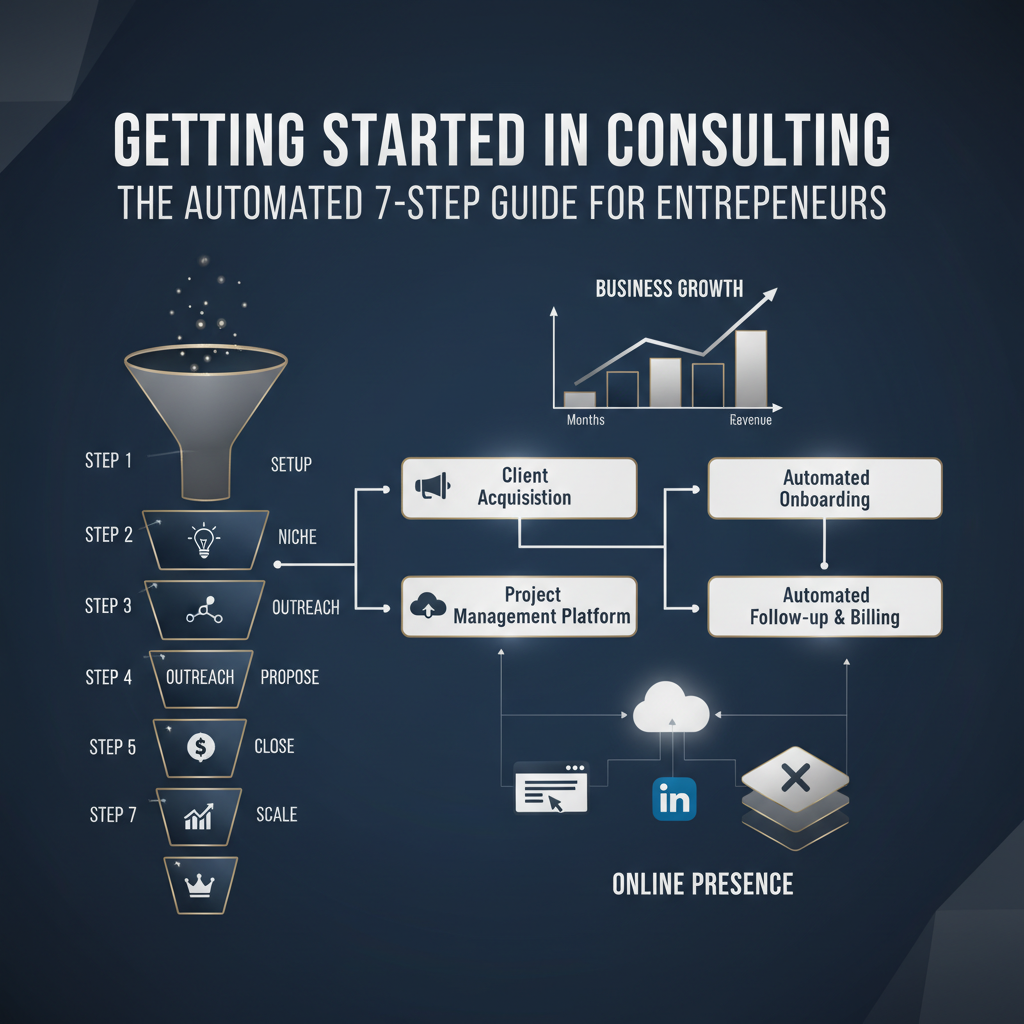
Getting started in consulting involves identifying your area of expertise, defining your ideal client, and establishing a professional brand. The key steps include creating service packages, setting up marketing systems to generate leads, and using business automation to streamline client onboarding and management for scalable growth.
Are you an expert in your field, ready to turn your knowledge into a successful consulting business? Many professionals dream of guiding clients and solving tough problems. But the path to getting started in consulting can feel overwhelming. With so many tasks—from finding your niche to building a professional online presence and mastering lead generation strategies—it’s easy to get frustrated.
This automated 7-step guide is for professionals like you who want to build and grow a successful consulting practice. We understand the challenges of small business growth and the need for a professional website without hiring multiple teams. Automated-Biz gives you the practical strategies and online tools you need to succeed. We’ll show you how to simplify your operations, attract steady leads, and build credibility by replacing manual work with automated systems.
Forget the guesswork and slow DIY methods. Our expert-led guide walks you through every key step, from defining your brand and building a high-converting website to managing your social media and online reputation. With Automated-Biz, you get proven workflows and business process automation tools. We help you start your consulting business the right way so you can increase revenue and achieve steady growth. Let’s dive in and show you how to build and automate your business with clarity and confidence.
Why Should You Start a Consulting Business?
The Key Benefits of a Consulting Model for Experts
Are you an expert in your field with special knowledge that can solve tough business problems? Becoming a consultant lets you use your skills in powerful new ways. It’s a great path to gain control over your career and finances.
Starting a consulting business has many benefits:
- Unleash Your Expertise: Your deep knowledge is your main asset. Clients pay you for your ideas and solutions, which is more rewarding than just completing tasks.
- Increased Earning Potential: Consultants can often earn more than in a typical job. You set your own rates and control your income. The global consulting market was valued at over $300 billion in 2023, showing there is a lot of demand [source: https://www.statista.com/statistics/1220479/management-consulting-market-size-worldwide/].
- Flexibility and Autonomy: You control your schedule and choose your clients. This freedom helps you create a better work-life balance because you decide where and when you work.
- Scalable Business Growth: A consulting business can grow easily. You can move beyond trading your time for money. Use business automation to serve more clients without working more hours. Automated-Biz offers the tools to make your work easier from day one.
- Meaningful Impact: You can directly help small businesses grow and solve tough problems for your clients. Seeing the real results of your advice is very satisfying.
- Low Overhead and Quick Launch: It usually costs less to start a consulting business. Your expertise is the main investment. A professional online presence is key to success. Automated-Biz provides branding and website creation services to help you launch quickly and with confidence.
However, running a consulting business takes more than just being an expert. Many business owners feel overwhelmed by marketing and daily tasks. This is where Automated-Biz can help. Our platform helps you automate repetitive work and find new clients consistently. We help you build a professional brand online without hiring several different companies.
Is Consulting the Right Path for You? A Quick Assessment
While consulting has great benefits, it’s not for everyone. It’s important to be honest about your skills and what you enjoy. This quick assessment will help you decide if consulting is a good match for your goals.
Ask yourself these questions:
- Do you possess deep, specialized knowledge? Your skills need to be valuable to other people. Can you clearly explain the specific problems you can solve?
- Are you a self-starter and disciplined? As a consultant, you need a lot of self-motivation. You have to manage your time well and stay focused, since there’s no boss watching you.
- Are you comfortable with sales and business development? Consultants must actively look for and win clients. This means networking, writing proposals, and finding new leads. Automated-Biz provides automated sales funnels to make this easier.
- Can you handle client relationships? It’s key to build trust and manage what clients expect. You must communicate clearly and professionally. Tools for managing your online reputation can help with this.
- Do you enjoy solving complex problems? Consulting is all about thinking things through. You will figure out problems and create practical solutions.
- Are you adaptable? The world of consulting changes quickly. You must always be learning and updating what you offer.
- Are you ready to build a business? Consulting is more than just giving advice. It involves marketing, admin work, and managing money. Automated-Biz has integrated tools to help you manage all of this and turn manual work into a smooth process.
If you answered yes to most of these questions, consulting could be a great fit for you. You are in a good position for a rewarding career using your strengths. Automated-Biz is designed to support business owners like you. We provide expert-guided business automation to help you build, grow, and automate your online business with less effort. Let us help you stop the guesswork and start getting clients consistently.
Step 1: How Do You Define Your Consulting Niche and Services?
Identify Your Core Expertise and Market Value
To start your consulting business, you need to know your unique strengths. The first step is identifying your core expertise [source: Forbes]. This builds the foundation for your success in getting started in consulting. It defines the specific problems you solve for clients.
Look at your professional background. What knowledge, skills, and experiences make you unique? Think about your past successes and the real results you produced. Your market value comes from these unique skills.
Follow these steps to find your core expertise:
- List Your Skills: Write down every skill you have. Include technical abilities, soft skills, and industry-specific knowledge.
- Highlight Achievements: Think about projects where you made a big impact. Use numbers to describe these achievements whenever possible (e.g., “increased sales by 15%,” “cut operational costs by 10%”).
- Identify Passions: What topics excite you? Where do you naturally do well and enjoy solving problems? When your passion and expertise align, you’ll be more dedicated.
- Pinpoint Pain Points Solved: Think about common problems you’ve helped clients or employers solve. How did your skills provide the solution?
- Seek Feedback: Ask former colleagues or clients what they see as your main strengths. Their outside perspective is valuable.
Your expertise must provide clear benefits to a potential client. This value is your core offering. It helps you build trust and attract the right clients from the start.
Research Profitable Niches and Your Ideal Client Profile
Trying to serve everyone rarely leads to consistent small business growth. Instead, specializing in a profitable niche is key for consultants. Focusing on a niche helps you become a known expert. This makes your lead generation strategies more effective and lets you charge higher rates [source: Harvard Business Review].
First, find market demand for your skills. Look for industries or clients with ongoing problems you can solve. Think about current trends and what people will need in the future. This will keep your services relevant long-term.
Next, create your ideal client profile (ICP). This is more than just basic information. It’s about understanding their main challenges and goals. A clear ICP makes all your small business marketing services much more effective. It also simplifies your automated sales funnels.
When defining your ideal client, ask:
- Who benefits most from your expertise? Which businesses or people have the most to gain?
- What are their biggest pain points? What keeps them awake at night?
- What are their goals and aspirations? What kind of success are they looking for?
- What is their budget capacity? Can they afford your services?
- Where do they get information? Which online platforms or communities do they use?
- What are their values? Do your business values line up with theirs?
Knowing your ICP helps you tailor your message. It also helps you create services that people truly want. This focused approach turns random interest into a steady stream of new clients.
Structure and Price Your Signature Service Packages
Once you know your niche and ideal client, it’s time to create your service packages. Move beyond hourly rates. Use value-based pricing. This method focuses on the results you deliver. As a result, it ensures your prices match your true market value.
Your service packages should be clear and focused on results. Consider offering a few different packages at different price points. This serves clients with different needs and budgets. This strategy helps you earn more money while offering flexible options.
Key elements of structuring your service packages:
- Identify Core Solutions: What main problems do your services solve? Break down what you do into distinct deliverables.
- Define Deliverables: Clearly list what clients get in each package. This could include reports, workshops, strategy sessions, or hands-on support.
- Set Clear Outcomes: Focus on the results clients will get. For example, “smoother operations” or “increased lead conversion rates.”
- Name Your Packages: Use clear, benefit-driven names (e.g., “Foundation Growth Package,” “Automated Sales Accelerator”).
Value-Based Pricing Strategies
Good pricing is key for online business solutions and for making a profit long-term. Your pricing should be based on the high value you provide, not just the hours you work.
Consider these pricing strategies:
- Project-Based Fees: Charge one flat fee for the entire project. This is predictable for both you and the client.
- Retainer Models: Offer ongoing support for a set monthly fee. This creates a steady, predictable income.
- Performance-Based Fees: Link part of your fee to specific results. This shows you are confident in your work.
- Value-Based Packages: Bundle multiple services into a single price. Focus on the client’s return on investment (ROI).
Automated-Biz provides tools to simplify how you deliver these services. With our platform, you can automate project management, client communication, and invoicing. This makes you more efficient and look more professional. It also frees you up to focus on important client work. In the end, this approach moves you from manual, messy work to smooth, automated systems. You can implement business process automation to save time and grow your business.
Step 2: How Do You Build a Professional Consulting Brand?
Choosing a Memorable Business Name and Domain
Your consulting business name is more than just a label. It’s the foundation of your brand. A strong, memorable name and matching domain quickly build trust and help you stand out in a busy market.
When you’re starting out, pick a name that shows your expertise and connects with your ideal clients. Think about the services you offer and the value you provide.
Key Considerations for Naming Your Consulting Business:
- Relevance: Does the name match what you do? A relevant name helps potential clients understand your services at a glance.
- Memorability: Choose a name that is easy to remember and say. Simple names often make the best impression.
- Uniqueness: Make sure your name is different from your competitors. This helps you build a unique online presence.
- Availability: Check if the domain name and social media handles are available. A consistent name across all platforms is key for marketing.
- Scalability: Pick a name that lets you grow or add new services later. Avoid names that are too specific if you plan to expand.
Securing Your Domain Name:
Once you have a name, getting the right domain is your next important step. Your domain is your online address and the front door to your business.
- Match Your Name: Try to get a domain that is the same as your business name. This strengthens your brand and makes you easy to find.
- Prioritize .com: While there are other options, .com is the most recognized and trusted extension. Most people type “.com” by default [1].
- Keep it Concise: Shorter domains are easier to type and remember, so people make fewer mistakes.
- Avoid Hyphens and Numbers: These can be confusing and look unprofessional.
This planning helps your brand start off strong and professional. It helps you avoid the common mistake of having an unclear brand that makes it hard to grow.
Creating Your Professional Brand Identity and Logo
A professional brand is more than a name—it’s how your business looks and feels to clients. Your brand identity shows people who you are, what you do, and the quality they can expect.
For new and small businesses, a consistent brand builds trust and makes you look like an expert. It helps you appear professional online from day one.
Core Elements of a Strong Brand Identity:
- Logo Design: Your logo is the most recognized part of your brand. It should be unique, professional, and match your consulting style. A great logo helps people recognize you instantly.
- Brand Colors: Colors create certain feelings. Using a consistent color scheme across your website and marketing materials helps people remember you.
- Typography: The fonts you use show your brand’s personality. Choose fonts that are easy to read and fit your overall tone.
- Imagery Style: This includes the photos, illustrations, and icons you use. A consistent style for all your visuals makes your brand message stronger.
- Brand Voice: This is the tone you use in your writing and communication. Are you formal, friendly, or technical? A consistent voice creates a clear brand personality.
The Power of Brand Consistency:
Using your brand identity consistently everywhere is key to growing your small business. It builds recognition, creates trust, and shows you’re a professional. Everything from your website to your social media should have the same look and feel. Automated-Biz specializes in professional branding and custom logos, making sure your brand looks great and is used consistently everywhere.
Building a High-Converting Website for Your Consulting Business
Your website is your online office. It’s open 24/7 to show off your skills and attract new clients. For consultants, a good website is key for getting new leads and building a professional online presence. It turns visitors into potential customers and, eventually, loyal clients.
Instead of struggling with scattered marketing efforts, a professional website ties everything together and makes your business look good.
Essential Elements of a High-Converting Consulting Website:
- Clear Value Proposition: Quickly explain what you do, who you serve, and why you’re different. Visitors should understand your value in seconds.
- Professional Design and User Experience (UX): Your site should be clean, modern, and easy to use. It should also work well on any device, from phones to desktops.
- Detailed Service Pages: Clearly describe your services, your process, and the results clients can expect. Explain how you solve your clients’ problems.
- About Page: Share your story, your background, and what makes you unique. This builds trust and helps people connect with you.
- Client Testimonials and Case Studies: Social proof is very effective. Share client success stories and testimonials to build trust and show your value.
- Strong Calls to Action (CTAs): Tell visitors what to do next with clear buttons like “Schedule a Free Consultation” or “Download My Guide.”
- Lead Capture Forms: Use simple forms to collect contact information from interested visitors. This is essential for capturing leads for your sales process.
- Blog or Resource Section: Share helpful articles and tips related to your work. This shows you’re an expert, helps with search engine rankings, and brings in new leads.
- Contact Information: Make it easy for people to get in touch with you. Include your phone number, email, and a contact form.
Automated-Biz offers all-in-one website design and hosting for consultants. We focus on building beautiful websites that work well and turn visitors into leads. By connecting your site to automated sales and marketing systems, we help you simplify your work and get new clients steadily, so you aren’t overwhelmed by marketing tasks. This ensures your online presence is not just professional, but a powerful tool for growing your business.
Step 3: What Legal and Financial Foundations Are Necessary?
Choosing the Right Business Structure (Sole Proprietor vs. LLC)
Choosing the right legal structure is a key first step for any consultant. It affects your taxes, liability, and how professional you look. The right choice protects your personal assets and prepares your business for growth.
Many consultants start as a Sole Proprietor. But as you grow, other options offer more benefits. An LLC, for example, can be a great choice for building a professional online presence.
Sole Proprietorship Explained
A Sole Proprietorship is the simplest business structure. It means you and the business are legally the same. There is no legal distinction between you and your consulting venture.
- Pros:
- Easy and cheap to set up.
- Less paperwork and administration.
- All profits are yours.
- Cons:
- No personal liability protection. Your personal assets are at risk if your business faces debt or lawsuits.
- Can appear less professional to larger clients.
- Harder to raise money or get investors.
Limited Liability Company (LLC) Explained
An LLC is a mix of different business types. It gives you the liability protection of a corporation and the tax benefits of a sole proprietorship. This makes it a popular choice for consultants who want both safety and flexibility.
- Pros:
- Personal Asset Protection: Protects your personal assets (like your home or car) from business debts and lawsuits. This is a key benefit.
- More Credibility: Having “LLC” after your business name can make you look more professional and stable to clients.
- Tax Flexibility: You can choose how your LLC is taxed (e.g., as a sole proprietorship, partnership, or even a corporation).
- Easier Funding: May be easier to secure business loans or attract investors.
- Cons:
- More complex to set up and maintain than a Sole Proprietorship.
- Higher setup and yearly fees.
- You must follow specific state rules.
Making Your Choice
Think about your comfort with risk and your goals for growth. A Sole Proprietorship is a simple way to start, but an LLC offers important protection and a more professional look. Approximately 80% of new businesses choose an LLC structure for its balance of protection and simplicity [2].
We recommend talking to a legal professional. They can give you advice for your specific situation. This helps you build a strong legal foundation that supports your business goals.
Setting Your Consulting Rates with Confidence
Setting the right price for your services is key to being profitable and showing your value. Your rates should match your expertise and the results you provide. Don’t make the common mistake of charging too little.
Pricing with confidence makes you look like an expert. It also gives you the revenue to invest in tools for sales and finding new clients. This helps you avoid the struggle of growing your online business without enough money.
Factors Influencing Your Rates
Several things should guide your pricing:
- Your Experience and Niche: Specialized consultants with a strong track record can charge more.
- Market Value: See what your competitors charge. This gives you a starting point for pricing your online services.
- Value Delivered: Focus on the results you deliver. How much money will you help clients make? How much time will you save them by automating their processes?
- Overhead Costs: Include all your business expenses, like software, marketing, and training.
- Desired Income: Figure out your income goals. Your rates need to help you reach them.
Common Consulting Pricing Models
Different models work for different services and clients:
- Hourly Rate: Good for small tasks or short projects. To find your rate, divide your target annual income by the number of hours you can bill.
- Project-Based Fee: Best for projects with a clear scope. This is clear for clients and pays you for the result, not just your time. It helps everyone focus on outcomes.
- Retainer Model: This gives you steady, predictable income. Clients pay a set monthly fee for ongoing access to your help. It helps build long-term relationships and stable growth.
- Value-Based Pricing: You charge based on the value or return on investment (ROI) you provide. This model requires confidence and clear ways to measure your success.
Actionable Steps to Set Your Rates
- Calculate Your Target Hourly Rate: Even if you don’t charge by the hour, it’s important to know what your time is worth. Be sure to include your desired salary, benefits, and business expenses.
- Research Your Market: Use online tools, industry reports, and your network to see what others are charging. Sites like Upwork or industry groups can give you a good idea [3].
- Define Your Service Packages: Group your services into clear packages. This makes it easy for clients to see everything you offer.
- Practice Communicating Your Value: Get good at explaining the benefits and ROI clients get from working with you. Focus on the change you provide, like moving from manual work to smooth, automated systems.
Remember, you can change your rates as you gain more experience and your business grows. Start with confidence and adjust when you need to.
Essential Contracts, Proposals, and Invoicing Systems
Being professional and efficient is essential for consultants. Good contracts, clear proposals, and simple invoicing systems protect your business. They also create a better experience for your clients. These are key parts of automating your business.
Setting up these basics helps you avoid getting bogged down by marketing and daily tasks. Instead, you can focus on delivering high-quality results. This also helps you look professional and trustworthy online.
Contracts: Your Legal Shield
A solid client contract is a must-have. It clearly outlines the work, deliverables, payment schedule, and legal protections for everyone. Without a clear agreement, you risk arguments, extra work (“scope creep”), and problems with getting paid.
- Key Elements of a Consulting Contract:
- Scope of Services and Deliverables: What exactly will you provide?
- Project Timeline: Clear start and end dates, or milestones.
- Payment Schedule and Terms: How and when will you be paid?
- Confidentiality Clauses: Protecting sensitive client information.
- Intellectual Property Ownership: Who owns the work created?
- Termination Clauses: Conditions for ending the agreement.
- Dispute Resolution: How conflicts will be handled.
Start with a good legal template, but customize it for each client. It’s a good idea to have a legal expert review your contract. This makes sure your agreements follow the law.
Proposals: Your Sales Tool
A good proposal is more than a price quote—it’s a sales tool. It should show you understand the client’s problem, explain your solution, and highlight the benefits. This is a key part of your sales process.
- Elements of an Effective Consulting Proposal:
- Executive Summary: A concise overview of the problem and solution.
- Client’s Challenge: Demonstrate understanding of their pain points.
- Your Solution: Clearly describe your services and how they address the challenge.
- Benefits and ROI: Quantify the value and outcomes for the client.
- Project Scope and Deliverables: What the client receives.
- Timeline: When the work will be completed.
- Fees and Payment Schedule: Transparent pricing.
- Call to Action: Next steps for the client.
Automated-Biz provides tools and templates for creating effective proposals. These help you get more leads by showing off your professional brand and website. Making this process smoother saves you time and helps you win more clients.
Invoicing Systems: Ensuring Timely Payments
Good invoicing is key to keeping a healthy cash flow. Doing invoices by hand takes time and can lead to mistakes. Automating your business processes makes this important task much easier.
- Benefits of Automated Invoicing:
- Time Savings: Create and send invoices quickly with pre-filled templates.
- Reduced Errors: Minimize manual mistakes in calculations and client details.
- Faster Payments: Professional invoices often lead to quicker client payments.
- Payment Tracking: Easily monitor outstanding invoices and payment history.
- Recurring Billing: Set up automatic invoicing for retainer clients.
Automated-Biz includes invoicing features right in its platform. This lets you manage payments, client relationships, and sales all in one place. It turns billing from a chore into a smooth, automated process. This is great for entrepreneurs who want to automate their work without sacrificing quality. It lets you focus on getting results for your clients, not on paperwork.
Step 4: How Can You Automate Lead Generation to Find Clients?
Setting Up an Automated Sales Funnel for Consultants
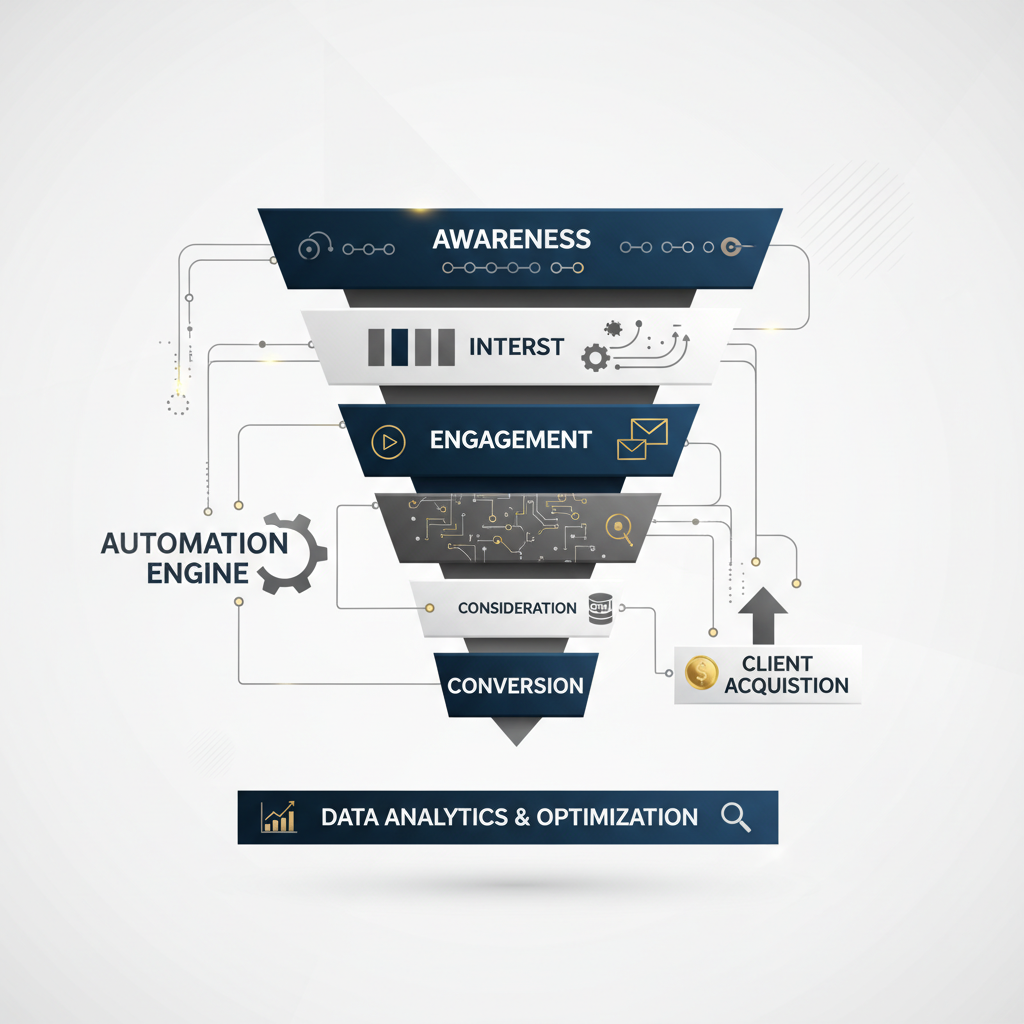
Getting new leads is key for any consultant. But many struggle to find clients consistently. An automated sales funnel creates a reliable path for new business. It guides people from first learning about you to becoming paying clients. This system works for you 24/7, turning unpredictable leads into a steady stream of new clients.
An effective sales funnel automates the important steps in your sales process. This saves you time. It also makes sure no potential client gets forgotten. Automated-Biz gives you all the tools you need to build your funnel easily.
Key Stages of an Automated Sales Funnel:
- Attraction: Catch the attention of your ideal clients with great content or targeted ads. Your professional website from Automated-Biz acts as the center for all your marketing.
- Engagement: Get their interest and collect contact info. Offer something helpful, like a free guide or webinar, in exchange for their email address. This is called a lead magnet.
- Nurturing: Build trust by showing you’re an expert. Send a series of automated emails with useful content that solves their problems. This shows them you know what you’re talking about.
- Conversion: Encourage potential clients to book a call or buy your service. Use clear calls to action to tell them what to do next, like scheduling a discovery call.
- Retention: Keep in touch with clients after they buy from you. Good communication can lead to more work and new referrals.
Using an automated sales funnel can help you get more clients from the leads you have. Businesses that use marketing automation get more high-quality leads. For example, they see 50% more sales-ready leads [4]. Automated-Biz makes it easy to build and launch these powerful systems. It combines your website, email marketing, and CRM into a complete online business solution for consultants.
Using Social Media Automation to Build Authority
Social media is a great tool for consultants to build awareness and trust. But managing many platforms at once is tough. That’s where social media automation helps. It keeps your online presence active and professional. Plus, it frees up your time to focus on clients.
Being consistent on social media builds trust and shows you’re an expert. Automation tools let you schedule posts ahead of time, so your content goes out at the best times. This strategy helps with your online reputation management and makes you look professional and trustworthy.
How Social Media Automation Works for Consultants:
- Content Scheduling: Plan and schedule your posts across all platforms, including LinkedIn, X (Twitter), Facebook, and Instagram. Consistency keeps your brand top-of-mind.
- Content Curation: Automatically find and share useful industry news. This shows you’re an expert in your field and gives your followers valuable content.
- Audience Engagement: Use tools to track brand mentions and reply quickly. While you still need to engage personally, automation can flag important conversations for you.
- Performance Analytics: See which posts get the most engagement. This data helps you improve your strategy by showing you what your audience likes best.
- Cross-Platform Promotion: Easily share your content on all your social media channels. This helps you reach more people and build a stronger online presence.
Engaging on social media is key for business growth. In fact, over 90% of small businesses use it for marketing [5]. Automated-Biz offers powerful social media management services. We help with both your free and paid social media plans. This helps your brand build authority effectively.
Developing a Content Strategy That Attracts Leads
A clear content strategy is key to getting new leads. It shows off your expertise and naturally attracts the right clients. Good content creates a predictable way to find new business by answering your audience’s biggest questions. It also positions you as the go-to expert in your field.
Good content marketing builds trust with people before they’re even ready to buy. It works by educating and helping them. Automated-Biz can help you create a strong content plan. We’ll work with you to make content that solves your ideal client’s biggest problems. This is a key part of our small business marketing services.
Elements of a Lead-Attracting Content Strategy:
- Understand Your Audience: Research their challenges and questions. Tailor your content to provide solutions.
- Choose Different Formats: Use a mix of content like blog posts, videos, case studies, and whitepapers. Podcasts and webinars also work well. This variety appeals to how different people like to learn.
- Optimize for Search Engines (SEO): Use the same keywords your clients use in search engines. This helps you rank higher so potential clients can easily find your expert advice.
- Use Clear Calls to Action (CTAs): Tell readers what to do next. For example, ask them to download a guide, sign up for your newsletter, or book a call.
- Be Consistent: Post new content on a regular schedule. This keeps your audience engaged and shows search engines your website is active and up-to-date.
Content marketing gives you a great return on your investment. It costs 62% less than traditional marketing but brings in about three times as many leads [6]. At Automated-Biz, we combine branding and website creation with a smart content plan. We make sure your expert content attracts new clients, helping you grow your business faster.
Step 5: How Can You Streamline Your Sales and Onboarding Process?
Crafting a Winning Consulting Proposal Template
To get new clients, you need a great proposal. A good consulting proposal is more than a list of prices. It’s your chance to show your value, build trust, and stand out from the competition.
But making a new proposal for every potential client is overwhelming. That’s where a good template helps. It makes your sales process faster and keeps everything consistent and professional.
A strong template also makes you look more professional online. It shows off your brand and skills before the project even starts. This way, you can focus on adjusting the details for each client instead of starting over every time.
Key Elements of an Irresistible Consulting Proposal
Every great proposal includes the same key parts. These sections walk your potential client through your plan. They set clear expectations and show off your skills.
- Executive Summary: Start with a short overview. Point out the client’s problem and how you’ll solve it. Focus on the main benefits they will get.
- Understanding the Client’s Needs: Clearly state the client’s problems. Show you truly understand their situation. This helps build trust right away.
- Your Proposed Solution: Explain how your services will solve their specific problems. Describe the methods you will use. This is where you show what makes you the best choice.
- Deliverables and Scope: Define what the client will get. List everything you will provide and the key project stages. Be specific to avoid the project growing beyond the original plan.
- Project Timeline: Provide a realistic timeframe for completion. Break down the project into manageable phases. This helps manage client expectations.
- Investment and Payment Terms: Clearly state your prices and how you expect to be paid. Be open about all costs. If you can, offer a few payment options.
- About Your Company: Briefly introduce your business. Highlight your experience and skills. Show again why you are the best choice for the job.
- Call to Action: Clearly state the next steps. Make it easy for the client to accept your proposal. Include contact information and an expiration date.
A template makes sure you never forget these important parts. It turns a big job into a simple one. This is a key step in automating your business.
Automated-Biz gives you tools to create and use these templates. This saves time and helps you win more clients. For instance, proposals with a clear call to action can increase sign-ups by up to 20% [7].
Automating Client Onboarding for a Seamless Experience
After a client says yes, the onboarding begins. This step is key to starting your working relationship off right. A smooth, professional welcome makes things easier for everyone. It also helps clients feel confident and happy.
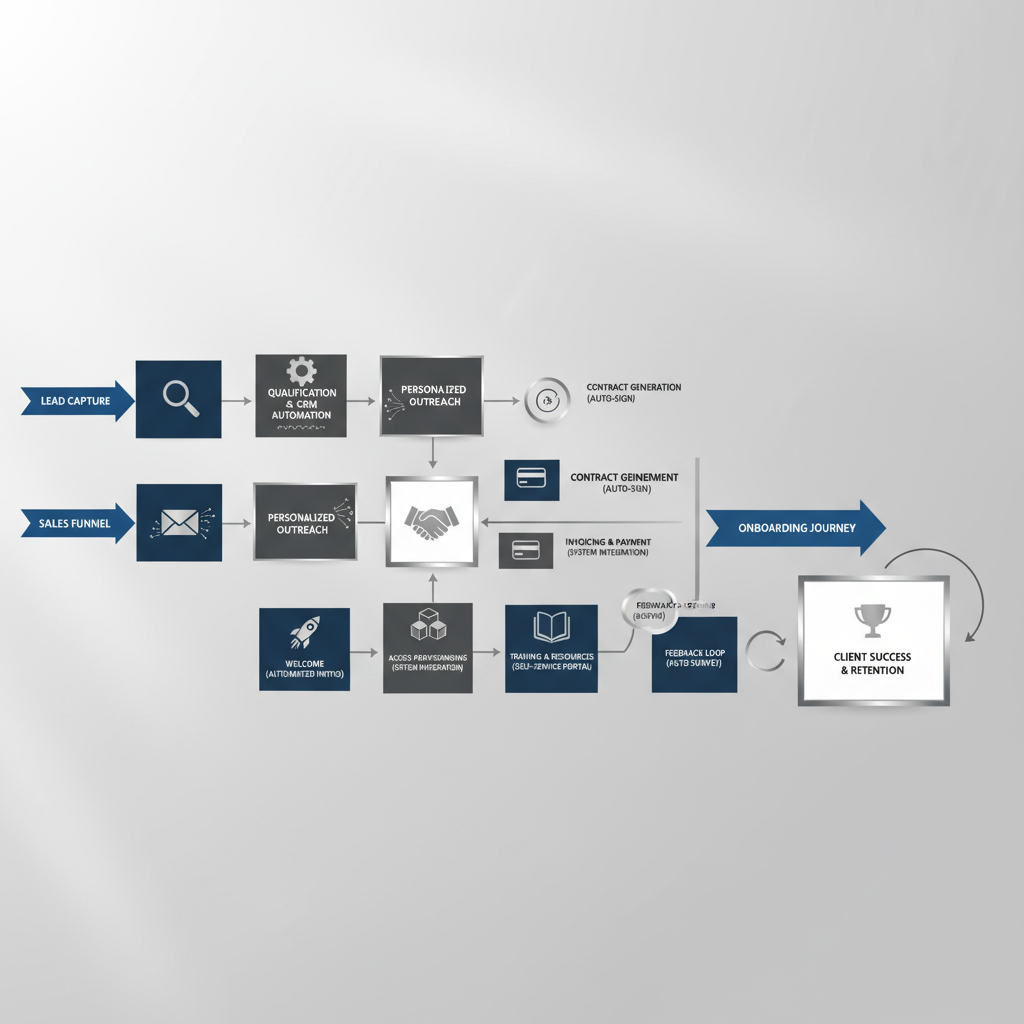
Onboarding clients by hand takes a lot of time and can lead to mistakes. You have to send many emails, track papers, and schedule calls. Automating this process saves you time and guarantees every client gets the same great welcome.
Think of automated onboarding as the next step after your sales process. It smoothly turns a potential customer into an active client. This helps your small business grow.
Steps to Automate Your Client Onboarding
Automating your client onboarding can change how you work. It makes the process consistent and efficient. It also lets you grow your business without losing quality.
- Automated Welcome Sequence: As soon as a client accepts your proposal, send an automated welcome email. It should thank them and explain what happens next. Include a link to a client portal or a place to share documents securely.
- Contract Management Integration: Use e-signature tools for contracts. Services like DocuSign or PandaDoc automate the signing process. This gets rid of paperwork and speeds up agreements.
- Scheduling Automation: Use an automated scheduling tool for initial kickoff calls. Calendly or Acuity Scheduling can sync with your calendar. Clients can book their preferred time slot easily.
- Information Gathering Forms: Use automated forms to collect client information. This could be project details, login info, or brand guides. Tools like Typeform or Google Forms make this easy.
- Welcome Packet Delivery: Automatically send a digital welcome packet. It can include FAQs, rules for how you’ll communicate, and a project plan. This sets clear expectations from the start.
- Task Assignment and Notification: Connect onboarding tasks to your project management software. Automatically give starting tasks to your team. Set up alerts for important project stages.
Following these steps helps you look more professional online. It also helps you keep clients, because happy clients come back. Studies show a good onboarding experience can increase client retention by as much as 82% [8].
Automated-Biz offers tools that handle these tasks for you. We help you set up smooth and productive systems. This turns a messy process into a simple, professional one.
Tools for Efficient Client and Project Management
Handling many clients and projects at once can be overwhelming. Without the right tools, you might miss deadlines, miscommunicate, and have unhappy clients. Good client and project management is key for your business to grow.
Automation isn’t just for sales and onboarding. It can also handle your daily tasks. Using the right tools helps you track progress, manage communication, and finish projects on time.
These tools can connect with your other marketing systems. They give you one central place for all client work. This helps you avoid the disorganization that can stop your business from growing.
Essential Tools for Managing Your Consulting Business
It’s smart to invest in good client and project management tools. They make your work run more smoothly. They also give you more time to focus on doing great work for your clients.
- Client Relationship Management (CRM) Systems:
- Purpose: Manage all client interactions and data in one place. Track leads, sales activities, and communication history.
- Benefits: Helps you find new leads and win more clients. You can personalize your messages and never miss a follow-up.
- Examples: HubSpot CRM, Salesforce, Zoho CRM.
- Project Management Software:
- Purpose: Organize tasks, track project progress, and collaborate with teams or clients.
- Benefits: Makes your team more productive and helps you deliver projects on time. It also keeps clients in the loop.
- Examples: Asana, Trello, Monday.com, ClickUp.
- Communication Platforms:
- Purpose: To make team and client communication easier.
- Benefits: Centralizes conversations, reducing email clutter. Improves response times.
- Examples: Slack, Microsoft Teams, Google Meet.
- Time Tracking and Invoicing Software:
- Purpose: Accurately record billable hours and generate professional invoices.
- Benefits: Makes sure you bill fairly and get paid consistently. It can also send automatic payment reminders to improve your cash flow.
- Examples: Harvest, FreshBooks, QuickBooks.
- Document Management Systems:
- Purpose: Securely store, share, and collaborate on documents.
- Benefits: Easy access to project files. Version control prevents errors.
- Examples: Google Drive, Dropbox, SharePoint.
Automated-Biz offers one platform that does all of this. We give you expert help to connect these tools. Our solutions help you automate your work while keeping quality high. We help you go from unpredictable results to a business that can grow smoothly. This ensures your consulting business runs well as it gets bigger.
Step 6: How Do You Scale Your Consulting Business for Long-Term Growth?
Leveraging Online Reputation Management to Build Trust
To scale your consulting business, you need more than new clients. You need to build deep, lasting trust. Your online reputation is your most valuable asset. It helps attract the right clients and makes you stand out from the competition.
Good online reputation management is key to small business growth. It turns potential clients into confident buyers. When they see you as a professional, trusted advisor, it builds your credibility and authority.
To manage and improve your consulting brand, focus on these key strategies:
- Ask for Client Testimonials: Make it a regular habit to ask happy clients for reviews. Display them clearly on your website and social media.
- Monitor Online Mentions: Keep track of what people say about your business. Use tools to monitor review sites, social media, and industry forums.
- Respond Professionally to All Feedback: Address both positive and negative comments with care. A polite response to criticism shows you care about client satisfaction.
- Share Case Studies and Success Stories: Go beyond testimonials. Explain the problems you solved and the real results you delivered for clients. This provides solid proof of your value.
- Become a Thought Leader: Regularly publish helpful content. Share your expertise in articles, webinars, or podcasts. This shows you are an expert in your field.
A strong online reputation helps you earn more. Research shows that 93% of consumers read online reviews before buying something [9]. With Automated-Biz, you get tools for online reputation management that work together. Our platform helps you easily gather testimonials and display them on your website and marketing materials. This makes sure you always look professional and trustworthy online.
Implementing Business Process Automation to Save Time
As your consulting business grows, so do your admin tasks. Many entrepreneurs get buried in marketing and operations work, which can slow down growth. The solution is smart business process automation (BPA).
BPA simplifies repetitive tasks. It helps you switch from manual work to smooth, automated systems. This frees up your time to focus on important consulting work and planning for the future. Automation also leads to fewer errors and more consistent results, helping you scale smarter and faster.
Consider using business automation in these areas of your consulting practice:
- Automated Sales Funnels: Set up email sequences to find new leads. Guide potential clients with drip campaigns that move them smoothly from first contact to a booked consultation.
- Client Onboarding Workflows: Automate sending contracts, welcome packets, and new client forms. This gives every new client a consistent, professional start.
- Appointment Scheduling: Connect an automated scheduling tool to your calendar. Clients can book meetings themselves, which gets rid of back-and-forth emails.
- Invoicing and Payment Reminders: Automatically create and send invoices. Set up automatic reminders for late payments. This improves your cash flow and reduces admin work.
- Social Media Automation: Schedule posts ahead of time on different platforms. This keeps your online presence active and consistent, saving you hours each week.
- Reporting and Analytics: Automatically create performance reports. Track important numbers without gathering data by hand.
Automated-Biz offers complete online business tools. Our platform builds business automation into every part of your operations, from sales funnels to social media. We provide the tools to change the way you work. You can automate tasks without losing quality. Businesses save an average of 10-20% on operational costs with automation [10]. You’ll go from too much manual work to simple, reliable systems.
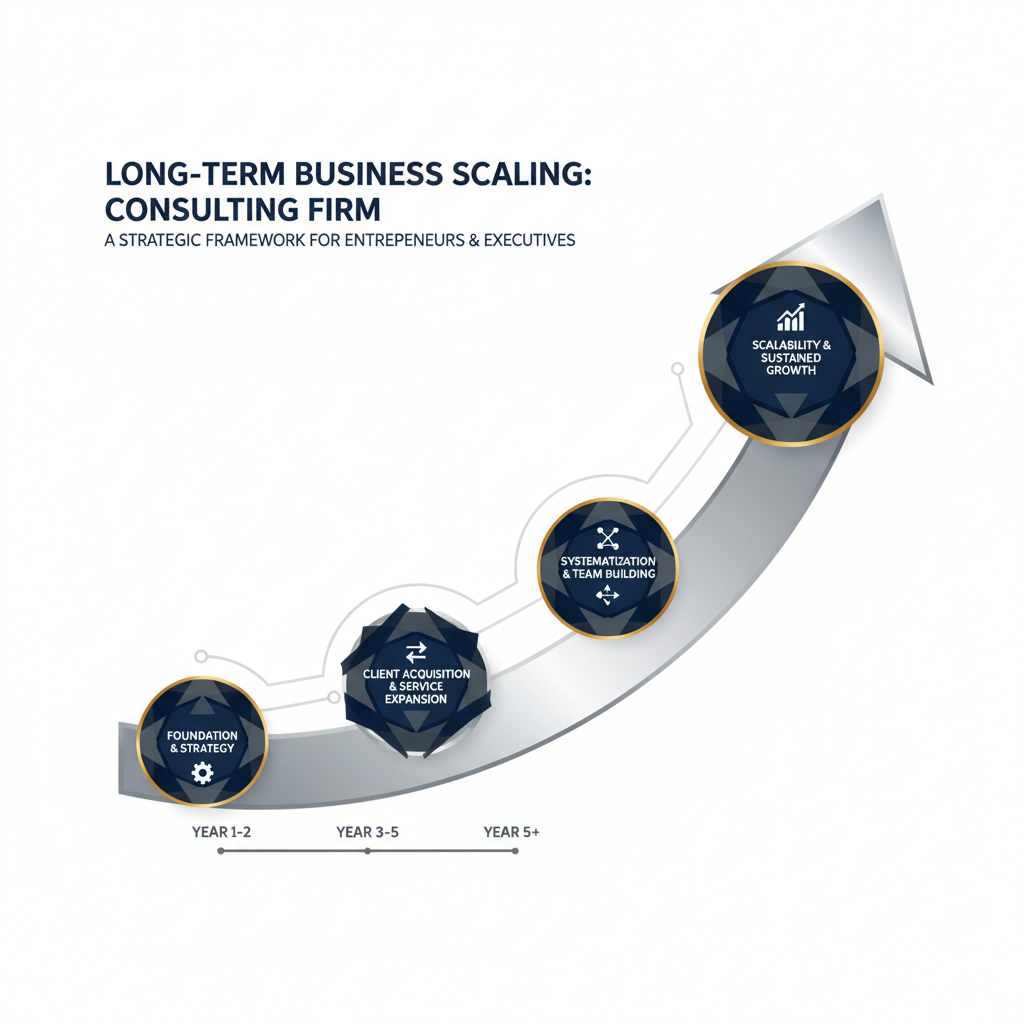
Strategies to Move from Solopreneur to a Scalable Business
Many consultants start as solopreneurs, doing everything themselves. While this can be rewarding, it also limits how much you can earn and grow. For long-term growth, you need to stop doing it all on your own. The goal is to build a business that runs well, even when you aren’t managing every detail.
This change requires a new approach. Your focus shifts from doing all the work to building systems that help your business grow. Here are practical steps to help you make the change:
- Turn Your Services into Products:
- Create Standard Packages: Offer clear services with set prices and details. This saves time on writing custom proposals.
- Develop Digital Products: Sell online courses, templates, or workshops. This lets you serve many clients at the same time.
- Use Group Programs: Create programs that serve multiple clients at once. This helps you make the most of your time.
- Create Systems for Everything:
- Document Your Processes: Write down step-by-step guides for common tasks. This makes it easier to hand off work to others.
- Use Business Automation: As we’ve covered, automate repetitive tasks to save time and ensure work is done consistently.
- Use One Main Platform: Bring your tools for customer relationships, marketing, and projects into one place. This creates a single, organized system.
- Build a Support Team:
- Hire Virtual Assistants: Use VAs for admin tasks, scheduling content, or doing research.
- Partner with Other Consultants: Work with other experts on projects that need special skills or more help.
- Improve How You Get Clients:
- Improve Your Sales Funnels: Make sure your methods for finding new leads are always bringing in the right kind of clients.
- Focus on Repeat Business: Build strong client relationships and create a plan to encourage referrals and future sales.
- Strengthen Your Online Presence:
- Invest in a Professional Brand and Website: A high-quality website and brand builds trust with potential clients.
- Use Social Media Automation: Use automation to stay active and visible on social media.
Moving from a one-person shop to a business that can grow is a journey. Automated-Biz gives you the online business tools you need for every step. Our platform has everything from branding and website creation to sales funnels, lead nurturing, and complete marketing services. We provide the tools to help you change your business. You can move from slow growth to scalable systems, all while saving effort and earning more.
Frequently Asked Questions
How much money do you need to start a consulting business?
Starting a consulting business can cost less than you think. The exact amount depends on your field and how you run your business. Many consultants start with very little money by using the skills and contacts they already have.
However, you still need the right tools to look professional and work well. Ignoring these can slow your growth.
Consider these key spending areas:
- Legal and Administrative: Registering your business, getting licenses, and creating contracts. This can cost from a few hundred to a couple of thousand dollars, depending on your setup (like forming an LLC) [source: https://www.sba.gov/business-guide/launch-your-business/register-your-business].
- Professional Online Presence: A great website, professional branding, and a custom logo are key. Many new owners find this part hard and end up hiring several different experts.
- Basic Operations Software: Tools for communication, project management, and invoicing.
- Marketing and Lead Generation: Marketing to get started, like networking or a small ad budget.
At Automated-Biz, we help lower many of these startup costs. Our all-in-one platform handles your branding, website, sales process, and other key tasks. This helps you build a professional online presence without the high cost of hiring separate companies. You can start finding new clients and building relationships from day one.
What qualifications do I need to be a consultant?
Formal degrees are often less important than proven experience and a history of success. To succeed as a consultant, you must solve your clients’ problems. Your value is in your knowledge, experience, and ability to get real results.
Here are the core qualifications that matter most:
- Specialized Expertise: Expert knowledge in a specific field. Clients want your unique point of view.
- Problem-Solving Skills: The skill to understand a client’s problems and create solutions that work. This is the most important part of consulting.
- Communication Skills: Good communication skills to explain complex ideas simply and build strong relationships with clients.
- Track Record of Results: A track record of success. Past projects, case studies, and good reviews are powerful tools to build trust.
- Professionalism and Ethics: Maintaining high standards and keeping information private.
Automated-Biz helps you show off these qualifications. We help you build a professional brand and a great website to feature your skills and client successes. Our tools make sure your best reviews and case studies are easy to find, which builds trust and attracts the right clients. We help you go from feeling overwhelmed to feeling confident about what you offer.
How do I get my first consulting client?
Getting your first client takes focus and a good plan. You need to show your value, build trust, and make sure potential clients can find you. Many new consultants find it hard to get steady leads at first.
Follow these steps to land your first client:
- Define Your Ideal Client: Know who they are, what they struggle with, and where they look for help. This keeps you focused.
- Leverage Your Network: Tell colleagues, friends, and past clients you’ve started a business. Referrals from people you know are often the best.
- Showcase Your Expertise: Share helpful tips in blog posts, articles, or videos. This makes you look like an expert in your field.
- Offer a Pilot Project: A smaller, low-risk project is a great way to show a new client what you can do.
- Build a Professional Online Presence: A great website and active social media are must-haves. They make you look credible right away.
- Ask for Testimonials: After you finish a project, be sure to ask for a testimonial. Positive reviews from others are very powerful.
Automated-Biz offers marketing services built for this exact challenge. We help you create a brand and website that show off your skills. Our platform helps you capture and follow up with new leads so you never miss a chance. Plus, our social media tools help you build your reputation and connect with your audience. We help you turn a random trickle of leads into a steady stream of new clients, allowing your business to grow.
Sources
- https://www.verisign.com/en_US/website-presence/domain-name-management/domain-name-basics/index.xhtml
- https://www.sba.gov/business-guide/start-your-business/choose-business-structure
- https://www.upwork.com/resources/consulting-rates-guide
- https://www.marketo.com/marketing-automation/
- https://www.statista.com/statistics/1083431/small-business-social-media-usage-in-the-us/
- https://contentmarketinginstitute.com/articles/content-marketing-statistics/
- https://blog.hubspot.com/sales/sales-proposal-template
- https://www.wyng.com/blog/customer-onboarding-stats/
- https://www.brightlocal.com/research/local-consumer-review-survey/
- https://www.mckinsey.com/capabilities/operations/our-insights/automation-the-new-productivity-imperative