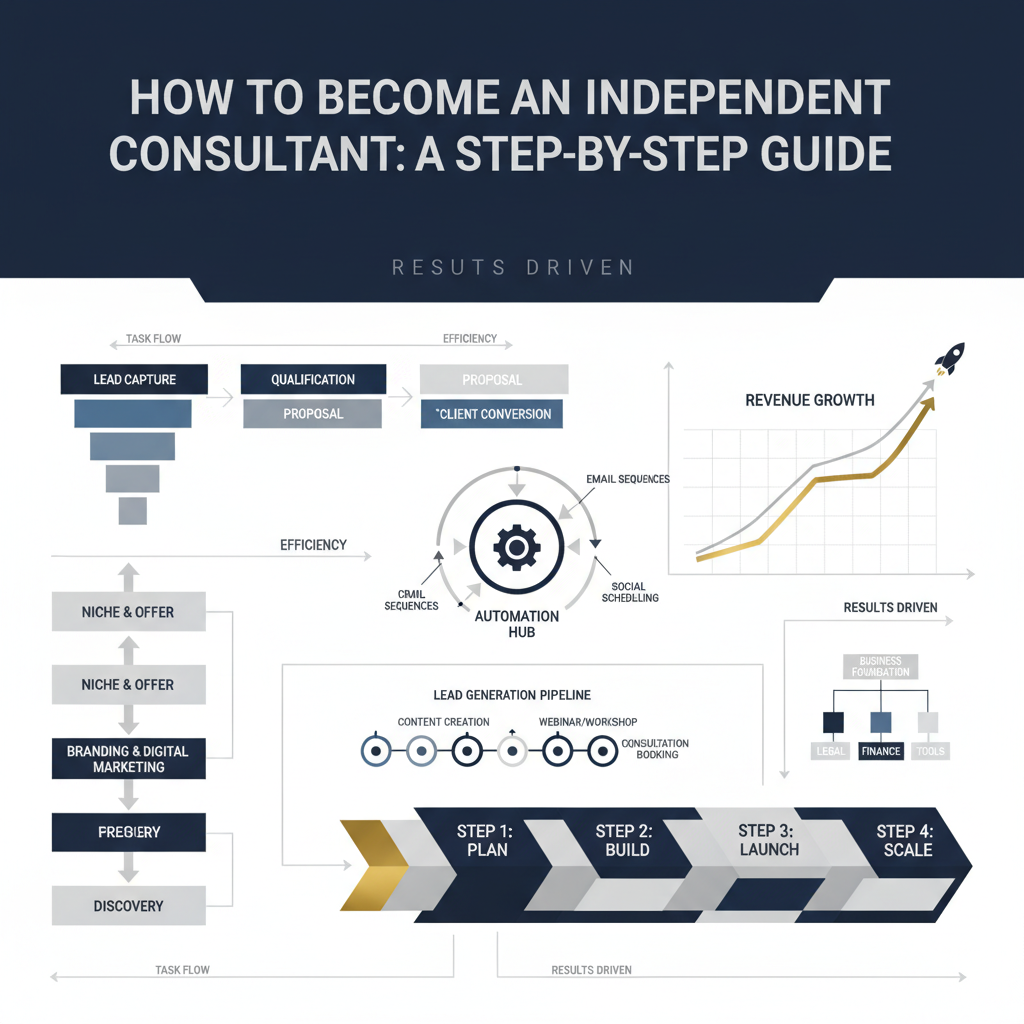
An independent consultant is a self-employed professional who provides expert advice, strategy, and services to businesses on a contractual basis. They operate their own business entity, are responsible for their own client acquisition and taxes, and offer specialized skills to solve specific problems without the long-term commitment of full-time employment.
Are you an expert ready to use your knowledge on your own terms? Becoming an independent consultant offers great freedom, a direct impact, and high earning potential. Many ambitious professionals want to become a self-employed consultant to break free from a traditional job. However, transitioning to an individual consultant role takes more than just skill. It requires a solid plan, a strong online presence, and reliable systems to attract clients. Without clear guidance, it’s easy to get overwhelmed by marketing and daily tasks, making it hard to grow your business and find consistent leads.
This guide is for new independent business consultants and seasoned pros looking to improve their approach. We simplify the process with a clear, step-by-step action plan to help you establish your practice, build a professional online presence, and automate important parts of your business. We cover everything from finding your niche and building your brand to using effective lead generation strategies and simplifying your operations. We’ll give you the tools you need to succeed as an independent management consultant. Our goal is to help you move from guesswork to confidence, building a profitable consulting business that looks professional and trustworthy online.
What Is an Independent Consultant and Why Become One?
Becoming an independent consultant gives you more freedom and a greater impact. You use your skills to solve important business problems and directly help your clients succeed. This career is perfect for professionals who want to control their work and their income.
Defining the Role of an Independent Business Advisor
An individual consultant or independent business advisor is a self-employed expert. They provide special skills and services to businesses for specific projects. Unlike regular employees, they work for themselves. Their main goal is to offer expert advice, strategic direction, and practical solutions.
These experts usually have a specialty. For example, an independent management consultant might improve how a company works. A financial advisor could guide a business’s growth. They help clients get past challenges and reach big goals. This often means creating and using new systems or plans.
As an independent business consultant, you become a trusted partner. You offer a fresh, outside view on tough problems, and your work directly helps your clients succeed. Automated-Biz helps you clearly define and market your services. We help you build a professional online presence to attract the right clients for your unique skills.
Key Benefits of Being a Self-Employed Consultant
Choosing to become a self employed consultant is a big step, but it offers many professional and personal benefits. Many entrepreneurs seek this path to gain more control and earn more money. Here are the main advantages:
- Autonomy and Flexibility: You set your own schedule and pick your projects. This helps you create a work-life balance that fits your life.
- Unlimited Earning Potential: Your income depends on your work and the value you provide, so there’s no salary limit. Rates vary, but many consultants earn well over $100 per hour based on their specialty and experience [1].
- Specialization and Impact: Focus on what you do best. You get to solve important problems and make a real difference for your clients.
- Diverse Project Portfolio: Work on a variety of projects in different industries. This keeps your work interesting and helps you learn new skills.
- Professional Growth: You are constantly learning and adapting to new challenges. This helps you grow as a business leader and expert.
Automated-Biz helps you get the most out of these benefits. Our business automation tools save you time on routine tasks, and our automated sales funnels bring in steady leads. This frees you up to focus on important consulting work, so you can grow your business faster and more easily.
Independent Consultant vs. Employee: What’s the Real Difference?
It’s important to understand the difference between an independent consultant and a regular employee. Knowing this helps you plan your career, set up your business, and work with clients. The table below shows the key differences:
| Feature | Independent Consultant | Traditional Employee |
|---|---|---|
| Employment Status | Self-employed business owner, contracting services to clients. | Works for an organization, receives a salary or hourly wage. |
| Control & Autonomy | Full control over projects, clients, hours, and work methods. Sets own rates. | Follows company policies, management direction, and fixed schedules. |
| Client Relationships | Works with many clients on different projects. Finds their own clients. | Part of an internal team, serves one employer. |
| Income Stability | Income varies based on finding clients and projects. Potential to earn more. | Stable, predictable salary or wage. |
| Benefits & Taxes | Responsible for all business expenses, taxes, and benefits. No employer-provided benefits. | Receives employer-sponsored benefits (health, retirement). Taxes withheld. |
| Business Ownership | Operates their own business. Handles marketing, sales, and operations. | Does not own the business or handle external tasks like sales. |
As an independent consultant, you’re not just selling your time—you’re selling solutions and building a business. This requires a strong system for finding and managing clients. Automated-Biz provides the online business solutions you need. We help you build a professional brand, automate your lead generation strategies, and simplify your digital marketing systems. This helps you succeed as a consultant and gives you the tools to compete with larger independent consultant companies.
How to become an independent consultant: Your 5-Step Action Plan
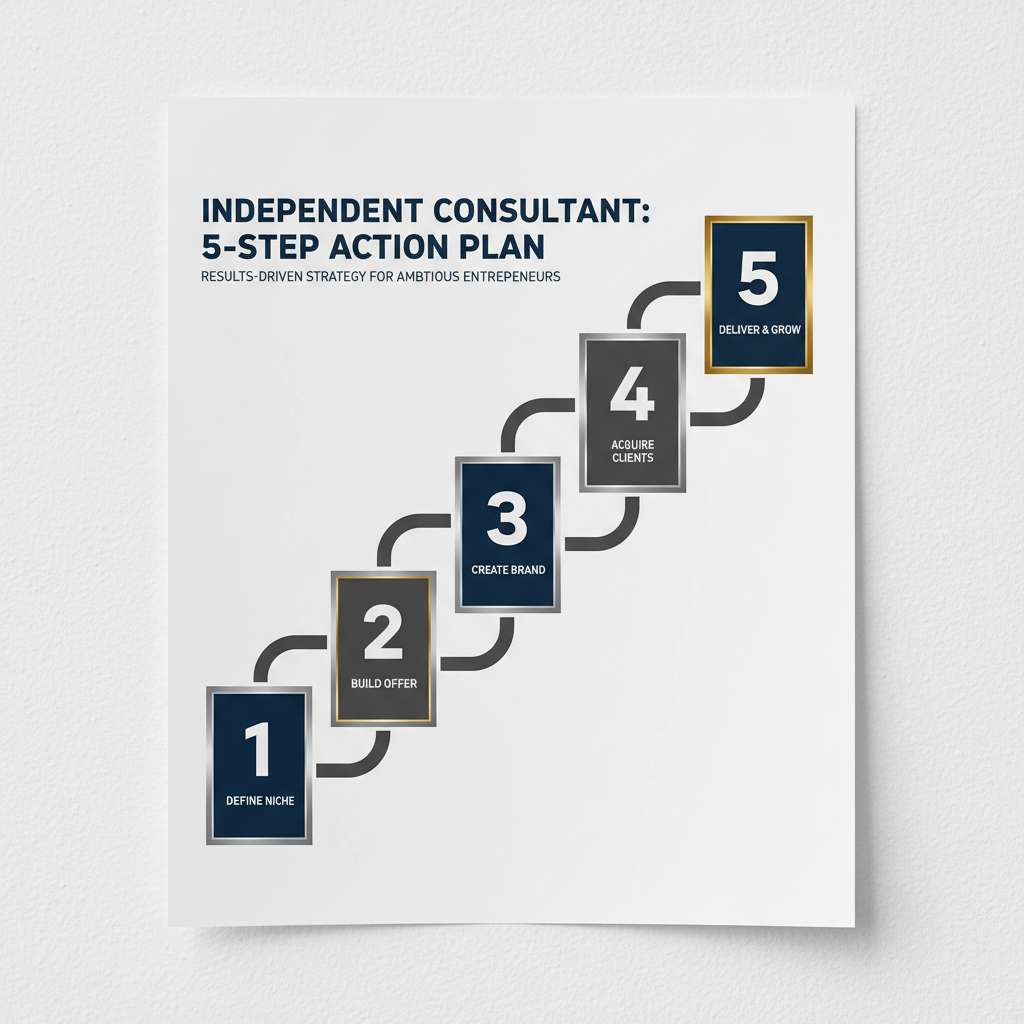
Step 1: Identify Your Niche and Define Your Services
To become a successful independent consultant, you need a clear focus. Start by identifying your niche. This defines who you help and what specific problems you solve.
Look at your past experience. What are your strongest skills? What problems are you great at solving for businesses? A clear niche helps you attract the right clients and positions you as an expert.
To define your niche and services, consider these points:
- Pinpoint Your Expertise: What are your strongest industry knowledge or technical skills? Are you an expert in marketing automation, financial strategy, or operational efficiency?
- Identify Your Ideal Client: Which type of business benefits most from your help? Are they startups, e-commerce businesses, or small businesses struggling to grow online?
- List Specific Pain Points: What common problems do these clients have? Do they need to generate more leads, streamline operations, or improve their online presence?
- Outline Your Solutions: How will your services solve these problems? Define the real results your clients can expect. For example, you might offer social media strategies or build a new brand and website.
A well-defined niche makes you a specialist, not a generalist. This focus allows you to charge higher rates and makes your marketing more effective.
Step 2: Build Your Business Foundation (Legal & Financial)
Before you offer your services, set up the legal and financial side of your business. This protects your consulting business and sets you up for long-term success.
This step is about more than just picking a name. It prepares your business for future growth and automation.
Key foundational elements include:
- Choose a Legal Structure: Decide if you will be a Sole Proprietorship, LLC, or S-Corp. An LLC offers personal liability protection for many consultants [2]. Talk to a lawyer to choose the best option for you.
- Obtain Necessary Licenses and Permits: Research the local, state, and federal rules for your business. Make sure you follow all regulations.
- Set Up Business Banking: Open a separate bank account for your business. This keeps your personal and business finances apart and makes taxes much easier.
- Secure Business Insurance: Consider professional liability insurance (E&O). This protects you if a client claims you made a mistake in your work.
- Draft Client Contracts: Create a clear contract for your clients. It should outline the project scope, payment terms, and what you will deliver. A professional contract builds trust and prevents confusion.
- Understand Tax Obligations: As a self-employed consultant, you need to pay estimated taxes every quarter. Talk to a tax expert to understand what is required.
Getting these things right from the start saves you time and headaches later. This lets you focus on your clients and growing your business.
Step 3: Create a Professional Brand and Website Presence
Your online presence is your digital storefront. It’s essential for attracting high-value clients. A professional brand and website show that you are credible and trustworthy.
This is where Automated-Biz shines. We offer branding and website services designed just for independent consultants.
To build a strong online presence:
- Develop a Strong Brand Identity: This includes a memorable logo, consistent colors, and a clear voice. Your brand should reflect your expertise and connect with your ideal clients.
- Design a High-Performance Website: Your website is the center of your online business. It must be easy to use, work well on mobile, and clearly show how you help clients. Feature your services, show off testimonials, and include a clear call to action.
- Craft Compelling Content: Add valuable content to your site, like blog posts, case studies, or service pages. This content should show your expertise and solve your clients’ problems.
- Optimize for Search Engines (SEO): Use relevant keywords on your site. This helps potential clients find you when they search for the solutions you offer.
- Integrate Professional Tools: Add tools for scheduling, contact forms, and client communication. This prepares you for future business automation.
With Automated-Biz, you get more than just a website. You get a professional online platform built to help you get clients and grow your business.
Step 4: Develop an Automated System for Lead Generation
Getting new clients consistently is vital. An automated lead generation system helps you find leads without getting bogged down by marketing tasks.
Automated-Biz specializes in creating powerful sales funnels. Our systems attract potential clients, build relationships, and turn them into paying customers.
Implement these lead generation strategies:
- Build Automated Sales Funnels: Create a step-by-step process that guides potential clients from first contact to booking a call. This can include lead magnets, email sequences, and automated follow-ups.
- Leverage Social Media Automation: Schedule engaging content on your platforms to build authority and drive traffic to your website. Tools can help you stay active without constant manual work.
- Implement Targeted Advertising: Use platforms like Google Ads or social media ads to reach your ideal clients. Automation can help you manage your campaigns and track results.
- Create Value-Driven Content: Write blog posts, host webinars, or create guides that solve common problems for your clients. Share this content using automated email campaigns.
- Integrate CRM for Lead Nurturing: Use a Customer Relationship Management (CRM) tool to track leads and automate communication. This ensures you don’t miss any opportunities.
By automating your lead generation, you can turn a trickle of leads into a steady stream of clients. This lets you focus on doing great work for them.
Step 5: Streamline Operations to Scale Your Consulting Business
Once you have clients, the next challenge is growth. You need to handle more work without sacrificing quality. Automating your processes is the key to growing without burning out.
Automated-Biz offers solutions to help consultants work more efficiently. We help you move from manual tasks to smooth, automated systems.
To streamline your operations and scale smarter:
- Automate Client Onboarding: Use automated forms, welcome emails, and client portals. This saves a lot of admin time.
- Implement Project Management Tools: Use tools to track tasks, collaborate, and manage deadlines. This helps projects run smoothly.
- Streamline Communication: Use integrated tools to automate follow-up messages and status updates. This keeps clients informed with less effort.
- Automate Invoicing and Payments: Set up recurring invoices and automatic payment reminders. This helps you get paid on time, every time.
- Optimize Online Reputation Management: Automate requests for client testimonials and reviews. Positive feedback is important for building trust and getting new business.
- Utilize Productivity Workflows: Find repetitive tasks and automate them with integrated tools. This frees up your time for important client work.
By automating your business, you can grow faster. You can stop guessing and start using expert-guided systems. This lets you take on more work and increase your revenue with less effort.
Independent consultant vs freelancer: Which is right for you?
Core Responsibilities and Scope of Work
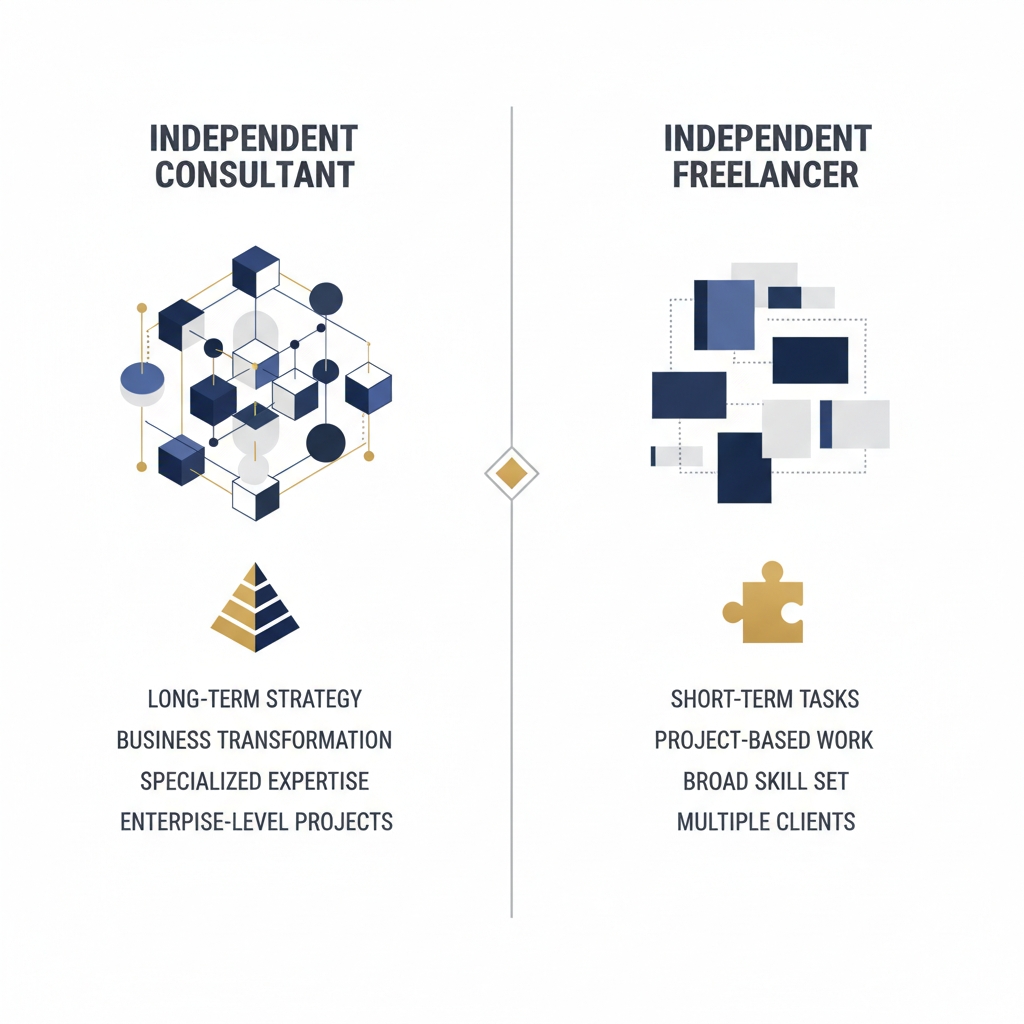
The main difference between an independent consultant and a freelancer is their core responsibilities. Both are self-employed, but their scope of work is very different.
An independent consultant acts as a strategic advisor. They find and solve high-level business problems and develop complete solutions. Their work involves deep analysis, strategic planning, and guiding clients through big changes. A consultant provides expert advice to help small businesses grow, offering long-term value. This can include setting up automated processes or creating lead generation plans for their clients.
- Strategic Guidance: Consultants find the root causes of business problems. They provide clear, actionable steps for overall improvement.
- Problem Solving: They tackle complex challenges, like improving operations or finding new ways to enter a market.
- Long-Term Impact: They focus on creating lasting change and growth. They aim to improve a client’s entire business model.
- Holistic View: An independent business advisor looks at the whole organization, including how all its parts work together.
On the other hand, a freelancer usually handles specific tasks or projects. They use their special skills to complete a defined job. Their work is often tactical and based on a single project. For example, a freelance web designer builds a website, or a content writer drafts articles. While their work is important, their scope is generally narrower than a consultant’s.
- Task-Specific Execution: Freelancers complete defined tasks, such as graphic design, coding, or social media posts.
- Deliverable-Focused: They provide a finished product, like a website, social media posts, or a marketing campaign.
- Short-Term Engagement: Projects usually have a clear start and end date. The focus is on finishing the work efficiently.
- Specialized Skills: Freelancers use their specific expertise to help clients with particular needs.
For both roles, Automated-Biz offers integrated tools to make your work easier. You can manage clients and projects more efficiently. This helps you move from manual tasks to smooth, automated systems that deliver consistent results.
Client Relationships and Project Structure
The way they work with clients and structure projects also sets these two roles apart. This affects how you manage your time, find new clients, and get repeat business.
An independent consultant builds deeper, long-term relationships with clients. They become part of the client’s business to understand its challenges. This partnership focuses on getting real, measurable results. Their work often includes ongoing advice, help with new systems, and high-level guidance. Many companies look for consultants who can become a core part of their team.
- Strategic Partnership: Consultants act as an extension of the client’s team. They share responsibility for long-term success.
- Ongoing Engagements: Projects can last for months or even years. This often includes retainer agreements or work that is done in stages.
- Collaborative Approach: They work closely with the client, with constant communication and feedback. Solutions are often created together.
- Impact-Driven: Success is measured by the client’s overall business improvement, such as increased revenue or market share.
In contrast, a freelancer’s relationship with clients is usually more direct and based on the job at hand. It’s focused on specific projects with clear goals and deadlines. Once the work is done and approved, the project ends. While freelancers want repeat business, each job is treated as a separate project.
- Project-Based: Each job is typically for a single, well-defined project.
- Clear Deliverables: The focus is on handing over a specific product, like a website, a design, or written content.
- Defined Scope: Contracts clearly state what will be delivered, when, and for what price.
- Client-Contractor Dynamic: The relationship is about providing a service, not becoming a strategic partner.
No matter which path you choose, Automated-Biz provides powerful tools to manage clients well. Our platform helps you automate sales, simplify client onboarding, and connect with potential customers. This replaces messy manual work with a system that brings in clients steadily and makes projects run smoothly. You can build a professional online brand and earn trust.
Rate Structures and Earning Potential
How consultants and freelancers charge for their work and how much they can earn is also very different. This affects your income and how quickly you can grow your business.
Independent consultants usually charge higher rates, often using value-based pricing. This means their fees are based on the return on investment (ROI) they bring to a client. This reflects their high-level impact on business growth. Consultants often use retainer fees for ongoing advice or charge large fees for big projects. Some may even take a share of a startup company as payment. Being able to show real, measurable value is key for a consultant.
- Value-Based Pricing: Fees are linked to the business results or increased revenue they generate for the client.
- Retainer Models: Clients pay a regular fee for ongoing access to expertise and strategic advice.
- Project Fees: Large, complex projects are priced based on their overall scope and expected impact.
- Higher Earning Potential: By focusing on high-level strategy and business transformation, consultants often earn more. Many earn over $100,000 annually [3].
Freelancers usually price their work by the hour or by the project. While they can earn a good income, their earnings are often limited by how many hours they can work. To earn more, they must be efficient and able to handle several projects at once.
- Hourly Rates: Charging for the time spent on a task is common.
- Per-Project Fees: A flat rate is set for a defined project, which encourages efficiency.
- Per-Deliverable Pricing: Rates are based on the specific output, like per article, per design, or per website page.
- Scalability Challenge: Earning potential is often tied to hours worked, which makes it harder to scale without automation.
Automated-Biz helps both consultants and freelancers earn more. By using automation and online tools, you can improve your processes. This lets you serve more clients or do better work in less time. Our platform helps you build a professional brand and website, which helps you charge higher rates. You can go from finding clients randomly to having a steady stream of work. This will help you grow your business and make sure your prices match the value you provide.
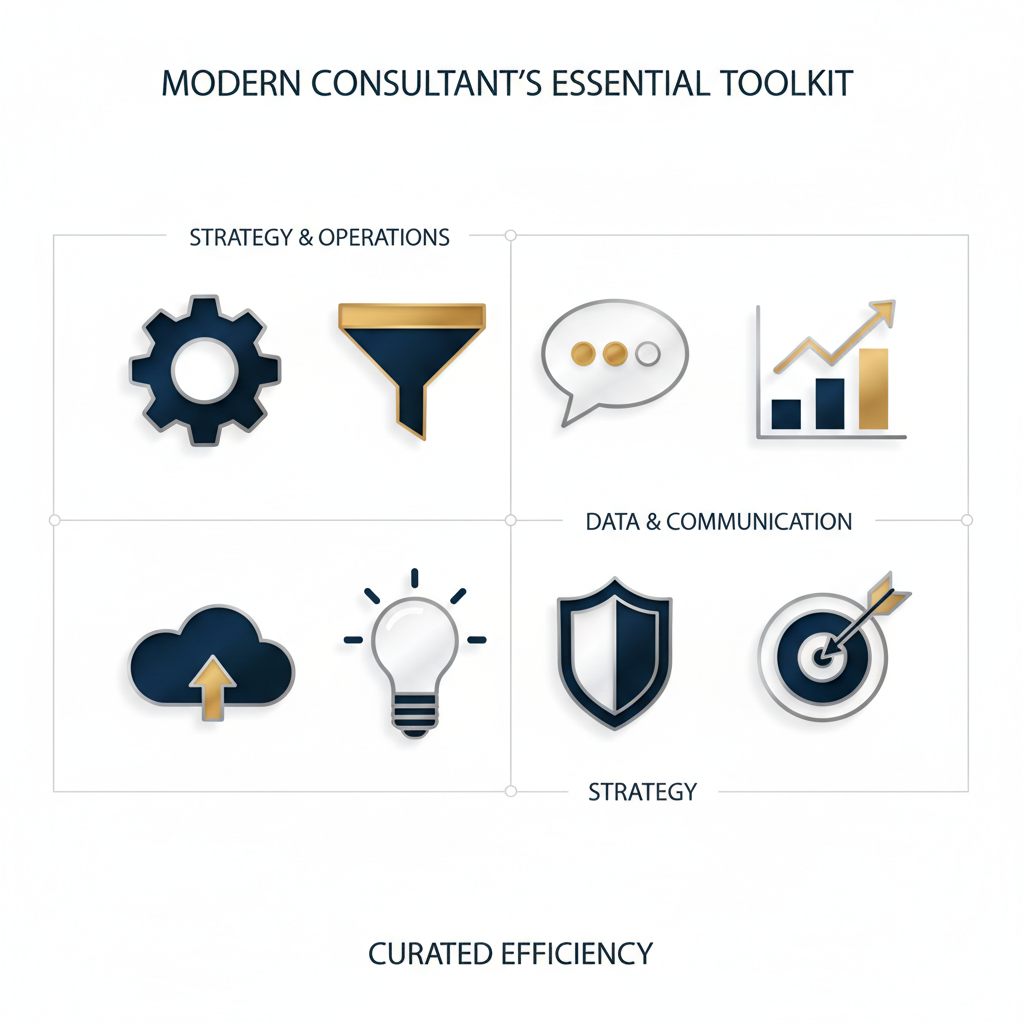
Essential Tools for the Modern Independent Management Consultant
Automated Sales Funnels for Consistent Client Acquisition
As an independent consultant, do you find it hard to attract new clients? Growing your business online can feel like a constant struggle. An automated sales funnel can help. It turns the hunt for clients into a simple, predictable process by guiding people from their first visit to their first payment.
Automated sales funnels are a must for any consultant who wants to grow their business. They work around the clock to find leads and introduce your services, all without you lifting a finger. This frees you up to focus on doing great work for your clients instead of chasing new leads.
Here’s how a good sales funnel can help your business:
- Predictable Lead Generation: Create a system that brings in qualified leads automatically. You’ll always have a list of potential clients.
- Efficient Nurturing: Use automated emails and content to build trust and show off your expertise over time. This process works on its own, even before you talk to someone directly.
- Increased Conversion Rates: Guide potential clients on a clear path that solves their problems. When you do this, they are more likely to hire you.
- Time-Saving Automation: Once set up, the funnel takes care of repetitive tasks like sending emails and qualifying leads. This saves you hours every week.
Automated-Biz builds sales funnels just for independent consultants. We help you go from chasing leads to getting clients consistently. Our solutions make this powerful automation simple for your business.
Social Media Automation to Build Authority
As an independent consultant, your reputation is everything. You need to show potential clients what you know, and social media is a great place to do it. But managing several social media accounts can be overwhelming.
That’s where social media automation comes in. It helps you keep a strong, consistent presence online without spending hours posting everything by hand. This allows you to build your reputation as an expert in your field much faster.
Using social media automation helps you:
- Consistent Brand Presence: Schedule your posts ahead of time for all your social media accounts. This keeps your message consistent and professional.
- Enhanced Credibility: Easily share helpful tips, news, and client success stories. This shows you’re an expert and helps your audience trust you.
- Time Efficiency: Automate posting and other tasks so you can focus on your clients and strategy.
- Targeted Engagement: Use tools to find the right conversations and people to talk to. This helps you connect with potential clients who need your help.
Automated-Biz offers powerful social media automation tools. We help independent consultants make their digital marketing easier. With our solutions, you can build your authority and reach more clients with confidence.
Online Reputation Management to Foster Trust
Your online reputation is more important than ever. Before hiring you, potential clients look for proof that you are credible and successful. A strong online reputation helps you win new business and keep the clients you have.
A weak online presence can turn people away. On the other hand, a great reputation with positive reviews works like a strong recommendation. It builds the trust you need to turn prospects into clients.
Here are key ways to manage your online reputation:
- Proactive Monitoring: Keep track of what clients are saying about you online. This lets you respond quickly.
- Review Generation: Create a simple way to ask happy clients for positive reviews. For example, businesses with over 200 reviews generate 54% more revenue [4].
- Responsive Engagement: Respond to all feedback—good and bad—in a professional and timely way. This shows you care about your clients.
- Showcasing Success: Feature your best testimonials and case studies on your website and in your marketing. This proves your expertise and builds trust.
Automated-Biz offers complete online reputation management services. We help independent consultants build and keep a professional online presence. Our solutions make sure your reputation helps you grow your business and get more clients.
Integrated Platforms for All-in-One Business Management
Do you feel like you’re juggling too many tools to run your consulting business? Using separate apps for email, projects, and billing can be confusing and slow you down. This messy approach makes it hard to grow.
To succeed today, consultants need to be efficient. An all-in-one business platform solves this problem. It brings all your important tools together in one place. You can automate tasks and make sure your entire business runs smoothly.
Here are the benefits of using an all-in-one platform:
- Centralized Operations: Manage everything—clients, projects, marketing, and finances—from a single dashboard. No more switching between different apps.
- Streamlined Workflows: Automate common tasks like scheduling, onboarding new clients, and sending invoices. This makes your work flow much more smoothly.
- Enhanced Collaboration: Store all client emails and project files in one spot. This makes it easy to manage clients and work with a team as you grow.
- Data-Driven Decisions: See how your whole business is doing at a glance. These insights help you make smarter plans for growth.
- Time and Cost Savings: Save time and money by not having to manage and pay for many different tools.
Automated-Biz helps entrepreneurs grow their businesses with smart automation. Our platform combines website creation, sales funnels, social media, and client management into one tool. We give you the support and solutions you need to grow your business faster and with less work.
Frequently Asked Questions
What is the average salary of an independent consultant?
As an independent consultant, your earning potential is very flexible and often higher than a typical salary. However, your actual income can vary widely based on several key factors.
On average, independent consultants in the United States earn between $75,000 and $150,000 a year. Experienced consultants with in-demand skills often earn more than $200,000 per year [5].
Key factors that determine your independent consultant salary include:
- Your Niche and Expertise: Skills in high-demand areas like digital transformation, AI, or business automation command higher rates.
- Experience Level: Experienced advisors with a proven track record can charge more.
- Client Type and Project Scope: Larger companies and more complex projects usually pay more.
- Location: Your location matters, as rates can change based on market demand.
- Branding and Marketing: A strong online presence and good marketing are key to attracting high-paying clients.
Automated-Biz helps you earn more by building a strong online presence with expert branding and a professional website. Our automated sales funnels bring you a steady stream of quality leads, so you can focus on great service and growing your business.
How do I handle taxes as a self-employed consultant?
Managing taxes is an important part of running your own consulting business and requires planning. When you work for yourself, you are responsible for your own taxes, which is different from being a regular employee.
Here are the key tax areas to focus on:
- Estimated Taxes: You’ll usually need to pay estimated taxes four times a year. These payments cover your income tax and self-employment taxes (Social Security and Medicare). The IRS requires this if you expect to owe $1,000 or more in tax for the year [6].
- Self-Employment Tax: This tax covers your Social Security and Medicare payments. For 2024, the rate is 15.3% of your net earnings. This includes 12.4% for Social Security and 2.9% for Medicare.
- Business Deductions: Claim all possible deductions to lower your taxable income. Common deductions include costs for a home office, business insurance, training, marketing, and software. Be sure to keep good records of all your business expenses.
- Record-Keeping: Keep detailed records of all your income and expenses. This is crucial for filing taxes correctly and in case of an audit. Business automation tools can make this process much easier.
- Professional Advice: It’s always a good idea to talk to a tax professional. They can give you advice tailored to your situation and help you follow all federal, state, and local tax laws.
Automated-Biz offers tools to help you run your business online. They can help with tracking your finances and managing expenses, which makes tax time much simpler. Our platform helps you manage your business efficiently, giving you more time to focus on your clients and growth.
What are the key responsibilities in an independent consultant job description?
Being an independent consultant is more than just giving expert advice. You have to wear many hats, acting as the CEO, marketer, and manager for your own business. Using automation can help simplify these different roles.
Key responsibilities usually include:
- Business Development & Sales: Finding and winning new clients. This means networking, writing proposals, and showing your value. Good lead generation is key.
- Marketing & Branding: Building a professional online brand. This includes creating a strong identity, making useful content, and running marketing campaigns.
- Client Relationship Management: Keeping clients happy by understanding their needs and managing the relationship. Your online reputation is also important.
- Project Delivery: Managing projects from start to finish. This includes defining the work, setting deadlines, delivering results, and measuring success.
- Financial Management: Handling all the money-related tasks, like invoicing, budgeting, and tracking expenses.
- Administrative Tasks: Taking care of administrative work, like contracts, scheduling, and legal paperwork.
- Continuous Learning: Always learning and staying up-to-date on industry trends and new skills.
Automated-Biz provides tools to help independent consultants manage these many different tasks. We make your work easier with everything from branding and websites to automated sales funnels and social media. This lets you focus on your clients and growing your business.
What are some of the best independent consultant companies to work with?
As an independent consultant, your main goal is to build your own list of clients. However, it can be helpful to partner with established companies or platforms. These partnerships can help you find your first projects, grow your network, and get bigger opportunities. They can be a great way to find a steady stream of work.
Here are a few types of companies and platforms that can help you find projects:
- Consultant Matching Platforms: These websites connect consultants with companies that need their skills. Examples include Upwork, Fiverr Pro, and Toptal. They make it easier to find new projects.
- Boutique Consulting Firms: Smaller, specialized firms often hire independent consultants for certain projects. Working with them can give you access to unique markets and interesting work.
- Large Consulting Houses: Even large firms like Accenture or Deloitte sometimes hire independent consultants. They usually do this for projects that need special skills or when they have too much work.
- Freelance Talent Networks: These networks gather top-tier consultants and match them with large corporate clients. The projects here often pay more than those on general freelance sites.
- Industry-Specific Platforms: Some industries have their own platforms for finding work. These connect you with clients only in that specific field, helping you find the right fit.
While these options are a good source of projects, the main goal for many consultants is to build their own long-term business. Automated-Biz gives you the tools to become fully independent. Our platform helps you create your own professional brand, find new leads, and manage clients directly. This means you don’t have to rely on third-party platforms and can focus on long-term growth.
Sources
- https://www.consulting.com/independent-consulting-salary
- https://www.sba.gov/managing-business/starting-business/choose-your-business-structure
- https://www.consulting.com/blog/how-much-do-consultants-make
- https://blog.reputation.com/business-review-statistics
- https://www.consulting.com/consultant-salary
- https://www.irs.gov/businesses/small-businesses-self-employed/estimated-taxes