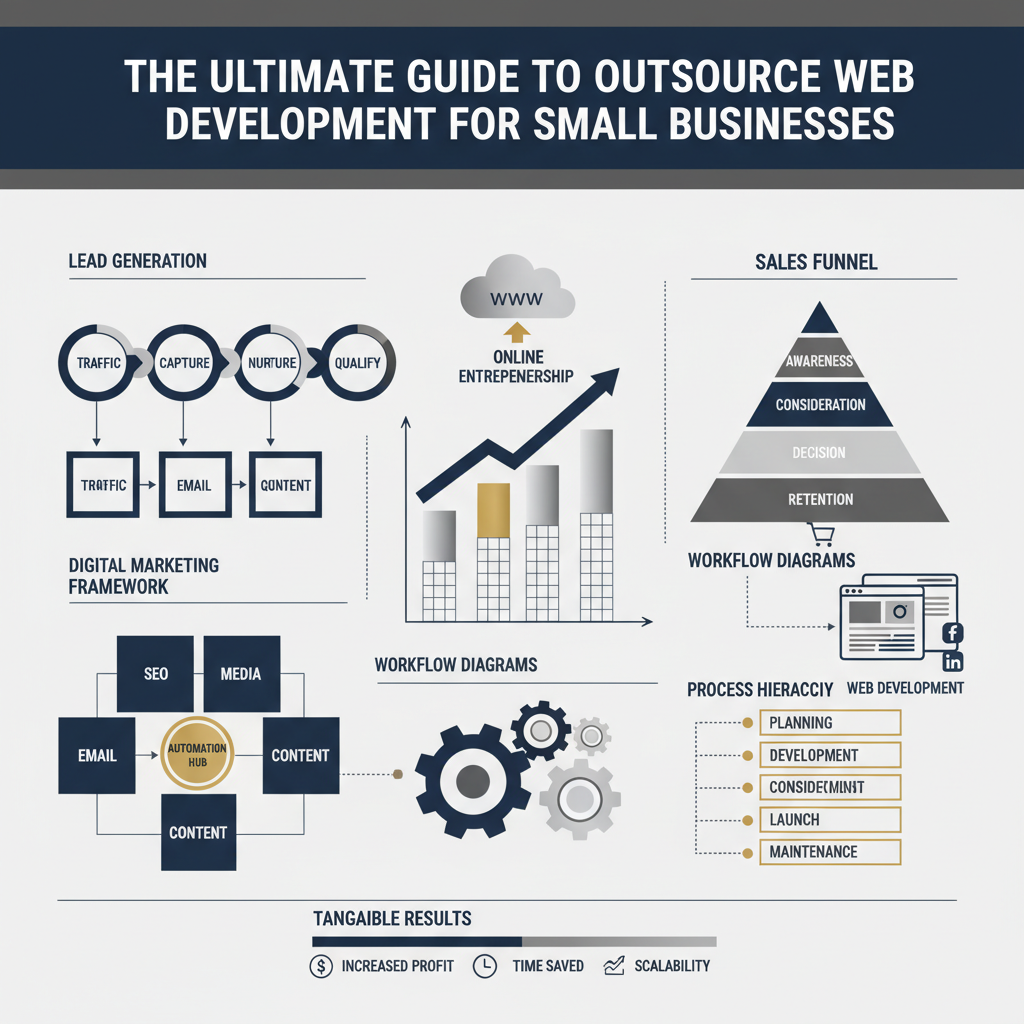
Outsourcing web development is the practice of hiring an external agency, team, or freelancer to handle the design, creation, and maintenance of your website. Businesses choose to outsource to access specialized skills, reduce operational costs, and accelerate their time-to-market, allowing them to focus on core growth activities.
To grow in today’s market, a strong online presence is a must-have for any small business. But for many owners, building a professional website feels like a big challenge. You might be struggling to get noticed online or feel overwhelmed by the technical work involved. It’s hard to create a site that looks great, brings in customers, and truly reflects your brand. The good news? You don’t have to do it alone. Smart business owners are hiring outside experts for web development to help them reach their goals.
Imagine getting a professional, high-performing website without using up all your time or overworking your team. Outsourcing your web development lets you work with experts, save money, and get your site online faster. This frees you to focus on running your business and achieving small business growth. Whether you need a brand-new website, want to set up automatic sales systems, or just need to find more customers, hiring a pro can build a strong foundation for your business online. This guide will show you how to do it right, so you get a website that not only looks professional but also helps increase your revenue.
This guide explains the benefits of hiring outside partners for your website. We’ll make the process simple, from defining your project goals to choosing the right help—whether it’s a freelancer, an agency, or a team overseas. You’ll learn how to find trusted partners for Web Design and connect your new site with marketing tools and other software. The goal is to build a website that brings in steady leads, improves your online reputation, and supports your business automation efforts. Get ready to move from DIY guesswork to real, expert-guided success.
What Does It Mean to Outsource Web Development?
Outsourcing web development means hiring outside experts to build, manage, or improve your website. Instead of creating an in-house team, you partner with freelancers or specialized agencies. This smart decision allows entrepreneurs and small business owners to get high-level technical skills easily.
For small businesses, this is a simple way to establish a professional online presence. You avoid the cost and complexity of hiring full-time staff. Many owners feel overwhelmed by marketing and other tasks. Outsourcing web development turns this challenge into a simple solution.
A professional online presence is key. For instance, 71% of small businesses already have a website, showing how necessary it is in today’s market [1]. When you outsource, you don’t just get a website. You get expertise to ensure your online foundation supports your business goals.
Understanding Web Design Versus Web Development
When you outsource web development, you engage with two main, connected areas:
- Web Design: This focuses on how your site looks and feels to a user (user experience or UX). It covers the layout, colors, fonts, and overall style. Strong web design makes your site intuitive and engaging, reflecting your brand. This helps you appear professional and trustworthy online.
- Web Development: This is the technical work that makes your website function. It includes coding, setting up databases and servers, and implementing features. Good development ensures your site is fast, secure, and works perfectly on all devices. This skill is vital for a strong online platform.
These two parts work together to deliver a complete, high-performing website. You can outsource one or both, depending on your needs.
Beyond the Initial Build: Ongoing Support
Outsourcing goes far beyond just building the website. It also includes ongoing services. You can outsource design updates, content management, and security checks. Many businesses outsource web development for long-term maintenance. This ensures your site stays current, secure, and fully functional. It’s about having a dynamic business tool, not just a static page.
The Automated-Biz Advantage
At Automated-Biz, we know a website is just one part of your business automation strategy. Outsourcing your web development with us means much more. We connect your professional branding and website with your other online business systems. Our approach ensures your site links seamlessly to automated sales funnels, lead generation tools, and social media.
We provide expert guidance to build, grow, and automate your online business. This turns inconsistent leads into a predictable way to get clients. It converts manual, disorganized work into smooth, automated processes. Our full-service platform helps your business scale smarter and faster, increasing revenue with less effort.
When Should Your Business Outsource Website Creation?
You Lack In-House Technical Expertise
As a small business owner, you already do a lot. But building a website requires special skills like coding, design, and cybersecurity. Most small businesses don’t have experts for all of these jobs on staff.
If you don’t have a tech team, building a site yourself can do more harm than good. A DIY website may look unprofessional, which can turn away customers and slow your growth. When you outsource, you get instant access to a team of experts.
You get a team of pros without the high cost of a full-time employee. They will build your website correctly and quickly, so it looks professional from day one. This takes the guesswork out of building a great website.
You Need to Launch or Scale Quickly
The online world moves quickly. Getting your website live as soon as possible is key. A delay can mean lost sales and missed opportunities.
Outsourcing helps you launch faster. An outside team can focus completely on your website, since they aren’t distracted by other company tasks. This gets you online sooner so you can start attracting customers right away.
Outsourcing is also a great help when you’re ready to grow. An expert team can quickly add new features to your site. This lets you adapt to customer needs without slowing down your business.
You Want to Reduce Operational Costs
Hiring a full-time web developer is expensive. The cost of salaries, benefits, and training adds up. This can be a major expense for small businesses and startups.
Outsourcing turns a fixed salary into a flexible, project-based cost. You only pay for the work you need, when you need it. This saves money and makes budgeting much easier.
Many businesses see big savings. For example, companies can save an average of 60% on operating costs by outsourcing. You can put that extra money back into marketing or improving your products. It’s a smart way to manage your finances.
You Need to Focus on Core Business Functions
As a business owner, your time is your most valuable asset. Spending it on complex tech tasks takes you away from your main job: running your business. This includes planning, sales, and customer service.
Outsourcing your website frees you from technical headaches. It lets you focus on what you do best—growing your business. You’ll have more time to find new customers and take care of your current ones.
By letting experts handle your website, you can focus on the big picture. Instead of managing small tech details, you can lead your company forward. This helps your business run smoothly and grow more efficiently.
What are the Core Benefits of Outsourcing Web Development?

Access to Specialized Skills and Technology
Building a strong website requires special skills. Many small businesses don’t have their own web development team. Outsourcing solves this problem. It gives you instant access to experts with deep knowledge of modern web design. They understand what makes a website easy to use (UX) and how to rank well on search engines (SEO).
You also get access to the best tools and technology. This ensures your website looks great and works well. It will be secure, reliable, and easy to use on any device. A professional website improves your brand’s image. It helps you look more credible and trustworthy online.
In fact, access to experts is a top reason why businesses choose to outsource [2]. Instead of doing it yourself, you get a website built by professionals. This creates a solid foundation for your business to grow.
Faster Time-to-Market for Your Online Presence
In today’s digital world, speed is essential. Outsourcing your web development gets your website online much faster. An outside team can focus only on your project. They won’t be distracted by other company meetings or daily tasks. This focused approach means your website will be ready sooner.
Getting online faster means you can launch new products or services quickly. You can also react rapidly to changes in the market, which is key for business growth. A live website helps you start getting new customers right away. It turns a slow internal project into a fast and efficient one.
Cost-Effectiveness and Budget Control
Controlling costs is important for any small business. Outsourcing web development is often much cheaper. You avoid the high cost of hiring full-time staff, which includes salaries, benefits, and ongoing training. You also don’t need to pay for more office space or equipment.
Instead, you pay for the specific project you need. This model gives you better control over your budget because you agree on the work and the price from the start. You can also hire experts from places where costs are lower. This helps you get professional work for a better price.
Saving money is a main reason businesses outsource [2]. It turns unpredictable internal costs into a fixed, manageable expense. This helps your business grow smarter and work more efficiently.
Increased Focus on Business Growth and Automation
As a business owner, your time is valuable. Outsourcing web development frees you from technical tasks. This lets you focus on what’s most important, like improving sales or customer service. You can put your energy into growing your business.
This shift also helps you automate parts of your business. Your web partner can connect your new site to important tools for sales, marketing, and getting customer leads. They can also connect it to your social media and online review tools.
This makes sure your website supports all your other marketing efforts. You go from being stuck on technical problems to focusing on growth. You get a reliable system that helps you find new clients consistently, saving you time and delivering better results.
How to Outsource Web Development Successfully: A 5-Step Process
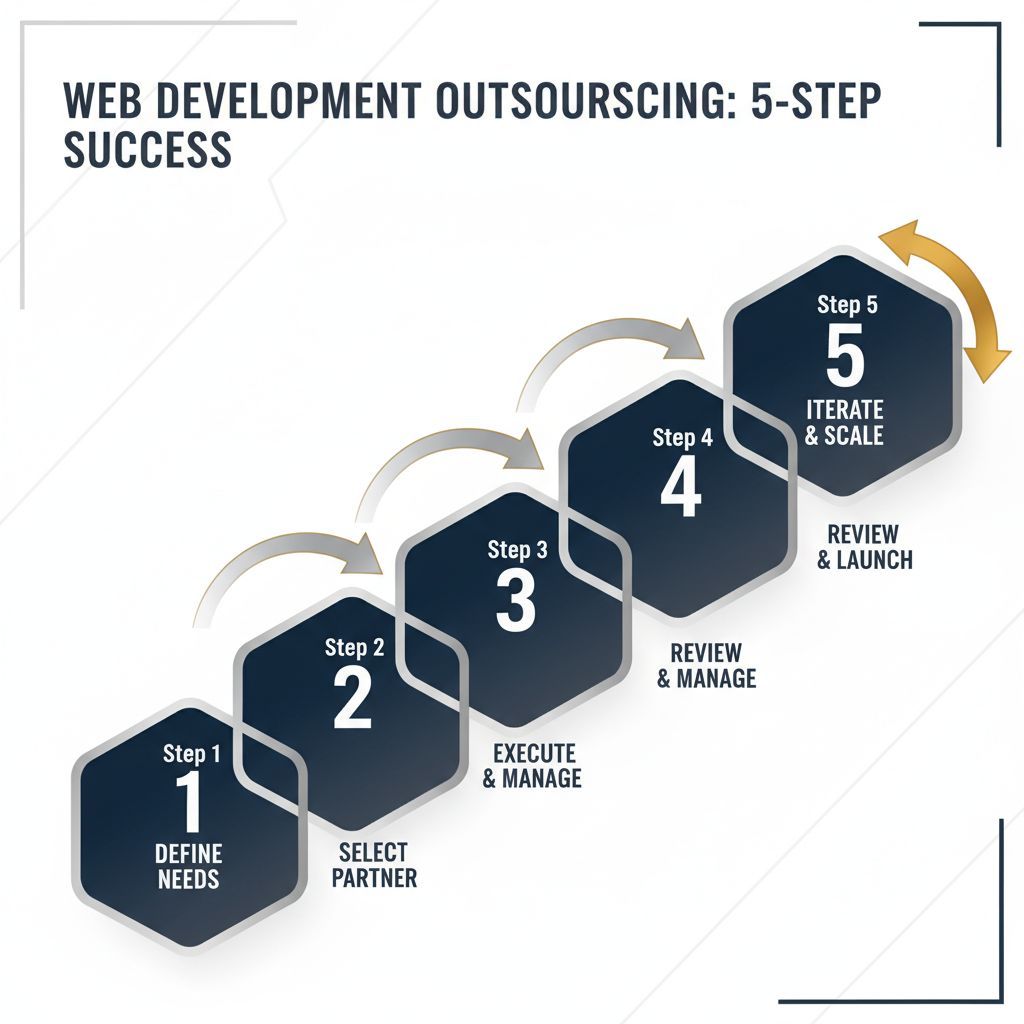
Step 1: Clearly Define Your Project Scope and Requirements
Successful outsourcing starts with a clear plan. Before looking for a partner, define exactly what you need. This important first step prevents confusion and makes sure your project is a success.
First, outline your vision for your website. What specific features does it need? Think about your target audience and what they want. A clear plan helps you get a professional result and avoid expensive changes later on.
Unclear requirements are a top reason projects fail [3]. It’s important to spend time on this step.
Key things to define include:
- Project Goals: What is the main goal of your website? (e.g., get more leads, increase sales, or support customers). Make sure this goal supports your overall business growth.
- Target Audience: Who is your website for? Knowing your audience helps you choose the right design and features.
- Core Features: List the must-have features. This could be an online store, a contact form, a booking system, or tools for automated sales.
- Design Preferences: Share examples of websites you like. Describe your brand’s style and the look you want for your site.
- Technical Requirements: Do you need any specific technologies, like certain platforms or integrations? Think about what you might need for business automation in the future.
- Budget and Timeline: Be realistic about your budget and timeline. This will help you find the right partner.
Think of this detailed plan as your project’s blueprint. It makes conversations easier and helps potential partners understand your vision for a professional website.
Step 2: Choose Your Outsourcing Model: Freelancer, Agency, or Offshore Team
After you’ve defined your project, it’s time to choose an outsourcing model. Each option has its own pros and cons. Your choice will affect the cost, the amount of control you have, and the support you get.
- Freelancers: Great for smaller projects or single tasks. They are flexible and often affordable. However, you will have to manage them directly, which takes more of your time.
- Agencies: Handle everything for you, from project management to design and development. They provide a team of experts, which is great for creating a consistent brand. While they cost more, they are a good choice for complex projects.
- Offshore Teams: Can save you a lot of money and give you access to talent from around the world. This model works well for large projects. You’ll need to plan for time zone differences, but many offshore teams deliver excellent work. The global market for IT outsourcing is large and growing [4].
Think about your project’s size, your budget, and how much time you can spend managing it. Automated-Biz can help you make the right choice. We offer solutions to help you reach your online business goals.
Step 3: How to Find and Vet Potential Development Partners
Finding the right partner is key to success. This step is all about doing your homework. You need a team that fits your business values and has the right technical skills. The goal is to find a trustworthy partner for your web development or design project.
Start by looking in the right places:
- Professional Platforms: Websites like Upwork, Toptal, and Clutch are great for finding freelancers and agencies.
- Referrals: Ask people you trust for recommendations. A personal referral is often the best way to find a reliable partner.
- Industry Networks: Look in online forums or communities focused on web development.
Once you have a list of candidates, it’s time to vet them carefully:
- Portfolio Review: Look at their past work. Is it high-quality? Is it similar to your project?
- Experience and Expertise: Check that they have experience with projects like yours. Make sure they have the right technical skills, especially for any business automation you need.
- Communication Style: How well do they communicate? Good communication is essential when working remotely.
- Client Testimonials and Reviews: Read reviews from their past clients. Look for positive feedback on sites like Clutch or Google.
- Pricing and Contract Terms: Make sure you understand their pricing. The contract should be clear about what they will deliver, the timeline, and who owns the final product.
- Project Management Approach: Ask how they manage projects. Do they provide clear updates on their progress?
Schedule a meeting with your top choices. Ask them about their process. Vetting partners properly will save you time and money later.
Step 4: Establish Clear Communication Channels and Milestones
Good communication is essential for any outsourced project. A clear plan for how you’ll talk helps avoid misunderstandings. It also keeps your project on time and on budget.
First, decide how and when you will communicate. Agree on which tools you will use, like Zoom, Asana, or Slack. Regular communication helps everyone be more productive [5].
Next, set up regular check-in meetings, such as daily or weekly updates. These meetings keep everyone on the same page. They also help you solve problems quickly, which saves time.
Key communication strategies include:
- Regular Updates: Ask for frequent progress reports so you always know what’s been done and what’s coming next.
- Feedback Loops: Give feedback quickly and clearly. This helps avoid mistakes and having to do work over again.
- Defined Contact Person: Choose one main contact person for your team and for theirs. This makes communication simpler.
- Documentation: Write down all important decisions and changes. This gives everyone a clear record to follow.
Clear milestones help you track progress. Break the project into smaller parts, each with its own deadline. This makes it easy to see how things are going and make changes if needed. This approach helps your business grow by making project results more predictable.
Step 5: Manage the Project and Plan for Long-Term Maintenance
Your job isn’t over when the project starts. Managing the project actively makes sure you get the website you want. Plus, planning for maintenance after the launch is key for long-term success.
While the site is being built, keep a close eye on progress. Review the work regularly and give feedback right away. Test new features as they are finished. This helps you find and fix problems early, ensuring a high-quality result.
As you get close to the end, talk about the handover. Make sure you get all the important files, like the code, passwords, and any user guides. You need to know how to manage your new website. Automated-Biz can make this step easier with our integrated online business solutions.
Your website needs ongoing care to stay healthy and secure. Plan for:
- Software Updates: Keep your website’s software, plugins, and themes up to date.
- Security Monitoring: Watch for and protect against security threats.
- Performance Optimization: Make sure your site loads quickly and is easy for visitors to use.
- Content Management: Have a plan for adding new content to your site regularly.
- Scalability: Plan for future updates as your business grows.
Your website is a living part of your business. It needs regular care to keep bringing in new customers. Automated-Biz offers a full-service platform with ongoing support. We can help with automated sales funnels, lead generation, and more. We make sure your website stays secure, professional, and works hard for your business.
Onshore vs. Offshore Web Development: Which is Right for You?
Choosing where to outsource web development is a big decision. This choice affects your project’s cost, timeline, and success. For entrepreneurs and small business owners, it can shape their path to a strong online business solution. Let’s break down the options.
It’s important to understand the differences between onshore, nearshore, and offshore web development. Each option has its own benefits. The best choice for you depends on your budget, how you like to communicate, and your project’s needs.
Defining Onshore, Nearshore, and Offshore Outsourcing
Outsourcing means you hire an outside team for your web development. These teams can be located anywhere in the world. We group these partnerships based on how close they are to your business.
Onshore Outsourcing
This means hiring a team within your own country. For example, a U.S.-based business might outsource web development to an agency in another U.S. state. The main benefits are easier communication and no cultural surprises.
Key characteristics include:
- Same time zone and language.
- Fewer cultural differences.
- Easy to arrange in-person meetings.
Nearshore Outsourcing
Nearshore outsourcing means you partner with a team in a neighboring country. For instance, a U.S. company might work with a developer in Mexico or Canada. This option gives you a good balance between saving money and having similar time zones.
Key characteristics include:
- Minimal time zone differences.
- Often shared or similar cultures.
- Lower travel costs compared to offshore.
Offshore Outsourcing
Offshore outsourcing involves hiring a team in a distant country. India, Eastern Europe, and Southeast Asia are popular choices. This option usually saves you the most money. But, it can also create challenges with time zones and cultural differences.
Key characteristics include:
- Significant time zone differences.
- Potential for cultural and language barriers.
- Typically the most budget-friendly option.
Pros and Cons of Each Model
Each outsourcing model has its own pros and cons. Reviewing them will help you choose the best fit for your small business growth and goals.
| Model | Key Benefits | Potential Drawbacks | Best For |
|---|---|---|---|
| Onshore |
|
|
Businesses that need perfect communication and local knowledge. Also good for complex or sensitive projects. |
| Nearshore |
|
|
Companies looking for a balance of cost, quality, and communication. Great for projects that change and grow over time. |
| Offshore |
|
|
Businesses on a tight budget. Projects with very clear and well-defined instructions. Companies wanting to save the most money. The global outsourcing market was valued at 97.5 billion U.S. dollars in 2023 [6]. |
Making the Best Choice for Your Small Business
The right choice comes down to your specific needs and priorities. Think about these factors before you outsource web design or development.
Evaluate Your Budget and Cost Savings
If saving money is your top priority, offshore web development is the cheapest option. But, you should always think about the total cost. This includes extra time for communication or checking for quality.
- Automated-Biz Insight: While cost is important, remember the value of a high-quality website. Investing wisely in branding and website creation pays off in the long run.
Assess Communication and Collaboration Needs
Good communication is key to any project’s success. If you need to talk with your team often and in real-time, onshore or nearshore is a better fit. Big time zone differences can slow things down.
- Choose a model that fits your workflow.
- Think about how complex your project is.
Understand Project Complexity and Timeline
Simple projects with clear instructions work well with offshore teams. More complex projects that need a lot of back-and-forth often work better with a closer team. Think about how quickly you need to launch.
- Faster launches can benefit from 24/7 offshore work cycles.
- However, managing those cycles requires clear rules.
Prioritize Quality and Expertise
No matter where your team is, quality should always come first. At Automated-Biz, we focus on solutions from experts. You need a team that understands your vision for business automation and online business solutions. Don’t sacrifice expertise just to save money.
- Check out any potential partners carefully.
- Look for a strong portfolio and a proven track record.
Consider Automated-Biz’s Integrated Approach
At Automated-Biz, we understand the details of building a successful online presence. We provide professional, integrated solutions that solve your specific problems. Whether you choose onshore, nearshore, or offshore, your web development should connect smoothly with your overall business process automation plan.
We make sure your website supports your automated sales funnels. It should also drive your lead generation strategies. Our platform gives you the tools and expert help to do this, making your choice of a development partner more effective and less stressful.
Beyond a Website: Integrating Development with Your Business Automation Strategy
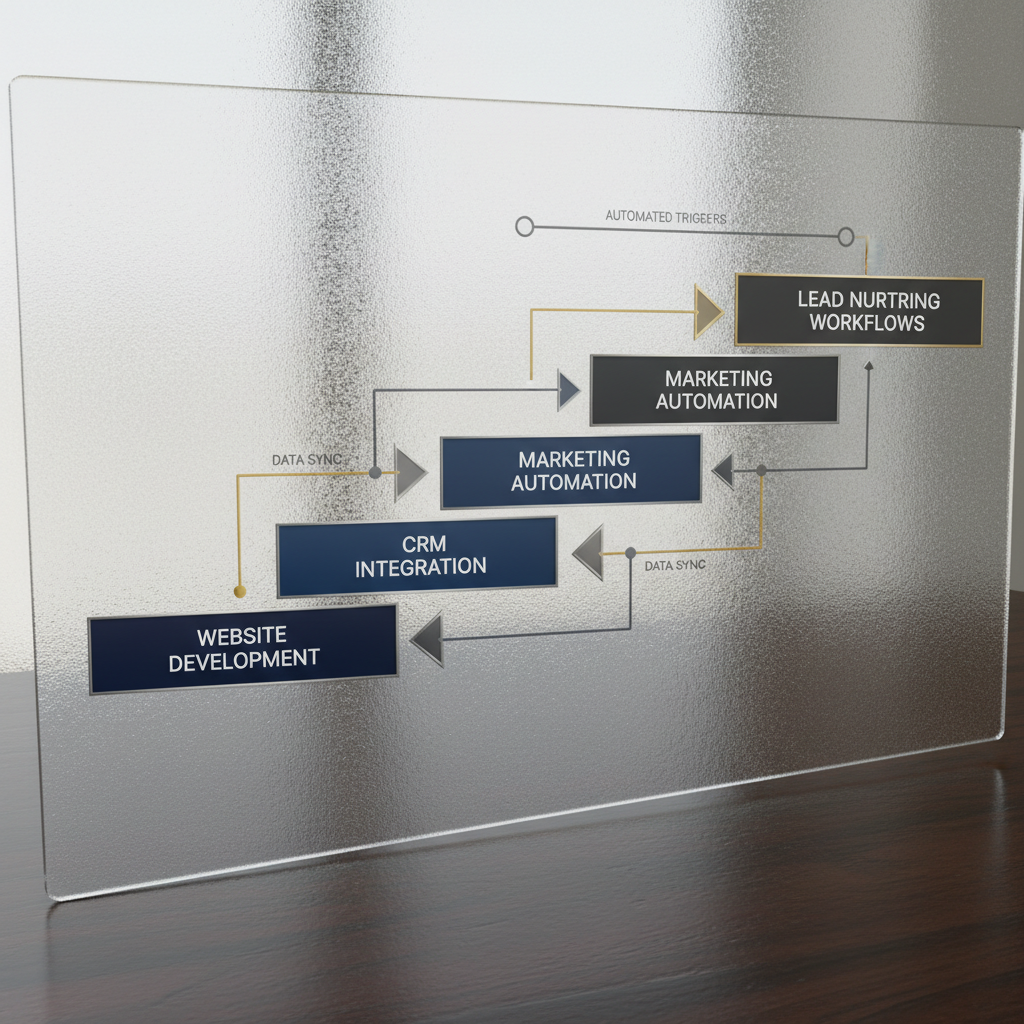
Connecting Your Website to Automated Sales Funnels
Your website should be more than an online brochure. It’s the command center for your entire
An automated sales funnel guides potential customers on the path to making a purchase. Many businesses are
Connecting your website to a sales funnel makes finding new customers easier. It helps turn visitors into loyal clients. Here’s how it works:
- Entry Points: Your website uses special landing pages to offer valuable content or services.
- Lead Magnets: Visitors provide their contact information to get helpful resources, like e-books, webinars, or free consultations.
- Automated Nurturing: Once you have a new lead, an automated system sends them a series of helpful emails. This content builds trust and educates them about your business.
- Conversion Triggers: The funnel uses clear calls to action (CTAs) to encourage leads to buy something or take the next step.
A connected system keeps potential customers engaged and helps you get the most out of every website visit. This approach also saves you a lot of time. In fact, studies show that businesses using marketing automation increase their sales productivity by 14.5% [7].
Ensuring Your Online Presence Supports Lead Generation
A strong online presence is more than just a website that works. It should bring in new leads 24/7. Everything you do online should support your
Many business owners feel
- Professional Branding and Website Creation: A well-designed, easy-to-use website immediately builds trust. It needs clear menus and strong calls to action.
- Search Engine Optimization (SEO): Your website needs to show up high in search results so potential clients can easily find you.
- Content Marketing: Great blog posts, articles, and videos show you’re an expert in your field. This content attracts visitors naturally.
- Social Media Integration and Automation: Sharing good content on social media brings people to your website.
Social media automation tools help you stay active without doing all the work by hand. - Online Reputation Management: Good reviews and testimonials build trust and help people decide to buy from you.
Online reputation management is essential for building that trust.
All these parts should work together smoothly to attract new business. When you combine them well, you will
The Automated-Biz Advantage: An All-in-One Solution
Many
Automated-Biz makes it simple. We offer one complete platform for all your
With Automated-Biz, you gain a significant advantage:
- Professional Branding and Custom Website Creation: We build your online brand from the ground up, including custom logos and a website that looks great on any device.
- Integrated Marketing Systems: Our platform has built-in
automated sales funnels and powerfullead nurturing tools. They work together to turn interested people into paying clients. - Streamlined Digital Presence: We manage your
social media management and online engagement to bring steady traffic and build your audience. - Online Reputation & Review Management: We help you build a great online reputation to increase customer trust.
- Expert Consultation & Dedicated Support: You get personal advice from our team. We help you use
digital marketing systems and strategies that are proven to work.
Our all-in-one service means you don’t have to deal with multiple companies. You can stop guessing and move from
Frequently Asked Questions
Why do companies outsource software development?
Many businesses choose to outsource web development to get ahead. It gives them fast access to special skills and technology. Outsourcing also helps companies work more efficiently and focus on what they do best.
For entrepreneurs trying to grow online, outsourcing can be a great solution. It turns messy, manual tasks into smooth, automated processes. This helps companies grow faster and build a stronger online presence.
Here are the key reasons businesses outsource software development:
- Access to Specialized Expertise: You get instant access to more experts. This includes specialists in certain programming languages or new technologies, without the cost of hiring them full-time.
- Cost-Effectiveness: Outsourcing often cuts business costs. You save on salaries, benefits, and office space compared to hiring an in-house team [source: https://www.statista.com/statistics/1234988/outsourcing-cost-savings-worldwide/]. It also makes your project budget more flexible.
- Faster Time-to-Market: Expert teams work faster and more efficiently. This means your website can launch sooner. You can add new features or marketing tools quickly.
- Focus on Core Business Functions: When you hand off development work, your team can focus on important goals. This includes finding new clients, improving your products, and growing your business.
- Scalability and Flexibility: Outsourcing makes it easy to add or remove developers as needed. You can adapt to project changes without long-term contracts. This is helpful for automating parts of your business.
- Risk Mitigation: Outside partners often use proven methods to ensure high quality. This can lower project risks and lead to a better final product.
How do I find reputable web development outsourcing companies?
Finding a good outsource web development company is key to success. It takes careful research. A trustworthy partner will make sure your project matches your vision and budget. Our platform, Automated-Biz, makes this easier by offering all-in-one solutions for branding and website creation.
If you are looking for a partner on your own, follow these steps:
- Define Your Needs Clearly: Before you start looking, be clear about your project’s goals, budget, and what you want to achieve. Know what you need for branding, design, and website features.
- Research Online Platforms and Directories: Look at popular outsourcing websites and business review sites. Find companies with great client reviews and a good reputation.
- Review Portfolios and Case Studies: Look at their past work. Does the style and quality meet your standards? Find examples that are similar to your project.
- Check Client Reviews and References: Read reviews on sites like Clutch or GoodFirms. Ask companies for references from past clients, and then contact those clients.
- Assess Communication and Transparency: When you first talk to them, see how quickly they respond and how clearly they explain things. Good communication is essential for a project to succeed.
- Evaluate Technical Expertise and Experience: Make sure their team has the right skills for your project. Ask them about the technologies and tools they have used before.
- Understand Their Project Management Process: A good company will have a clear, organized plan. This plan should include project goals, progress updates, and quality checks.
- Review Contracts and Agreements: Read all contracts carefully. Pay attention to the project terms, deadlines, and who owns the final work. Make sure everything is written down clearly.
Automated-Biz offers a complete solution for your online presence. We take away the hassle of finding different people for each job. Our platform combines branding, website creation, and business automation into one simple service.
What is the difference between outsourcing web development and web design?
It’s important to know the difference between web development and web design. Both are needed for a great website, but they are not the same. They require different skills and have different goals. Whether you outsource one or both depends on your project.
- Web Design: Focus on Aesthetics and User Experience
- Web design is all about the look and feel of a website. It focuses on how the site appears and feels to a user.
- This includes the layout, colors, fonts, and images. It’s about the site’s overall user interface (UI).
- Designers focus on user experience (UX) to make sure the site is easy and enjoyable to use. Their goal is to create a website that looks professional and keeps visitors engaged.
- When you outsource web design, you hire experts to create your site’s visual style and guide users through it. This helps your brand look more trustworthy online.
- Web Development: Focus on Functionality and Code
- Web development is the technical work that brings a design to life. It turns the visual concept into a working website.
- Developers write the code that powers the website. This includes front-end work (what users see) and back-end work (the server and database that run in the background).
- They handle programming, connecting to databases, and making sure the website runs smoothly and reliably.
- When you outsource web development, you hire programmers to build the site’s core structure and features. This is what powers tools like automated sales funnels or lead generation systems.
Think of it this way: web design is the blueprint and interior design of a house. Web development is the construction crew that actually builds it. You need both. Automated-Biz offers both branding and website services together. We provide expert design and solid development in one complete package.
How much does it cost to hire an offshore developer?
The cost to hire an offshore web development developer can vary a lot. The final price depends on several factors. Understanding these factors will help you create a realistic budget.
Here are the key factors that affect the cost:
- Geographic Location: Rates change a lot depending on the country. For example, developers in Eastern Europe or Asia usually charge less per hour than developers in North America or Western Europe [source: https://www.global-sourcing.com/blog/offshore-developer-rates/].
- Developer Experience and Skill Level: A junior developer costs less than a senior developer with more experience. More complex projects require more skilled experts, which costs more.
- Project Complexity and Scope: A simple website costs less than a large e-commerce store. Special features like payment systems, sales funnels, or complex databases will add to the cost.
- Project Duration: You might get a better hourly rate for a long-term project. Short, urgent projects can sometimes cost more.
- Technology Stack: The cost can change based on the programming tools needed. If your project requires a rare or specialized technology, it may be more expensive.
- Engagement Model: How you pay affects the cost. You can pay by the hour, a fixed price for the whole project, or a monthly fee. Each payment model works best for different types of projects.
- Team vs. Individual: Hiring a full team with a designer, developer, and project manager costs more than hiring just one developer.
While offshore development can save money, focus on getting good value, not just the lowest price. Paying a little more for a skilled team can prevent problems later and result in a better product. Automated-Biz offers clear, predictable pricing for our services, including branding, website creation, and automation. We deliver professional results without the hidden fees or headaches of hiring individual freelancers.
Sources
- https://clutch.co/website-designers/resources/small-business-website-statistics
- https://www2.deloitte.com/content/dam/Deloitte/se/Documents/strategy/global-outsourcing-survey-2020.pdf
- https://www.pmi.org/learning/library/poor-requirements-management-causes-project-failure-6691
- https://www.statista.com/statistics/189782/market-size-of-it-outsourcing-worldwide/
- https://hbr.org/2016/06/the-power-of-proactive-communication
- https://www.statista.com/statistics/189788/market-size-of-it-outsourcing-worldwide/
- https://www.nucleusresearch.com/research/single/roi-of-marketing-automation-2014/