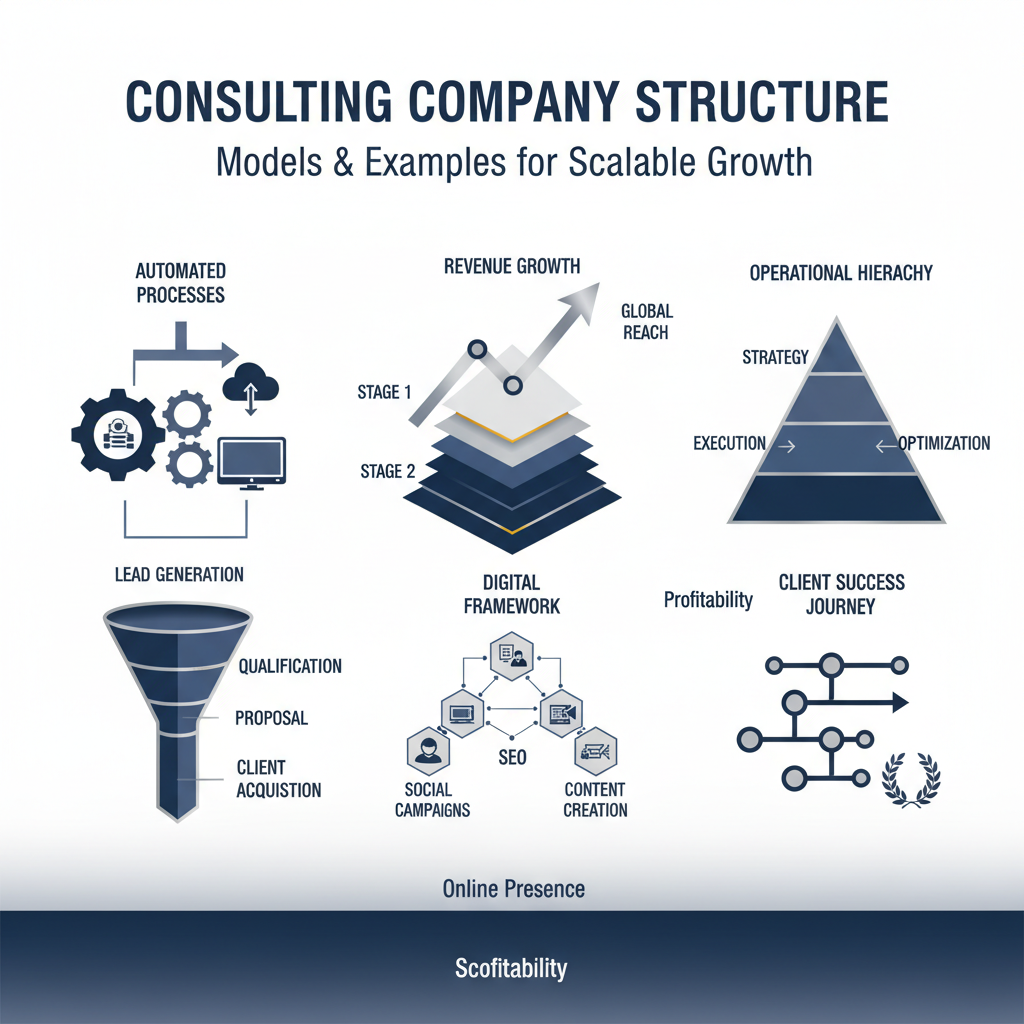
A consulting company structure defines its legal and operational framework, dictating how it’s taxed, who is liable, and how it’s managed. Common structures range from simple Sole Proprietorships for individual consultants to more complex LLCs and Corporations for larger firms seeking liability protection. The best structure depends entirely on the firm’s size, number of partners, and long-term growth objectives.
As a consultant, your expertise is your most valuable asset. But as your business grows, so do the challenges. You might find yourself overwhelmed by marketing and operations tasks, struggling to expand online, and realizing that unplanned growth causes problems instead of success. A strong business foundation isn’t just nice to have—it’s essential for turning your passion into a scalable company.
The solution is to plan your company structure carefully. This goes beyond legal paperwork. It means picking a business model that fits your goals, services, and future plans. This guide offers simple advice and real examples to help you find the right structure for your consulting business. We’ll cover options from sole proprietorships to corporations and show how the right choice leads to growth, credibility, and efficiency.
Choosing the right structure helps you automate tasks, find new clients, and look professional from day one. By organizing your business well, you’ll have more time to focus on what you do best: getting great results for your clients. Let’s explore the first steps to building a consulting firm that can succeed and grow for years to come.
Why is Your Consulting Company Structure a Critical First Step?
Starting a consulting business takes more than just expertise. You need a solid foundation. Your consulting company structure is that crucial first step. It shapes everything you do, from your legal standing and taxes to your potential for small business growth.
Many new consultants skip this step to focus on finding clients. But the wrong business structure can create big problems later. You could face legal risks or pay more in taxes than you need to. It also makes growing your business much harder, leaving you overwhelmed with marketing and operations tasks.
Choosing the right structure has clear benefits:
- Legal Protection: It protects your personal assets from lawsuits or business debts. This is a key reason why small businesses with a formal legal structure tend to last longer [1].
- Tax Efficiency: Different structures have different tax benefits. Choosing the right one can lower your taxes and increase your profit.
- Operational Clarity: A good structure clarifies who does what. It creates a clear plan for how your business runs, which is key for using business process automation.
- Scalability: The right structure makes it easier to grow. You can hire employees and bring on partners confidently, setting you up for long-term small business growth.
- Professional Credibility: A formal structure shows clients and investors you’re serious. It helps you appear professional and trustworthy online and supports your branding and website creation efforts.
Think of your company structure as the foundation for your goals. It’s the framework for building a professional online presence, adding automated sales funnels, and using effective lead generation strategies. Without the right structure, automation tools won’t work as well, and you might struggle to grow your business online. A smart structure helps you switch from manual work to smooth, automated systems. You can go from getting inconsistent leads to finding new clients reliably. Automated-Biz provides the online business solutions to help you succeed. We guide you from DIY guesswork to expert-led business automation.
What Are the Most Common Consulting Company Structures?

Sole Proprietorship: The Solo Consultant’s Choice
Most consultants start out as a sole proprietorship because it’s the simplest business structure. Legally, you and your business are the same entity. It requires very little paperwork to get started and gives you direct control over everything.
Key Characteristics and Considerations:
- Simplicity: Easy to set up and run, with fewer regulations to follow.
- Full Control: You make all the decisions, which helps you adapt and change direction quickly.
- Direct Profit: All profits go directly to you and are taxed as your personal income.
- Unlimited Liability: This is a major drawback. Your personal assets, like your home or car, are not separate from business debts. This puts you at significant personal risk [2].
- Limited Scalability: Growing the business can be difficult because it often depends entirely on your personal time.
For solopreneurs and new consultants, a sole proprietorship is a fast way to begin. However, this structure can leave you unprotected and make it harder to grow your business online. Automated-Biz helps solo consultants build a professional online presence with services like branding and website creation. You can also use tools like automated sales funnels and lead generation strategies. These allow you to scale your business smartly, even when you work alone. You can earn more with less effort, replacing guesswork with expert-guided business automation.
Partnership: Collaborating for Growth
A partnership is a business owned by two or more people who share responsibilities and profits. This structure is great when partners have different skills that work well together. It also lets you pool your resources and knowledge.
Types and Implications:
- General Partnership (GP): All partners share management duties and are personally responsible for the business’s debts.
- Limited Partnership (LP): Includes “general” partners who run the business and “limited” partners who only invest money. Limited partners are only liable for the amount they invest and are not involved in daily operations [3].
- Limited Liability Partnership (LLP): This structure protects each partner from debts created by the other partners. It’s a common choice for professional groups like law firms.
Partnerships can help a small business grow faster by combining strengths and sharing the work. However, it’s vital to have a clear partnership agreement to avoid disagreements later. Roles and responsibilities should be defined from the beginning. Automated-Biz offers business process automation tools to help partners work together smoothly. You can coordinate tasks and manage projects efficiently, ensuring great collaboration and happy clients. Our platform automates routine work so you can focus on growing the business instead of paperwork.
Limited Liability Company (LLC): Balancing Protection and Simplicity
The Limited Liability Company (LLC) is a very popular choice for consultants. It gives you the liability protection of a corporation but with the simpler taxes of a sole proprietorship. An LLC creates a legal wall between your personal assets and your business debts, which is a major benefit.
Advantages of an LLC:
- Personal Liability Protection: Your personal assets are safe from business debts or lawsuits.
- Tax Flexibility: You can choose how you want to be taxed—as a sole proprietorship, a partnership, or even an S-Corp, which can save you money.
- Credibility: Having “LLC” after your business name often looks more professional and builds trust with clients.
- Operational Simplicity: LLCs have fewer rules to follow compared to corporations.
Forming an LLC is a smart step for a growing consulting business. It provides peace of mind so you can focus on serving your clients. This structure helps you appear professional and trustworthy online. Automated-Biz offers online business solutions that work perfectly with an LLC. Our tools help with online reputation management, social media management, and automated sales funnels. This helps your LLC find new leads and turn them into happy clients, creating steady growth.
Corporation (S-Corp & C-Corp): For Complex, High-Growth Firms
A corporation is a more formal business structure that is legally separate from its owners. This offers the strongest protection for your personal assets. This structure is best for consultants who plan to grow quickly or look for investors. It’s important to know the difference between an S-Corp and a C-Corp.
S-Corporation (S-Corp):
- Pass-Through Taxation: Profits and losses pass through to the owners’ personal income, which avoids the problem of “double taxation” [4].
- Liability Protection: Owners’ personal assets are protected from business debts.
- Credibility: This structure signals a high level of professionalism.
- Strict Requirements: There are limits on the number and type of shareholders.
C-Corporation (C-Corp):
- Separate Taxable Entity: The C-Corp pays taxes on its profits, and then shareholders pay taxes on their dividends. This is known as “double taxation.”
- Unlimited Growth Potential: C-Corps can have unlimited shareholders, making them a good choice for raising money from investors or going public.
- Strong Liability Protection: This structure offers the highest level of protection for personal assets.
- Complexity: Requires a lot of paperwork and strict record-keeping.
If you want significant small business growth and plan to scale up, a corporation could be the right choice. It provides a solid foundation for attracting investors and hiring a large team. But it comes with more administrative work. Automated-Biz provides the business automation tools that corporations need. We simplify complex tasks with business process automation and help you find more clients using automated sales funnels. Our platform supports your digital marketing systems and client acquisition, helping you move from manual work to smooth, automated systems for top efficiency.
Flat vs. Hierarchical Models: Defining Your Operational Flow
Beyond a legal structure, you also need to decide how your business will operate day-to-day. Your operational model defines how your team works together and makes decisions. This choice greatly affects your company culture and efficiency.
Flat Organizational Model:
A flat structure has few or no levels of management between employees and the owners. This gives team members more independence and cuts down on red tape. As a result, decisions can be made faster. This model is common in small, flexible consulting firms and encourages open communication.
- Benefits: More employee empowerment, faster decisions, and better communication.
- Challenges: Can get messy as the company grows, and career paths may be unclear.
Hierarchical Organizational Model:
A hierarchical structure has a clear chain of command with multiple layers of management. Roles and responsibilities are clearly defined. This model is common in larger, more established firms because it provides structure and clear career paths.
- Benefits: Clear lines of authority, specialized roles, and structured opportunities for promotion.
- Challenges: Decision-making can be slower, and communication can get stuck between layers.
Your choice between a flat or hierarchical model depends on your firm’s size, culture, and goals. Both models can be improved with smart productivity workflows and time-saving processes. Automated-Biz offers online business solutions that work for any structure. Our platform simplifies your operations and helps you provide great client service, no matter how your team is organized. With tools for everything from social media automation to online reputation management, we help you manage your team and grow in a structured way. We take you from feeling overwhelmed to running an efficient, scalable business.
How to Choose the Best Organizational Structure for a Consulting Business
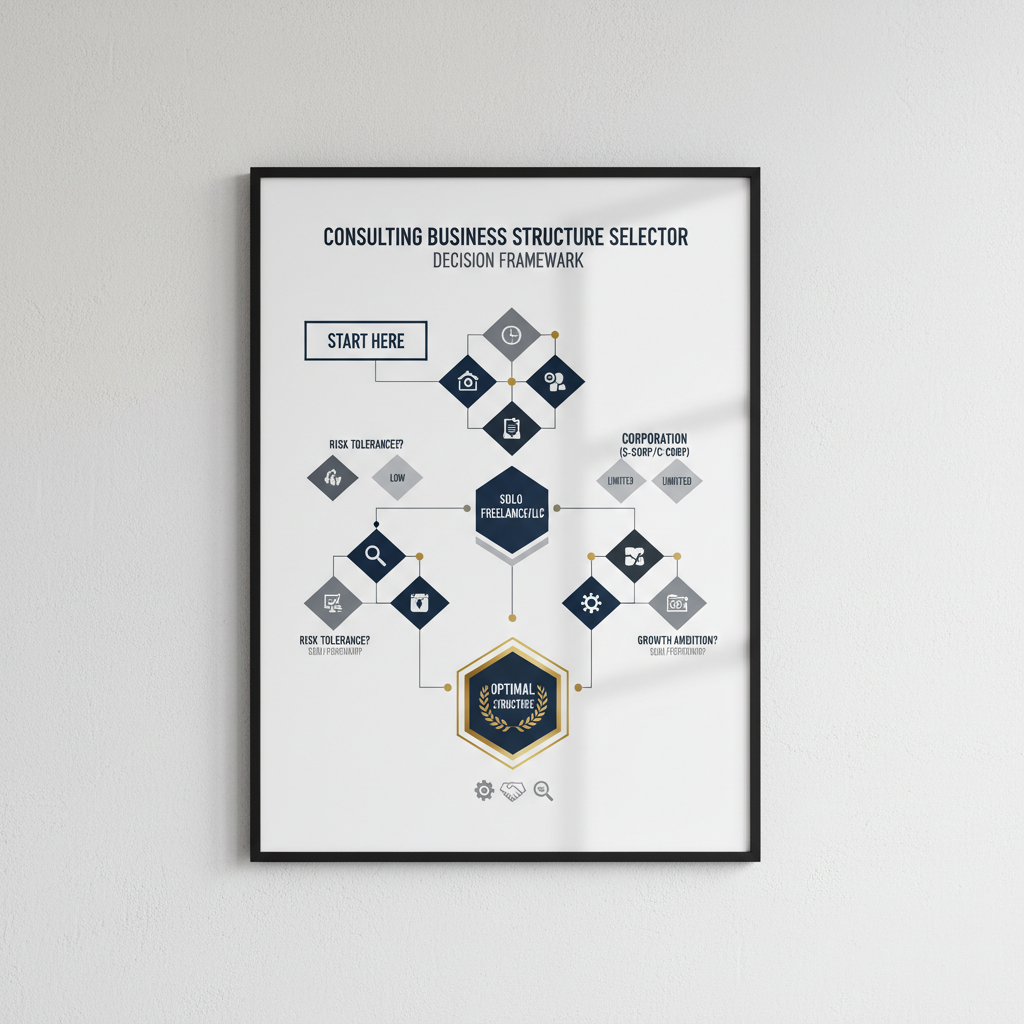
Consider Your Firm’s Size and Scalability
To pick the right consulting company structure, first look at your firm’s current size. Then, think about its future growth. A solo consultant’s needs are very different from a firm with ten employees.
For solopreneurs or very small teams, a simpler structure often makes sense because you need flexibility. Still, you should think about where you want your business to be in 3-5 years. Do you plan to expand your team or offer new services?
- Solo or Micro Firms: Focus on easy setup and simple operations. Sole proprietorships and single-member LLCs are common choices.
- Growing Small Businesses: As you add partners or employees, you’ll need a structure that works for multiple owners. Partnerships or multi-member LLCs are good options.
- Scaling for the Future: Choose a structure that supports your small business growth. It should make it easy to add new services and team members.
Remember, a structure that supports business automation early on helps even small firms run more efficiently. This makes it easier to scale later. Automated-Biz offers online business solutions built for this type of growth, so you’re ready when it’s time to expand.
Align Structure with Your Service Specialization
Your consulting services should shape your business structure. Your specialty affects how you work with clients and how your team manages projects.
- Niche Specialists: If you focus on one area, like social media automation or lead generation strategies, a simple structure works well. This lets experts work directly with clients and make decisions quickly.
- Broad Service Providers: If you offer many services, like general management or full small business marketing services, a structure with different departments might be better. This lets teams focus on specific areas and deliver consistent quality.
- Project-Based Firms: Many consultants work project by project. A matrix structure can be very effective here. In it, consultants report to both a department manager and a project manager. This helps with sharing resources and working together across teams.
Your structure should make it easier to share your expert knowledge and support the way you work with clients. Good branding and website creation are key. They show potential clients what you specialize in. Automated-Biz can help you build that professional online presence.
Factor in Liability and Tax Implications
Protecting yourself legally and saving on taxes are key for any consulting business. Your business structure affects both your personal liability and how much you pay in taxes.
Here’s a look at common structures and what they mean for you:
- Sole Proprietorship: This is the easiest to set up, but it offers no protection for your personal assets. If the business has debts or gets sued, your personal property is at risk. Filing taxes is simple.
- Limited Liability Company (LLC): An LLC protects your personal assets from business debts. This is a huge benefit for small business owners. Profits and losses “pass through” to your personal tax return, which helps you avoid double taxation. For many, an LLC is a good mix of protection and simplicity.
- Corporation (S-Corp & C-Corp): Corporations offer the most liability protection because they are completely separate legal entities from the owners.
- S-Corp: Profits and losses pass through to the owners’ personal income, avoiding corporate taxes. This can also lead to savings on self-employment taxes if you pay yourself a reasonable salary.
- C-Corp: The business pays corporate income tax on its profits. When profits are paid to shareholders as dividends, they are taxed again on a personal level (this is “double taxation”). C-Corps are often used by larger companies that want to raise money from investors.
It’s a good idea to talk to a lawyer and a tax professional. They can help you understand these details and choose the best structure for you. This is a key step for your business’s long-term financial health [2]. While Automated-Biz focuses on operational growth, we encourage smart decisions in all parts of your business. Business process automation can also make it easier to keep financial records, no matter which structure you choose.
Plan for Future Growth and Team Expansion
Your business structure shouldn’t just work for you today; it should also support your future goals. A good consulting company structure is scalable, meaning it can grow with you without needing major changes.
Consider these points for future growth:
- Think About Team Size: Do you plan to hire employees, use contractors, or add partners? Some business structures make it easier to add new people than others.
- Plan for Getting Clients: As you grow, how will you manage more clients? Good automated sales funnels are key. They help you get a steady stream of new leads and clients.
- Handle More Work: Growth means more projects and tasks. Business process automation is a must-have to keep things running smoothly. It turns messy manual tasks into simple, automated ones.
- Expand Your Reach: Do you want to enter new markets or add new services? Your structure needs to be flexible enough for these changes.
Automated-Biz offers online business solutions that help you scale. Our tools assist with lead generation strategies, online reputation management, and taking care of your clients. This helps you move from slow growth to a scalable business. Our platform lets you automate tasks without sacrificing quality, so your consulting business can grow smarter and faster while always looking professional.
What Do Consulting Company Structure Examples Look Like in Practice?
Example: The Small Boutique Consulting Firm
Many entrepreneurs start their journey as a small boutique consulting firm. This is often a sole proprietorship or a single-member LLC. You are likely the main consultant, salesperson, and manager all in one.
Typically, these firms focus on a specific niche. They offer highly personal services to a small number of clients. Growth depends heavily on a good reputation and word-of-mouth referrals.
Operationally, small firms are lean and flexible. However, it can be overwhelming to manage everything. This includes finding new clients, delivering projects, and handling administrative tasks.
Here’s how a small boutique firm often works:
- Structure: Usually a Sole Proprietorship or LLC.
- Team: One to three core consultants. They may hire freelancers for specific tasks.
- Focus: Deep expertise in a niche market. Examples include social media strategy for local businesses or specialized financial consulting [5].
- Client Engagement: High-touch, personalized service. Strong relationships are key for repeat business.
- Decision-Making: Fast and centralized. The owner makes most of the decisions.
For small firms, the biggest challenge is growing without burning out. You need consistent ways to generate new leads. A professional online presence is also essential. Automated-Biz offers integrated solutions to make this easier. For instance, our platform helps you create a professional brand and website. It also simplifies social media automation and lead nurturing.
Example: The Mid-Sized Professional Services Organization
As a consulting firm grows, it often becomes a mid-sized professional services organization. This change usually involves moving from a sole proprietorship to an LLC or S-Corp. You also begin to build a more formal team.
Mid-sized firms offer a wider range of services to a larger, more diverse client base. They have dedicated teams for marketing, sales, project management, and client services.
The main goal is to grow in a structured way. They aim to deliver high-quality services consistently. Automating business tasks is essential for smooth operations. Without it, growth can become chaotic.
Consider the common traits of this model:
- Structure: Often an LLC or S-Corp to provide liability protection and tax benefits.
- Team: Five to fifty employees, including senior consultants, project managers, and support staff.
- Focus: Multiple service lines or expertise in broader industries. They might serve clients in several different sectors.
- Client Engagement: More structured client management. Standard processes help ensure consistent service.
- Decision-Making: Somewhat decentralized. Team leads and department heads can make daily operational decisions.
A common problem for mid-sized firms is managing growth effectively. They need to find new leads consistently while keeping service quality high. They also want to automate tasks without losing a personal touch. Automated-Biz provides powerful business automation tools, like automated sales funnels and online reputation management. These tools help streamline operations and support scalable growth.
Example: The Large Firm Hierarchy (The Deloitte Model)
The large firm hierarchy, like that of companies such as Deloitte, is the biggest type of consulting structure. These are usually C-Corporations with a formal, multi-layered organizational chart.
These global companies offer a wide range of services. They serve large, corporate clients across many industries. Their structure is built to handle huge teams and complex projects around the world [6].
While Automated-Biz is designed for entrepreneurs and small business owners, it’s helpful to understand this model. It shows how large companies use strong systems to grow. Small businesses can use technology to apply similar ideas.
Key elements of a large firm include:
- Structure: A complex C-Corporation, which allows for global operations and raising significant capital.
- Team: Thousands of employees organized by practice area, industry, and geographic location.
- Focus: A wide range of consulting services, including strategy, technology, human resources, and risk advisory.
- Client Engagement: Highly structured projects. Teams often work on large, long-term contracts.
- Decision-Making: Spread out but hierarchical. Partners and executives lead major strategic decisions.
The large firm model focuses on efficiency, standardization, and knowledge sharing. While your small business may not reach this size, you can copy its core strengths. Automated-Biz helps you build a professional online presence and streamline operations with integrated tools. This makes your business appear trustworthy and allows you to automate processes for scalable growth.
By using expert-driven tools, you can move from DIY guesswork to guided business automation. This allows even small firms to achieve a level of professionalism that was once only possible for large corporations.
How Can Automation Streamline Your Chosen Structure?
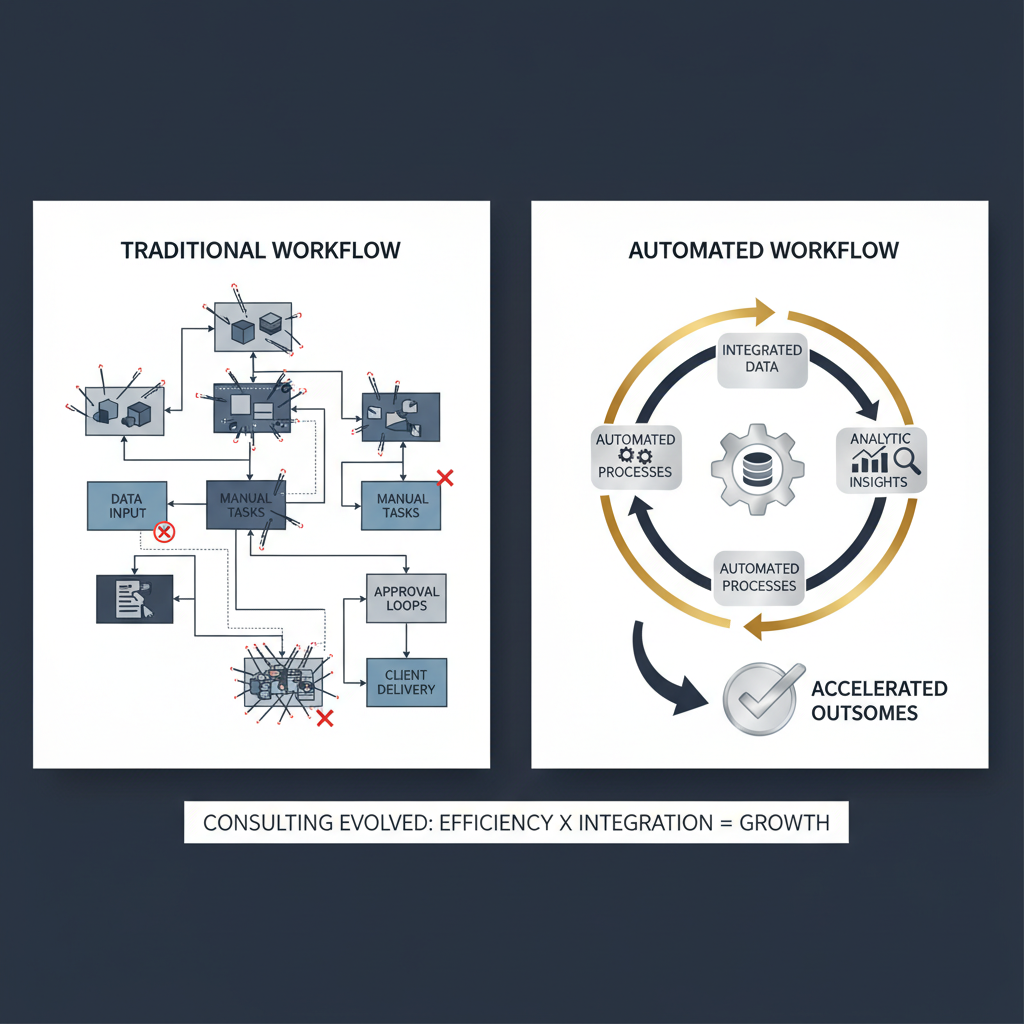
Choosing the right organizational structure [7] for your consulting firm is just the first step. To get the most out of it and drive small business growth, you need business automation. This powerful combination turns manual work into a smooth process, helping you grow smarter and faster.
Automated-Biz provides the complete online business solutions you need to succeed. Our platform helps turn your business structure into an engine for growth. We help you move from feeling overwhelmed to growing in an organized way. Let’s look at how automation can help your consulting company.
Implementing Automated Sales Funnels for Client Acquisition
Finding it hard to get consistent leads for your consulting business? Finding clients manually takes a lot of time and often leads to unpredictable results. The answer is automated sales funnels. These systems guide potential clients through each step, from first learning about you to becoming a paying customer.
Automated sales funnels save you valuable time and bring in a steady stream of potential clients. This frees you up to focus on what you do best: providing great consulting services. Our platform makes the whole process simple. Here’s how:
- Lead Capture Pages: Create professional landing pages to turn visitors into leads by easily collecting their contact information.
- Automated Email Nurturing: Set up smart email sequences that build trust by educating potential clients over time, all automatically.
- CRM Integration: Track every interaction and manage your leads easily. Automated-Biz connects with top CRM tools.
- Behavioral Triggers: Send automatic follow-ups based on what potential clients do, reaching out with the right message at the right time.
The result? You turn random inquiries into a predictable way of getting new clients. This is essential for growing your business.
Using Business Automation to Manage Projects and Deliverables
Consulting firms often manage many client projects, tight deadlines, and complex work. Without good business process automation, it’s easy to become disorganized and miss opportunities. Automated workflows help your projects run smoothly and keep quality high without adding more manual work.
Automated-Biz helps you make your operations more efficient. Our tools are designed to support your firm’s structure. Here are some key areas where you can use automation:
- Task Management: Automatically assign tasks and track progress so every team member knows what they need to do.
- Client Communication: Schedule automatic updates and progress reports for clients. This keeps them happy and informed without extra work for you.
- Document & Asset Management: Keep all your files in one place with version control. Share documents securely and automatically, so everyone has the latest version.
- Feedback Loops & Approvals: Speed up project timelines by automating requests for client feedback and approvals.
- Time Tracking & Invoicing: Use automated time tracking to generate invoices based on project hours, making your billing more efficient.
With this kind of automation, you can replace disorganized manual work with smooth, efficient processes. It makes your whole firm more productive.
Building a Professional Online Presence to Support Your Brand
In today’s world, a professional online presence is a must-have for any consultant. It helps you build trust, show your expertise, and attract the right clients. Automated-Biz offers all-in-one solutions for branding and website creation, social media, and online reputation management.
Our platform makes sure your online presence always reflects your expertise. Here’s how we help:
- Custom Branding & Website Design: We help you develop a professional brand and launch a high-quality website designed to turn visitors into clients.
- Social Media Automation: Plan and schedule content for all your social media channels. You can stay active and build your social media marketing without the constant manual work.
- Online Reputation Management: Keep track of reviews and automatically ask happy clients for feedback. This builds trust and credibility with new prospects.
- Consistent Content Distribution: Automatically share your blog posts, case studies, and other content to position your firm as an expert in your field.
Using Automated-Biz means you can stop guessing and start using expert-guided business automation. This helps you create a strong and professional online brand, which is key to long-term growth.
Frequently Asked Questions
What is the best organizational structure for a consulting business?
There is no single “best” organizational structure for every consulting business. Your ideal structure depends on several factors.
Consider your firm’s size, services, growth plans, and legal or tax preferences. For example, a solo consultant has different needs than a firm with multiple partners.
Here are key elements to evaluate:
- Your Firm’s Size: Are you a solo consultant or do you have a team?
- Service Specialization: Do you offer niche services or a broad range?
- Liability Concerns: How much personal asset protection do you need?
- Tax Implications: Which structure offers the best tax treatment for your earnings?
- Growth Ambitions: Do you plan to scale quickly or stay a boutique firm?
Common structures include sole proprietorships, partnerships, LLCs, and corporations. These options differ in liability protection, taxes, and how complex they are to manage. Research shows that LLCs are a popular choice for new businesses, offering flexibility and liability protection [source: https://www.sba.gov/business-guide/start-your-business/choose-business-structure].
No matter which structure you choose, Automated-Biz has the tools to support your growth. Our platform helps you manage your online business solutions and simplify your business process automation. This lets you focus on strategy, not day-to-day administrative tasks.
What is a typical consulting firm hierarchy structure?
A typical consulting firm, especially a larger one, has a clear hierarchy. This structure creates defined roles and a path for career growth.
Smaller firms, however, often have a flatter structure. This allows them to be more agile and communicate directly. If your firm is growing, knowing these roles can help you build your team.
Common roles in a hierarchical consulting firm include:
- Analyst: An entry-level role focused on data collection, research, and analysis.
- Consultant: Manages parts of a project, talks with clients, and develops solutions.
- Manager: Oversees project teams, manages client relationships, and ensures projects are delivered on time.
- Senior Manager/Principal: Leads multiple projects, helps bring in new business, and mentors junior staff.
- Partner/Director: Holds a senior leadership position, responsible for firm strategy, finding new clients, and overall growth.
Even with a clear hierarchy, business automation can make your firm more efficient. Automated-Biz supports your team by reducing manual tasks at every level. Our productivity workflows help projects run smoothly, from research to client reporting. This improves operations and supports your small business growth.
What is a good structure for a small consulting firm?
For a small consulting firm or a solo consultant, simplicity and flexibility are key. A lean structure lets you focus on serving clients and achieving small business growth.
Many small firms start as a Sole Proprietorship because it’s easy to set up. However, an LLC (Limited Liability Company) is often a better choice. An LLC protects your personal assets by keeping them separate from your business. This gives you peace of mind as your business grows.
A good structure for a small consulting firm focuses on:
- Clear Service Offerings: Define your niche to attract the right clients.
- Client Focus: Build strong relationships through great service.
- Efficient Operations: Automate administrative and marketing tasks.
- Scalability: Choose a structure that can change as you grow your team or services.
If you feel overwhelmed with marketing and operations tasks, use technology to help. Automated-Biz offers a complete set of online business solutions designed for small consulting firms. We help you automate workflows without losing quality.
Our platform provides:
- Professional Branding and Website Creation: Build a credible
online presenceinstantly. - Automated Sales Funnels: Automate your
lead generation strategiesand client signup process. - Social Media Automation: Maintain consistent engagement online with less effort.
- Online Reputation Management: Build trust and improve your credibility.
- Integrated CRM: Manage leads and client relationships in one place.
With Automated-Biz, you can go from struggling to grow your business online to getting clients predictably. Our tools help you appear professional and trustworthy online, saving you time and increasing revenue through smart business automation.
Sources
- https://www.sba.gov/business-guide/start-your-business/choose-business-structure
- https://www.sba.gov/business-guide/launch-your-business/choose-business-structure
- https://www.investopedia.com/terms/l/lp.asp
- https://www.irs.gov/businesses/s-corporations
- https://www.forbes.com/advisor/business/what-is-boutique-firm/
- https://www2.deloitte.com/us/en/pages/about-deloitte/articles/deloitte-organizational-structure.html
- https://www.investopedia.com/terms/o/organizational-structure.asp