
Shopify website development is the process of planning, designing, building, and launching an e-commerce store using the Shopify platform. It extends beyond basic templates to include custom theme development, app integration for business automation, and setting up automated sales funnels. The goal is to create a professional online presence that not only sells products but also streamlines operations and drives sustainable business growth.
To succeed today, every business needs a strong online presence. But growing your business online can be tough, and the world of e-commerce can feel overwhelming. You know a simple storefront isn’t enough—you need a professional, trustworthy platform that turns visitors into customers. This is where expert Shopify website development becomes your greatest advantage.
A great Shopify store is more than just a place to list products. It needs smart design, helpful integrations, and automation to increase revenue and support lasting small business growth. Without a clear plan, you might get stuck wondering how to find new customers or automate tasks without sacrificing quality. This guide shows you how to build a Shopify website that looks professional and works for you. We’ll cover how to use business automation and automated sales funnels to simplify your work and achieve clear results.
Whether you are launching your first online store or improving an existing one, this article provides a step-by-step plan for serious business owners. We’ll cover everything from your brand strategy and custom design for a Professional Online Presence, to adding key apps for smart shopify web development and setting up effective lead generation strategies. By the end, you’ll understand how a focused shopify website development company can help you grow smarter, turning manual tasks into a smooth and successful online business.
What is Shopify Website Development?
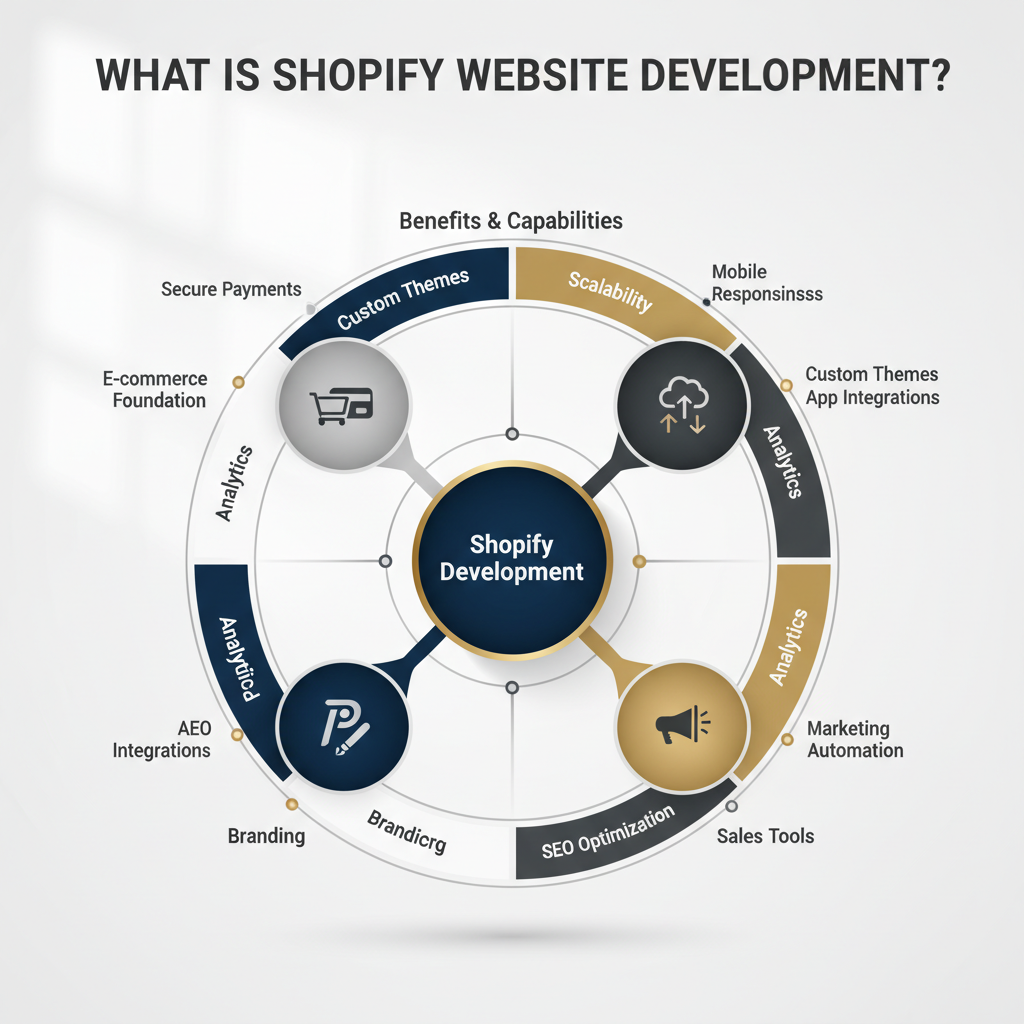
Beyond a Basic Store: The Role of a Shopify web developer
Many people think Shopify is just a simple platform for selling products. But professional Shopify website development is much more than a basic template. It turns your idea into a strong, automated online business. Think of it as an advanced digital storefront that works like your best employee.
A skilled Shopify web developer, or a team like Automated-Biz, does more than just upload products. They build your entire online store from the ground up. Their expertise makes sure your store looks great and is set up to grow and run smoothly.
A Shopify web developer has many responsibilities. Their main goal is to build a professional website that performs well. This includes:
- Custom Design and Branding: Creating a unique design that matches your brand. A developer uses custom themes and layouts to make sure your branding and website creation truly represents your business.
- Optimized User Experience (UX): Making the site easy to navigate for a smooth shopping experience. A good user experience keeps customers on your site and helps turn visits into sales.
- Performance Enhancement: Making sure your site loads quickly and works without errors. A fast site keeps customers happy and is better for search rankings.
- Feature Integration: Adding key apps for more features, like inventory tracking, customer support, and powerful marketing tools.
- Mobile Responsiveness: Ensuring your store looks and works perfectly on phones and tablets, where most shoppers are today.
- SEO Best Practices: Building your site so it shows up high in search engine results. This helps new customers find you.
- Strategic Automation Setup: Setting up tools for business process automation, like automatically handling orders or customer service questions.
When you work with an expert, you get a powerful, custom-built platform instead of a generic one. It’s an investment that helps your online store perform well and grow with your business.
Key Benefits for Small Business Growth and Automation
For small business owners and startups, professional Shopify ecommerce development offers major benefits. It’s about building a strong foundation for long-term small business growth. This helps solve the common problems of running and growing an online business.
Here’s how expert Shopify website development services can improve how your business works:
- Establish a Professional Online Presence: A custom-designed store improves your brand’s image. It makes your business look professional and trustworthy, helping you earn customer confidence right away.
- Streamline Operations with Business Automation: Add apps to automate tasks like managing inventory, shipping, and customer service. This cuts down on manual work, freeing you up to focus on growing your business.
- Generate Consistent Leads and Sales: Set up powerful automated sales funnels and smart lead generation strategies. These systems work around the clock to attract new customers, giving you a steady stream of sales.
- Enhance Customer Experience: A great site is easy to use and has a simple checkout process. This keeps customers happy and encourages them to come back.
- Scalability for Future Growth: Shopify is built to grow with you. A custom store can handle more traffic and products as your business expands, helping you build scalable business processes.
- Data-Driven Decision Making: Use powerful analytics to understand sales, customer actions, and marketing results. For example, Shopify merchants processed over $79.5 billion in sales in just one quarter of 2023 [1]. This data helps you make smarter choices.
- Integrated Marketing Capabilities: Connect tools for social media automation, email marketing, and online ads. This makes all your marketing efforts work together smoothly.
- Improved Online Reputation Management: Add tools for customer reviews and feedback directly to your store. This helps you build and maintain a positive online reputation.
- Time-Saving Automation: Switch from clunky manual tasks to smooth, automated systems. This greatly reduces your administrative workload so you can focus on what matters.
Ultimately, professional Shopify development helps you automate tasks without sacrificing quality. It’s about using expert knowledge and technology to build a business that runs smoothly, grows smartly, and delivers reliable results.
How to Build a Shopify Website: A 7-Step Process for Entrepreneurs
Step 1: Define Your Business Goals and Brand Strategy
A successful Shopify site starts with a clear vision. Before you design anything, defining your business goals is key. This first step makes sure your online store supports your business growth. A strong brand strategy will also help you attract the right customers.
Without a clear brand, it’s hard to grow your business online. Planning now saves you from wasted effort later and helps you look professional from the start.
- Identify Your Target Audience: Who are you selling to? Understanding their needs and preferences will guide your entire approach.
- Outline Your Unique Selling Proposition (USP): What makes your products or services stand out? Communicate this difference clearly.
- Craft Your Brand Story and Voice: How will you connect with customers? Your brand voice should be consistent everywhere.
- Develop Your Visual Identity: This includes your logo, color palette, and fonts. Automated-Biz offers expert branding and website creation services to create a unique and memorable brand, saving you time and ensuring professionalism.
When you define these elements, you’re not just building a website—you’re creating a consistent brand experience. This early work is essential for generating consistent leads and building customer loyalty.
Step 2: Choose the Right Shopify Plan and Theme
Once you have a brand strategy, it’s time to choose your technical foundation. Shopify has several plans for different business sizes. The right choice affects your future automation options and costs.
Look at the features of each plan carefully. Think about things like transaction fees, staff accounts, and reporting options. Your choice also affects how advanced your Shopify website can be.
Next, pick a Shopify theme. The theme controls how your store looks, feels, and works. A good theme improves the user experience and helps you look professional.
- Shopify Plan Selection:
- Compare pricing, features, and options for growth.
- Consider your current sales volume and future business goals.
- For instance, higher-tier plans offer advanced reporting and lower transaction fees, which is important for growing businesses [2].
- Theme Selection:
- Browse Shopify’s Theme Store for free and paid options.
- Choose themes that work well on mobile devices and look good.
- Look for themes that match your brand’s style and industry.
- Make sure the theme can display your products the way you want.
The right plan and theme give you a solid platform. This setup will support your e-commerce goals and help you grow in the future.
Step 3: Customizing Your Design for a Professional Online Presence
A generic website won’t help you stand out. Customizing your Shopify theme makes it unique and professional. This is where you add your brand’s personality to every part of your store.
Business owners want to look professional and trustworthy. Customization makes your site look good and reflect who you are as a brand. A custom design builds trust with your customers.
- Color Palette and Typography: Use your brand colors and fonts everywhere for a unified look.
- High-Quality Imagery: Use professional photos and graphics for products and banners. Good visuals make a big difference.
- Layout and Navigation: Organize your content logically. Make it easy for customers to find what they need.
- Page Customization: Customize your homepage, product pages, and ‘About Us’ section to tell your brand story.
- Responsive Design: Make sure your site looks and works perfectly on all devices. Over 79% of smartphone users have bought something online with their mobile device in the last 6 months [3].
If you have too much to do, professional services like those from Automated-Biz can handle this for you. Our Shopify web designer experts will make sure your site is beautiful, functional, and easy for customers to use.
Step 4: Adding Products and Configuring Collections
This step brings your store to life. Adding products is a key part of building any e-commerce site. How you present your products will directly affect your sales.
Adding products is more than just uploading images. You need to write good descriptions and set the right prices. Setting up collections helps customers find what they’re looking for. Good organization makes shopping easy.
- Product Details:
- Write compelling product descriptions that highlight benefits and features.
- Upload high-quality images from multiple angles. Think about adding product videos.
- Set prices, show sale prices, and manage your inventory.
- Define product options like size, color, and material.
- Collection Setup:
- Group similar products into collections (e.g., “Men’s T-Shirts,” “Summer Sale”).
- Use clear titles and images for your collections.
- Collections make your site easier to navigate and help search engines understand your products.
Good product pages help you get more leads. Clear information and nice photos make it easier for customers to buy. This is a vital part of building your Shopify website.
Step 5: Integrating Essential Apps for Business Automation
To make more money with less work, you need the right apps. Business automation can be a game-changer for entrepreneurs. The Shopify App Store has thousands of tools to add new features to your store.
Many business owners feel overwhelmed by marketing and daily tasks. The right apps can automate your work without sacrificing quality. This turns manual tasks into smooth, automated processes.
Automated-Biz can find and set up the best apps for your business. We help you create automated sales funnels and make your operations more efficient.
- Marketing Automation:
- Email marketing apps for newsletters, abandoned cart emails, and welcome messages.
- Social media tools to schedule posts and manage comments.
- SEO apps to improve your rankings in search results.
- Operations & Customer Service:
- Inventory management apps for tracking stock in real time.
- CRM tools to manage your customer relationships.
- Live chat and help desk apps to provide instant support.
- Sales & Conversion:
- Upsell and cross-sell apps to increase how much customers spend.
- Review apps to build trust and manage your online reputation.
- Subscription apps to create recurring revenue.
Using these tools can save you a lot of time, improve efficiency, and boost your marketing. Integrating the right apps is key to growing your business.
Step 6: Setting Up Payments, Shipping, and Taxes
The last setup steps are for the backbone of your store. Setting up payments, shipping, and taxes correctly ensures every transaction is smooth and legal. This affects customer happiness and your profits.
A simple and clear checkout process is key. Customers want things to be easy and straightforward. Correct tax and shipping costs prevent problems and build trust, helping you look more professional.
- Payment Gateways:
- Use Shopify Payments because it’s easy and has lower fees.
- Add other popular options like PayPal, Stripe, and Apple Pay.
- Offer several payment methods to give customers more choice.
- Shipping Settings:
- Set up your shipping zones and rates (e.g., flat rate, calculated, free shipping).
- Connect with shipping companies to automatically create labels and track packages.
- Communicate your shipping policies clearly to customers.
- Tax Configuration:
- Set up automatic tax calculations based on where the customer lives.
- Know your tax rules for different areas and products.
- Talk to a tax professional to make sure you are compliant.
These settings are essential for any Shopify website. They make sure your store runs smoothly and looks professional. Getting this right now prevents future problems and saves you time.
Step 7: Testing, Launching, and Your Go-To-Market Plan
Before you launch your new Shopify site, you must test it completely. This important step ensures customers have a great experience. It also helps you find and fix any costly errors before you go live.
A successful launch also needs a good go-to-market plan. You need a strategy to get your first visitors and find new leads. This helps you avoid the common problem of having a great store that no one knows about.
- Comprehensive Testing:
- Place test orders to check the entire checkout process, from payment to shipping.
- Test all forms, links, and buttons on your site.
- Check how your site looks and works on different mobile devices.
- Look for broken images, typos, and check your site speed.
- Strategic Launch:
- Get your marketing materials ready, like social media posts and email announcements.
- Think about a “soft launch” for a small group to get final feedback.
- Watch your website’s performance carefully right after you launch.
- Go-To-Market & Growth Plan:
- Use strategies to capture new leads.
- Use automated sales funnels to turn new leads into repeat customers.
- Use social media automation to stay visible.
- Manage your online reputation to encourage positive feedback. Automated-Biz offers marketing services to support your growth after you launch. We help you get new clients consistently and grow your business.
Launching your Shopify store is just the start. With the right automation and growth strategies, your business can succeed long-term. Automated-Biz is here to give you the professional website and automated systems you need to grow.
Can I hire someone to build my Shopify?
DIY vs. Hiring a Shopify Website Development Company
Choosing between building a Shopify store yourself or hiring a Shopify website development company [4] is a key decision for any entrepreneur. Many small business owners first think about the DIY route. This approach gives you full control and can seem cheaper at first. However, it takes a lot of time and has a steep learning curve. You might struggle to grow your business online while trying to manage design, product setup, and technical details.
On the other hand, hiring a professional Shopify web development company [5] offers immediate benefits. They have the expertise to create a professional online store. This ensures your store looks great and works smoothly. Experts can also set up powerful business automation tools from the start, saving you time and making your operations more efficient. While professional help has an upfront cost, the long-term benefits in growth, efficiency, and trust are significant. Using expert support lets you focus on your main business, so you don’t get buried in marketing and operational tasks.
Here’s a comparison to help you decide:
| Factor | DIY Shopify Build | Hiring a Professional Shopify Development Company |
|---|---|---|
| Time Investment | High. You’ll spend a lot of time learning design, setup, and optimization. | Low. You have more time to focus on business strategy. |
| Design & Professionalism | Can look unprofessional without design skills. Customization is limited. | A professional, custom design that matches your brand. |
| Technical Expertise | You must learn how to handle integrations, apps, and problems yourself. | You get expert help with complex features, integrations, and ongoing support. |
| Automation & Growth Tools | Basic setup. You have to research and set up everything on your own. | Includes automatic business tools, sales funnels, and lead generation from day one. |
| Cost | Lower upfront cost, but costs you more time. | Higher upfront cost, but saves time and can lead to a faster return on investment (ROI). |
| Scalability | Hard to grow your store without the right setup. | Built to grow with your business. |
What to Look for in a Shopify Web Designer
Choosing the right Shopify web designer or Shopify website developer [6] is critical. This choice directly affects your online store and your business’s growth. You need a partner who understands your goals and can turn them into a successful store. Look for more than just a good-looking design. Focus on whether they can build a Shopify site that gets results.
Here are key qualities to look for in a Shopify web designer:
- Proven Experience: Look at their past Shopify projects. Find examples that match your industry or the style you like.
- Business Knowledge: They should understand your business goals. A good Shopify web developer [7] will focus on getting you customers and creating a good user experience, not just on looks.
- Technical Skills: Make sure they are skilled with the Shopify platform, its apps, and integrations. They should also be able to do custom coding if you need it.
- SEO Knowledge: A great-looking store is useless if customers can’t find it. Your partner should use basic SEO practices from the start.
- Communication Skills: Good communication is key. They should give you regular updates throughout the project.
- Focus on Automation: Find a Shopify website development service [8] that values efficiency. They should include tools for automatic sales funnels and lead generation.
- Post-Launch Support: Ask about their support, maintenance, and future growth options. Your site will need to change as your business grows.
Choosing the right expert helps you get steady leads and look professional and trustworthy online.
The Automated-Biz Approach: Integrating Development with Growth
At Automated-Biz, we know a great Shopify store is more than a website. It’s the foundation of your online business. Our approach to Shopify web development is more than just basic setup. We combine your store build with business automation and growth strategies. This way, you launch with a professional store designed to make you more money with less work.
We help entrepreneurs and small business owners grow smarter and faster. Our all-in-one platform is your expert partner for business automation. We turn messy, manual tasks into smooth, automated ones. You’ll go from getting occasional leads to a steady stream of new clients. You’ll move from slow growth to a business that can easily expand.
Here’s how Automated-Biz combines Shopify development with business growth:
- Professional Branding and Custom Website Creation: We start with a custom logo and branding. Then, we build a Shopify store designed to get you sales.
- Automated Sales Funnels and Lead Nurturing: We build automatic sales funnels into your site to help you find and connect with new customers.
- Easy Integration of Marketing Tools: We connect tools for social media, email marketing, and more directly to your Shopify store. This simplifies your digital marketing.
- Online Reputation Management: We set up systems to manage your online reviews and reputation. This builds trust with customers from the start.
- Dedicated Expert Support: Our team is your strategic partner. We offer hands-on support and expert advice for your online business.
- Time-Saving Workflows: We automate repetitive tasks for you. This frees you up to focus on growing your business.
With Automated-Biz, you get more than a website; you get a complete system for growth. This all-in-one solution saves time, boosts sales, and improves how you work online. It’s the smart choice for entrepreneurs who want to see real results.
How much does it cost to build a website on Shopify?
Breaking Down Shopify Website Development Costs
Building a successful online store is a smart move for any business owner. To plan well, it’s important to understand the costs. The price of a Shopify website can vary a lot. Factors like design complexity and the features you need play a big role. Let’s break down the main parts of the cost.
At Automated-Biz, we believe in transparency. We want you to know exactly where your money goes. This way, your professional online store is built on a solid foundation.
Here are the primary cost categories for building a Shopify website:
- Shopify Plan Subscriptions: This is a basic, recurring cost. Shopify has several plans, from Basic Shopify to Advanced Shopify. Each plan comes with different features and transaction fees. For example, Basic Shopify starts at $39 per month [2].
- Theme and Design: You can use free Shopify themes to start, but premium themes often have more features and design choices. They usually cost between $180 and $350. A fully custom shopify web design can cost from a few thousand to tens of thousands of dollars, depending on how complex it is. A professional shopify web designer will help create a unique look for your brand.
- Apps and Integrations: The Shopify App Store is huge. Many apps can add new features to your store, like making your business run smoother or creating automated sales funnels. While some apps are free, many premium ones have monthly fees. It’s important to budget for these if you want to use business automation.
- Content Creation: Great product photos and well-written text are very important. This includes your product descriptions, blog posts, and other page content. Professional content makes your brand look more polished and gives customers a better experience.
- Development and Setup Services: Many businesses hire a shopify web development company, especially for custom features. A shopify website developer can customize themes, integrate apps, and set up payments and shipping. The cost for these shopify website development services depends on the project’s scope. A basic setup may cost a few thousand dollars, while a complex, custom store will cost more.
- Marketing and Launch: After your store is built, people need to find it. This means setting up SEO and planning your marketing. A launch campaign can bring your first visitors. Remember to budget for things like online ads or social media automation.
Understanding these costs helps you create a smart budget. This ensures your spending aligns with your goals for growing your small business.
| Cost Component | Typical Range (USD) | Notes |
|---|---|---|
| Shopify Monthly Plan | $39 – $399+ per month | Recurring subscription fee. Basic, Shopify, Advanced plans. |
| Premium Theme | $180 – $350 (one-time) | Better design and features than free themes. |
| Essential Paid Apps | $10 – $200+ per month | Adds features for marketing, sales, and automation. |
| Custom Design/Development | $2,500 – $20,000+ (one-time) | For custom features and design from a development company. |
| Product Photography/Content | $500 – $5,000+ (one-time/project) | Essential for a professional look and feel. |
The ROI of Professional Shopify Ecommerce Development
While it’s important to consider costs, focus on the return on investment (ROI). Professional shopify ecommerce development is more than just an expense—it’s an investment in your future. A well-built store adds real value and helps turn unpredictable leads into a steady stream of customers.
Here’s how a professional approach delivers measurable ROI:
- Increased Conversion Rates: A professionally designed website is easy for customers to use, which encourages them to buy. A clear, simple layout removes barriers to purchase. Automated sales funnels can also help guide customers through the buying process.
- Stronger Brand Trust: A professional website helps build trust with customers. It makes your business look credible and reliable. Great branding and design connect with your target audience and improve your online reputation.
- Time and Resource Savings: Integrating business automation tools can save you a lot of time. By reducing manual tasks, you can focus on growing your business. This helps you move from manual work to smoother, automated operations.
- Scalability for Growth: A solid Shopify store is built to grow with your business. You can easily add new products or features without needing a costly rebuild down the line. This makes your business processes ready for future expansion.
- Improved SEO and Visibility: Professional developers build your site with search engines in mind. Good SEO helps more customers find you through search engines like Google, leading to more traffic and sales without paying for ads.
- Enhanced Customer Lifetime Value: Using automated follow-ups can keep customers engaged after a purchase. This encourages them to come back and buy again, building loyalty and creating a steady source of leads.
Investing in quality shopify website development helps create predictable revenue growth. It turns your online store into a powerful asset that fuels your small business growth.
Avoiding Hidden Fees and Future-Proofing Your Investment
Many business owners worry about hidden costs and unexpected bills. Building your Shopify website correctly from the start helps you avoid these problems. Choosing the right shopify web development company is key to making sure your investment lasts.
Here’s how to avoid common pitfalls and secure your long-term success:
- Thorough Planning: Be clear about what you need from the very beginning. Working with your shopify web developer to create a detailed project plan helps prevent “scope creep,” where extra work leads to extra charges.
- Understand App Costs: Review all your app subscriptions carefully. Some apps start with a free trial and then charge a fee. Make sure every app you pay for is worth the cost. Look for opportunities to use one app for multiple tasks to lower your monthly bills.
- Prioritize Mobile Responsiveness: A professional shopify web design company will make sure your site works perfectly on all devices, from desktops to smartphones. This isn’t an optional extra; it’s essential. A site that’s not mobile-friendly can lose you sales and frustrate visitors. Over 50% of web traffic comes from mobile devices [9].
- Invest in a Scalable Design: The cheapest option isn’t always best if it limits your ability to grow. A well-built store makes it easy to add new features later on. This helps your business expand without needing a costly redesign.
- Clarify Support and Maintenance: Know what kind of ongoing support is included with your project. Ask about help with security updates, bug fixes, and site speed. This regular maintenance prevents bigger problems down the road and keeps your site running smoothly.
- SEO from Day One: Don’t overlook SEO during the initial setup. Building your site with good SEO practices from the start is very important. It helps your store show up higher in search results and brings in more visitors for free.
At Automated-Biz, we offer complete shopify website development services that combine branding, web design, and business process automation. Our process is designed to avoid hidden costs by giving you a clear roadmap for your online business. We provide expert guidance to improve your digital presence, moving you from DIY guesswork to expert-guided business automation. This smart approach helps your professional online presence grow faster and more efficiently.
Beyond the Build: Automating Your Store for Sustainable Growth

Creating Automated Sales Funnels
Building a great Shopify store is just the first step. To grow your business, you need to turn visitors into loyal customers. Automated sales funnels are a great tool for this. They guide potential buyers through each step of a sale.
An automated sales funnel works like a salesperson who never sleeps. It works 24/7 to find leads, teach them about your products, and encourage them to buy. This gives you consistent engagement and a steady way to get new clients.
Here’s how a typical sales funnel works:
- Awareness: You grab attention with social media ads, blog posts, or SEO.
- Interest: Potential customers learn more about what you sell. Automated emails send them helpful content, which builds trust.
- Decision: They are now thinking about buying. Targeted promotions or product recommendations help them decide.
- Action: They make a purchase. Automated follow-ups ensure the transaction goes smoothly and help build loyalty after the sale.
Using automated funnels saves you a lot of time. You can focus on your overall strategy instead of sending manual follow-ups. Businesses using marketing automation see a 14.5% increase in sales productivity [10].
Automated-Biz helps you design and set up powerful automated sales funnels. We help turn your leads into a steady stream of revenue. Our expert-guided automation ensures your Shopify store is set up to help you grow.
Streamlining Operations with Business Process Automation
Many small business owners feel overwhelmed with daily tasks. Managing a Shopify store is more than just selling. You also have to handle inventory, customer service, and shipping. Business process automation can help with these challenges.
Business process automation (BPA) means using technology to handle repetitive, rule-based tasks. This frees up your valuable time. It lets you focus on growing your business instead of on tedious chores.
Here are a few key areas you can automate in your Shopify store:
- Order Management: Automatically send order confirmations and shipping updates. This keeps customers informed without any manual work.
- Inventory Updates: Sync your inventory levels across all sales channels. Get low-stock alerts to avoid selling items you don’t have.
- Customer Service: Use chatbots for common questions and automate support tickets. This speeds up customer service.
- Marketing Communications: Schedule social media posts and email campaigns ahead of time. Use social media automation tools to keep a consistent presence online.
- Data Entry: Automatically transfer data between your Shopify store and your accounting software. This reduces errors and saves hours of work.
Automating these tasks makes your business more efficient and lowers costs. Companies that use business process automation can cut operational costs by 30% [11]. Automated-Biz helps you connect different tools to automate your business processes. We help your operations run smoothly, so you can scale your business with less daily stress.
Using Lead Generation Strategies to Nurture Customers
Getting new leads is vital for any online business. But just attracting potential customers isn’t enough. You also need a good way to nurture those leads. This process builds relationships and turns interest into sales.
A professional online presence is the foundation for trust. Then, smart nurturing brings in results. Here’s how to get leads and turn them into loyal customers:
Effective Lead Generation Tactics
- Content Marketing: Create helpful blog posts, guides, and videos. Share content that solves your customers’ problems or answers their questions.
- Search Engine Optimization (SEO): Optimize your Shopify store with relevant keywords like “shopify website development services.” This helps you show up in search results.
- Social Media Engagement: Be active on the social media platforms where your audience spends their time. Use automation to maintain consistent activity.
- Paid Advertising: Run targeted ads on social media or search engines. These campaigns can drive traffic and capture leads quickly.
- Lead Magnets: Offer free resources like e-books, checklists, or discounts in exchange for an email address.
Robust Lead Nurturing Strategies
- Automated Email Sequences: Send welcome emails, abandoned cart reminders, and personalized product recommendations to keep your brand top of mind.
- Personalized Communication: Group your audience based on their interests. Then, send them messages that are relevant to them.
- Online Reputation Management: Ask for customer reviews and testimonials, and respond to all feedback professionally. This builds trust and encourages new customers [12].
- Customer Loyalty Programs: Reward repeat customers for their business. This helps build long-term relationships and leads to more sales.
Automated-Biz offers complete marketing services for small businesses. We help you set up powerful ways to get and nurture leads. Our platform helps you consistently get new clients and turn them into loyal fans. This allows your business to scale smarter and faster with less effort.
Frequently Asked Questions About Shopify Development
What is the downside to Shopify?
Shopify is a great choice for online businesses, but it’s not perfect. Knowing the downsides can help you decide if it’s the right platform for your small business.
Here are a few things to consider:
- Transaction Fees: If you don’t use Shopify Payments, you’ll pay an extra transaction fee on each sale (0.5% to 2%) [2]. This is on top of what your payment provider charges.
- App Costs Can Add Up: The Shopify App Store has many useful apps, but adding new features often means paying monthly fees for each one. These costs can add up quickly.
- Customization Limitations: While you can customize your store’s look and feel, there are some limits on deep coding compared to open-source options. This may be an issue if you have very specific technical needs.
- Dependency on the Platform: Your store relies on Shopify’s platform. If they change their rules or features, it could affect your business.
- SEO Learning Curve: Shopify has built-in tools for basic SEO, but getting to the top of search results takes skill. Many business owners need help creating a strong SEO plan to attract more customers.
At Automated-Biz, we help you overcome these challenges. Our experts build and optimize Shopify stores with the right tools and plans. We’ll guide you through choosing apps, improve your store’s speed, and set up marketing strategies to help you grow. We turn these potential downsides into opportunities for your business.
Is it free to build a Shopify website?
No, building a Shopify website isn’t completely free, but getting started is easy. Shopify offers a free trial, usually for 3 days [13], so you can try it out. This lets you build your store and see how it works before you pay.
After the trial, you’ll need to choose a paid plan to launch your store and start selling. Your total cost will include more than just the monthly plan:
- Shopify Subscription: You’ll pay a monthly fee for your Shopify plan. Different plans offer different features, transaction rates, and user accounts.
- Theme Costs: Shopify has free design templates (themes). For a more professional look with extra features, you can buy a premium theme, which costs about $180 to $350.
- App Subscriptions: Many apps that help with marketing, sales, or customer service have their own monthly fees.
- Domain Name: You’ll need to buy a custom domain name (like yourbusiness.com), which is usually an annual fee.
- Professional Services: Hiring a professional developer or designer is key to creating a polished, high-performing store. This investment helps build a strong brand.
While there are upfront costs, they are a smart investment in your business. At Automated-Biz, we build professional Shopify websites that get results. We create a great-looking store with automated systems to help you grow your business and avoid the guesswork.
Do I need an LLC to start a Shopify store?
No, you don’t legally need an LLC (Limited Liability Company) to open a Shopify store. You can start as a sole proprietor, where your business is legally the same as you.
However, creating an LLC is a good idea as your business grows. It offers several key benefits:
- Personal Liability Protection: An LLC creates a legal wall between your business and your personal finances. This means your house and savings are safe if your business has debts or legal problems [14].
- Enhanced Professionalism: Customers, partners, and investors often see an LLC as more credible and trustworthy. This helps strengthen your brand.
- Tax Benefits: An LLC might give you more flexibility and potential savings on your business taxes, depending on your situation.
- Easier Funding and Partnerships: Banks and partners are often more willing to work with an official business structure like an LLC.
If you’re serious about growing your business, we strongly recommend forming an LLC. It provides a solid legal foundation for the future. While we handle your website and online systems, getting the right legal setup is crucial. Always talk to a legal or tax professional for advice specific to you.
What does a Shopify developer do?
A Shopify developer builds, customizes, and improves online stores. Their job is more than just basic setup—they make sure your store works well and helps your business succeed.
Here are some of the common tasks a Shopify developer handles:
- Theme Customization: They customize existing themes or build new ones from the ground up to match your brand’s unique look and feel.
- Feature Development: They add special features to your store using code like Liquid, JavaScript, and CSS to create a great experience for your customers.
- App Integration: They connect third-party apps to add more power to your store, such as tools for managing inventory or automating your marketing.
- API Integrations: They link your store to other software you use, like customer management (CRM) or inventory (ERP) systems, to make your business run smoothly.
- Performance Optimization: They make your site fast. A quick-loading store is better for customers and search rankings, so they optimize code and images for speed.
- SEO Best Practices: They handle technical SEO by setting up the backend of your site correctly so search engines can find you, which helps bring in more free traffic.
At Automated-Biz, our developers do more than just build websites—we create complete online solutions. We help streamline your work, improve your brand’s image, and set up systems for steady customer growth. From design to automation, we give you the expert help you need to scale your business.
Sources
- https://investors.shopify.com/news-and-events/news/news-details/2023/Shopify-Announces-Third-Quarter-2023-Financial-Results/default.aspx
- https://www.shopify.com/pricing
- https://optinmonster.com/mobile-marketing-statistics/
- https://www.shopify.com/partners/blog/shopify-experts
- https://www.shopify.com/plus/partners/agencies
- https://help.shopify.com/en/partners/resources/find-a-partner
- https://community.shopify.com/c/shopify-discussion/what-is-the-role-of-a-shopify-developer/td-p/1344449
- https://developers.shopify.com/api/admin-rest
- https://www.statista.com/statistics/307901/percentage-of-mobile-internet-traffic-worldwide/
- https://www.nucleusresearch.com/research/single/roi-study-salesforce-marketing-cloud/
- https://www.mckinsey.com/capabilities/operations/our-insights/the-future-of-work-in-a-changing-world
- https://www.brightlocal.com/research/local-consumer-review-survey/
- https://www.shopify.com/free-trial
- https://www.sba.gov/business-guide/start-business/choose-business-structure