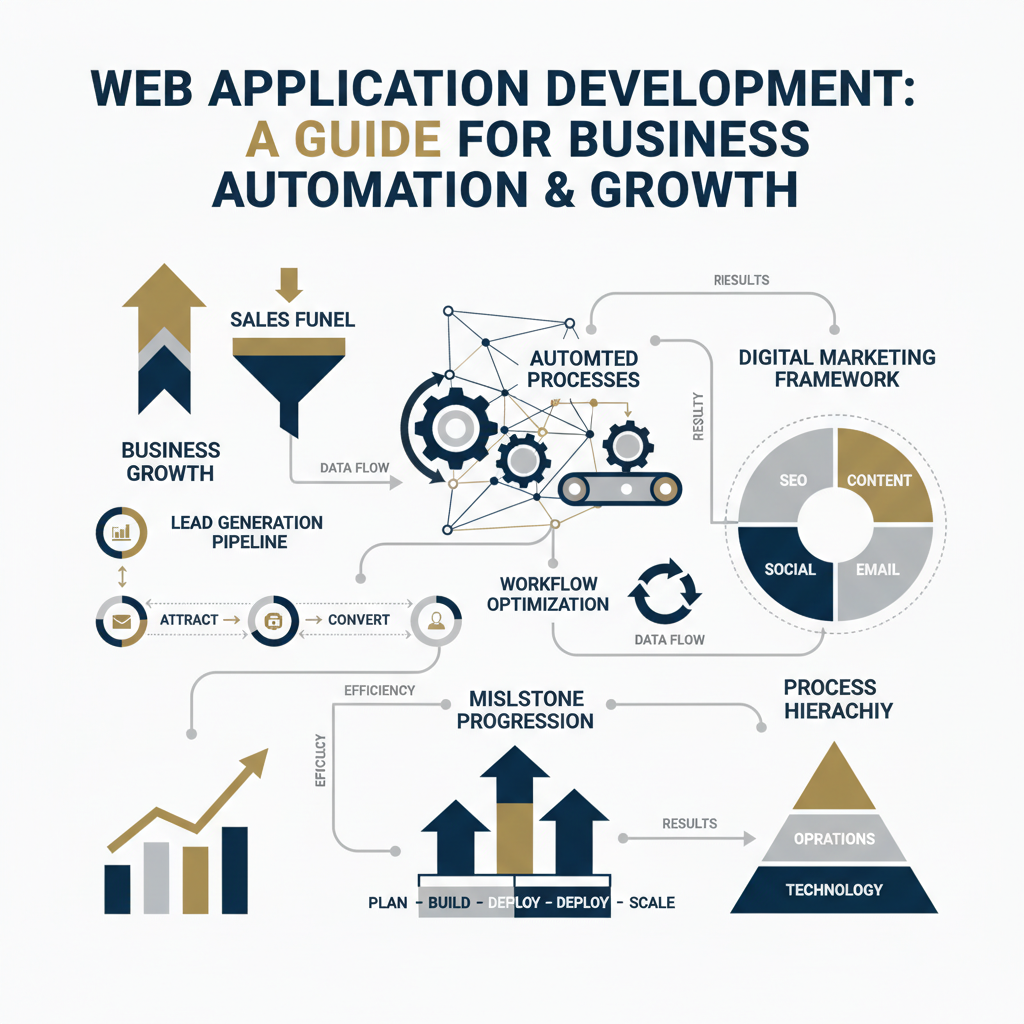
Web application development is the process of building software programs that run on a web browser, designed to perform specific functions for users. For businesses, this means creating custom tools like client portals, internal dashboards, or automated sales funnels to streamline operations, enhance customer interaction, and drive scalable growth.
As a small business owner, do you feel overwhelmed by the endless tasks of running your business? You’re likely juggling everything from finding clients to managing daily operations, all while trying to maintain a professional online presence. What if you could simplify these challenges and turn manual work into an automated system? A custom web application can do exactly that.
A custom web app is more than just new technology—it’s a tool to make your business run smoother and find new opportunities for growth. Imagine a system built just for you that automates repetitive tasks, helps you connect with customers, and even creates new ways to earn revenue. This guide will explain web app development in simple terms, helping you move from messy workflows to organized systems that can grow with your business.
This guide offers clear, useful advice on how web applications can help you automate tasks and scale your company. We’ll cover what a custom web app is, why your business might need one, and what to expect during the development process, including costs and choosing the right partner. You’ll learn how strategic website and app development can bring in steady leads, simplify your workload, and build a trustworthy online presence. The result is a business that runs efficiently, allowing you to scale smarter and faster.
What is Web Application Development for Your Business?
In today’s digital world, a basic website isn’t always enough. Web application development gives your business powerful, interactive tools to help you grow. Think of a web app as software that runs in your browser. It does more than just display information—it helps you manage tasks, connect with customers, and automate your work.
For small business owners, this changes how you operate. Instead of a simple brochure website, you get powerful tools designed for your specific needs. With custom web application development services, you can simplify difficult tasks and greatly improve your customer’s experience.
Driving Business Automation and Growth
Web application development is key for small business growth today. It lets you automate repetitive tasks, which frees up your time for more important work. Stop struggling to grow your business online with manual methods. Web apps give you a consistent and reliable way to get things done.
Here are some benefits of adding custom web apps to your business:
- Automated Workflows: Web apps can handle key tasks like onboarding new clients or managing inventory. This helps reduce mistakes and get more done with business process automation.
- Better Customer Interactions: You can offer self-service portals, personalized content, and quick support systems to keep your clients happy.
- Data-Driven Decisions: Web apps collect useful data about how people use them. You can use this information to make smarter business decisions and improve what you offer.
- Scalability: Custom web apps are made to grow with you. As your business gets bigger, your app can handle more work without needing a complete rebuild.
- Competitive Edge: Offer special features or services that make you stand out from the competition and attract more customers.
What Web Applications Can Do for Your Business
A web application is much more than a static website because it’s built to perform tasks. It can solve your specific business challenges and help you seize new opportunities. For example, you could build a web app to manage your sales pipeline, create a client portal, or develop a robust e-commerce platform.
Here are some practical ways web app development can help your business:
- Simplify Operations: Manage projects, track employee hours, or automate invoicing to reduce your administrative work.
- Get More Leads: Use interactive forms, calculators, or CRM integrations to generate consistent leads and automatically follow up with them.
- Improve Customer Service: Build a knowledge base, a support ticket system, or a live chat feature to help customers faster and keep them satisfied.
- Create New Revenue Streams: You can offer subscription services, sell premium content, or provide online tools to attract new customers.
- Strengthen Your Online Presence: A professional and functional web app makes your business look more trustworthy. According to one study, 75% of users judge a company’s credibility by its website design [1].
Automated-Biz: Your Partner in Web Application Development
At Automated-Biz, we understand the challenges small businesses face. If you feel overwhelmed with marketing and operations tasks, we can help. We offer expert web application development services to give you powerful online business solutions. We focus on results and make sure your custom web app works smoothly with your existing systems, like your automated sales funnels and social media automation. This creates a single, powerful system for your business.
We guide you from the initial idea to the final launch. Our focus is on building web apps that save you time, increase revenue, and build your brand. We see your web app as more than just a standalone tool—it’s a key part of your overall business automation plan. Choose Automated-Biz to build a web application that truly changes your business for the better.
Why Should Your Small Business Invest in a Custom Web App?
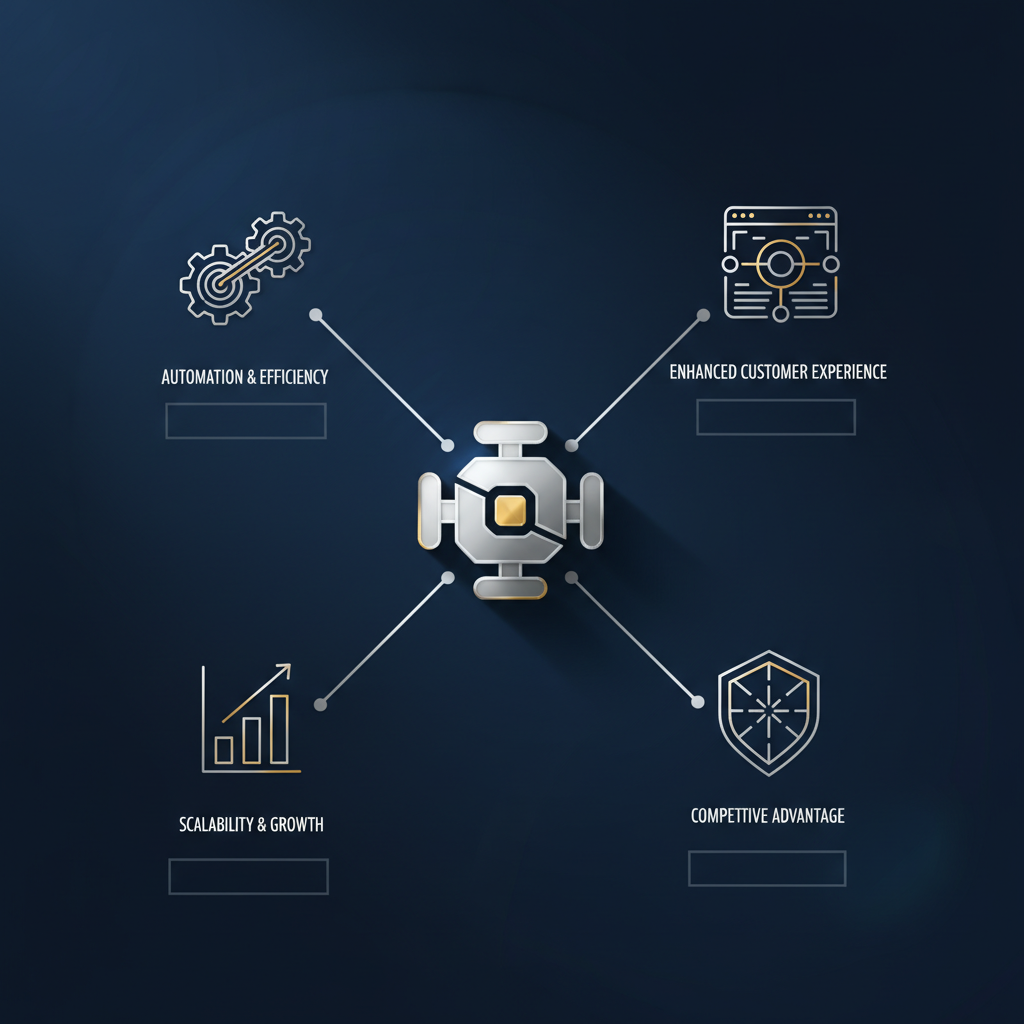
Automate and Streamline Business Operations
Many small business owners feel overwhelmed by repetitive, manual tasks. These jobs drain precious time and resources. Investing in custom web application development can transform your workflow by automating these time-consuming processes.
A custom web app works the way your business does, so you can stop using clunky, generic software. This leads to a big boost in efficiency. Businesses save up to 70% of their time on administrative tasks through automation [source: https://www.mckinsey.com/capabilities/operations/our-insights/the-future-of-work-in-automation].
With business process automation, you can:
- Reduced Manual Work: Automate data entry, invoicing, scheduling, and inventory management.
- Improved Accuracy: Minimize human error in critical operations.
- Faster Workflows: Streamline approvals and task assignments.
- Resource Optimization: Free up your team to focus on strategic growth, not busywork.
- Integrated Systems: Connect different business tools into one simple platform.
Automated-Biz specializes in creating online business solutions that boost productivity. Our web and app development services help you move from messy workflows to smooth, automated operations. This supports healthy small business growth.
Enhance Customer Engagement and Service
A great customer experience sets successful businesses apart. Generic tools often fall short because they can’t offer the personal touch your clients expect. A custom web app solves this problem, letting you deliver excellent service designed for your customers.
This helps you build stronger relationships and bring customers back. Personalization is key to earning customer loyalty. In fact, 80% of consumers are more likely to buy when brands offer personalized experiences [source: https://www.evergage.com/blog/8-stats-prove-personalization-critical-ecommerce-strategy/].
A custom solution can help you:
- Offer Personalized Interactions: Tailor content, product recommendations, and special offers.
- Provide Self-Service Portals: Empower customers with FAQs, order tracking, and account management.
- Streamline Support: Add live chat, ticketing systems, and help guides for quick answers.
- Collect Valuable Feedback: Easily gather reviews and ideas to improve your services.
- Improve Online Credibility: A professional, easy-to-use app builds trust and showcases your brand.
Automated-Biz offers custom web application development services. These include powerful digital marketing systems and online reputation management tools. We help you find new leads, support your clients, and build a stronger online presence.
Create New Revenue Streams
Are you struggling to grow your business online? A custom web app can open up new opportunities. It lets you go beyond your usual services and offer new products on a professional platform that features your brand.
This helps you reach more customers, since you’re no longer limited by your location or business hours. It also makes it easier for your business to grow. The global e-commerce market is projected to reach over $7 trillion by 2027 [source: https://www.statista.com/statistics/379046/worldwide-ecommerce-sales/], and a custom app helps you take advantage of this trend.
New ways to generate revenue include:
- Digital Product Sales: Sell e-books, courses, templates, or software.
- Subscription Services: Offer exclusive content, tools, or member benefits.
- Online Booking & Reservations: Set up a simple system for appointments, classes, or events.
- Marketplace Functionality: Host other companies’ products or services for a commission.
- Expanded Service Delivery: Provide unique online services directly through your app.
Automated-Biz helps you build automated sales funnels and lead nurturing systems. We create solutions that do more than just sit online—they actively make you money. Our web application development agency gives you the tools to find clients consistently and grow your revenue.
Gain a Competitive Advantage
In today’s market, it’s crucial to stand out. Using generic software makes you look like everyone else. A custom web application sets your brand apart, giving you a unique edge that off-the-shelf solutions can’t offer.
A custom app helps your business adapt quickly to market changes and customer needs. It also strengthens your branding and website creation efforts, acting as a key part of your online presence.
By investing in web app development services, you can:
- Differentiate Your Offering: Provide unique features and services your competitors don’t have.
- Enhance Brand Identity: Perfectly reflect your company’s style and values.
- Improve Scalability: Build a solution that grows easily with your business.
- Leverage Data Insights: Use key data to make smarter business decisions.
- Boost Professionalism: Project an image of an innovative, expert business.
Automated-Biz provides expert business automation. We offer complete small business marketing services, including social media automation. We make sure your custom web app fits perfectly with your overall strategy. This helps you lead your market, not just compete in it.
What is custom web application development?
Off-the-Shelf Software vs. Custom Solutions
As a business owner, you have a big decision to make when buying new tools. Should you use standard, off-the-shelf software, or invest in custom web application development? This choice is key to your business automation, efficiency, and future growth.
Off-the-shelf solutions are ready-made software packages. Think of common Customer Relationship Management (CRM) tools, accounting software, or project management platforms. They are usually quick to set up and have a lower starting cost. But since they are built for a wide audience, they often have features you won’t use. They might also lack the specific tools you need for your unique way of doing business.
On the other hand, a custom web application is built just for you. It’s designed to fit your exact needs and how you work. This approach gives you a powerful online tool made specifically for your company. It solves your unique problems and supports your growth strategy.
Let’s compare these two options:
| Feature | Off-the-Shelf Software | Custom Web Application |
|---|---|---|
| Purpose | Solves general problems for many users. | Solves your specific, unique business challenges. |
| Customization | Limited to the settings and add-ons available. | Fully tailored to your exact needs. |
| Deployment Time | Fast, often ready to use right away. | Longer, includes time for development and setup. |
| Initial Cost | Lower, often a monthly or yearly fee. | Higher upfront investment. |
| Fit for Business | You may need to change how you work to fit the software. | The software is built to fit how you already work. |
| Scalability | Limited by the provider’s plans and updates. | Designed to grow with your business. |
| Competitive Edge | Offers few unique advantages. | Creates a clear advantage in your market. |
| Control & Ownership | You depend on the provider and don’t own the code. | You have full ownership and control. |
Key Benefits of Building a Custom Web App
Investing in a custom web application means building a powerful asset for your business. It can transform how you operate and set you up for major growth. Here are the main benefits:
- Automate Tasks and Improve Efficiency: A custom app can automate the repetitive tasks unique to your business. This streamlines your work, gets rid of manual errors, and frees up your team’s time. For example, businesses that use digital tools well can see a 20-30% rise in productivity [2]. This directly helps your small business grow.
- Built Exactly for Your Needs: Unlike a one-size-fits-all solution, a custom app is a perfect match for your workflow and business model. You get the exact features you need without the extra clutter or missing tools. This ensures your money is spent solving your biggest challenges.
- Grows With Your Business: Your custom web app is built with the future in mind. It can easily adapt as your company grows. Adding new features, handling more users, or connecting with other systems is a smooth process. This supports long-term, steady growth.
- Gain a Competitive Edge: A unique web application helps you stand out. It lets you offer special services, find new ways to automate tasks, or give customers a better experience than standard tools allow. This strengthens your online presence.
- Better Security and Data Control: With a custom app, you are in complete control of security. This means your sensitive business and client data is protected by your standards, not a third-party’s. You always own your data.
- Integrates With Your Current Tools: A custom application can be built to connect perfectly with the software you already use. This creates a unified system, gets rid of information bottlenecks, and makes sure data flows smoothly everywhere it needs to.
- Create a Better Customer Experience: A custom app can offer your clients a superior, more personal experience. This could be a customer portal, an easy-to-use booking system, or a simple checkout process. A better experience leads to happier clients and more sales.
- Saves Money Over Time: The initial cost might be higher, but a custom app is often cheaper in the long run. You won’t pay subscription fees for features you don’t use, and because the app is a perfect fit, you won’t need clumsy workarounds or extra software. It is a smart investment in your business.
In short, custom web application development gives you the power to build, grow, and automate your online business with complete precision and control. Automated-Biz helps business owners through this process, making sure your custom tool delivers real results and lasting success.
How can I create my own web application?
Step 1: Define Your Goal and Strategy
Every web application starts with a clear vision. Before writing any code, you must define the exact problem your app will solve. This foundation is key to success and makes sure your work helps you meet your business goals.
Start by asking some basic questions:
- What specific problem are you solving for customers or your team?
- What business result do you want? This could be to make operations smoother, reduce manual errors, or get customers more involved.
- How will this app fit into your overall small business growth plan?
- What resources (time, money, people) do you already use to solve this problem?
Great web apps are not just technical achievements; they are powerful tools for business process automation and growth. Defining your goal from the start helps you avoid wasted effort and ensures your app delivers real value. This first step connects your technical work with your main online business solutions.
Many business owners find themselves struggling to grow their business online because their efforts are not connected. A clear strategy for your web app gives you focus and sets a clear path to success.
Step 2: Plan Features and User Flow
Once your goal is clear, the next step is to plan your app’s features and user experience. This means outlining what the app will do and how people will use it. Careful planning at this stage makes your app easy to use and effective.
Think about the main functions your app needs to work. Focus on these “must-have” features that directly help you reach your goal. Then, map out the user’s entire journey, from first opening the app to finishing a key task. Every step should feel simple and logical. This creates a smooth user flow that makes the app easy to navigate.
Consider how your app can create efficient productivity workflows and introduce time-saving processes. For example, if your goal is better lead generation strategies, what features will help you find and qualify leads? If you want to automate sales, how will it connect with your automated sales funnels?
During this planning stage, think about:
- Key Features: What will users be able to do? What information will the app show?
- User Roles: Will different users have different levels of access or permissions?
- Data Management: What data will the app need to collect, store, and use?
- Integrations: Will the app need to connect with other software, like a CRM, payment system, or accounting tool?
Planning these details early on streamlines the custom web application development process. It helps you avoid expensive changes later and ensures your app effectively supports your business goals.
Step 3: Choose Your Development Path (DIY vs. Agency)
Deciding who will build your web app is a major choice. You have two main options: do it yourself (DIY) or hire a professional development agency. Each path has its own pros and cons.
DIY Development (Including Low-Code/No-Code)
If you have technical skills or a simple project, the DIY approach can be tempting. Low-code or no-code platforms let you build basic apps with little to no coding, using visual tools and templates. In fact, low-code is expected to make up over 65% of all application development by 2024 [3].
However, this path takes a lot of time and a good understanding of logic and design. For more complex or scalable apps, DIY solutions often fall short. They can result in an app that is less professional or reliable, which can create problems and extra costs down the road.
Partnering with a Web Application Development Agency
For business owners who are serious about growth and quality, hiring a dedicated team is often the better choice. A specialized web application development agency provides expert knowledge at every stage, including design, development, and launch.
When you partner with a platform like Automated-Biz, you get integrated web app development services. We specialize in custom web application development services and our work goes beyond just writing code. We take the time to understand your business goals. Our experts make sure your web app is not only functional but also matches your branding and marketing plans.
Choosing an expert partner gives you:
- Professional Quality: A strong, secure, and scalable app built by experts.
- Time Efficiency: A faster development process to get your app to market sooner.
- Integrated Solutions: A seamless connection with your other small business marketing services.
- Dedicated Support: Ongoing help to ensure your app performs well for years to come.
We help businesses avoid the problems that come with generic solutions. Our goal is to ensure you appear professional and trustworthy online with a custom-built app. This partnership gives you the expert support you need to grow.
Step 4: The Design and Development Process
After you choose a development path, the building process begins. This phase turns your plans into a working web application and involves several key stages, from visual design to coding.
Design (UI/UX)
The first step is to focus on the user experience (UX) and user interface (UI). UX design makes sure the app is easy and enjoyable to use. UI design creates the look and feel, including colors, fonts, and buttons. A great design is key to getting and keeping users, and it helps build a strong, professional online presence.
Frontend Development
This is where the design becomes a real interface. Frontend developers build everything users see and interact with in their web browser. Using tools like HTML, CSS, and JavaScript, they create an experience that works well on any device.
Backend Development
The backend is the “engine” of the application. It handles things like data storage, security, and communication with databases. Backend developers build the core logic that makes your app work, managing user accounts, processing information, and connecting to other services.
API Integrations
Most web apps need to connect with other software. Application Programming Interfaces (APIs) make this possible. This might mean connecting to a payment system, a CRM, or social media. Good integrations are essential for effective digital marketing systems and automated workflows.
Iterative Development
Development is usually not a straight line. It often happens in cycles. Developers build and test features in small parts, gathering feedback along the way. This flexible approach allows for adjustments and ensures the final custom web application meets your needs as they change.
At Automated-Biz, we manage this entire process for you. We make sure your custom web app fits perfectly with your branding and website creation. Our services also include full website design and hosting, giving you a complete and powerful digital tool.
Step 5: Testing, Launch, and Maintenance
Building a web app isn’t finished once the code is written. The final steps—testing, launching, and maintenance—are vital for the app’s long-term success and reliability.
Rigorous Testing
Before your app goes live, it needs to be tested thoroughly. This helps find and fix bugs, security risks, and performance problems. Testing covers several areas:
- Functional Testing: Making sure every feature works correctly.
- Usability Testing: Checking if the app is simple and easy to use.
- Performance Testing: Seeing how the app handles many users at once.
- Security Testing: Protecting the app and user data from threats.
- User Acceptance Testing (UAT): Letting real users try the app before it is released to the public.
Good testing protects your business reputation and helps you avoid struggling to grow your business online because of technical problems.
Strategic Launch
Launching your app is more than just turning it on. You need a clear launch plan. This includes telling your target audience about the app and its benefits. Think about how this new tool will work with your other online business solutions and marketing.
Post-Launch Maintenance and Support
Software always needs care. Ongoing maintenance is essential to keep your app running smoothly. This includes:
- Bug Fixes: Solving any issues that appear after the launch.
- Security Updates: Protecting against new online threats.
- Performance Monitoring: Making sure the app stays fast and efficient.
- Feature Enhancements: Adding new features based on user feedback and your business needs.
At Automated-Biz, our help continues long after your app is live. We offer ongoing expert consultation and dedicated support. This keeps your web app secure, up-to-date, and performing at its best. We help you use your app for continuous business process automation and can also assist with online reputation management, ensuring your digital presence is always strong.
How much does it cost to build a custom web app?
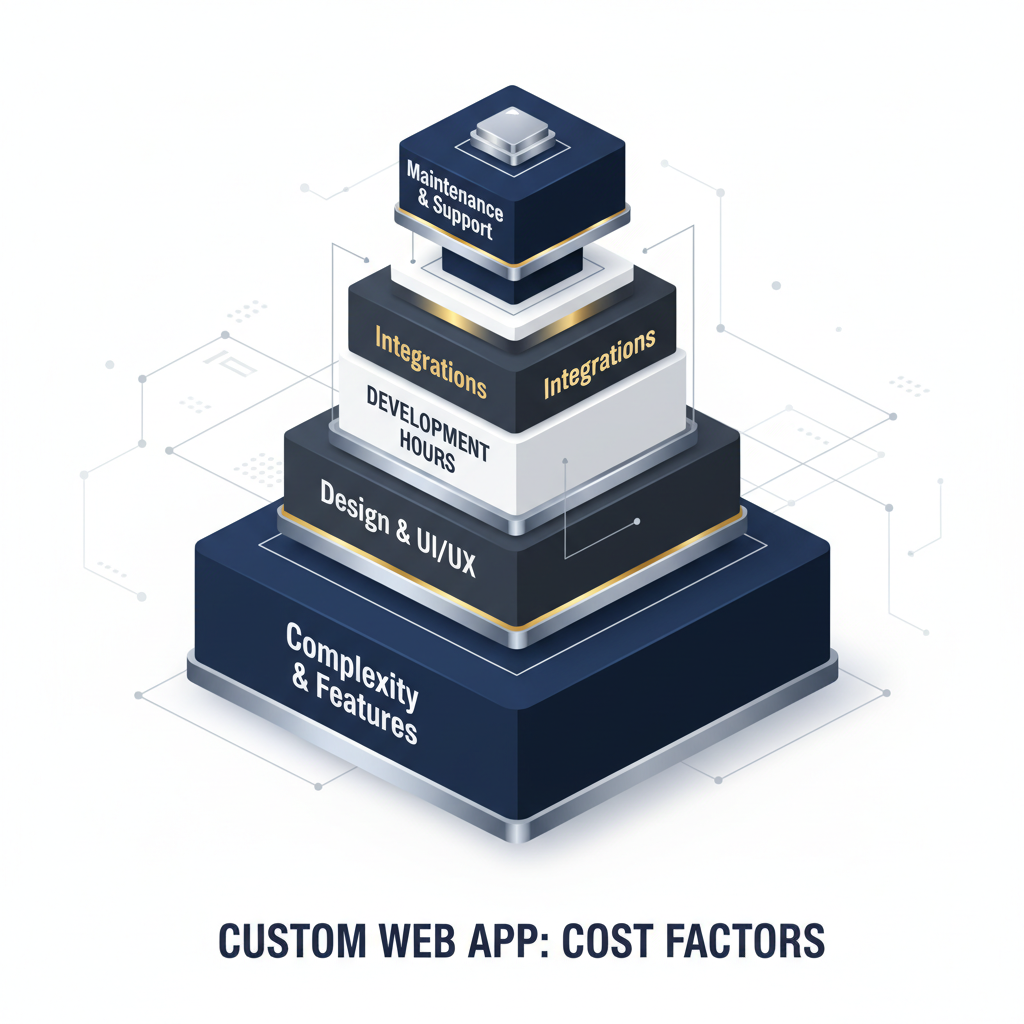
Factors That Influence Development Costs
Knowing how much a custom web app will cost is key for any business owner. The price isn’t fixed. Instead, it depends on your project’s size and complexity. Understanding these factors helps you budget better and get the most for your money.
Here are the main things that affect custom web app development costs:
- Feature Set and Complexity: The more features you need, the higher the cost. A simple data entry form will be cheaper than a complex platform with AI features or real-time data. Think about whether you need user logins, payment systems, connections to other software, or detailed analytics.
- User Interface (UI) and User Experience (UX) Design: A custom, polished design takes more time and skill than using a pre-made template. However, a great design pays off by attracting more users and making your web app look professional and trustworthy.
- Integrations with Existing Systems: Many businesses need their new web app to connect smoothly with tools they already use, like a CRM or marketing platform. This integration requires special development and testing, which adds to the cost.
- Performance, Scalability, and Security: Building an app that can handle lots of users, manage large amounts of data, and stay secure takes more work. Strong security and a design that can grow with your business are essential for protecting your data and supporting long-term growth.
- Development Team Location and Expertise: Costs change based on where the developers are located and how experienced they are. An experienced web application development agency with a proven track record will cost more, but they usually deliver better quality and work faster.
- Testing and Quality Assurance: Thorough testing is key to making sure your web app works perfectly. This includes checking its features, performance, and security. Skipping this step can lead to expensive bugs and a bad user experience later on.
- Post-Launch Support and Maintenance: A web app is never truly “finished.” You will need ongoing maintenance, bug fixes, and updates to keep it running smoothly. This often costs about 15-20% of the initial development price each year [source: https://clutch.co/developers/web/resources/how-much-website-costs].
At Automated-Biz, we walk you through each of these factors. We make sure our plan is clear and fits your business goals for automation and growth.
Understanding Pricing Models
When you hire a web application development agency, you’ll see a few different pricing models. Each has its pros and cons and works best for certain projects. Choosing the right one helps you manage your budget and expectations.
Here are the common pricing models for web app development services:
-
Fixed-Price Model:
This model is best for projects with clear, set requirements that are unlikely to change. You agree on a total price upfront based on detailed plans.
- Pros: Predictable costs, clear budget, ideal for small, straightforward projects.
- Cons: Less flexible for changes, can lead to disputes if the plan changes, scope creep can mean extra costs.
-
Time & Material (T&M) Model:
Here, you pay for the actual hours the team works, plus any material costs (like software licenses). It’s ideal for projects where the details might change or aren’t fully clear from the start.
- Pros: Very flexible to adapt to new needs, lets you improve the app as you go, great for complex or long-term projects.
- Cons: Harder to predict the final cost, requires you to monitor progress closely.
-
Dedicated Team Model:
For larger projects or long-term work, you can hire a team that works only for you. You pay a monthly fee that covers their salaries, tools, and management.
- Pros: You have full control over the team, they gain a deep understanding of your business, ideal for long-term work and constant improvements.
- Cons: Higher overall cost, requires more management from you.
Automated-Biz helps you choose the best pricing model for your custom web app, making sure it aligns with your business goals.
Getting a Quote for Your Project
Getting an accurate quote for your custom web app is a key first step. It requires clear communication and a solid plan. This process helps you understand the cost and compare different development companies.
Follow these steps to get a clear and accurate quote for building your web app:
-
Define Your Vision and Goals:
Before you contact developers, be clear about what you want your web app to do. What problem will it solve? Who is it for? What are your main business goals? Do you want to increase revenue, save time with automation, or give customers a better experience?
For example, do you need a platform for automated sales funnels or a tool for online reputation management?
-
Outline Core Features and Functionalities:
List the key features your app must have to meet your goals. Separate the “must-haves” from the “nice-to-haves.” This helps control costs and keeps the project focused from the start.
You could even draw simple sketches to show how people will use your app.
-
Prepare a Detailed Project Brief:
A good project brief is extremely helpful. It should include your vision, target audience, core features, technical needs (if you know them), budget range, and timeline. This document gives developers the information they need to give you an accurate estimate.
-
Engage with Reputable Development Partners:
Find development partners that fit your business needs. Automated-Biz, for example, specializes in solutions for small business growth and digital marketing systems.
-
Review and Compare Proposals:
When you get quotes, don’t just look at the final price. Check the cost breakdown, the technology they plan to use, the project timeline, and the support they offer. A good proposal should clearly explain what you’ll get and how they’ll work.
-
Ask for Clarifications:
Never hesitate to ask questions. Make sure you understand what’s included, what’s not, and how they will handle any changes to the project.
At Automated-Biz, we believe in clear pricing and careful planning. Our team helps you figure out exactly what you need, which makes the process simple and predictable. We focus on building custom web apps that help you find new customers, automate tasks, and grow your business online.
How to Choose the Right Web Application Development Partner
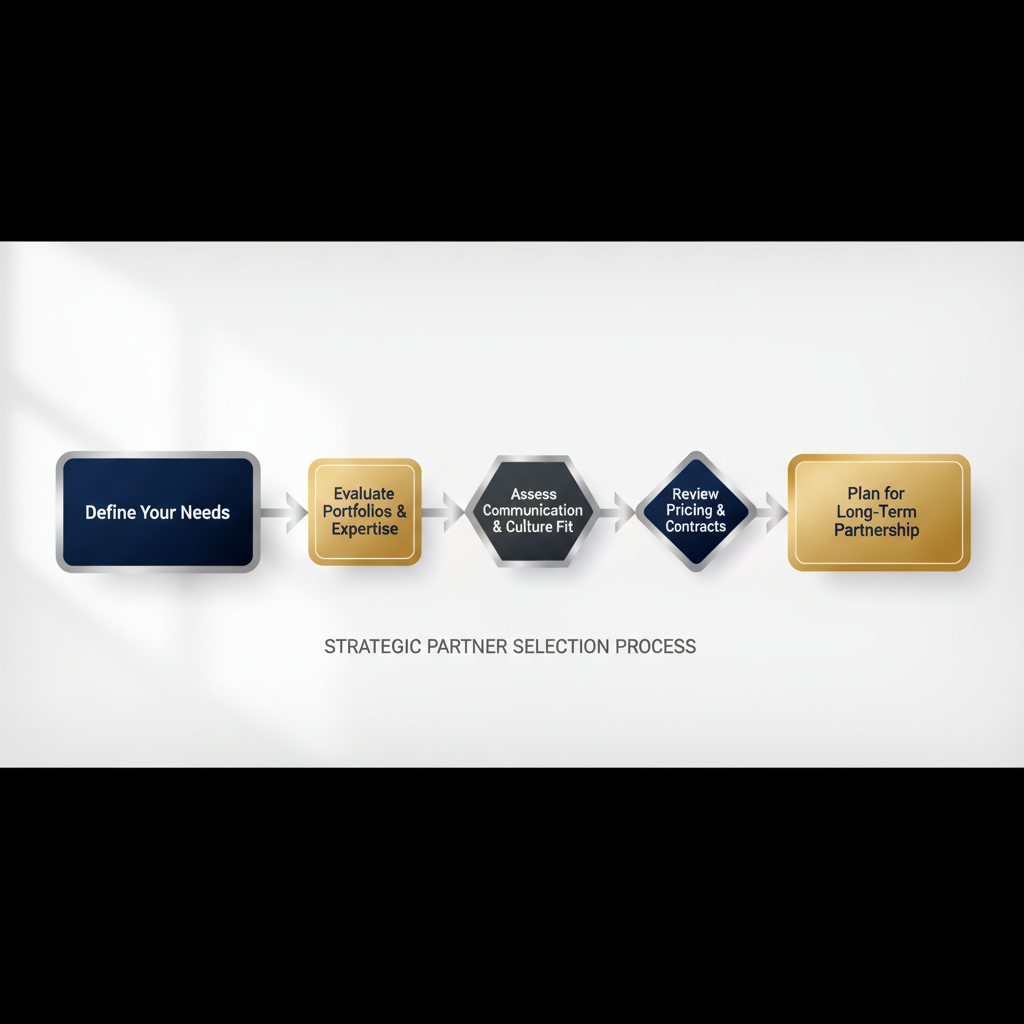
What to Look for in a Development Agency
Choosing the right web development partner is a big decision. This choice affects how your business runs and grows. You need more than just coders. You need a partner who understands your goals.
Here are key qualities to look for when choosing a web application development agency:
- Proven Expertise and Portfolio: Look for an agency with a proven track record. Check their past work, especially projects that helped small businesses grow. A strong portfolio shows what they can do.
- Technical Proficiency: The agency must be skilled in modern web development. They should use strong, scalable technology. This ensures your custom web application will perform well now and in the future.
- Clear Communication and Transparency: Good communication is essential. Your partner should give you regular updates. They must be open about their progress and any problems that come up.
- Structured Project Management: A good agency has a clear process. This process should cover everything from planning and design to development and launch. A clear plan helps the project run smoothly.
- Focus on Business Outcomes: They should focus on your business goals. Ask how their work will solve your problems. How will it increase revenue or make your operations smoother?
- Post-Launch Support and Maintenance: The work isn’t over after the launch. Make sure they offer support after your app is live. Maintenance, updates, and fixes are key to long-term success.
- Integration Capabilities: Your new web app must connect with the tools you already use. Ask about their experience linking apps with CRM, marketing, or accounting software. This is crucial for automating your business.
- Scalability Considerations: As your business grows, your web app should be able to grow with it. Talk to them about future needs and how the app’s design can support them.
- Understanding of Small Business Needs: Do they understand the unique challenges of small businesses? They should offer solutions that fit your budget and growth plans.
Questions to Ask Before Hiring a Developer
Before you hire a web development partner, be sure to interview them well. Asking the right questions will help you see if they are a good fit and can meet your goals.
Consider asking these essential questions:
- Can you show me examples of custom web application development projects you’ve completed?
- Their past work should be similar to your project or industry.
- What is your typical web app development process from start to finish?
- Make sure you understand their process and your role in it.
- How do you handle changes or new feature requests during development?
- A good process for changes keeps the project on track.
- What technologies do you specialize in for creating a web app?
- Make sure their technology is up-to-date, secure, and right for your project.
- How will this custom web application integrate with my existing business systems and tools?
- This is key for making your business run more smoothly.
- What is your estimated timeline for my project, and what factors might affect it?
- Ask for a realistic timeline.
- How do you structure your pricing, and are there any potential hidden costs?
- Get clear pricing to avoid hidden fees.
- What kind of post-launch support, maintenance, and updates do you provide?
- Ongoing support is vital for the app’s future.
- Who will own the intellectual property (IP) of the developed web app?
- You should always own the final product.
- How do you ensure the security and scalability of the web application?
- Good security keeps your data safe, and scalability allows your app to grow with you.
Integrating Your Web App with Other Business Systems
A new web app is only part of the solution. To truly automate your business and help it grow, your new app needs to connect smoothly with the tools you already use. When your systems don’t talk to each other, you have to move data by hand. This creates more work and causes errors. That’s why connecting them is so important.
Here are the key benefits of connecting your web app to other systems:
- Time-Saving Automation: Connect your app to other software to stop repetitive data entry. For example, new leads can automatically go into your CRM.
- Streamlined Operations: Create one smooth workflow. Your sales, marketing, and customer service teams can all access the same, up-to-date information. This makes everyone more productive.
- Improved Data Accuracy: When data syncs automatically, there are fewer mistakes. This gives you one reliable source for your business data.
- Enhanced Customer Experience: Seeing all customer interactions in one place helps you offer better, more personal service. This builds loyalty and brings customers back.
- Better Decision-Making: Connected data gives you a clearer picture of your business. You can track your results more easily. This helps you make smarter plans for marketing and growth.
Common integrations for web applications include:
- Customer Relationship Management (CRM) Systems: Sync customer data, interactions, and sales information.
- Marketing Automation Platforms: Automate emails, track leads, and manage campaigns.
- Payment Gateways: Securely handle payments and manage billing.
- Accounting Software: Automate invoices, track expenses, and manage financial reports.
- Social Media Management Tools: Connect your app to schedule posts and track engagement.
- Analytics and Reporting Tools: Monitor performance and gather useful data.
Connecting your systems saves a lot of time and money. Businesses with integrated systems often run more efficiently [source: https://www.statista.com/statistics/1233010/drivers-for-business-process-automation-worldwide/]. This method gets rid of disconnected data and helps you get the most out of your custom web app.
At Automated-Biz, we know how powerful connected online solutions are. Our platform links your branding, website, sales funnels, and online reputation. We help you build a complete digital marketing system. This makes sure your custom web application fits into a business that is synchronized, efficient, and ready to grow.
Frequently Asked Questions
Can ChatGPT create web apps?
AI tools like ChatGPT are powerful, but they can’t build a complete, working web app on their own. ChatGPT is great for making code snippets, outlining project structures, and improving code logic. Think of it as a smart assistant.
However, building a custom web app takes more than just code. It requires a solid understanding of:
- Your specific business goals and user needs.
- How to design the app’s structure.
- Managing and connecting databases.
- Keeping data safe and private.
- Thoroughly testing and fixing bugs.
- How to maintain and grow the app over time.
Using only AI to build a web app can cause big problems with its quality, features, and security. You might end up with a generic app that lacks the unique features needed to automate your work and help your business grow.
For entrepreneurs and small business owners who want a reliable, custom web app, the best approach is to combine AI tools with human experts. Automated-Biz offers professional web application development services. We make sure your solution is tailored, secure, and scalable to help your business succeed online.
What are some common web application development examples?
Web applications are powerful tools that change the way businesses work, talk to customers, and handle data. They are key to automating tasks and growing a small business. Here are a few common examples to show what they can do:
- Customer Relationship Management (CRM) Systems: These custom web apps help businesses manage customer information and conversations. This makes it easier to find new leads, keep clients happy, and make sales, marketing, and service teams more efficient.
- Project Management Tools: Web apps for project management help teams work together, track progress, and manage tasks. This cuts down on manual work and makes everyone more productive.
- Inventory Management Systems: For businesses that sell products, these web apps track inventory, manage orders, and automatically reorder items. This prevents running out of stock and makes operations smoother.
- Client Portals: These are secure, private areas where clients can see their information, pay invoices, make requests, and contact you directly. This improves customer service and keeps them engaged.
- Online Booking and Scheduling Systems: Popular with service businesses, these apps automatically handle appointments, which helps reduce no-shows and gives customers an easy booking experience.
- Custom Reporting Dashboards: These apps pull data from different places into one easy-to-read dashboard. This gives you clear insights to make smarter business decisions and improve your marketing.
Getting a custom web application means you get a tool built specifically to solve your problems and help you grow. Automated-Biz specializes in these online business solutions, making sure they fit perfectly with how you already work.
What is the difference between a website and a web application?
People often use the terms “website” and “web application” to mean the same thing, but there’s a key difference in what they do. It’s important to know the difference when you’re planning your online strategy and thinking about business automation.
A website is mainly for showing information. Think of it like a digital brochure. The content usually doesn’t change much, and people visit to read articles, look at pages, or view images.
On the other hand, a web application is all about interaction. It’s a tool that lets users do things, like manage data or complete a task. A web app is built to solve a specific problem or offer a service [4].
Here’s a clear comparison:
| Feature | Website | Web Application |
|---|---|---|
| Primary Purpose | Inform and present content. | Enable user interaction and specific tasks. |
| Interactivity | Low to moderate (e.g., contact forms, comment sections). | High (e.g., data entry, complex calculations, personalized dashboards). |
| Data Handling | Shows information; takes little input from users. | Works with data that users create and change. |
| Complexity | Usually simpler, with fewer features. | Often has complex code, databases, and connects to other tools. |
| Examples | Brochure sites, blogs, news portals, portfolios. | Online banking, project management tools, e-commerce stores, social media platforms, CRM systems. |
For small business owners, this difference is important for growth. A professional website is great for branding and sharing information. But a custom web application can automate tasks, manage your business, and offer unique services that boost your efficiency and income. Automated-Biz is a web and app development company that offers both, creating solutions to cover all your online needs.
Sources
- https://standford.io/research/web-credibility-study-key-findings/
- https://www.mckinsey.com/capabilities/operations/our-insights/the-digital-manufacturing-revolution-how-to-extract-value
- https://www.gartner.com/en/newsroom/press-releases/2021-02-15-gartner-predicts-low-code-will-be-used-in-more-than-65-percent-of-application-development-by-2024
- https://www.geeksforgeeks.org/difference-between-website-and-web-application/