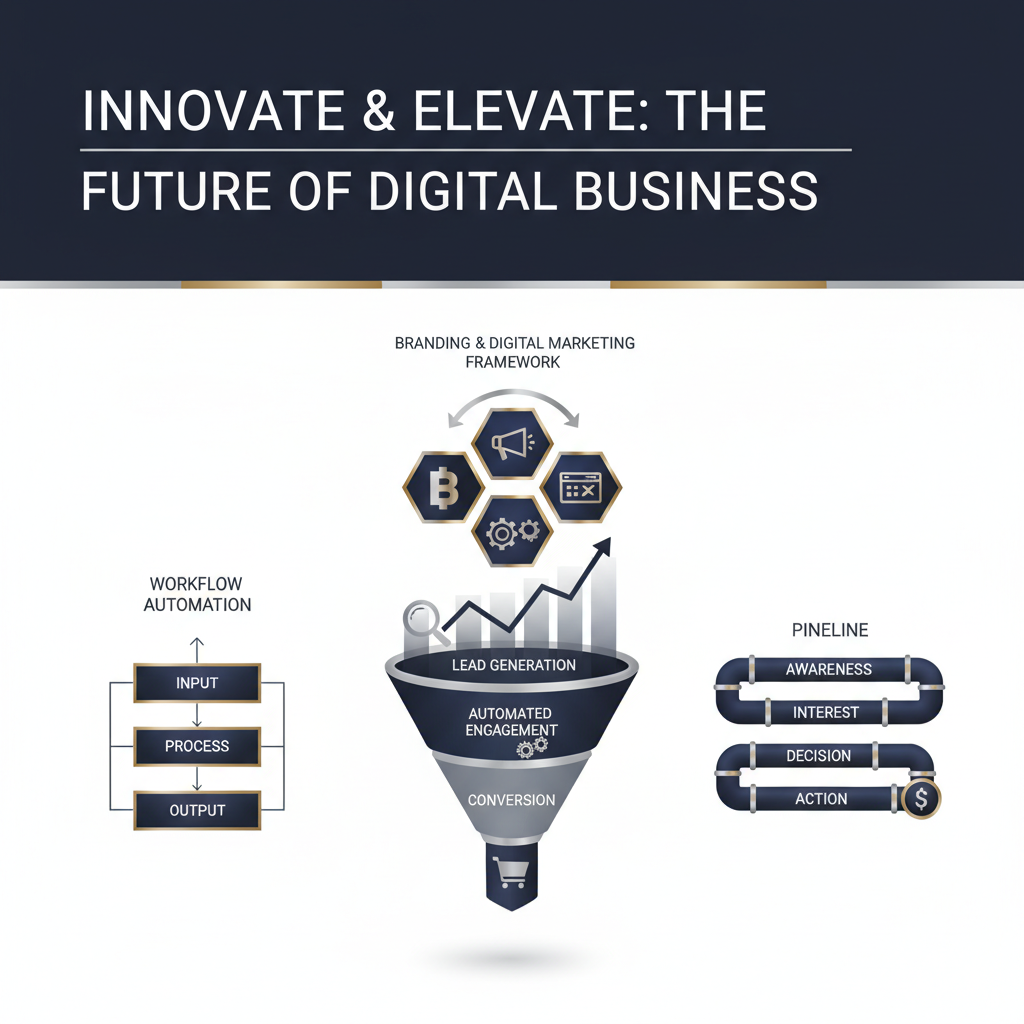
The management consulting process is a structured, multi-stage framework used to analyze complex business challenges, develop strategic solutions, and guide implementation. It typically begins with defining the problem and gathering data, followed by in-depth analysis, creating actionable recommendations, and overseeing their execution to improve an organization’s performance and efficiency.
Are you an entrepreneur or small business owner trying to grow your company? Many founders feel overwhelmed by marketing and operations. It’s a struggle to expand online and find steady leads without losing quality. Building a professional online presence and boosting revenue can feel like a puzzle. You may be wondering how to simplify operations, automate tasks, and achieve lasting small business growth.
What if you could tackle your business challenges like an expert consultant? This article explains the proven management consulting process in a simple, step-by-step guide for entrepreneurs. We’ll show you how to use this system to find problems, create effective online solutions, and build effective strategies. You can apply it to everything from branding and website creation to automated sales and lead generation. This is not a temporary fix. It’s about creating a solid plan for long-term success.
Using a structured consulting process helps you stop just reacting to problems and start planning for growth with real data. You’ll learn how to get consistent results by creating reliable systems. This lets you automate daily tasks so you can focus on growing your business. Are you ready to improve your operations and online presence with business automation? Let’s explore why this organized approach is essential for real, long-term growth and profit.
Why Should Your Business Adopt a Management Consulting Process?
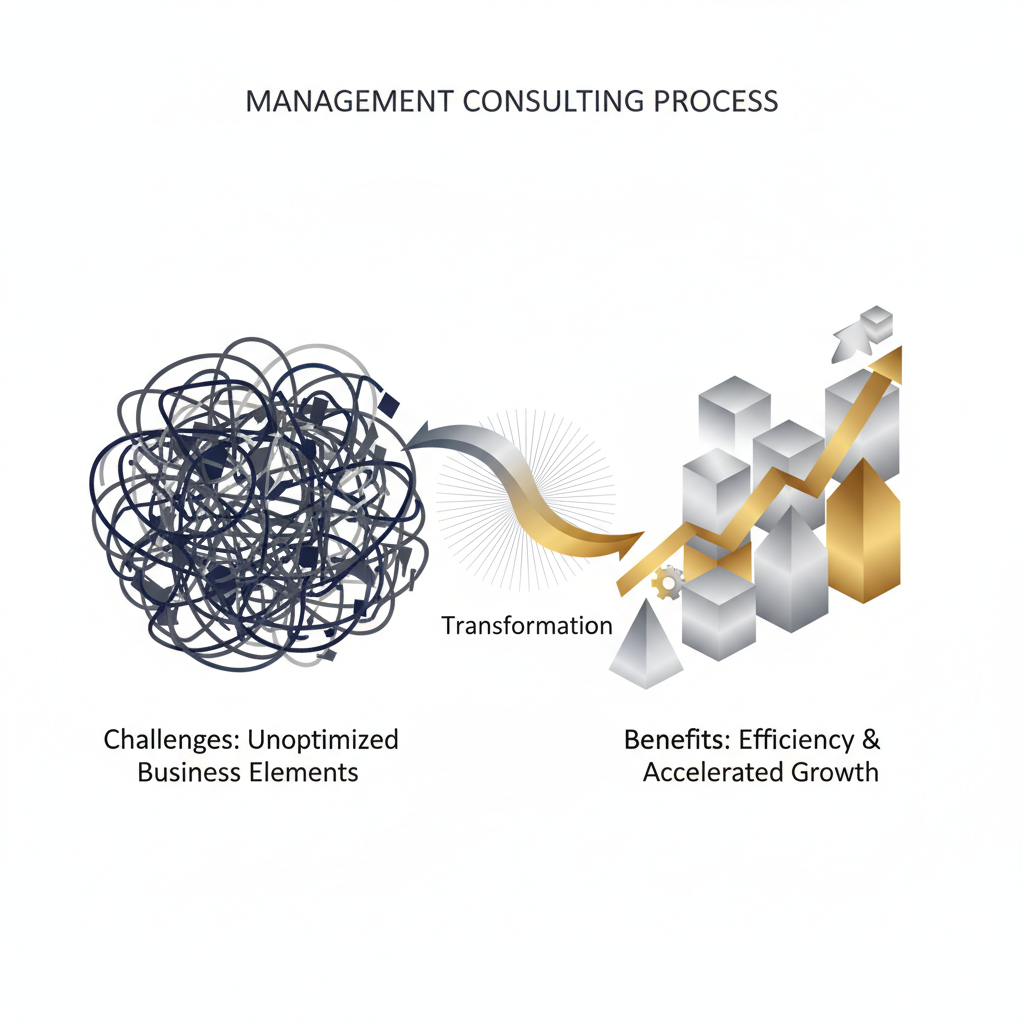
Moving from Reactive Fixes to Proactive Growth
Many small business owners are always putting out fires. They only fix issues after they become urgent problems. This reactive approach wastes time and stops long-term growth.
Imagine patching leaks forever instead of building a strong, waterproof boat. This is the reality for businesses without a clear plan. They struggle with unreliable leads, messy marketing, and wasted effort. In fact, about half of all small businesses fail within their first five years [1]. This is often because of a lack of strategic planning and the inability to adapt.
A management consulting process changes this. It shifts your focus from just fixing today’s problems to building for the future. This proactive approach helps you see challenges coming, seize new opportunities, and build a stronger business.
With expert help in business automation, you can stop guessing. You’ll use proven systems that save time and deliver steady results. This structured approach helps your business grow with a purpose, not just survive day-to-day.
The Core Benefits: Clarity, Efficiency, and Scalability
A good management consulting process offers real benefits that drive your business forward. These advantages are key if you’re serious about building and growing your online business.
- Enhanced Clarity: You get a clear picture of where your business is now and where it can go. This process helps you set clear goals, find your ideal customer, and define your place in the market. You’ll go from a fuzzy idea to a clear, step-by-step plan for growing revenue. This clarity helps you make smarter decisions.
- Unmatched Efficiency: This process finds the things that slow you down in your operations and marketing. It then helps you streamline workflows. By automating your business processes, you can put repetitive tasks on autopilot. This includes things like sales funnels, lead generation, and social media. Your team is then free to focus on work that matters most. As a result, you save a lot of time and money.
- Sustainable Scalability: To grow your business steadily, you need strong systems. A management consulting process helps you build them. It makes sure your business can handle more customers without sacrificing quality. This means you are ready to expand. You can confidently find more clients and manage them well. Everything from branding and web design to your online reputation works together to support your growth.
Automated-Biz helps you make this change. We offer the expert advice and tools to take your business from manual, messy work to smooth, automated operations. You’ll go from unreliable leads to a steady stream of new clients. We also help you shift from slow growth to systems that are built to scale. Our all-in-one platform includes branding, custom web design, social media, automated sales funnels, and full support. All of this helps you build a professional online presence and earn more money with less work.
What Are the Key Stages of the Management Consulting Process?

Stage 1: Problem Definition & Entry
Every successful business change starts with a clear understanding of the problem. This first stage is all about defining the problem. We work with you to find what’s really holding your business back. Are you struggling to grow online? Are you overwhelmed with marketing and operations? Finding the exact pain point is key.
Next, we agree on the project’s scope and goals. This makes sure we’re on the same page about the results. A clear problem statement guides the entire process. It helps us focus on the real cause of the issue, not just the symptoms.
- Find core challenges: What specific issues impact your revenue or efficiency?
- Set the project scope: What areas of your business will we work on?
- Set clear objectives: What measurable results do you want to achieve?
- Agree on expectations: Ensure we both understand the process and what will be delivered.
Stage 2: Data gathering & Fact-Finding
Once we define the problem, we gather data. This means we look closely at your operations, your market, and your customers. We collect facts to get a clear picture of where you stand. This way, we use real data, not just guesses.
We use different methods to gather data, including interviews, surveys, and looking at your performance numbers and competitors. For online businesses, we often analyze website traffic, social media data, and customer feedback. This helps us find ways to get more leads and improve the customer experience. Good data is the foundation for any good solution.
- Review internal documents: Analyze sales reports, marketing data, and how you operate.
- Talk with key team members: Speak with important staff to understand their views.
- Analyze market trends: Understand industry changes and what competitors are doing.
- Examine customer feedback: Use surveys, reviews, and support requests to learn more.
- Use digital analytics: Track website traffic, conversion rates, and social media performance.
Stage 3: Data Analysis & Diagnosis
With the data collected, we move to the analysis and diagnosis phase. Here, we turn raw information into useful insights. We search the data for patterns, root causes, and ways to improve. We look for roadblocks in your workflow or gaps in your online presence.
Our team finds the root of the problem. We figure out why you’re struggling to get leads or why your online reputation needs a boost. This clear-eyed look is key to creating the right solutions. It helps your business move from just fixing problems to planning for growth.
- Identify key trends: Spot repeating patterns in your performance data.
- Find root causes: Figure out why certain problems exist.
- Compare your performance: Check your metrics against industry standards [2].
- Find opportunities: Discover areas to become more efficient or grow revenue.
- Create a clear diagnosis: Summarize the main challenges, backed by data.
Stage 4: Solution Development & Recommendations
Based on our findings, we develop practical solutions that get results. This means we brainstorm and create strategies just for you. We focus on creating simple plans that fix problems and use opportunities. We aim for solutions that work now and in the future.
We might recommend new automation tools, better sales funnels, or improvements to your brand and website. We explain the benefits of each solution clearly. This includes how they will save you time, make you more money, and improve your online presence. Our goal is to give you expert advice that leads to real results.
- Brainstorm solutions: Explore different ways to solve the problem.
- Create clear strategies: Outline simple steps to take.
- Focus on high-impact solutions: Prioritize recommendations that will make the biggest difference.
- Explain the benefits: Clearly state the expected results of each recommendation.
- Provide a clear roadmap: Give you a plan to achieve your desired results.
Stage 5: Implementation & Execution
This is where the plan becomes reality. Putting the plan into action is key to getting real results. We work with you to carry out the new strategies. This can include setting up new automation, launching sales funnels, and improving your online presence. Our hands-on support makes the changeover smooth.
Automated-Biz gives you the tools and help to make this stage easier. We help you automate repetitive tasks and use your small business marketing services well. This turns plans into action, leading to real growth and efficiency.
- Develop an implementation plan: Detail timelines, resources, and who does what.
- Set up new systems: Integrate business automation tools and software.
- Launch marketing campaigns: Start your automated sales funnels and social media strategies.
- Provide training and support: Make sure your team can use the new tools and processes.
- Help your business adapt to change: Guide a smooth transition to new ways of working.
Stage 6: Measuring Results & Feedback
After the plan is in place, we track performance. This stage is all about tracking results and getting feedback. We check how well the new solutions are working toward the original goals. Are you getting more leads? Is your online reputation better? We use data to answer these questions.
By tracking progress, we can make adjustments as we go. We analyze data from your sales funnels, social media, and other online tools. This makes sure your strategies are always working their best. This feedback process is key for long-term growth.
- Set success metrics (KPIs): Decide which numbers to track for success.
- Track performance data: Regularly review your analytics and reports.
- Gather feedback: Collect input from your team and customers.
- Check results against goals: Compare your actual results to what you aimed for.
- Find what needs to be improved: Pinpoint areas that need fine-tuning for better results.
Stage 7: Project Closure & Exit
The final stage is the official end of the project. Our goal is to leave your business stronger and able to succeed on its own. We make sure all goals have been met and your team has the knowledge they need. This sets your team up for future success.
We review the entire project, noting what we learned and suggesting future steps. Our aim is to give you strong, automated systems for continued growth. Automated-Biz helps you confidently manage your online presence and sales funnels long after we’re gone.
- Confirm project success: Make sure all goals have been met.
- Write down lessons learned: Summarize the key insights from the project.
- Pass on key knowledge: Prepare your team to manage things on their own.
- Plan for long-term success: Set up processes to maintain and improve your systems.
- Officially close the project: End the project with a clear exit plan.
How to Apply This Process to Your Small Business Challenges
Identifying Bottlenecks in Your Sales Funnel
To grow your small business, you need to understand your sales funnel. Many owners struggle to grow online because of hidden problems. A “bottleneck” is a point in your sales process where you lose potential customers before they can buy.
Start by mapping out your customer’s journey. Picture every step they take, from first hearing about you to making a purchase. This map will show you the weak spots in your automated sales funnels.
Use these steps to find and fix problems in your funnel:
- Define Each Stage: Clearly write down every step a customer takes. This includes their first contact with you, their engagement, and the final sale.
- Track Key Numbers: Look at your conversion rates for each stage. For example, how many website visitors become leads? How many of those leads book a call? For B2B companies, a common lead-to-opportunity conversion rate is about 13%, but this can change depending on your industry [source: MarketingCharts].
- Find Drop-Off Points: Look for places where you lose the most people. Is it a confusing landing page? Are your emails not getting a response?
- Ask for Feedback: Talk to people who didn’t buy. Use surveys or short conversations to learn why they decided to leave.
- Make Focused Changes: Once you find a problem, fix it. You might need to improve your website, change your lead generation plan, or create a better follow-up system.
Automated-Biz provides tools to track your sales funnel from start to finish. You can easily spot and fix these problems, leading to more consistent leads and higher sales.
Streamlining Your Marketing and Operations Workflows
Many small business owners feel swamped by marketing and daily tasks. Doing the same things by hand over and over wastes time and money. By thinking strategically, you can simplify your work and turn messy routines into smooth, efficient systems.
Start by writing down all your current tasks for both marketing and operations. Find the repetitive jobs you can automate without sacrificing quality. The goal is to use automation to save time and get more done.
Here are some key areas where you can make a big difference:
- Social Media Management: Posting on every platform by hand is a waste of time. Use automation tools to schedule posts, track how they perform, and manage everything in one place. Automation can save businesses up to six hours a week on social media [source: Hootsuite].
- Email Marketing: Set up automatic welcome emails, follow-ups, and nurturing campaigns. This keeps your communication consistent and your brand fresh in your customers’ minds.
- Client Onboarding: Create a standard process for new clients. Use automated forms, welcome emails, and task lists to make sure every client has a great first experience.
- Customer Support: Use chatbots to answer common questions or an automated system to track support requests. This lets your team focus on bigger problems.
- Content Distribution: Automatically share your new blog posts or company news across your website and social media.
Automated-Biz offers tools for branding, websites, social media, and email marketing. They all work together smoothly to help you automate your tasks without losing quality. This gives you more time to focus on growing your business.
Using Data to Make Smarter Growth Decisions
Stop guessing and start using data to make smart decisions. For a small business, this means gathering and using information to guide your growth. Using data helps you look more professional and trustworthy online.
Think like a consultant: find the facts first, then create a solution. You can do this by regularly looking at your business data. This way, your plans are based on what’s actually happening, not what you think is happening.
Here’s how you can use data to make better decisions:
- Track Website Analytics: Watch where your visitors come from, what they do on your site, and how many leave right away. Find out which pages are popular and where people lose interest.
- Analyze Marketing Results: Check the return on investment (ROI) for your ads and content. Which marketing efforts bring in the best leads? Which channels work best for your business?
- Listen to Customer Feedback: Keep an eye on your online reputation. Reviews and direct comments tell you what customers love and what you can improve. Using this feedback can help you improve your products and services, which can boost customer loyalty by up to 15% [source: Forbes].
- Review Your Sales Data: Look at how long it takes to make a sale, the average sale amount, and how much a customer is worth over time. This information helps you set prices and train your sales team.
- Look for Trends: Find patterns in your data over time. Do sales go up during certain seasons? Are some marketing tactics just not working?
Automated-Biz gives you easy-to-read dashboards and reports. You can see all your data—from your website, sales funnels, and social media—in one place. This complete picture helps you make smart decisions that lead to real, lasting growth for your business.
Automating Your Business Growth with a Consultant’s Mindset

Using Tools for Data Gathering and Analysis
To solve a problem, you first need to understand it. This means gathering and analyzing the right data. For small businesses, this step can feel overwhelming. But modern tools make it much easier.
This helps you stop guessing and start making informed decisions, which is how you build a business that lasts. In fact, 86% of business leaders consider data analytics crucial for their growth [3]. Good data shows you where your business stands today. It shows you what’s working and what’s not.
Consider these key areas for data collection and analysis:
- Website Analytics: Track visitor behavior, popular pages, and sales. Tools like Google Analytics show how people use your website. This data helps you improve your website and brand.
- CRM Data: Your Customer Relationship Management (CRM) system holds valuable client information. Look at your sales pipeline, customer conversations, and buying habits. This helps you find more leads and take better care of your clients.
- Social Media Insights: Social media platforms give you data on post engagement, reach, and who your audience is. Use this information to improve your social media content and automation. Understand what your audience loves to see.
- Market Research: Understand industry trends and what your competitors are doing. Tools can help you find gaps in the market. This helps you decide where your business fits in.
Using these tools turns numbers into a clear plan. This plan guides your marketing and helps you grow. It also helps you find repetitive problems you can automate. For example, if many customers leave items in their cart, the data shows a problem in your checkout process. Fixing it will improve your sales funnels.
Making decisions based on data isn’t just for big companies anymore. It’s a key part of automating your business successfully. It makes sure your work is focused and gets results.
Building Automated Systems to Get Things Done
Once you have your data, it’s time to act. This is where automation can change your business. The goal is to create efficient systems you can use over and over. This saves you time and keeps things consistent. Automated systems are key to growing your business without getting overwhelmed.
Many business owners struggle with repetitive tasks that drain their time and energy. Automation frees you up to focus on the big picture. You can stop putting out fires and start planning for the future.
Key areas for building automated systems include:
- Automated Sales Funnels: Create a clear path for your potential customers. From the first hello to the final sale, every step is covered. Automation ensures no lead falls through the cracks and sends the right message every time.
- Lead Nurturing: Send personalized emails and content to potential customers automatically. Guide them through your sales process. This builds trust, shows you know your stuff, and is a great way to increase sales.
- Social Media Automation: Schedule posts, manage conversations, and track performance across platforms. This keeps your social media active and consistent, saving you hours every week.
- Client Onboarding: Automate welcome emails, sending documents, and other setup tasks. This gives new clients a smooth and professional start, which is great for your online reputation.
- Customer Support: Use chatbots for common questions and set up automatic ticket routing. These tools offer quick support and make customers happier.
These automated systems have huge benefits. They reduce errors, save time, and ensure every customer gets the same great experience. A recent study found that automation can save businesses up to 30% of their time on repetitive tasks [4]. You can grow your business quickly without hiring more people. These systems lead to less stress and more predictable results.
By thinking like a consultant, you can build systems that do the work for you. These systems will bring in leads, care for clients, and boost sales automatically. They combine technology with smart business strategy to get great results.
Using Automated-Biz to Streamline Your Growth
The biggest challenge for entrepreneurs is putting all these pieces together. You need more than just a box of tools. You need one system that works together, just like a consultant would build. That’s where Automated-Biz comes in. We are your all-in-one partner for growing your business online.
Automated-Biz is a single platform designed to help small businesses grow. You can stop juggling different tools and agencies. We combine expert strategy with powerful automation. We help you go from manual and chaotic to automated and smooth.
Here’s how Automated-Biz brings every part of your business growth together:
- Professional Branding and Website Creation: We build your strong online presence. This includes a custom logo and a website that looks great on any device. Your site will look professional and build trust.
- Automated Sales Funnels and Lead Nurturing: We build sales funnels that bring in a steady flow of leads. Our systems then automatically follow up with them, which leads to more first-time and repeat sales.
- Social Media Automation and Content Planning: We handle your social media. We schedule great content and make sure it reaches the right people, improving both your free and paid results.
- Online Reputation Management: We help you monitor and improve your online reviews. This builds trust and makes you look more credible. A good reputation is key to getting new business.
- Business Process Automation: Our platform brings all your tools for marketing, client management, and getting leads into one place. This saves you a lot of time and effort and makes your business run more efficiently.
- Expert Consultation and Dedicated Support: You get hands-on support and clear, practical advice. We give you step-by-step plans to make more money with less work, and our team helps you set up systems that are proven to work.
Automated-Biz completely transforms your business. We help you go from chasing leads to getting clients predictably. You’ll go from slow growth to a business that can scale. We also help you automate tasks without sacrificing quality. Our all-in-one system makes sure you look professional and trustworthy online.
Stop struggling to grow your business online. Stop feeling overwhelmed with marketing and operations. Automated-Biz gives you the expert advice, practical steps, and all-in-one technology you need. We are the best choice for entrepreneurs who want to build and grow their business the smart way.
Frequently Asked Questions
What are consulting services?
Consulting services give businesses expert advice and strategic plans. These services help you find challenges, improve operations, and reach your growth goals. For entrepreneurs, this means getting clear direction without the cost of a full-time executive team.
Expert consultants act as unbiased advisors. They use their specialized knowledge and proven methods to help your unique business. This can be anything from improving a marketing campaign to redesigning your entire sales process.
At Automated-Biz, we combine this expert planning with practical business automation solutions. We help you go from struggling to grow online to building a professional, high-performing digital presence. Our services cover branding and website creation, automated sales funnels, and social media automation. We provide the expert support you need to make more money with less work.
What is a consulting process model?
A consulting process model is a structured plan that guides consultants and clients through a series of clear steps. It provides a logical and effective way to solve problems and achieve goals. This turns inconsistent results into a predictable, reliable system.
This model isn’t just theory. It’s a clear roadmap that moves from identifying the initial problem to implementing a solution and measuring the results. It prevents random efforts by creating a step-by-step approach. This organized method helps businesses run more smoothly with connected tools and ensures every action leads to measurable results. The goal is to shift from DIY guesswork to expert-guided business process automation.
What are the 7 steps of the consulting process?
The consulting process usually follows seven distinct steps. These steps provide a complete plan for solving business challenges and building sustainable small business growth strategies. Following this process helps businesses switch from manual, disconnected tasks to smooth, automated operations.
Here are the key stages:
- Problem Definition & Entry: In this first step, we learn about your current situation and core problems. We clearly define the issue, set the project’s scope, and establish mutual expectations.
- Data Gathering & Fact-Finding: The consultant gathers important information through interviews, surveys, and document reviews. This data provides a factual basis for understanding the problem.
- Data Analysis & Diagnosis: The collected data is analyzed to find root causes and patterns. This leads to a clear diagnosis of the underlying issues and highlights opportunities for improvement.
- Solution Development & Recommendations: Based on the diagnosis, we design practical, actionable solutions. We provide specific recommendations tailored to your business needs, like new lead generation strategies or workflow improvements.
- Implementation & Execution: The plan is put into action. This may involve training your team, using new technology, or adjusting automated sales funnels. This step turns the strategy into real results.
- Measuring Results & Feedback: We monitor and measure the impact of the new solutions. Key performance indicators (KPIs) are used to track progress. Regular feedback and check-ins help ensure continuous improvement [source: https://www.forbes.com/sites/forbescoachescouncil/2021/04/27/10-ways-to-measure-the-impact-of-a-consultant/?sh=29108b3562a0].
- Project Closure & Exit: Once the goals are met and the new systems are in place, the project concludes. A final review ensures your team is prepared to manage everything moving forward, setting you up for long-term success.
Sources
- https://www.sba.gov/
- https://www.statista.com/statistics/1238497/global-digital-marketing-market-size/
- https://www.salesforce.com/news/stories/what-is-data-analytics/
- https://www.mckinsey.com/capabilities/operations/our-insights/the-future-of-work-in-a-changing-economy-how-automation-and-ai-will-transform-work
Leave a Reply