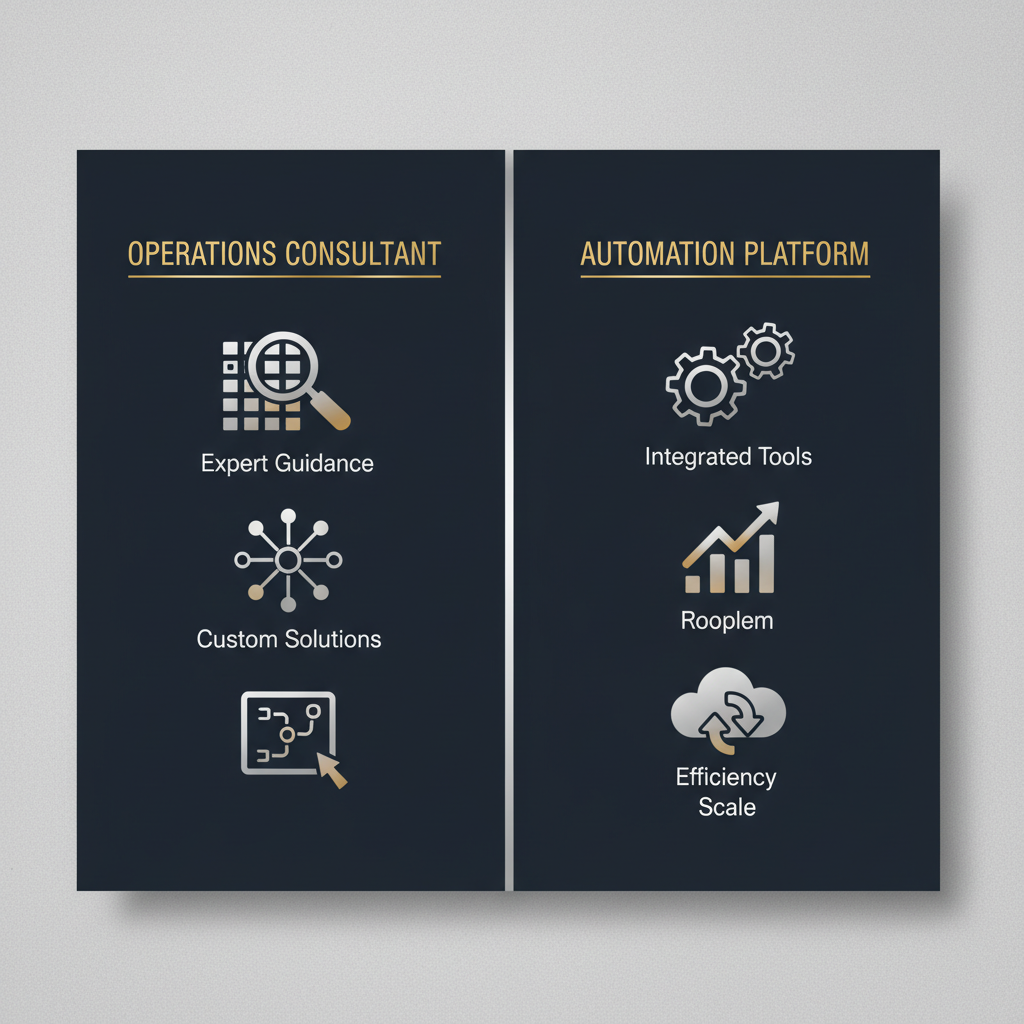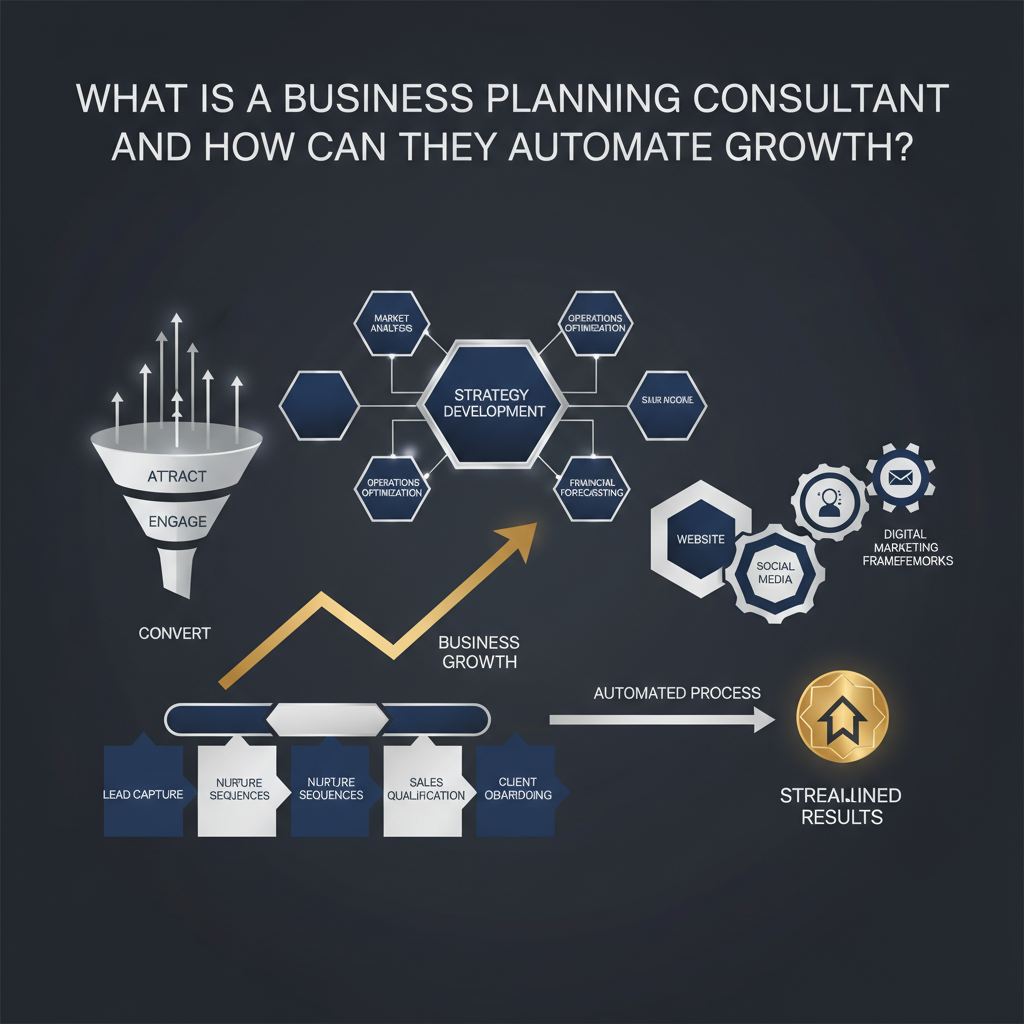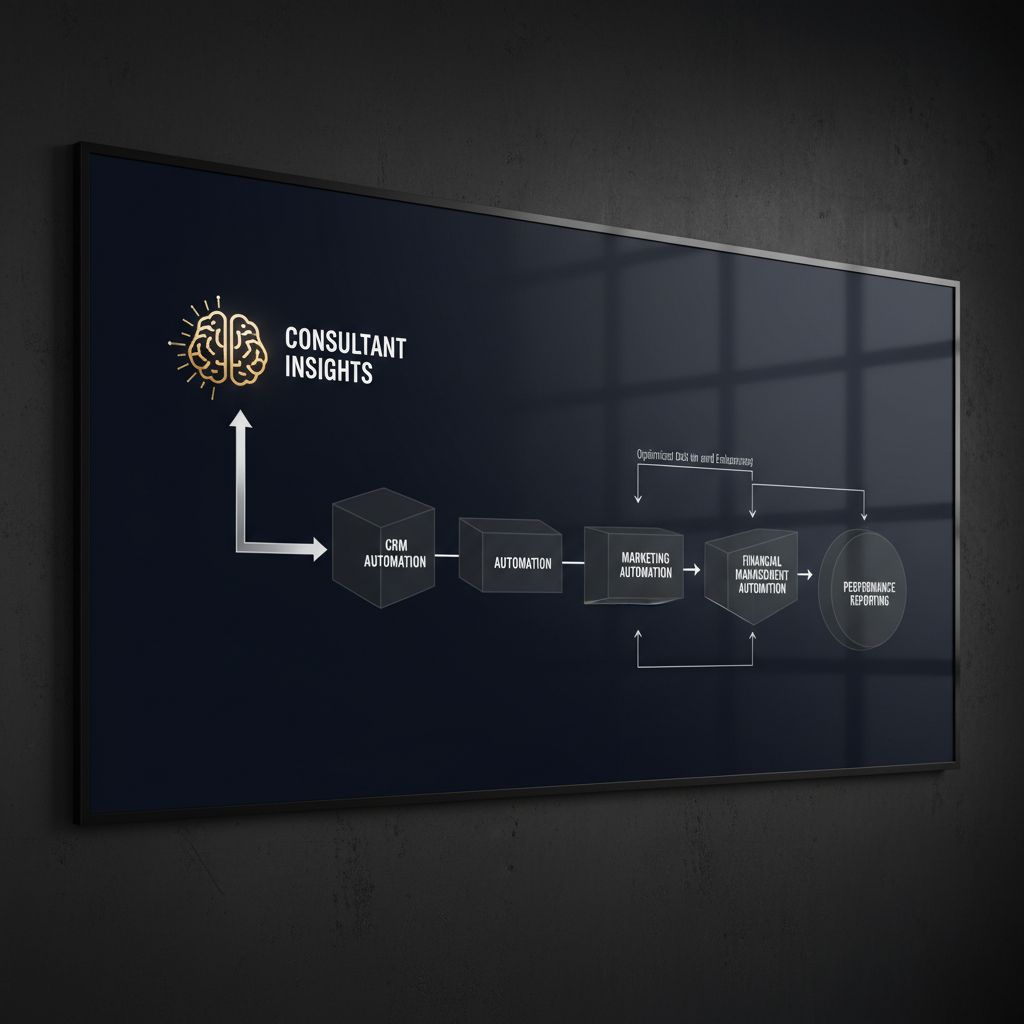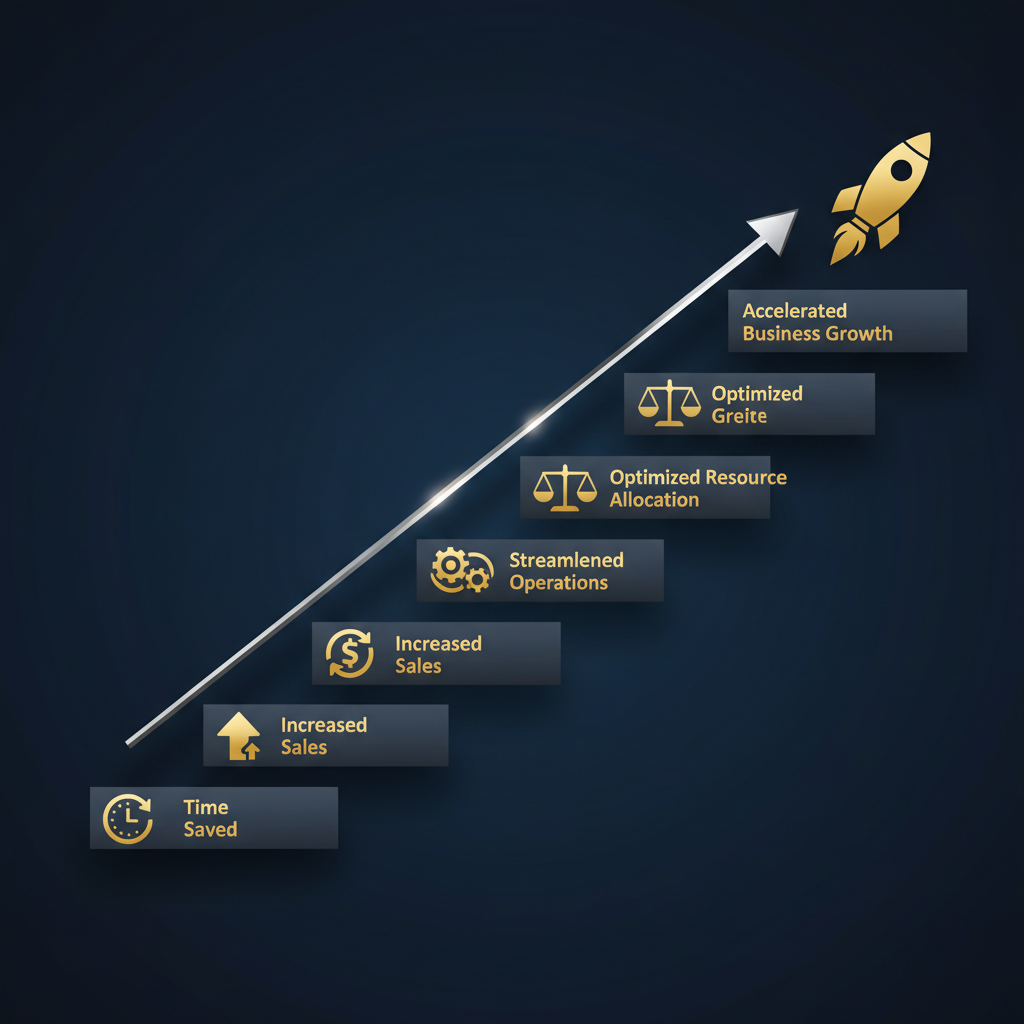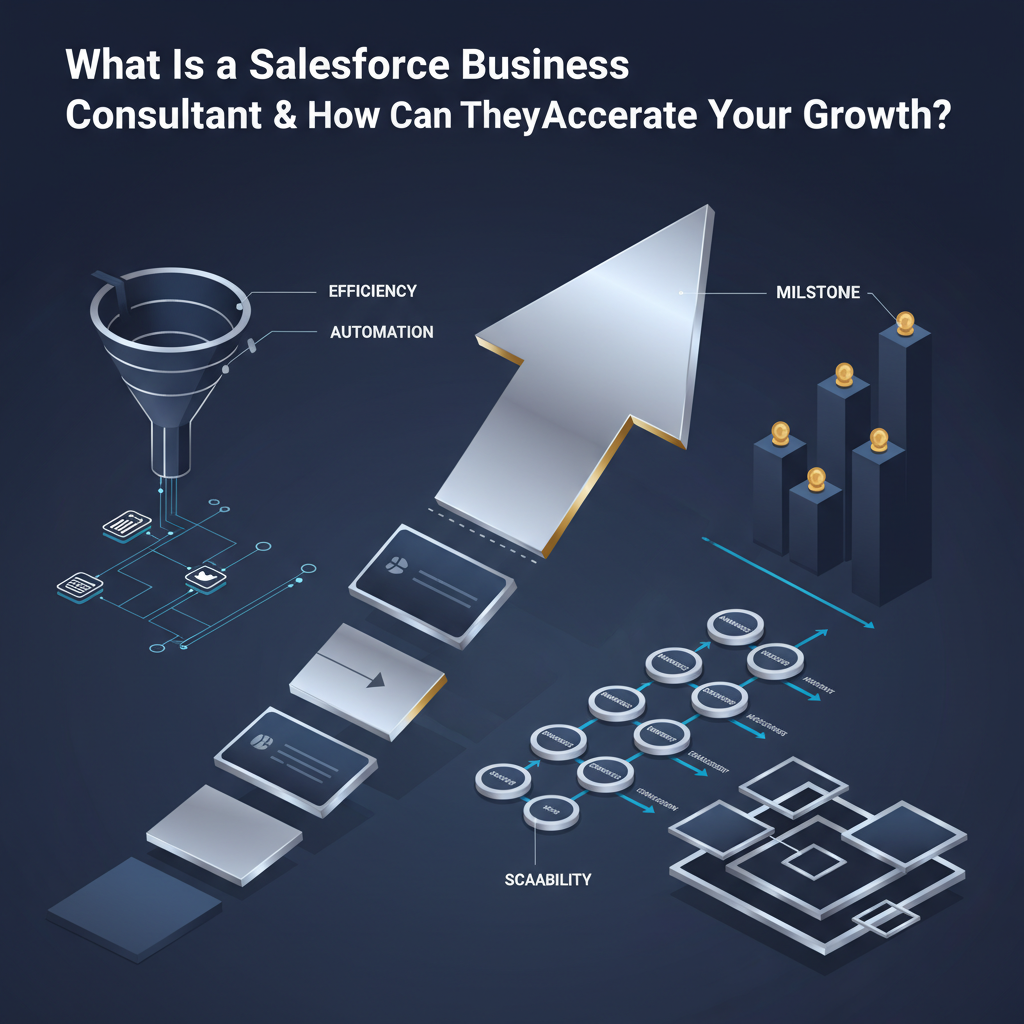
A Salesforce Business Consultant is a strategic expert who helps businesses leverage the Salesforce platform to streamline operations, automate marketing and sales workflows, and improve customer relationships. They analyze your specific business needs to customize and implement Salesforce solutions that drive efficiency and scalable growth.
As a small business owner, you want to grow. But you may feel overwhelmed by all the marketing and operations tasks. It’s hard to achieve steady small business growth when you’re buried in work. Getting new clients and building a professional online brand can seem impossible when you use manual processes and mismatched tools. You need a better way to find leads and simplify your daily work without sacrificing your time or the quality of your service.
There is a way to handle these challenges. You can use strong business automation and build online systems that work together to grow your business. This is where a Salesforce Business Consultant can make a huge difference. This article explains what they do and how they help founders switch from manual work to automated efficiency, which helps in accelerating your small business growth.
A skilled Salesforce Business Consultant offers expert guidance to set up reliable systems. They can design automated sales funnels, improve lead generation strategies, and refine your business process automation. They help you look professional and trustworthy online. This ensures your small business marketing services get real results, so your business can run smarter, not harder. Let’s look at what a Salesforce Business Consultant does and why they are so important for your company’s future.
What is a Salesforce Business Consultant (and Why Should Your Business Care)?
Beyond CRM: The Role of a Consultant in Business Automation
Many people hear “Salesforce” and think “CRM.” Salesforce is a great CRM, but a skilled Salesforce business consultant does much more. They are not just tech experts. They are your strategic partners.
Your business needs more than just software. You need a complete solution. A consultant guides you through the world of business automation. They turn your goals into simple, automated workflows. This is about more than just managing your contacts.
Think of them as architects for your business. They design systems that connect all its different parts. This is vital for small business growth. It helps when you feel overwhelmed with marketing and operations tasks. It also builds a professional online presence.
Their expertise helps you get the most from Salesforce. They connect your sales, marketing, and service teams. This makes your whole business run smoothly. The result is a strong and efficient online business solution.
Key Responsibilities and How They Impact Your Bottom Line
A Salesforce business consultant offers direct help. Their work boosts your profit and efficiency. Here are their main jobs:
- Business Process Analysis and Optimization: They review how you work now. They find bottlenecks and slow spots. Then, they create clear plans for business process automation. This saves you a lot of time and lowers your costs.
- Custom Salesforce Configuration: Consultants set up Salesforce for your needs. This is not a one-size-fits-all solution. They build a system that works for your sales and service teams. This helps you avoid paying for features you don’t need.
- Automated Sales Funnel Development: They help you build automated sales funnels. These funnels capture new leads well. They also warm up potential customers for you. This helps you generate consistent leads and close more sales. Businesses that use automation often see a 10% or greater increase in sales productivity [1].
- Lead Generation Strategies and Integration: A consultant connects your lead sources to Salesforce. This includes website forms, social media, and emails. They set up strong lead generation strategies. You can see how each customer finds you, right from the start.
- Data Migration and Management: They move your customer data into Salesforce smoothly. This creates a “single source of truth.” It makes your data more accurate and easier to find. This helps you make smarter business decisions.
- Reporting and Analytics: Consultants set up clear dashboards and reports. These tools give you useful information to act on. You can track results, learn about customers, and improve your plans. Using data this way is key for smart small business marketing services.
- User Training and Adoption: They teach your team to use Salesforce well. Getting your team on board is key to a good return on your investment. They make sure your investment pays off with real results. This helps you automate workflows without losing quality.
In short, a Salesforce business consultant changes how you work. They move you from manual tasks to smooth, automated success. This expert help saves time, increases revenue, and builds a professional online presence you can trust.
How Can a Salesforce Consultant Drive Small Business Growth?
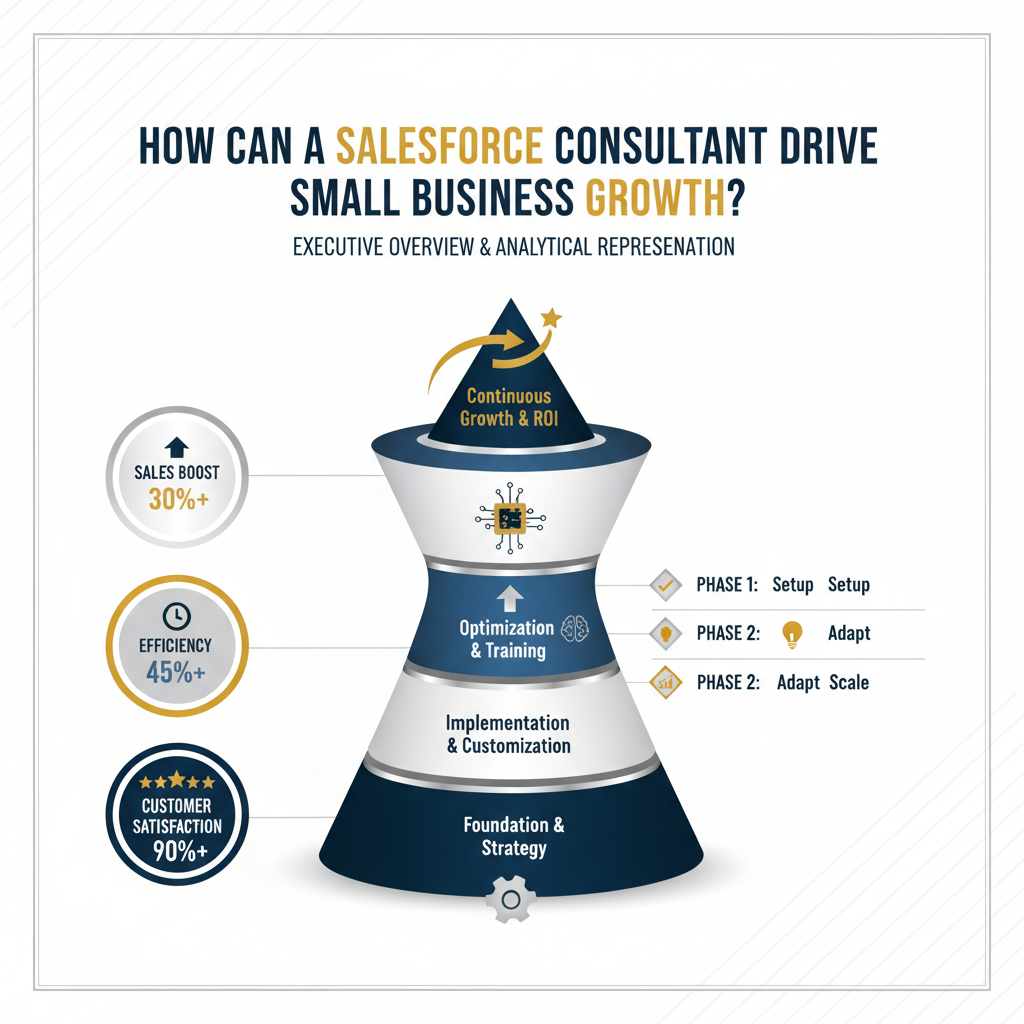
Streamlining Operations with Business Process Automation
Small businesses often handle many manual tasks. This can lead to stress and slow growth. A Salesforce consultant turns your manual work into efficient, automated workflows. They study your process, find bottlenecks, and set up Salesforce to handle repetitive tasks for you.
Consider the benefits of business process automation:
- Reduced Manual Data Entry: A consultant connects your systems to enter data automatically. This reduces errors and saves a lot of time.
- Faster Approval Processes: Set up automatic approvals for your workflows. This keeps projects moving forward without delay.
- Automated Reporting: Get sales, marketing, and service reports made for you. This gives you current information to make smarter choices.
- Optimized Customer Service: Automatically send customer cases to the right person and follow up. This makes sure no customer question is missed.
With these changes, your business will run more smoothly. You will free up your team for more important work. Saving time this way helps your business grow steadily. The change is clear: you move from manual tasks to smooth, automated systems.
Building Automated Sales Funnels for Consistent Lead Nurturing
Getting new leads is a common challenge for business owners. A Salesforce consultant can design and build strong, automated sales funnels for you. These funnels capture leads, connect with them, and turn them into customers. This takes the guesswork out of getting new leads.
Here’s how a consultant helps build powerful automated sales funnels:
- Lead Capture and Segmentation: They set up web forms and landing pages to automatically get new leads. They also sort these leads based on what they do or like.
- Automated Email Sequences: A consultant sets up email campaigns for you. These emails automatically send the right message at the right time to keep potential customers engaged.
- Task Automation for Sales Teams: When a lead does something specific, Salesforce automatically creates a task for your sales team. This makes sure they follow up on time.
- Engagement Tracking: Every action is tracked in Salesforce. This helps you see what works and what you need to change.
This gives you a reliable system for finding clients and growing sales. Moving from few leads to many is key for business growth. Studies show that businesses using marketing automation see a 14.5% increase in sales productivity [2]. A Salesforce consultant helps you become more efficient and builds a strong foundation for your business online.
Improving Client Acquisition with data-driven insights
To grow your business faster, you need to understand your customers. A Salesforce consultant helps you use data to learn about them. They set up your CRM to collect and analyze important customer information. This helps you move from guesswork to smart, automated decisions.
A consultant helps you use data to:
- Understand Customer Behavior: See what customers do, what they buy, and what they like. This helps you create marketing they will respond to.
- Personalize Marketing Campaigns: Use what you learn to create messages for specific groups of customers. This helps you get more sales.
- Identify High-Value Leads: Figure out which leads are most likely to buy. This lets your sales team focus on them.
- Measure ROI of Marketing Efforts: See which of your marketing campaigns are working best. This shows you where you get the most value.
This planned approach helps you find more clients. You can make smart decisions based on real data, not guesses. This takes you from slow growth to a system that can grow with you. Your digital marketing will be set up to get great results.
Enhancing Your Online Reputation Through Better Customer Management
Your online reputation is very important for getting and keeping clients. A Salesforce consultant helps you keep all customer chats in one place. This leads to great service and a strong online presence. It’s about building trust with your audience.
A consultant ensures Salesforce supports your online reputation by:
- Centralizing Customer Communication: All emails, calls, and support tickets are saved in one spot. This gives you a full history of every customer.
- Improving Service Response Times: Automatic workflows can flag urgent problems. This helps you respond quickly and consistently to clients.
- Facilitating Feedback Collection: Add surveys and feedback forms to your process. This makes it simple to get helpful ideas from customers.
- Proactive Issue Resolution: Find potential issues before they get bigger. Deal with customer problems fast to avoid bad online reviews.
By improving how you manage customers, you build stronger client relationships. Happy customers are more likely to leave good reviews and buy from you again. This directly helps your online reputation. It also shows that your brand is professional and trustworthy. Better customer management helps your business grow by turning happy clients into fans.
What Core Problems Does a Salesforce Consultant Solve for Entrepreneurs?
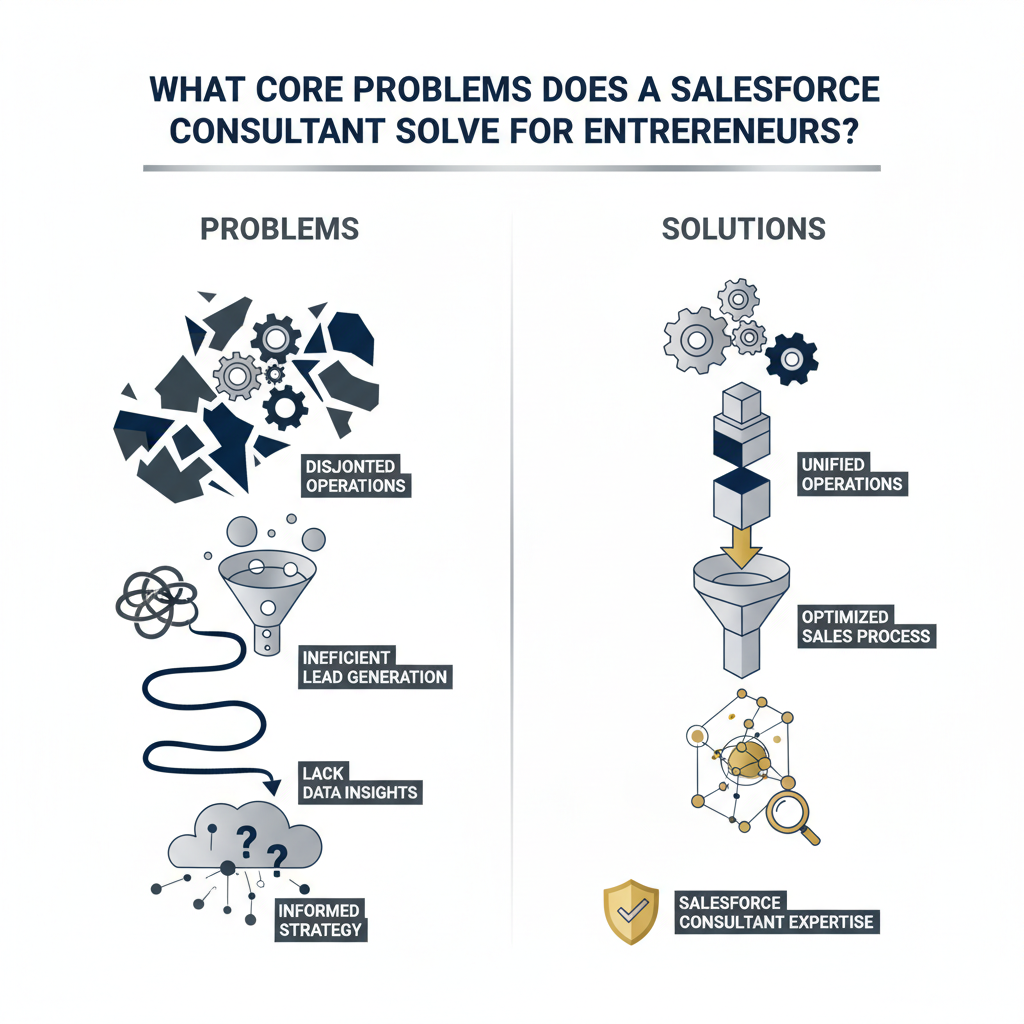
Overcoming Inconsistent Lead Generation
Many business owners struggle to get new leads consistently. This causes unpredictable income and slow growth. You might always worry about where your next client is coming from. A Salesforce business consultant solves this problem directly.
They use proven sales strategies right inside Salesforce. This builds a strong system to attract, capture, and guide new clients. Instead of random efforts, you get a clear, structured plan.
A consultant helps you:
- Define Your Ideal Customer: Pinpoint who to target for the best results.
- Automate Lead Capture: Set up web forms and connect your marketing tools.
- Build Automated Sales Funnels: Create automatic steps that guide leads from interest to purchase.
- Track Lead Sources: See which marketing channels bring in the best leads.
- Prioritize High-Value Leads: Focus your time on the leads most likely to buy.
This turns unpredictable leads into a steady stream of new clients. You stop guessing and start using a data-driven system to grow your business.
Eliminating Manual Data Entry and Repetitive Tasks
Are you overwhelmed by marketing and daily operations? Manual data entry and repetitive tasks take up valuable time you could use to grow your business. This work often leads to mistakes and slows you down. A Salesforce consultant uses automation to fix this.
They look at how you work to find slow spots and wasted steps. Then, they set up Salesforce to handle these tasks automatically. This includes things like updating customer info, sending follow-up emails, or assigning new leads. For instance, businesses save up to four hours per day by automating administrative work [3].
Key benefits include:
- Time Savings: Free your team to focus on more important work.
- Reduced Errors: Automation lowers the risk of human mistakes.
- Improved Efficiency: Tasks get done faster and more reliably.
- Streamlined Operations: Create a smoother workflow for your whole business.
- Better Resource Allocation: Use your team’s time and skills more effectively.
The change is clear: you go from manual, messy work to a smooth, automated system. You get your time back and make your business more productive.
Creating a Single Source of Truth for Customer Data
Is your customer information scattered everywhere? Data is often stuck in different spreadsheets, email accounts, or other tools. This makes it hard to understand your customers or provide good service. You need one central place to see every client interaction.
A Salesforce consultant brings all your customer data together on one platform. Salesforce becomes your “single source of truth.” This means your whole team sees the same, up-to-date information for every client. This helps you make better decisions and communicate more personally.
With all your data in one place, you can:
- Access Comprehensive Customer Profiles: See a client’s past purchases, conversations, and preferences.
- Personalize Marketing Efforts: Send the right messages based on accurate customer history.
- Improve Customer Service: Get the full story to help customers faster and better.
- Enhance Collaboration: Make sure everyone on your team is on the same page.
- Generate Accurate Reports: Get reliable insights into what your customers do and want.
This shift from scattered files to organized data helps you make smarter choices, build stronger client relationships, and grow your business online.
Scaling Your Operations Without Scaling Your Headcount
Many business owners want to grow but hit a wall. How do you get bigger without hiring a lot more people? Adding staff costs money and makes things more complex. A Salesforce business consultant gives you the tools to grow in a smarter way.
They help you use Salesforce automation to handle more work with your current team. By improving your workflows, you can manage more leads, serve more customers, and handle more projects. Businesses using automation can see up to a 20% increase in productivity [4].
This smart approach allows you to:
- Increase Capacity: Handle a bigger workload without hiring more staff.
- Standardize Processes: Keep your quality high as you grow.
- Reduce Operational Costs: Avoid the high costs of adding more team members.
- Maintain Agility: Adapt quickly to market changes with a flexible system.
- Focus on Strategic Growth: Put your resources into new ideas, not repetitive tasks.
A consultant helps you move from slow growth to smart, scalable growth. This ensures you can grow faster while making more money with less effort.
How Do You Find the Right Salesforce Consultant for Your Business?
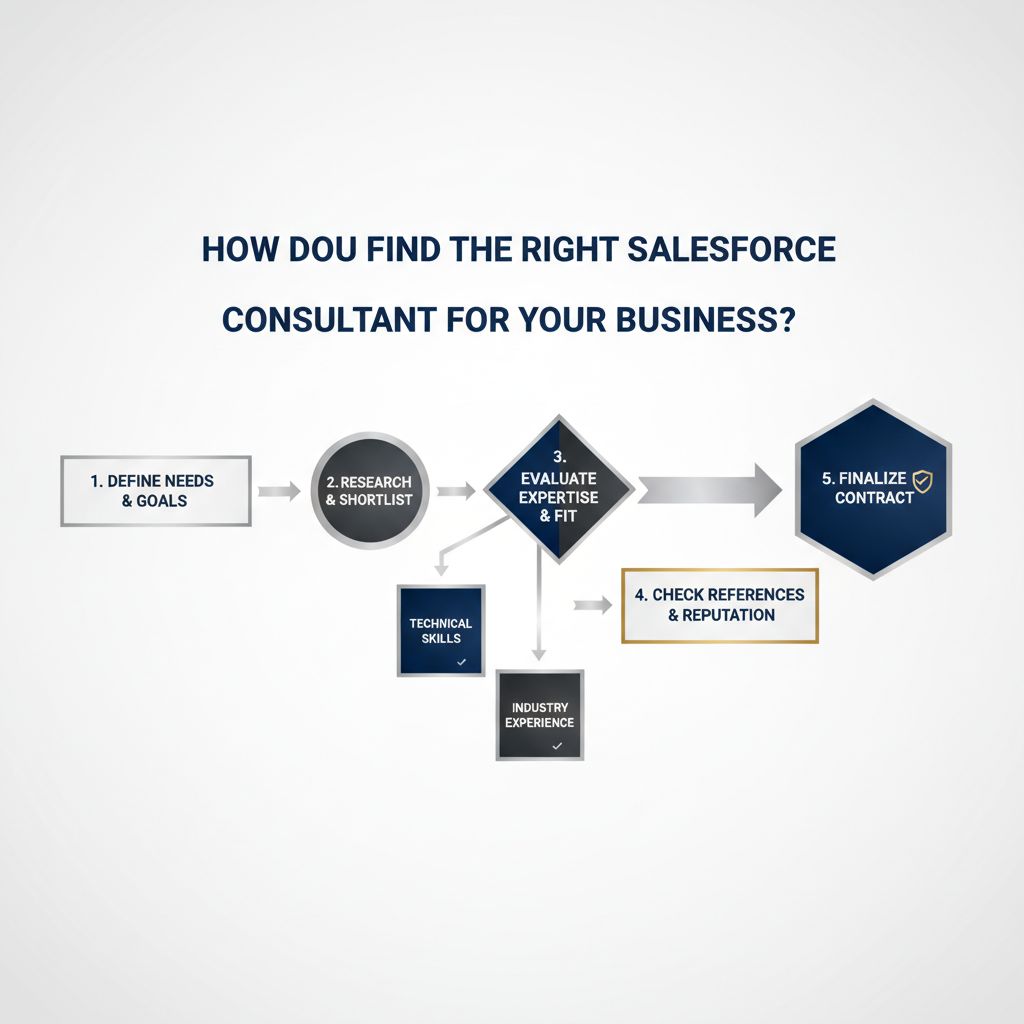
Key Traits to Look for in a Consulting Partner
Finding the right Salesforce consultant is key to automating your business. A good partner ensures your investment leads to real growth and efficiency. Look for someone who understands both Salesforce and the unique needs of small businesses.
- Proven Salesforce Expertise: A great consultant has deep Salesforce knowledge. They should have certifications and real-world experience. They also need to know how to use the platform for business process automation.
- Small Business Focus: A startup’s challenges are different from a large company’s. Look for consultants with experience in small business growth strategies. They should offer solutions that work for smaller teams and budgets.
- Strategic Vision for Automation: A great partner does more than just technical work. They think about the big picture. They help you find ways to use business automation in every department. This includes improving your automated sales funnels and lead nurturing.
- Strong Communication Skills: Clear communication is key. Your consultant should explain complex ideas in simple terms. They need to be open about progress, problems, and fixes. This builds trust and keeps everyone on the same page.
- Results-Oriented Approach: The goal is to see real results. Find a consultant who focuses on outcomes, like more revenue or saved time. They should focus on productivity workflows that provide true value.
- Integration Acumen: Salesforce doesn’t stand alone. A good consultant can connect it with the tools you already use. This creates connected online business solutions. It also makes your digital setup work more smoothly.
Questions to Ask Before You Hire
Before you hire a Salesforce consultant, interview them carefully. The right questions help you find a partner who fits your goals for small business growth. These questions help you check their skills and methods.
- “Can you share examples of successful projects with businesses similar to mine?” This question helps you check their experience. Find a consultant who knows the challenges of your industry. For example, ask if they’ve helped businesses struggling to grow your business online.
- “How do you learn about our unique business processes and goals?” A good consultant will not offer a generic solution. They should explain their process for discovery. This helps them understand your specific needs for business process automation.
- “What is your process for implementation, and what is a typical project timeline?” You need to understand how they manage projects. A clear plan helps manage expectations and resources. It also ensures they deliver things like automated sales funnels on time.
- “How do you measure success, and what ROI can we expect?” Focus on results you can measure. The consultant should explain the key performance indicators (KPIs) for your project. They should also show how their work improves small business growth and efficiency.
- “What kind of support and training do you offer after the project is done?” The project isn’t over at launch. Make sure they provide ongoing support and training. This helps your team use the new business automation tools well.
- “How do you handle budget overruns or project changes?” It’s important to be open about potential problems. A good consultant has a clear plan for unexpected changes. This protects your investment.
- “How do you keep our data secure and private?” Data security is extremely important for any online business solution. Make sure they are committed to protecting your sensitive information.
Integrating a Consultant with Your Existing Team and Tools
Adding a Salesforce consultant to your team needs careful planning. Good integration helps you get the most from their work. It also avoids disrupting your daily routine. This helps you reach your business automation goals faster.
Start with clear communication. Decide how often you will meet and how you’ll talk. This keeps everyone on the same page.
Next, set clear roles and responsibilities from the beginning. This prevents confusion and keeps everyone accountable. Your team can do their usual work while the consultant handles the special business process automation tasks.
Implement changes in stages. A gradual approach is better than a huge overhaul all at once. This gives your team time to adjust and not feel overwhelmed with marketing and operations tasks. It also lets you test and improve things along the way.
Make training a priority. The consultant should teach your team how to use the new system. They should offer full training on new Salesforce features and workflows. This is key for long-term success with automated sales funnels and lead generation strategies.
Use the systems you already have. A good consultant will connect Salesforce with your current tools. This can include your tools for branding and website creation or social media automation. Connecting everything creates a single, smooth system. It improves data flow and helps with online reputation management.
Finally, remember the goal is a smooth transition. A consultant helps you move from manual work to automated, streamlined operations. They guide your business from inconsistent results to steady, scalable growth. This partnership helps you build a professional online presence and get clients consistently.
Frequently Asked Questions
What is a Salesforce Consultant certification?
A Salesforce Consultant certification proves a professional has special skills. It shows they can set up, configure, and improve Salesforce solutions. These certifications are important. They show a consultant is skilled. They cover areas like Sales Cloud, Service Cloud, or Experience Cloud. [5]
For business owners, this certification means you can trust the consultant. A certified Salesforce consultant has proven skills. They know how to use Salesforce to solve your unique problems. This skill leads to better automation of your business tasks. It makes your workflows more efficient. It also helps your business grow steadily. Choosing a certified consultant means you get expert help. This speeds up your path to finding professional online business solutions. It ensures your investment in Salesforce brings real, measurable results.
What do Salesforce consulting companies do?
Salesforce consulting companies are strategic partners for businesses. They help businesses get the most value from Salesforce. Their main goal is to match Salesforce’s features with your business goals. This helps your small business grow faster and creates strong business automation.
These expert firms offer many services. They do more than just the basic setup. They offer solutions designed for your specific goals.
Here are the key things they do:
- Strategic Planning and Discovery: They start by learning about your unique problems. For example, they can help if you are struggling to grow your business online. They look at your current methods and find ways to make them better.
- Implementation and Configuration: Consultants set up Salesforce. They customize it to fit how you work. This turns manual work into efficient, automated tasks.
- Customization and Development: They tailor Salesforce to fit your exact needs. This can include building custom tools or designing automated sales funnels. These funnels help you get new leads consistently.
- Integration Services: They connect Salesforce with the other tools you use. This creates one connected system. This includes your website, marketing tools, or accounting software.
- Data Migration and Management: They make sure your customer data moves smoothly into Salesforce. This gives you one main place for all client information.
- User Training and Adoption: They provide key training for your team. This makes sure everyone starts using the system smoothly. Everyone learns how to use the system well.
- Ongoing Support and Optimization: Consulting companies offer ongoing support. They also suggest improvements. This makes sure Salesforce changes as your business grows.
By partnering with a Salesforce consulting company, you build a professional online presence. You also find a clear path to getting new clients. This helps you manage your online reputation. They act as part of your team. This makes your operations smoother and saves a lot of time. Their expert help lets you automate tasks without losing quality.
How to become a Salesforce Consultant
To become a successful Salesforce consultant, you need a good plan. You must mix technical skill with good business sense. This career is about helping businesses change for the better. Consultants help companies automate their work and grow faster.
Here are the key steps to start this career:
- Master Salesforce Fundamentals: Start with the Salesforce Administrator certification. This gives you a strong base knowledge of the platform. [5]
- Gain Practical Experience: Put your knowledge to use. Work on projects or volunteer. It is very important to understand real business problems.
- Earn Specialized Certifications: Get certifications for consultants. Examples include Sales Cloud, Service Cloud, or Experience Cloud Consultant. Each one proves you have skills in a specific area.
- Develop Strong Business Acumen: Learn about different industries. Understand common business problems. Focus on how technology can solve these issues. This includes making good online solutions for businesses.
- Cultivate Essential Soft Skills: Good communication, problem-solving, and client skills are key. You need to explain technical ideas in a way that shows their business value.
- Focus on Solution Delivery: Consultants are problem-solvers. They create and carry out plans. These plans make work run more smoothly and increase sales.
This career is great for people who want to get real results. It’s about helping businesses succeed with technology. You help them automate their workflows. You guide them toward a stronger professional online presence.
Sources
- https://hbr.org/2019/07/why-software-is-eating-the-world
- https://www.nucleusresearch.com/research/single/sap-customer-experience-roi-case-study/
- https://www.salesforce.com/news/stories/what-is-automation/
- https://hbr.org/2021/07/how-automation-can-help-your-company-grow
- https://trailhead.salesforce.com/credentials/administratorcertificates