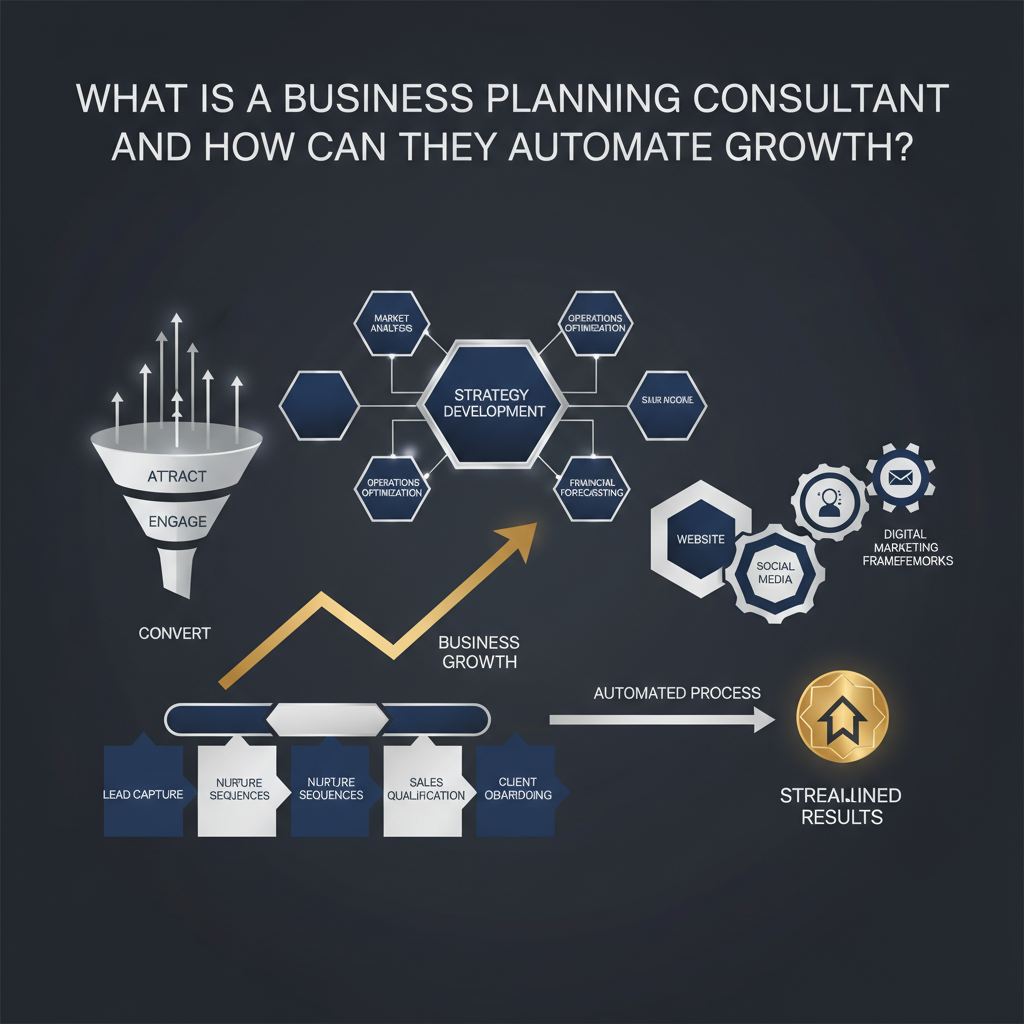
A business planning consultant is an expert advisor who helps businesses formulate, refine, and execute strategic plans for growth. They provide objective analysis, market insights, and financial forecasting to create a clear roadmap for achieving long-term goals. Hiring a consultant is ideal for businesses needing to streamline operations, secure funding, or navigate scalable growth effectively.
As a small business owner, you might be struggling to grow their business online. It’s common to feel overwhelmed with marketing and operations tasks. You want a professional online presence that helps you generate consistent leads, but messy processes get in the way. You know you want to automate workflows without losing quality and want to appear professional and trustworthy online, but it’s hard to know where to start.
This is where a business planning consultant can make a real difference. A Strategic Planning consultant does more than give advice—they help you stop putting out daily fires and start building a clear plan for the future. They show you how to use business automation and other online business solutions effectively. They’ll also connect the dots between things like automated sales funnels and good branding and website creation to create a solid plan for small business growth.
In this guide, we’ll explain what a business planning consultant does and the benefits of using strategic planning consulting services. We will also show you how their planning works hand-in-hand with today’s business automation tools. You will learn how to use their advice to make your work more efficient, attract clients consistently, and grow your business with smart automation instead of manual effort.
What Does a Business Planning Consultant Actually Do?
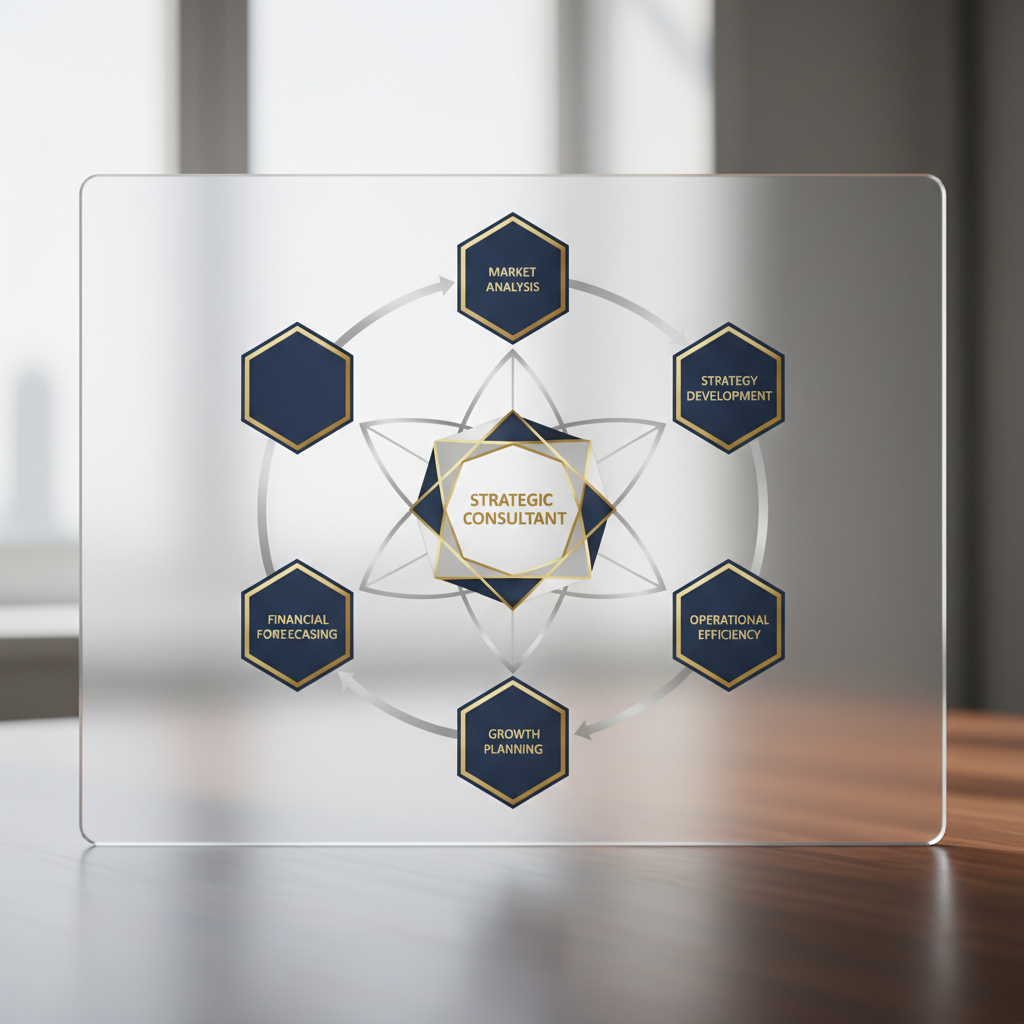
Defining the Role: From Strategy to Execution
Many entrepreneurs and small business owners feel overwhelmed. They struggle to grow online, facing endless tasks and an unclear path. This is where a business planning consultant can help. They are more than just an advisor.
A business planning consultant is your strategic partner. They guide your company from its early vision to a successful launch. Their main job is to help you set clear goals and create a practical roadmap. This ensures your efforts are focused and deliver real results.
They turn your big ideas into concrete steps. They also find key areas for improvement and new opportunities. This often means building business automation into your plan from the start.
Their work often includes:
- Objective Assessment: Analyzing your current business model, market position, and operational efficiency.
- Goal Definition: Helping you set clear, achievable goals that make a real impact.
- Strategy Development: Creating a solid plan for long-term small business growth.
- Implementation Guidance: Giving you a step-by-step plan to put your strategy into action, including advice on online business solutions.
Ultimately, a consultant helps you stop guessing. They provide expert advice to build a professional online presence and achieve steady growth. This turns scattered efforts into a focused system that gets results.
Key Deliverables: Actionable Roadmaps and Financial Models
When you hire strategic planning consulting services, you need more than just advice. You need real, usable documents. A consultant provides key deliverables designed to help you right away and for years to come.
These documents are your blueprint for growth. They help you make smart decisions and use your resources wisely. As a result, you gain a clear and confident sense of direction for your business.
Typical deliverables include:
- Comprehensive Strategic Plan: A clear document outlining your vision, mission, and long-term goals. It covers market analysis, how you stand out from competitors, and your main strategies.
- Detailed Operational Roadmap: A step-by-step guide for putting your strategy into action. It often includes workflows for business process automation and how to assign resources.
- Robust Financial Projections: Solid forecasts for your income, costs, and profits. These models show if your plan is financially sound and help you find funding.
- Market Analysis & Competitive Landscape: A deep dive into your target audience, industry trends, and what your competitors are doing. This informs your lead generation strategies.
- Marketing & Sales Strategy: A plan for reaching customers, including tips for automated sales funnels, social media automation, and small business marketing services.
- Branding & Online Presence Blueprint: Guidance on building a professional brand, with advice on branding and website creation and online reputation management.
These documents help you avoid common mistakes. They provide a clear framework for growing your business. Studies show that businesses with a formal plan are much more likely to grow [source: https://hbr.org/2010/07/why-you-need-a-business-plan].
Strategic Planning vs. Business Planning: Understanding the Difference
People often use the terms “strategic planning” and “business planning” to mean the same thing. But they are two different, related parts of planning your business’s future. Knowing the difference is key to growing effectively.
Strategic Planning is about the big picture. It defines your long-term vision and how you’ll stand out from the competition. It involves looking at the market and making major decisions. It answers questions like: “What is our core business?” and “Where do we want to be in 3-5 years?”
On the other hand, Business Planning is about the details. It turns your strategy into a specific to-do list. A business plan covers daily operations, marketing tactics, and financial details. It answers: “How will we make it happen?” and “What do we need to get there?”
Consider it this way:
| Aspect | Strategic Planning | Business Planning |
|---|---|---|
| Focus | Big-picture vision, competitive edge | Daily actions, operational details |
| Time Horizon | 3-5 years or more | 1-2 years, specific projects |
| Key Question | What should we achieve? Why? | How will we achieve it? When? |
| Outputs | Mission, vision, core strategies | Budget, marketing plan, operational workflows |
| Role of Consultant | High-level guidance, market insights | Detailed project management, resource help |
You need both for steady small business growth. Strategic planning points you in the right direction, and business planning gives you the map to get there. A skilled business planning consultant helps you connect the two. This makes sure your big vision is backed up by real, automated processes. When they work together, you get smoother operations and reliable results.
When Should You Hire a Strategic Planning Consultant?
Signs You’re Ready for Expert Guidance
Many entrepreneurs hit a point where growth stalls. You might be working harder but not seeing matching results. This is often the perfect time to consider strategic planning consulting services.
If you struggle to grow your business online or feel swamped by marketing and operations, expert guidance is essential. A strategic planning consultant brings a fresh perspective and proven methods. They help you clarify your vision and set a clear path forward.
Consider these common signs that you’re ready to hire a business planning consultant:
- Lack of Clear Direction: You have many ideas but no clear strategy. Your efforts feel disconnected, making it hard to reach your goals.
- Inconsistent Revenue: Your sales are up and down. You need to generate steady leads and create reliable income.
- Overwhelmed Operations: You’re trapped by daily tasks with no time for big-picture thinking. Manual processes are slowing you down and limiting your growth.
- Scaling Challenges: You want to expand but don’t have a plan for sustainable growth. You need to automate tasks without losing quality or control.
- Weak Online Presence: Your branding and website aren’t getting the results you want. You want to look professional and trustworthy online but aren’t sure how.
- Ineffective Marketing: Your current marketing efforts aren’t delivering a strong return on investment (ROI). You need better ways to find leads and create automated sales funnels.
- Difficulty in Decision-Making: You face big decisions but lack the data or confidence to choose wisely.
Working with an expert helps you shift from being reactive to proactive. You’ll move from inconsistent leads to getting clients predictably. Automated-Biz supports this by providing the tools to put your consultant’s plan into action, offering integrated online business solutions and process automation.
Navigating Key Business Stages: Startup, Growth, and Scaling
A strategic planning consultant can help at every stage of your business journey. Their advice helps you overcome challenges and seize opportunities. Each phase has unique strategic needs.
Startup Phase: Building a Solid Foundation
In the startup phase, a consultant helps confirm that your business idea is solid. They help you define your target audience and what makes you unique. This includes creating a strong business plan, which is vital for early success. Businesses with formal plans are 16% more likely to succeed [1].
A consultant can help with:
- Market Research: Finding your ideal customer and understanding what they want.
- Niche Definition: Pinpointing what makes your business special.
- Initial Strategy: Creating a plan to launch your business.
- Branding and Website Creation: Building the foundation for a professional online presence. Automated-Biz provides the tools to make this happen.
Growth Phase: Expanding Your Reach and Revenue
As your business grows, things get more complex. A strategic planning consultant helps you improve your operations and marketing. They focus on building on what’s already working.
During this stage, a consultant helps with:
- Revenue Optimization: Improving your pricing and finding new ways to make money.
- Automated Sales Funnels: Creating efficient ways to turn leads into customers.
- Lead Generation Strategies: Using effective tactics to find new clients consistently.
- Social Media Automation: Developing strategies for steady online engagement.
- Small Business Marketing Services: Building complete digital marketing systems.
- Process Improvement: Making your daily tasks more efficient through business process automation.
Scaling Phase: Sustaining Momentum and Maximizing Efficiency
To scale your business, you need to move beyond doing everything by hand. A consultant helps you create systems for long-term, sustainable growth. This often means using more automation and technology.
Here, a consultant focuses on:
- System Implementation: Adding new technologies to be more efficient.
- Team Structuring: Building an organization that can grow with you.
- Online Reputation Management: Protecting and improving your brand as you expand.
- Diversification: Exploring new products or markets.
- Operational Efficiency: Making sure all your online business solutions work together smoothly.
No matter your stage, Automated-Biz offers the platform to put your strategic plan into practice. We provide branding, website design, automated sales funnels, and expert support in one place. This ensures your growth is both strategic and efficient.
Preparing for Fundraising or Major Investments
If you’re looking for funding, you need to show investors a clear and exciting vision. They need to feel confident that your business has a future and that you can deliver. A business planning consultant is essential for this.
They help you clearly explain your value, market, and financial forecasts. Their expertise ensures your pitch deck and business plan are solid and ready for investors. This makes your business look like a professional, low-risk, and high-potential investment.
A consultant will help you present:
- A Cohesive Business Plan: A well-researched plan that outlines your strategy, market, and finances.
- Clear Growth Projections: Showing a clear path to growing your revenue and becoming profitable.
- Scalable Operations: Showing how automation and efficient processes will help you grow quickly.
- Proven Lead Generation Strategies: Showing a reliable way to get new clients.
- Strong Online Presence: Presenting a professional brand, website, and a positive online reputation.
- Risk Mitigation: Identifying potential challenges and explaining how you’ll overcome them.
A consultant gives you an outside perspective on your business. This helps you fix weaknesses before you talk to investors. Automated-Biz then gives you the tools to build and show off the automated systems and professional online presence that investors want to see. This expert guidance helps you get the money you need to grow.
How Can a Consultant Integrate with Business Automation Tools?
Translating Your Strategic Plan into Automated Workflows
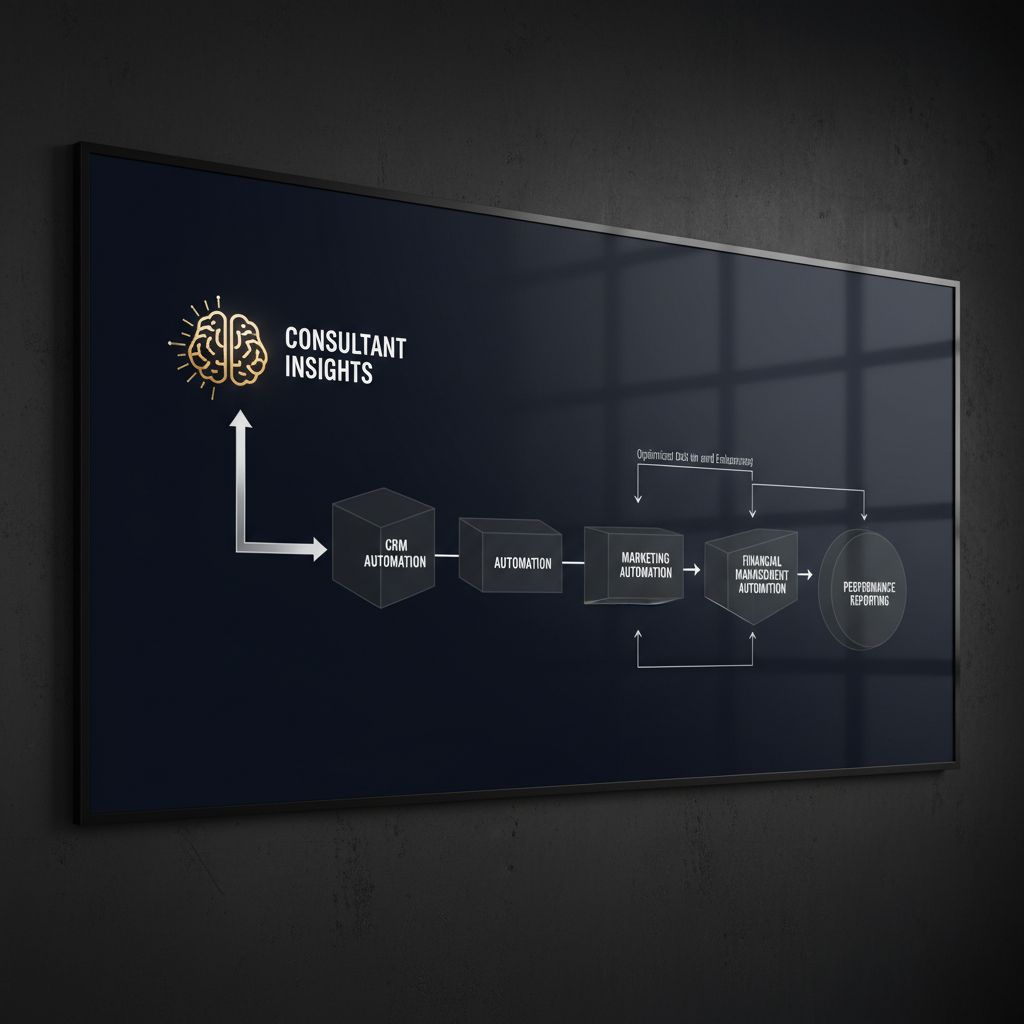
A business planning consultant does more than create big-picture goals. They show you how to turn your vision into real steps. This often means using business automation tools. As a result, your strategic plan becomes a set of automated workflows.
First, your consultant identifies your key business processes. They find repetitive or time-consuming tasks like client onboarding, data entry, or routine emails. They also check your current systems to see where they can be improved.
The goal is to cut down on manual work. This frees your team to focus on more important tasks. Your consultant will map out better workflows and recommend the right automation tools. For example, Automated-Biz has tools for:
- Automated client communication and follow-ups.
- Streamlined project management and task delegation.
- Data synchronization across different platforms.
- Automated reporting and analytics for performance tracking.
This expert-guided approach makes sure your processes are efficient and match your strategic goals. Businesses that automate their work often see big increases in productivity and savings [2].
Building Automated Sales Funnels Based on Your Growth Goals
Getting new leads consistently is key to growing your small business. A consultant can help you build strong automated sales funnels. These funnels are tailored to your growth goals and bring in a steady stream of potential customers.
First, your consultant defines your ideal customer. They map out the customer’s journey from first hearing about you to becoming a loyal fan. Then, they outline each stage of the sales funnel, including how you’ll capture, nurture, and convert leads.
Once you have a clear plan, automation tools make it happen. Automated-Biz offers all the online business solutions you need. They help you build sales funnels that get great results. Key parts include:
- Lead Generation Strategies: Automatically capture contact information through landing pages or forms.
- Automated Lead Nurturing: Send targeted email sequences based on lead behavior.
- Personalized Communication: Deliver relevant content that moves leads through the funnel.
- Conversion Triggers: Automate calls to action or sales outreach when leads are ready to buy.
This organized approach makes sure no lead is forgotten. It also makes getting new clients more predictable. Companies using marketing automation often get more qualified leads and sales [3]. This directly leads to more revenue for your business.
Using a Consultant’s Plan to Streamline Operations and Marketing
A strategic planning consultant gives you a big-picture view of your business. They find ways to make your operations and marketing more efficient. This ensures every part of your online presence works well and looks professional. Their plan connects easily with powerful automation tools.
Your consultant might suggest improving several areas:
- Branding and Website Creation: Ensure your online presence is consistent and professional. Automated-Biz helps you establish a strong brand identity from the start.
- Social Media Automation: Plan, schedule, and publish content across platforms. This boosts engagement without constant manual effort.
- Online Reputation Management: Automate requests for reviews. Monitor feedback to maintain a positive online image. A strong online reputation has a big impact on customer trust and sales [4].
- Digital Marketing Systems: Integrate email marketing, SEO, and advertising campaigns. This creates a unified marketing strategy for your small business.
Making these changes saves you valuable time. You can then focus on growing your business. Automated-Biz provides all the tools and expert support you need. It turns manual, disconnected tasks into smooth, automated operations. This helps your business run well as you scale up smarter and faster.
What are the Core Benefits of Strategic Planning Consulting Services?
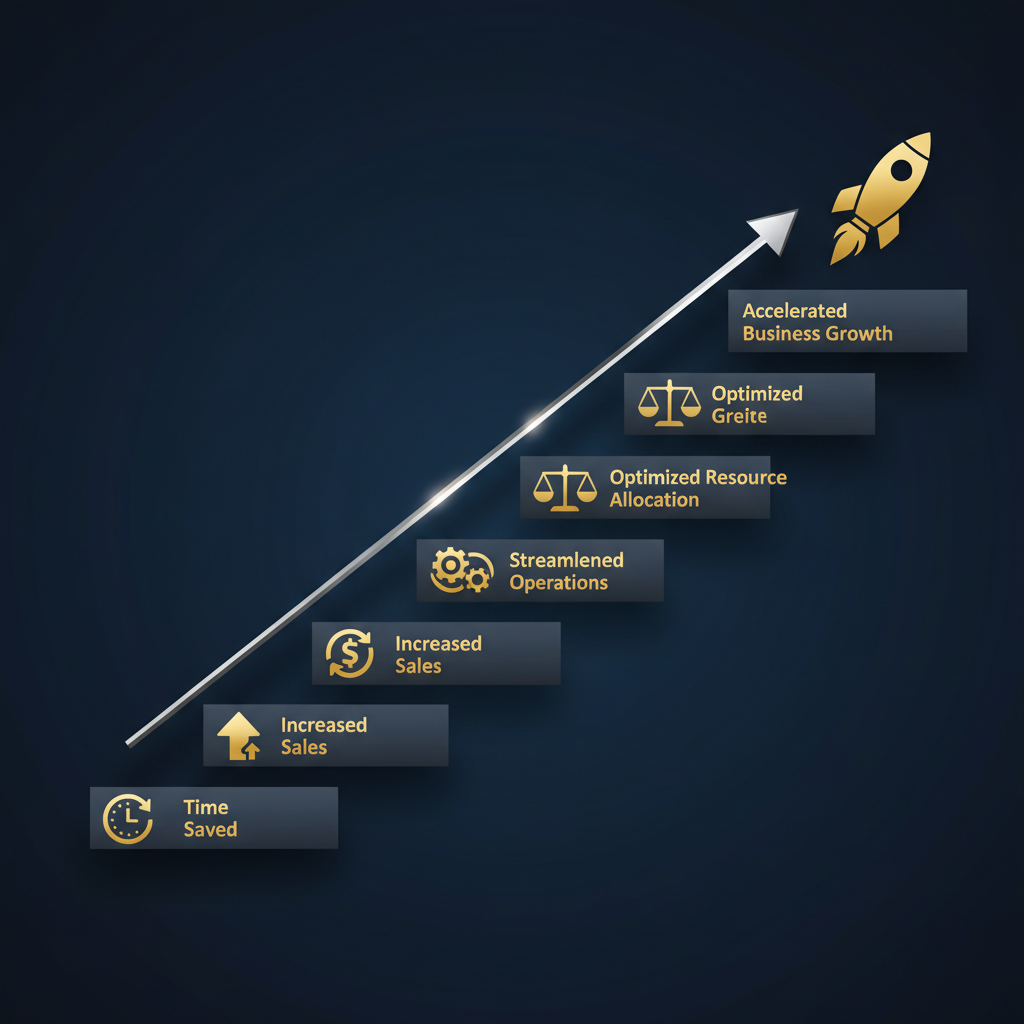
Gaining an Objective, Data-Driven Perspective
When you run a business, you’re deeply involved every day. But being so close can make it hard to see the big picture. You might miss hidden problems or new opportunities.
A strategic planning consultant offers a fresh, outside view. They aren’t influenced by internal company politics. Instead, they look at your business, your place in the market, and your potential for growth with an unbiased eye.
Their analysis is based on facts and data, not guesswork. For instance, studies show that businesses using data are more likely to do better than their competitors [5]. An expert helps you understand where your business truly stands. This process helps you:
- Find hidden strengths in what you already offer.
- Spot weaknesses that are holding you back.
- Discover new opportunities for targeted
small business growth. - See how you measure up against top competitors.
This data-first approach helps you make much better decisions. It also lays the groundwork for strong digital marketing systems and smart business process automation strategies. In the end, this clear view helps you grow in a smarter, more sustainable way.
Saving Time and Avoiding Common Small Business Pitfalls
As a business owner, you do it all. That leaves little time for big-picture planning. Trying to handle complex strategy on your own can eat up your time and lead to expensive mistakes.
Hiring a strategic consultant saves you a lot of time. They bring proven plans and methods, helping you avoid the usual challenges of small business growth. For example, many new businesses fail within their first five years, often because they lack a solid plan [6].
Consultants bring years of experience to the table. They already know what works and what doesn’t, which stops you from:
- Wasting time creating strategies from scratch.
- Making costly mistakes you could have avoided.
- Spending money on tactics that don’t work.
They can guide you in creating automated sales funnels without the guesswork. They’ll also help you develop lead generation strategies that fit your market. Their advice helps build productivity workflows and time-saving processes. It also makes decisions about branding and website creation easier, so you look professional right from the start.
This frees you up to focus on running your business. You can confidently hand off the strategic planning. This partnership helps you reach your goals faster by using business automation and making smarter choices.
Creating a Clear Path to Predictable Revenue Growth
Unpredictable revenue is a big worry for many business owners. It makes it hard to grow and creates stress. A strategic consultant helps make your income more reliable. They focus on creating a steady stream of revenue and new clients.
A consultant helps you set clear, measurable goals for your revenue. Then, they create a step-by-step plan to hit them. For instance, companies with a formal plan tend to grow faster than those without one [7]. This complete plan includes:
- Building strong
automated sales funnelsthat turn potential customers into paying ones. - Using smart
lead generation strategiesto keep new prospects coming in. - Improving your
digital marketing systemsto attract the right kind ofclient acquisition. - Adding
business automationtools to your sales process to save time and effort.
This expert guidance makes sure your hard work pays off. You’ll go from random sales to predictable revenue growth. The final result is a complete strategy that covers everything from finding new customers to encouraging repeat client generation.
You will understand what drives growth in your business and how to use it. This clarity powers your small business growth with a practical online business solution built to help you expand. You’ll stop hoping for sales and start creating them on purpose.
How Do You Find and Choose the Right Consultant?
Key Qualities of the Best Business Planning Consultant
Finding the right business planning consultant is a crucial step. A great consultant offers more than just advice. They give you practical strategies to grow your small business. They also know how to use business automation to make your company more efficient.
Look for these key qualities in a consultant:
- Proven Results and Experience: The best consultants have more than just theories. They can show you real results and success stories. Ask to see their past work, especially with small businesses or those needing to improve their online presence. A consultant who knows your industry can offer better advice.
- Focus on Automation: Your consultant should understand business automation. They need to know how to turn your strategic goals into automated processes, like sales funnels and lead generation. This approach saves time and helps your business grow.
- Uses Data to Make Decisions: Avoid consultants who just guess. A good consultant uses data to back up their recommendations. They will look at your current performance, find problems, and suggest solutions based on facts.
- Clear Communication and Practical Plans: A great consultant explains complex ideas in a simple way. They provide clear, direct guidance and give you a real roadmap to follow, not just abstract theories. Every suggestion should be something you can act on.
- Focus on Measurable Results: A good consultant focuses on results. They should help you set clear goals (KPIs) from the beginning. This makes them accountable and helps you track your progress. The goal is to see real change, like moving from inconsistent leads to a steady stream of new clients.
- Understands Digital Presence: A strong online presence is essential today. Your consultant must understand the importance of branding, your website, social media automation, and how your business is seen online.
Key Questions to Ask Before You Hire
Once you have a shortlist of consultants, ask them specific questions. This will help you check their skills and see if they are a good fit for your goals. Be ready to talk about how they can help you automate tasks and improve your online business.
- “How do you measure success for my specific business goals?”
This shows if they focus on real results. They should offer clear ways to measure success, not just make vague promises.
- “Can you share specific examples of how you’ve helped businesses automate workflows or streamline operations?”
Listen for real-world examples. This proves they have experience with automation and making businesses more efficient. It also shows they know how to turn a plan into action.
- “What is your approach to integrating a strategic plan with our existing or planned automation tools, like those on Automated-Biz?”
This checks if they know modern automation tools. A good consultant connects strategy with technology. They should help you use tools for things like automated sales and customer communication.
- “How do you ensure a professional online presence and effective digital marketing systems are part of the strategy?”
They should explain how their services include branding, website help, and social media automation. This is vital if you find it hard to grow your business online.
- “What steps do you take to understand our specific market and competitive landscape?”
A consultant’s advice must be specific to you. Generic plans usually don’t work well for growing a small business.
- “What ongoing support do you offer after the strategic plan is delivered?”
Growth is an ongoing process. Find out what support they offer after the initial plan is made. This could include helping you improve workflows or find more leads.
Finding the Right Fit for Your Business
Choosing a consultant is about more than their qualifications. The right fit is someone who shares your vision and values. They should understand your challenges and what you want to achieve. Small businesses that use strategic planning are 12% more likely to grow than those that don’t [8]. Make sure the expert you choose can guide you well.
Consider these points to make sure it’s a good match:
- Shared Goals for Automation and Growth: Does the consultant believe in business automation? They should focus on saving you time and creating processes that can grow with your business. This will help you get the best return on your investment.
- Understands Your Challenges: A good consultant sees when you are overwhelmed with marketing and daily tasks. They should recognize your need for consistent leads or for automated systems that don’t sacrifice quality. Their solutions must solve your specific problems.
- Good Chemistry and Communication: You’ll be working closely together. Make sure their communication style is clear and that they are easy to talk to. A good relationship builds the trust needed for great results.
- Focus on Your Full Digital Presence: Do they look at the big picture, not just the plan? They should consider how to make your business look professional and trustworthy online. This includes your brand, social media, and online reputation.
- Clear About the Expected Results: The consultant should clearly explain the changes you can expect. For example, they can help you move from manual, disconnected tasks to smooth, automated operations. They should guide you from guessing on your own to using expert-led automation.
- Plans for Long-Term Growth: Their strategies must be designed for long-term growth. They should help you scale your business smartly and quickly, turning slow progress into predictable success.
Frequently Asked Questions
What do strategic planning consulting services typically include?
Strategic planning consultants help your business define its vision and create a roadmap to reach it. This is more than just advice. Consultants provide clear strategies and practical steps for growth. They offer an outside perspective and a structured plan for your success.
Typically, strategic planning consulting covers several key areas:
- In-depth Business Assessment: Consultants start by learning how your business works now. They look at your place in the market, your team’s skills, and any challenges you face. This includes talking to key people and reviewing data.
- Market and Competitive Analysis: They study market trends and what your competitors are doing. This helps find opportunities and threats in your industry. It also makes your competitive advantage clear.
- Vision and Goal Setting: Consultants help you set clear, measurable goals that match your long-term vision. This makes sure everyone on your team is working toward the same outcome.
- Strategic Roadmap Development: The roadmap is a key outcome of the process. It lists specific actions, sets timelines, and plans how to use your resources. This plan often suggests using tools like business automation and online business solutions [9].
- Financial Modeling and Projections: Consultants build financial forecasts to predict future results. These models show the likely impact of new strategies and help you estimate your return on investment (ROI).
- Operational Streamlining Recommendations: Consultants find ways to make your business more efficient. This often involves advice on business process automation. More efficient operations save time and cut costs.
- Digital Presence and Marketing Strategy: A modern plan must include a digital strategy. This covers your brand, website, ways to find new customers, and automated sales funnels.
- Implementation Support and Monitoring: Many consultants also help you put the plan into action. They track your progress and help you adjust the strategy when needed. This keeps the momentum going and delivers results.
In short, these services move your business from guesswork to predictable systems. They put you on a clear path to growth.
How much does a business planning consultant cost?
The cost of a business planning consultant can vary a lot. The final price depends on several factors, so there is no single price tag. Understanding these factors will help you know what to expect.
Key factors that affect the cost include:
- Scope of the Project: A complete business overhaul will cost more than a focused review. A bigger project needs more of the consultant’s time and effort.
- Consultant’s Experience and Reputation: Top consultants with a strong reputation usually charge more. Their experience and proven success provide more value.
- Project Duration: A short-term project usually costs less than a long-term contract. The total cost is directly tied to how long the project takes.
- Deliverables: The specific things you get, like detailed financial models or market research, can add to the cost. Complex items like custom sales funnels also increase the price.
- Engagement Model:
- Hourly Rates: Many consultants charge an hourly fee, ranging from $100 to $500 or more, depending on expertise.
- Project-Based Fees: A fixed fee for the entire project makes the cost predictable. This is common for clearly defined strategic planning projects.
- Retainer Agreements: Ongoing support might be billed monthly or quarterly. This model provides continuous guidance.
Costs can range from a few thousand dollars for simple advice to over $50,000 for a major project. Think of it as an investment. A good strategic plan can speed up your growth and help you avoid expensive mistakes. For example, the average return on investment (ROI) for management consulting can be 6.7 times the cost [source: https://www.consulting.com/blog/consulting-roi]. It gives you a clear path to predictable income and smoother operations. Automated-Biz supports these services by giving you the tools to put your consultant’s plan into action.
What should I look for in a strategic planning consulting proposal?
When you get a proposal from a consultant, review it carefully. You need to be sure they understand your business needs. Their plan should also match your goals for growth and automation.
Here are the key things to look for in a good proposal:
- Clear Understanding of Your Business: The proposal should show they listened to you. It should mention your specific challenges and goals. Watch out for generic language that could apply to any business.
- Defined Scope and Objectives: The proposal should clearly state what the project includes. Look for specific, measurable goals. What results will they help you get?
- Detailed Methodology: How will they do the work? A good proposal explains their step-by-step process. This shows they are organized.
- Specific Deliverables: What will you get at the end? This could be a roadmap, financial models, or an action plan. The proposal should clearly list any recommendations for automation or finding new customers.
- Timeline and Milestones: Look for a realistic timeline with key dates. This helps you track progress and holds the consultant accountable.
- Proposed Team and Expertise: Who will be on the team? Check their experience and skills. Make sure they know about online business tools and digital marketing.
- Integration with Automation and Digital Strategy: The best proposals show how to use technology. They should include ideas for things like automated sales funnels or social media. This will improve your online presence and make your business more efficient.
- Pricing Structure and Payment Terms: The price should be clear. Make sure you know what’s included and what might cost extra. Look out for any hidden fees.
- Measurable Success Metrics: How will you measure success? The proposal should list key performance indicators (KPIs). This makes sure the focus is on real results and a return on your investment.
- Post-Engagement Support: Find out if the consultant offers support after the project ends. This can be very helpful as you start using the new plan.
A good proposal does more than just list services. It shows you a clear path to improve your business. It helps you move from inconsistent results to steady, planned growth. This also helps your business look more professional and trustworthy online.
Sources
- https://www.forbes.com/sites/forbescoachescouncil/2019/08/29/why-small-business-planning-is-so-critical/
- https://www.mckinsey.com/capabilities/operations/our-insights/the-next-frontier-for-automation-and-ai-in-the-enterprise
- https://blog.hubspot.com/marketing/marketing-automation-stats
- https://www.brightlocal.com/research/local-consumer-review-survey/
- https://hbr.org/2012/10/big-data-the-management-revolution
- https://www.sba.gov/
- https://www.mckinsey.com/
- https://www.score.org/blog/strategic-planning-essential-small-business
- https://www.forbes.com/sites/forbesagencycouncil/2023/12/11/strategic-planning-is-key-to-business-success-here-are-the-steps-to-take/?sh=59a24c5e3f14
Leave a Reply